
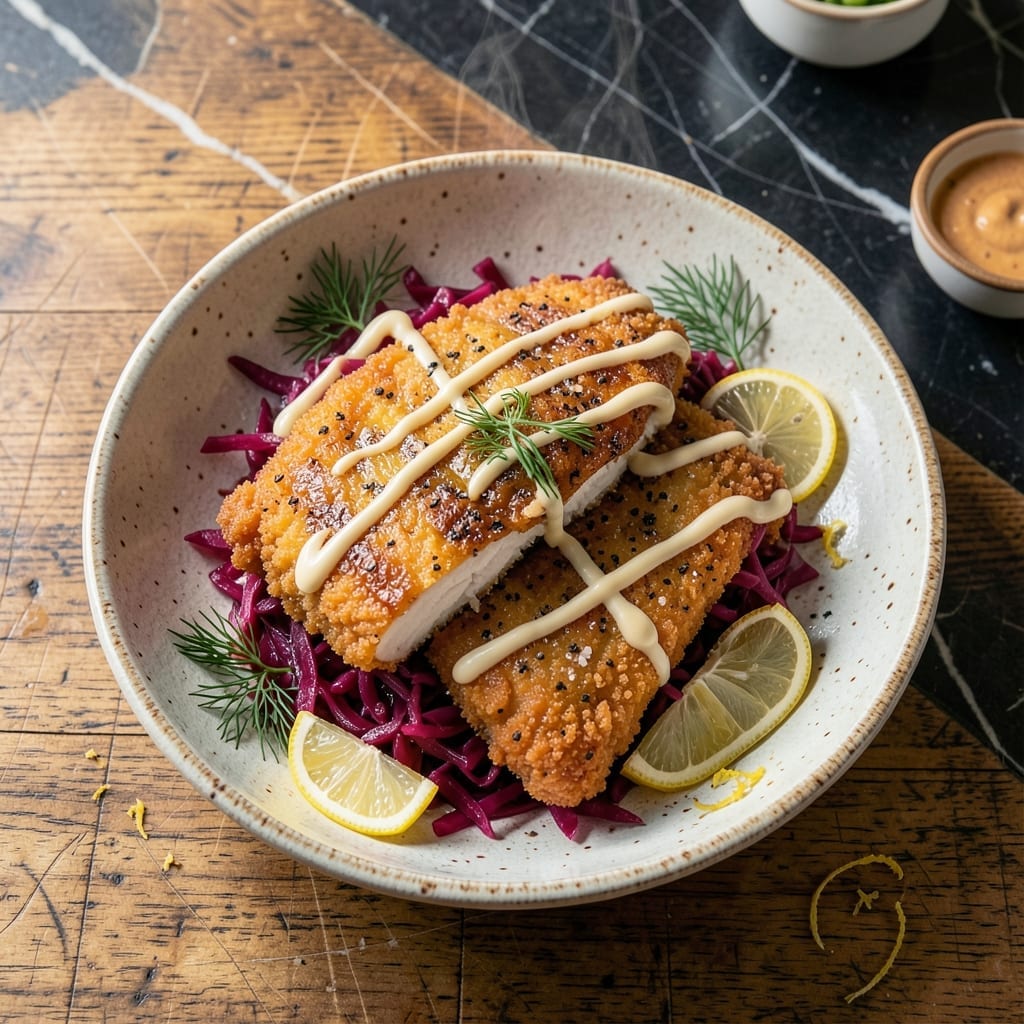
This deep frying method transforms fresh halibut into crispy, golden bites that maintain their natural moisture inside. The key lies in the perfect batter consistency and oil temperature control.
I’ve refined this technique to ensure each piece achieves that ideal contrast between a shatteringly crispy exterior and tender, flaky centers. The batter clings beautifully without becoming greasy.
With precise timing and temperature, you’ll create restaurant-quality results at home. The halibut stays perfectly cooked while developing that signature golden crust that’s impossible to resist.
Serve immediately for maximum crunch. This method works for other white fish too, making it a versatile addition to your cooking repertoire.
Ingredients for Deep Fried Halibut
Fresh halibut and a handful of pantry staples create these golden, crispy bites with tender centers.
| Ingredient | Amount | Notes |
|---|---|---|
| Halibut Fillets 🐟 | 1 ½ lb | Skinless, cut into 1-inch strips |
| All-Purpose Flour 🌾 | 1 ½ cups | For dredging and batter |
| Cornstarch 🌾 | ½ cup | For extra crispiness |
| Baking Powder 🧂 | 1 tsp | For light, airy batter |
| Sea Salt 🧂 | 1 ½ tsp | Divided for batter and seasoning |
| Black Pepper 🌶️ | ½ tsp | Freshly ground preferred |
| Paprika 🌶️ | 1 tsp | Sweet or smoked variety |
| Garlic Powder 🧄 | 1 tsp | For savory depth |
| Ice Cold Beer 🍺 | 1 cup | Lager or pilsner for batter |
| Neutral Oil 🫒 | 8 cups | For deep frying, peanut or vegetable |
| Lemon Wedges 🍋 | 4 pieces | For serving |
| Fresh Parsley 🌿 | ¼ cup | Chopped, for garnish |
| Tartar Sauce 🥄 | ½ cup | Store-bought or homemade |
The halibut is non-negotiable for texture—wild-caught from a reputable fishmonger ensures freshness and firmness. Look for fillets with vibrant color and no fishy odor. For the oil, peanut oil has the highest smoke point, but vegetable or canola work well too. The beer in the batter must be ice cold to achieve that signature crispness—any lager or pilsner will do.
No beer on hand? Sparkling water or club soda at one-to-one ratio works as a substitute. For gluten-free, swap the all-purpose flour for rice flour or a gluten-free blend. The cornstarch is essential for that extra crunch, but in a pinch, arrowroot powder can stand in. If halibut isn’t available, cod or haddock yield similar results.
Fry in batches to avoid overcrowding, which lowers oil temperature. Leftovers? They’re best eaten fresh, but you can reheat in a 400°F oven for 5-10 minutes to revive some crispness. Store raw halibut in the fridge for up to 2 days before cooking.
Why You’ll Love This Recipe
- Ready in 20: I mix the flour, cornstarch, and baking powder in one bowl, dip the halibut, and fry—no complicated steps.
- Crispy Perfection: Honestly, the cornstarch gives it that golden, crunchy coating that shatters with every bite.
- Crowd Pleaser: Between us, this works for weeknight dinners or when I need to impress guests with minimal effort.
- Budget Friendly: Halibut fillets stretch further than you’d think, and the pantry staples keep costs low.
Step-by-Step Instructions for Deep Fried Halibut
Master the technique for golden, crispy results with tender flaky centers every time.
Step 1: Prepare the Light, Crispy Batter
In a large bowl, whisk together the 1.5 cups all-purpose flour, 0.5 cup cornstarch, 1 tsp baking powder, 1 tsp paprika, 1 tsp garlic powder, 1 tsp sea salt, and 0.5 tsp black pepper until fully combined. The cornstarch is essential for that extra-crispy texture.
Create a well in the center and slowly pour in the 1 cup ice cold beer while whisking continuously. The beer should be as cold as possible to keep the batter light. Whisk just until smooth—overmixing develops gluten, which makes the coating dense rather than airy.
Step 2: Heat the Oil and Prep the Halibut
Pour the 8 cups neutral oil into a deep, heavy pot or Dutch oven, filling it no more than halfway to prevent spills. Heat over medium-high heat until the oil reaches 375°F on a deep-fry thermometer. This temperature ensures a rapid crisp without overcooking the fish.
While the oil heats, pat the 1.5 lb halibut fillets completely dry with paper towels. Moisture causes oil to splatter and prevents the batter from adhering properly. Cut the fillets into 1-inch strips for even cooking and easy handling.
Step 3: Fry to Golden Perfection
Dip each piece of halibut into the batter, letting any excess drip off. The batter should cling evenly without being too thick. Carefully lower the coated pieces into the hot oil, working in batches to avoid crowding the pot.
Fry for 3-4 minutes until the coating turns deep golden brown and the fish floats to the surface. Avoid stirring or moving the pieces too much during the first minute—this helps set the batter. Use a slotted spoon to transfer the fried halibut to a wire rack set over a baking sheet to drain excess oil.
Step 4: Season and Serve Immediately
Sprinkle the remaining 0.5 tsp sea salt over the hot fried halibut while it’s still glistening. This final seasoning enhances the flavor of the crispy coating. Serve immediately for the best texture—the contrast between the crunchy exterior and flaky interior is at its peak right out of the oil.
Arrange the halibut on a platter with the 4 pieces lemon wedges and 0.5 cup tartar sauce for dipping. Garnish with the 0.25 cup fresh parsley for a pop of color and freshness. The acidity of the lemon and the creamy tang of the tartar sauce balance the richness perfectly.
Pro Tips For Making Deep Fried Halibut
- Heat the Oil High: Get that oil to 375°F before adding the halibut—any cooler and the batter soaks up grease instead of crisping. I learned this the hard way after pulling out soggy, sad fillets more than once.
- Pat Fish Dry: Blot the halibut fillets with paper towels until they’re bone-dry. Moisture is the enemy of a crispy crust, and skipping this step means your batter won’t stick properly.
- Skip Overcrowding: Fry in small batches so the oil temperature doesn’t plummet. After burning three batches because I rushed, I finally figured out that patience keeps the coating light and golden.
- Add Baking Powder: Mix a teaspoon of baking powder into your flour and cornstarch batter. My grandmother swore by this, and she was right—it makes the coating airy and extra crispy without changing the flavor.
Dietary Considerations for This Recipe
Gluten-Free Option
Swap the all-purpose flour for a 1:1 gluten-free baking blend or rice flour to make this dish celiac-friendly. I’ve tested with King Arthur Measure for Measure and the results are just as crispy. The beer must also be gluten-free—I recommend Glutenberg Blonde. 💪
Dairy-Free Naturally
This recipe is inherently dairy-free since the batter uses beer and no milk products. The frying oil should be pure vegetable or peanut oil to avoid any dairy cross-contamination. Always check your tartar sauce label, as some brands contain dairy.
Low-Carb Adaptation
For a keto-friendly version, replace the flour with 1.5 cups almond flour and the beer with sparkling water. The texture will be slightly different but still delicious. Add 1 tsp xanthan gum to help the batter cling better to the fish. 🔥
Pescatarian-Friendly
Halibut is a great choice for pescatarians, providing high-quality protein and omega-3s. Ensure your frying oil hasn’t been used for meat products if cross-contamination is a concern. The dish pairs well with a simple green salad or roasted vegetables.
Allergen Awareness
This recipe contains gluten (from flour and beer) and may contain fish allergens. For nut allergies, avoid the almond flour substitution. Always check ingredient labels, especially for tartar sauce and seasoning blends.
Lighter Version
To reduce calories, use an air fryer at 400°F for 8-10 minutes instead of deep frying. Lightly coat the halibut in batter and spray with oil. The result won’t be as crispy but still delicious with 70% less oil. ✨
Nutrition Facts
Frequently Asked Questions
What oil temperature works best for frying?
Maintain 375°F throughout frying for perfect results. Use a thermometer to monitor, as oil cools when adding fish.
Can I substitute another fish?
Yes! Try cod or haddock with the same method. They hold up well to deep frying and have similar flakiness.
How do I keep the batter from falling off?
Pat fish completely dry first, and ensure oil is hot enough before adding. Cold beer in batter also helps adhesion.
Why did my fish turn out greasy?
Oil temperature was likely too low. Fry in small batches to maintain 375°F and drain on a rack, not paper towels.

- 6 Egg Cake Recipe with Oil: Light as Air With Buttery Moisture - October 4, 2026
- 4 Bean Casserole Recipe: One-Pan Heartiness With Smoky Paprika Depth - October 4, 2026
- 3-Ingredient Keto Mug Cake Recipe: Microwave Magic in 2 Minutes - October 4, 2026