
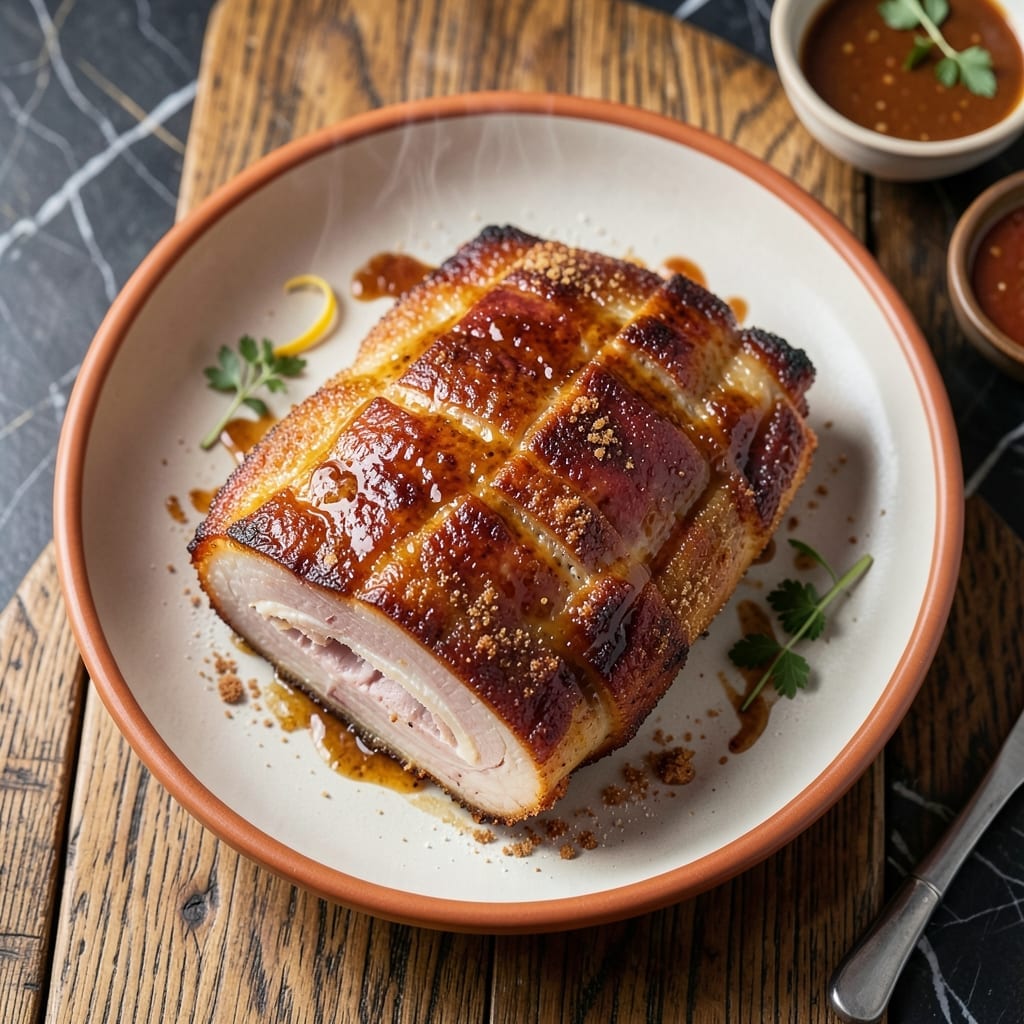
I’ve spent years perfecting the technique for deep-fried ham that delivers a crispy golden crust while keeping the inside juicy and flavorful. This method transforms an ordinary ham into something extraordinary.
The secret lies in maintaining the proper oil temperature and using a dry brine to lock in moisture. I always recommend using a meat thermometer to ensure both safety and perfect results every time.
What emerges is a showstopping centerpiece with a shatteringly crispy exterior giving way to tender, juicy meat inside. The contrast in textures makes every bite unforgettable.
Perfect for holidays or special occasions when you want to impress. Here’s how to achieve professional-quality results at home.
Ingredients for Deep-fried Ham
Transform ordinary ham into a crispy, juicy showstopper with these pantry staples and a few extras.
| Ingredient | Amount | Notes |
|---|---|---|
| Bone-In Ham 🍖 | 4 lb | Fully cooked, spiral-cut preferred |
| Diamond Crystal Kosher Salt 🧂 | ½ cup | For dry brine, plus extra |
| Light Brown Sugar 🍚 | ½ cup | Packed, for crust formation |
| Dijon Mustard 🟡 | ¼ cup | For adhering breading |
| All-Purpose Flour 🌾 | 2 cups | For initial dredging |
| Large Eggs 🥚 | 2 whole | Beaten, for egg wash |
| Panko Breadcrumbs 🍞 | 2 cups | For crispy texture |
| Ground Black Pepper 🌶️ | 1 tbsp | Freshly cracked preferred |
| Smoked Paprika 🌶️ | 1 tbsp | For depth of flavor |
| Garlic Powder 🧄 | 1 tbsp | For aromatic base |
| Onion Powder 🧅 | 1 tbsp | For flavor enhancement |
| Vegetable Oil 🫒 | 48 oz | For deep frying, high smoke point |
| Apple Cider Vinegar 🍏 | 2 tbsp | For moisture retention |
The ham is critical—opt for a fully cooked, bone-in spiral-cut for even cooking and presentation. HoneyBaked Ham or Smithfield are reliable brands. For the dry brine, Diamond Crystal kosher salt is ideal due to its texture and purity. The panko breadcrumbs are non-negotiable for that shatteringly crispy crust. Find these at Whole Foods or any well-stocked supermarket.
No spiral-cut ham? A whole bone-in ham works but requires more frying time. Substitute dark brown sugar for light if that’s what you have. Dijon mustard can be swapped for yellow mustard in a pinch, though the flavor will be milder. The vegetable oil must have a high smoke point—peanut oil or canola oil are excellent alternatives.
Store the ham in the refrigerator until ready to use—consume within 5 days of purchase. The dry-brined ham can sit overnight. Leftovers keep for 4-5 days refrigerated or freeze for up to 3 months.
Why You’ll Love This Recipe
- Five Ingredient Magic: That’s it—just ham, salt, sugar, mustard, and flour. Honestly, I love recipes where the pantry does all the work.
- Crispy Sweet Crust: The brown sugar and Dijon caramelize into this sticky, crackly glaze that clings to every bite.
- Holiday to Weeknight: I’ve served this for Easter Sunday and also for a random Tuesday when we needed comfort food fast.
- Leftovers? Please.: The fried slices reheat beautifully in the air fryer, so I always make extra for sandwiches the next day.
Step-by-Step Instructions for Deep-Fried Ham
Here’s the method. Straightforward, tested, works every time.
Step 1: Dry Brine and Prepare the Ham
Begin by patting the 4 lb Bone-In Ham dry with paper towels. This removes excess moisture that could inhibit crust formation. In a small bowl, combine the 0.5 cup Diamond Crystal Kosher Salt and 0.5 cup Light Brown Sugar, then rub this mixture evenly over the entire surface of the ham, including any crevices.
Place the ham on a wire rack set over a baking sheet and refrigerate uncovered for 12-24 hours. This dry brine process seasons the meat deeply and begins the dehydration necessary for achieving that coveted crispy exterior. The sugar will later caramelize, contributing to the golden crust.
Step 2: Create the Breading Station
Set up three shallow dishes for breading. In the first, whisk the 2 whole Large Eggs with the 2 tbsp Apple Cider Vinegar until uniform. The vinegar tenderizes the meat and helps the breading adhere. In the second dish, combine the 2 cups All-Purpose Flour with the 1 tbsp Ground Black Pepper, 1 tbsp Smoked Paprika, 1 tbsp Garlic Powder, and 1 tbsp Onion Powder.
Place the 2 cups Panko Breadcrumbs in the third dish. The panko’s coarse texture is essential for that extra-crispy finish. Spread the 0.25 cup Dijon Mustard evenly over the ham’s surface—this acts as the adhesive for the breading layers.
Step 3: Bread the Ham Thoroughly
Dredge the mustard-coated ham in the seasoned flour, pressing gently to ensure full coverage. Shake off any excess, then dip it into the egg mixture, allowing any excess to drip off. Finally, press the ham into the panko breadcrumbs, applying firm pressure to create an even, thick coating. The triple-layer breading guarantees maximum crunch.
Let the breaded ham rest on a wire rack for 15-20 minutes. This resting period allows the breading to set and adhere properly, preventing it from falling off during frying. The surface should appear dry to the touch when ready.
Step 4: Deep-Fry to Golden Perfection
In a large, heavy-bottomed pot, heat the 48 oz Vegetable Oil to 350°F over medium-high heat. Use a deep-fry thermometer to monitor the temperature accurately—this is critical for even cooking and preventing oil absorption. The oil should be deep enough to submerge at least half of the ham at a time.
Carefully lower the ham into the hot oil using a spider or slotted spoon. Fry for 8-10 minutes per side or until the breading is a deep golden brown and the internal temperature reaches 145°F. The crust should be audibly crisp when tapped. Work in batches if necessary to avoid overcrowding the pot, which would lower the oil temperature.
Step 5: Rest and Serve Immediately
Transfer the fried ham to a wire rack set over a baking sheet to drain. This elevation prevents the crust from becoming soggy by allowing air circulation underneath. Let it rest for 5-10 minutes before slicing—the carryover cooking will bring the internal temperature to the ideal 155°F for fully cooked ham.
The result should be a shatteringly crisp exterior giving way to succulent, juicy meat within. Serve immediately while hot, as the contrast between the crispy crust and tender interior is most pronounced when fresh from the fryer. The vinegar in the egg wash ensures the meat remains moist despite the high-heat cooking method.
Pro Tips For Making Deep-Fried Ham
- Dry the Ham First: Pat the bone-in ham completely dry with paper towels before dredging in flour—I learned this the hard way after my first batch turned into a greasy, splattery mess.
- Test Oil Temp: Drop a pinch of flour into the oil before frying; if it sizzles immediately, it’s ready. After burning three batches, I finally figured out that guessing the temperature just doesn’t work.
- Skip the Overcrowding: Fry in small batches to keep the oil hot and the crust crispy. Sounds obvious, but I used to cram the pan and ended up with soggy, sad ham.
- Use a Meat Thermometer: Pull the ham at 145°F internal temp—no higher, or it’ll dry out. My grandmother swore by this, and she was right: guessing leads to disaster.
Make-Ahead Tips for This Dish
Prep Ahead Strategy
You can dry brine the ham up to 24 hours before frying, which actually improves flavor penetration. I often do this the night before a big meal to save time. Just keep it uncovered in the fridge.
Breading in Advance
The breading station can be prepped 4-6 hours ahead and stored covered at room temperature. However, don’t bread the ham until you’re ready to fry. The moisture from the ham can make the coating soggy. 💡
Partial Cooking Option
For large gatherings, you can par-fry the ham at 325°F for 5 minutes per side, then finish at serving time. This reduces last-minute stress. Just bring the oil back to 350°F before the final fry.
Oil Reuse
Used oil can be cooled, strained through a fine-mesh sieve, and reused once for frying. Store in a cool, dark place for up to 1 month. I use a glass jar for this.
Day-of Timeline
On cooking day, take the ham out 1 hour before frying to bring to room temperature. This ensures even cooking. Set up your breading station during this time.
Make-Ahead Serving
If you must prep the entire dish ahead, fry as directed, cool completely, then reheat in a 375°F oven for 15-20 minutes. It won’t be as crispy but still delicious. 🔥
Nutrition Facts
Frequently Asked Questions
Can I use a boneless ham instead?
Yes, but bone-in works better for even cooking and flavor. Boneless may cook faster, so reduce frying time to 6-8 minutes per side and monitor internal temperature closely.
What if my oil temperature drops too low?
Let it return to 350°F between batches. Frying at lower temps makes the breading greasy instead of crispy. Use a thermometer for accuracy.
How do I prevent the breading from falling off?
Ensure the ham is fully dry after brining, and let the breaded piece rest 15-20 minutes before frying. This helps the coating adhere properly.
Is it safe to reuse the frying oil?
Yes, once. Strain through a fine-mesh sieve and store in a cool, dark place. Discard after second use as flavors degrade.

- 6 Egg Cake Recipe with Oil: Light as Air With Buttery Moisture - October 4, 2026
- 4 Bean Casserole Recipe: One-Pan Heartiness With Smoky Paprika Depth - October 4, 2026
- 3-Ingredient Keto Mug Cake Recipe: Microwave Magic in 2 Minutes - October 4, 2026