
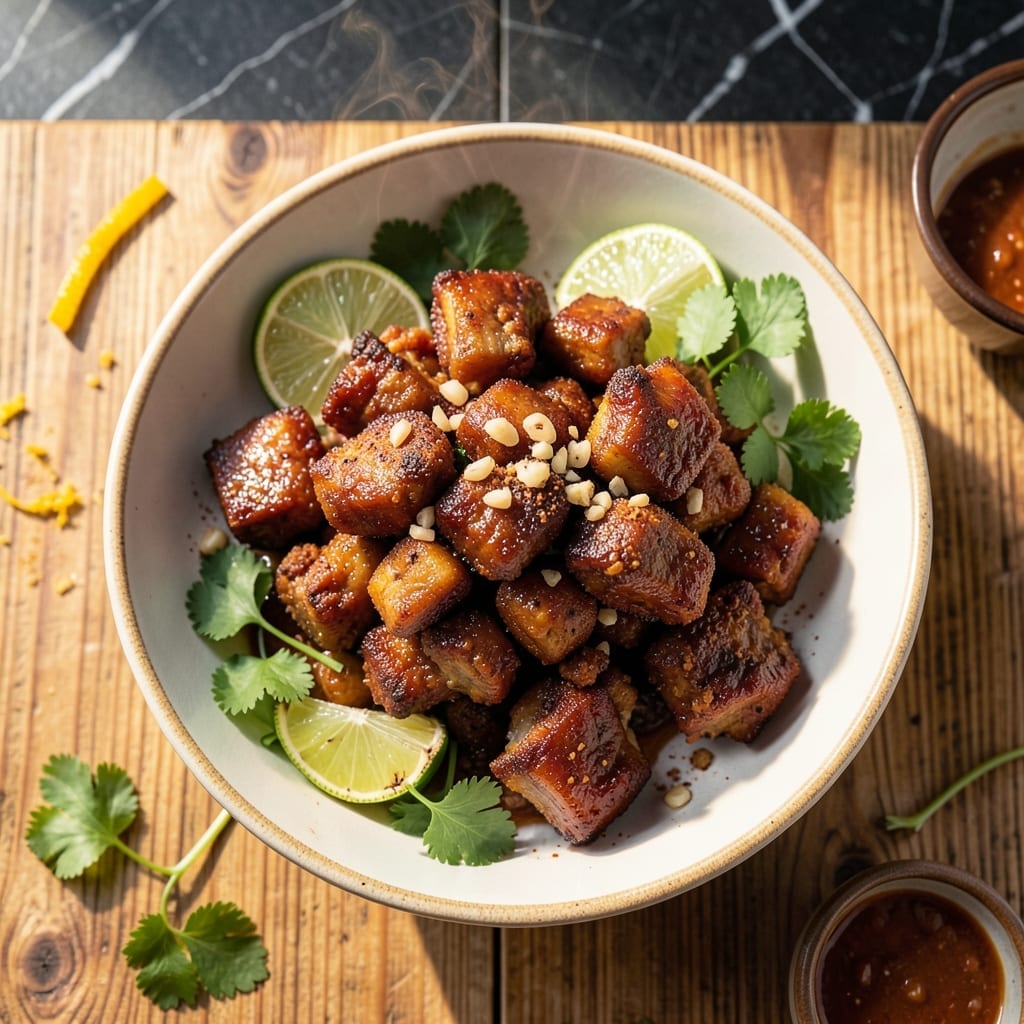
This carnitas recipe delivers tender pork with crispy edges, just like your favorite Mexican restaurant. The secret is in the slow cooking process that transforms tough cuts into melt-in-your-mouth perfection.
I’ve perfected this method over years of testing, focusing on simple ingredients and precise timing. The pork first becomes fall-apart tender, then finishes with a quick sear to achieve that signature crispness everyone loves.
What sets this version apart is the balance of textures – the contrast between the crispy exterior and tender interior in every bite. The seasoning is authentic but approachable, using spices you likely already have.
The result is versatile enough for tacos, burritos, or served over rice. Here’s how to make carnitas that will impress at any meal.
Ingredients for Defined Dish Carnitas
Pantry spices meet pork shoulder for that authentic Mexican restaurant experience at home.
| Ingredient | Amount | Notes |
|---|---|---|
| Pork Shoulder 🐷 | 3 lb | Boneless, cut into 2-inch chunks |
| Kosher Salt 🧂 | 1 tbsp | Diamond Crystal preferred |
| Ground Cumin 🌿 | 1 tsp | Toasted for deeper aroma |
| Dried Oregano 🍃 | 1 tsp | Mexican oregano ideal |
| Smoked Paprika 🌶️ | 1 tsp | Adds signature depth |
| Garlic Cloves 🧄 | 6 cloves | Minced for even distribution |
| Yellow Onion 🧅 | 1 whole | Diced into small pieces |
| Orange Juice 🍊 | ¾ cup | Freshly squeezed preferred |
| Lime Juice 🍈 | 2 tbsp | Freshly squeezed essential |
| Olive Oil 🫒 | 2 tbsp | Divided for cooking stages |
| Bay Leaves 🌿 | 2 whole | Dried, for slow cooking |
| Cinnamon Stick 🌰 | 1 whole | Optional for warmth |
| Chicken Broth 🥣 | ½ cup | Low-sodium preferred |
| Fresh Cilantro 🌿 | ¼ cup | Chopped, for garnish |
The pork shoulder is non-negotiable here. Bone-in or boneless both work, but look for good marbling—this is what keeps it juicy after the crisp. Costco has great pre-cut chunks if you’re short on time. I always grab mine from the butcher counter at Whole Foods though (they’ll cube it for you if you ask nicely). Avoid lean cuts like tenderloin—they dry out.
No smoked paprika? Regular paprika plus a pinch of chipotle powder gets you close. Fresh out of oregano? Marjoram at the same amount works in a pinch. The orange juice is key for that citrus brightness—bottled works (just don’t tell the purists). If you’re missing bay leaves, skip ’em. The cinnamon stick? Totally optional but adds a subtle warmth I love.
Carnitas taste even better the next day—store in the fridge for up to 4 days. Freeze portions for 3 months (reheat straight from frozen in a skillet). The cooked pork keeps well, but crisp it fresh before serving. Leftovers? Taco night, round two.
Why You’ll Love This Recipe
- Hands-Off Cooking: I just toss pork shoulder with salt, cumin, oregano, and smoked paprika then let the oven do the work.
- Smoky, Spiced Perfection: The combination of smoked paprika and cumin gives these carnitas a deep, complex flavor that’s anything but boring.
- Tacos, Bowls, or Sandwiches: I’ve served these carnitas in tacos, over rice bowls, and even piled high on crusty bread for sandwiches.
- Leftovers for Days: Honestly, these taste even better the next day, and they freeze beautifully for future quick meals.
Step-by-Step Instructions for Crispy and Tender Carnitas
Here’s my proven method for achieving that perfect balance of crispy edges and fall-apart tenderness.
Step 1: Season and Sear the Pork Shoulder
Pat the 3 lb pork shoulder chunks dry with paper towels, then toss them with 1 tbsp kosher salt, 1 tsp ground cumin, 1 tsp dried oregano, and 1 tsp smoked paprika in a large bowl. I like to get my hands in there to ensure every piece is evenly coated—this creates a flavor base that penetrates deeply.
Heat 1 tbsp olive oil in a heavy pot over medium-high heat until shimmering. Working in batches to avoid crowding, sear the pork chunks on all sides until deep golden brown. This takes about 3-4 minutes per side and builds the foundation for rich flavor.
Step 2: Build the Aromatic Braising Liquid
In the same pot, add the remaining 1 tbsp olive oil and sauté the diced yellow onion for 5 minutes until softened and translucent. Add the 6 minced garlic cloves and cook for 30 seconds until fragrant—don’t let it burn.
Pour in the 0.75 cup orange juice, 2 tbsp lime juice, 0.5 cup chicken broth, then add the 2 bay leaves and 1 cinnamon stick. The citrus will mellow and create a complex, tangy backbone for the carnitas as they slow-cook.
Step 3: Braise Until Fork-Tender
Return all the seared pork to the pot along with any accumulated juices. The liquid should come about halfway up the meat—if not, add a splash more broth. Bring to a gentle simmer, then reduce heat to low, cover, and cook for 2 to 2.5 hours.
You’ll know it’s done when the pork shreds easily with a fork and the sauce has reduced slightly. I check at the 2-hour mark and let it go longer if needed. The meat should pull apart with minimal resistance, and the house will smell incredible.
Step 4: Shred and Crisp for Maximum Texture
Using two forks, shred the pork directly in the pot. I like to leave some larger chunks for texture. Increase the heat to medium-high and let the carnitas cook uncovered for 10-15 minutes, stirring occasionally, until the liquid has mostly evaporated and the edges begin to crisp.
This step is crucial for that signature carnitas texture—you want some pieces to develop a golden crust while others stay succulent. The residual fat from the pork will help achieve this. Watch closely near the end to prevent burning.
Step 5: Finish and Serve
Transfer the carnitas to a serving dish and discard the bay leaves and cinnamon stick. Stir in 0.25 cup chopped fresh cilantro for a bright, fresh finish. The cilantro adds a pop of color and cuts through the richness.
Serve immediately on warm tortillas with your favorite toppings. The contrast between the crispy, caramelized edges and the tender, juicy interior is what makes this dish truly special. Leftovers keep well and actually improve in flavor overnight.
Pro Tips For Making Defined Dish Carnitas
- Cut Evenly: I learned this the hard way—cube the pork shoulder into 1½-2 inch chunks, not too small, so they hold up during the long cook and get that perfect crisp later.
- Bloom the Spices: Toast the cumin, oregano, and smoked paprika in a dry pan for 30 seconds until fragrant before adding to the pork—it wakes up the flavors like nothing else.
- Don’t Rush the Crisp: After braising, spread the pork on a tray and broil for 5-7 minutes, flipping once, to get that golden crust—skip this and you’ll miss the best part.
- Use Enough Salt: Sounds obvious, but pork shoulder needs a full tablespoon of kosher salt for 3-4 pounds to season deep into the meat—taste the juice before serving and adjust.
Health Benefits of These Flavors
Rich in Protein
This dish packs a serious protein punch—3 lb pork shoulder provides about 150g of protein per pound cooked. Protein is essential for muscle repair and keeps you feeling full longer. I love knowing I’m fueling my body with high-quality nutrition. 💪
Healthy Fats Source
Pork shoulder contains monounsaturated fats, the same heart-healthy type found in olive oil. These fats help reduce bad cholesterol levels when consumed in moderation. The slow cooking process renders much of the fat, making it easier to control intake.
Vitamin B Boost
You’ll get a significant dose of B vitamins, especially B12 and thiamine, from this recipe. These nutrients support energy metabolism and nervous system function. A 3-ounce serving provides about 25% of your daily B12 needs.
Iron and Zinc
This creation is an excellent source of heme iron (the most easily absorbed form) and zinc. Iron supports oxygen transport in blood, while zinc boosts immune function. The orange juice in the recipe actually enhances iron absorption. 🥗
Low Carb Friendly
With no added sugars and minimal carbs from the citrus, this fits perfectly into low-carb or keto lifestyles. Each serving contains roughly 2-3g net carbs, mostly from the natural sugars in the 0.75 cup orange juice.
Collagen Benefits
Slow-cooked pork shoulder breaks down collagen into gelatin, which supports joint health and skin elasticity. The long cooking time in this recipe maximizes this benefit. I notice my skin looks better when I eat collagen-rich foods regularly.
Nutrition Facts
Frequently Asked Questions
Can I use a different cut of pork?
Pork shoulder is ideal, but pork butt works too since it’s similarly fatty. Avoid lean cuts like tenderloin—they’ll dry out during the long cooking process. The fat content is what makes carnitas tender and flavorful.
How do I make them extra crispy?
After shredding, spread the carnitas on a baking sheet and broil for 3-5 minutes on high heat. Alternatively, crisp in a skillet with a little oil over medium-high heat for 5-7 minutes.
Can carnitas be made in a slow cooker?
Yes! Cook on low for 6-8 hours or high for 4-5 hours. Transfer to a skillet afterward to crisp. The texture will be slightly different but still delicious.
What’s the best way to reheat?
Reheat in a dry skillet over medium heat until sizzling, about 5 minutes. Microwaving works but results in softer texture. Add a splash of broth to prevent drying.

- 6 Egg Cake Recipe with Oil: Light as Air With Buttery Moisture - October 4, 2026
- 4 Bean Casserole Recipe: One-Pan Heartiness With Smoky Paprika Depth - October 4, 2026
- 3-Ingredient Keto Mug Cake Recipe: Microwave Magic in 2 Minutes - October 4, 2026