
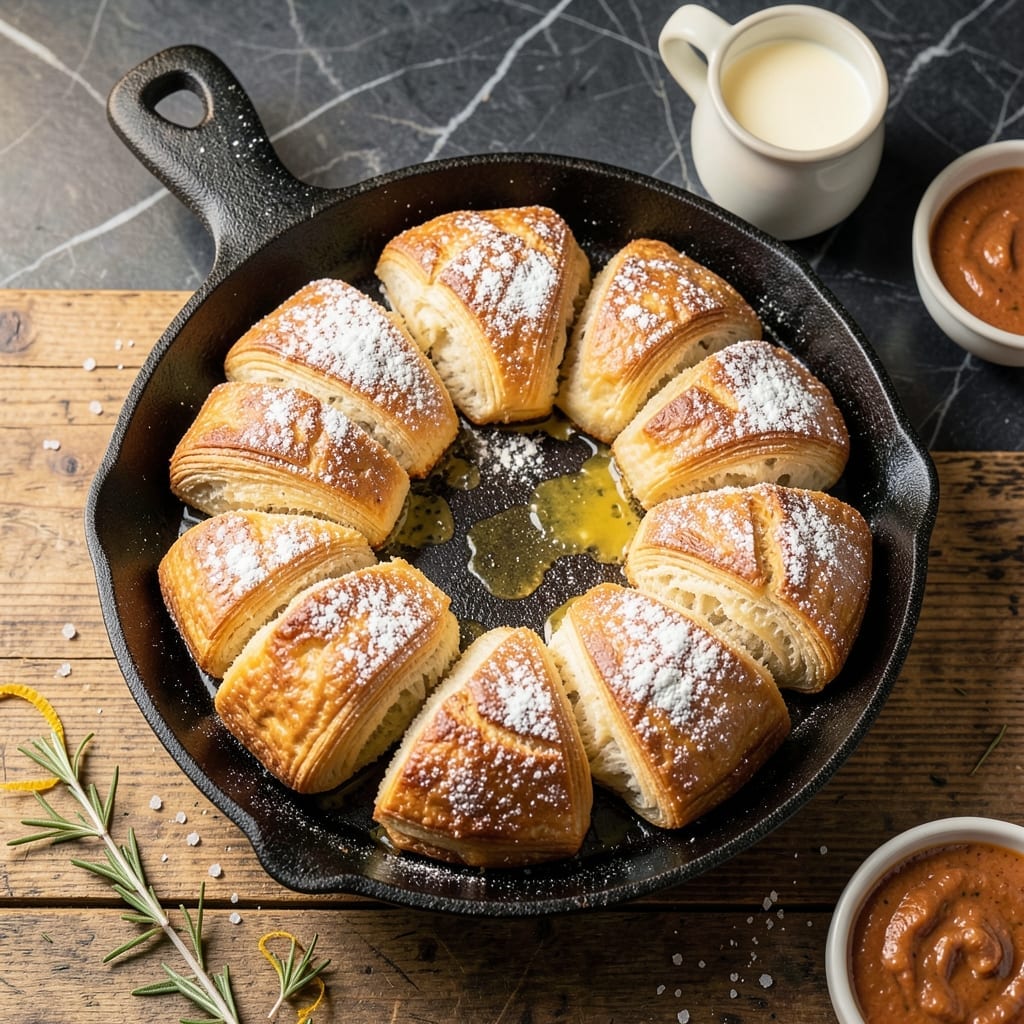
I’ve spent years perfecting the art of buttery, flaky biscuits inspired by Denver Biscuit Company’s legendary layers. The secret lies in cold ingredients and a precise folding technique that creates those signature heights and textures.
This method requires just a few simple ingredients—flour, butter, buttermilk, and a touch of leavening. The key is keeping everything ice-cold until the moment it hits the oven, which prevents the butter from melting prematurely and ruining the layers.
What emerges from the oven are golden-brown biscuits with a crisp exterior and a tender, layered interior that practically melts in your mouth. The buttermilk adds a subtle tang that balances the rich butter perfectly.
The result is restaurant-quality biscuits that rival the original, with that same irresistible pull-apart texture. Serve warm with honey or gravy for the full experience.
Ingredients for Denver Biscuit Company Biscuit
Cold butter, precise folds, and flaky layers start with these simple ingredients.
| Ingredient | Amount | Notes |
|---|---|---|
| All-Purpose Flour 🌾 | 2 ½ cups | Plus extra for dusting surface |
| Unsalted Butter 🧈 | 1 cup | Ice cold, cubed into 1/2-inch pieces |
| Buttermilk 🥛 | 1 cup | Full-fat for richness |
| Baking Powder 🧂 | 1 tbsp | Aluminum-free preferred |
| Baking Soda 🧂 | ½ tsp | Balances acidity in buttermilk |
| Granulated Sugar 🍚 | 1 tbsp | Fine white sugar |
| Kosher Salt 🧂 | 1 tsp | Diamond Crystal preferred |
| Honey 🍯 | 2 tbsp | For serving, optional |
| Sautéed Mushroom Gravy 🍄 | 1 ½ cups | For serving, optional |
The butter must stay ice-cold—cut from a fresh stick and cubed quickly. King Arthur Flour is the gold standard for all-purpose, but any unbleached variety works. Buttermilk matters: full-fat gives the best texture and tang. If you can’t find buttermilk, Whole Foods and most supermarkets carry it in the dairy case. The leavening agents need to be fresh—old baking powder loses its lift, resulting in dense biscuits.
No buttermilk? Stir 1 tbsp lemon juice or vinegar into regular milk and let sit for 5 minutes. Swap the all-purpose flour for White Lily if you want a more Southern-style biscuit (lower protein content = more tender). The honey can be maple syrup or jam if preferred. For the gravy, any creamy mushroom version works—store-bought is fine in a pinch (just warm it up).
Biscuits are best served warm, straight from the oven. Leftovers keep 2-3 days in an airtight container, but they’re never as good as fresh. Reheat in a 350°F oven for 5-10 minutes to revive. The dough can be made ahead and refrigerated overnight—just let it warm slightly before rolling and folding.
Why You’ll Love This Recipe
- One Bowl Magic: I dump everything in a single bowl—flour, cold butter, buttermilk—and it comes together in minutes.
- Buttery Heaven: The unsalted butter and buttermilk create layers so flaky and rich I swear I can hear angels singing.
- Breakfast to Dinner: Honestly, these biscuits work with jam at dawn, as sandwiches at noon, or smothered in gravy at night.
- Pocketbook Friendly: A bag of flour and a stick of butter feed my whole family for pennies. Leftovers? Freeze ’em—they reheat like a dream.
Step-by-Step Instructions for Denver Biscuit Company Biscuits
Master the technique for creating tall, flaky layers with this professional approach.
Step 1: Chill and Cut the Butter Into Flour
Begin by combining the 2.5 cups All-Purpose Flour, 1 tbsp Baking Powder, 0.5 tsp Baking Soda, 1 tbsp Granulated Sugar, and 1 tsp Kosher Salt in a large bowl. Whisk thoroughly to ensure even distribution of the leavening agents and seasoning.
Add the 1 cup Unsalted Butter (cubed into ½-inch pieces and ice cold) to the dry mixture. Using a pastry cutter or your fingertips, work the butter into the flour until the mixture resembles coarse crumbs with pea-sized butter pieces visible. This creates the pockets that will puff into flaky layers during baking.
Step 2: Incorporate the Buttermilk Gently
Create a well in the center of the flour-butter mixture and pour in the 1 cup Buttermilk. Using a wooden spoon or silicone spatula, gently stir just until the dough begins to come together. The mixture will be shaggy and slightly sticky—this is exactly what you want.
Overworking the dough at this stage develops gluten, which will result in tough, dense biscuits rather than the light, flaky texture we’re after. Stop mixing as soon as the dry ingredients are moistened.
Step 3: Laminate the Dough for Maximum Flakiness
Turn the dough onto a lightly floured surface and pat it into a 1-inch thick rectangle. Fold the dough in thirds like a business letter, then rotate it 90 degrees. Repeat the folding and rotating process two more times to create multiple layers.
This laminating technique is the secret to achieving those tall, flaky layers that define great biscuits. Each fold multiplies the layers in your final product. The dough should remain cool to the touch throughout this process.
Step 4: Cut and Bake to Golden Perfection
Pat the laminated dough to a ¾-inch thickness and cut into 2½-inch rounds using a biscuit cutter. Press straight down without twisting to maintain the layered structure. Place the biscuits on a parchment-lined baking sheet, touching slightly for support during rising.
Bake in a preheated 450°F oven for 12-15 minutes until the tops are golden brown and the layers are visibly separated. The high heat ensures a quick rise and that characteristic flaky texture. Rotate the pan halfway through for even browning.
Serve warm with the 2 tbsp Honey or 1.5 cups Sautéed Mushroom Gravy for dipping, if desired. The biscuits are best enjoyed immediately when the layers are at their most distinct and the exterior is crisp.
Pro Tips For Making Denver Biscuit Company Biscuit
- Chill the Butter: Cut your unsalted butter into small cubes and chill for 20 minutes before mixing—this keeps it from melting into the flour, which is how you get those flaky layers.
- Use Cold Buttermilk: I learned this the hard way—warm buttermilk makes tough biscuits. Pull it straight from the fridge and measure it while it’s still ice-cold.
- Don’t Overwork the Dough: Mix just until the flour is barely incorporated, even if it looks shaggy. Overmixing develops gluten, and suddenly you’ve got hockey pucks instead of biscuits.
- Fold for Height: After cutting the dough, stack the scraps, give them a quick fold, and cut again—this creates extra layers for taller, airier biscuits.
Troubleshooting Great denver biscuit company biscuit
Dense Biscuits
If your biscuits turn out dense instead of flaky, the most likely culprit is overworked dough. Once you add the buttermilk, mix just until the dry ingredients are moistened—I use a wooden spoon and stop as soon as the shaggy dough forms. 💡
Flat Layers
Flat biscuits with no rise usually mean the butter melted before baking. Ensure it stays ice-cold throughout prep. I keep my butter in the freezer until ready to use and work in a cool kitchen. Also check your baking powder’s freshness.
Dry Texture
Dry biscuits often result from too much flour during rolling. Dust your surface lightly and don’t re-flour between folds. If the dough cracks while folding, it’s too dry—spritz with a bit of buttermilk to bring it together.
Uneven Browning
For even browning, rotate your pan halfway through baking. Also, ensure biscuits are spaced slightly apart on the sheet. My oven has hot spots, so I always bake on the middle rack at 450°F for consistent results.
Butter Leakage
If butter pools around your biscuits, it means the pieces were too large or the oven wasn’t hot enough. Cube your butter into ½-inch pieces and preheat your oven for at least 15 minutes before baking. This helps the layers set quickly. 🔥
Tough Exterior
A tough crust can happen if biscuits bake too long. Start checking at 12 minutes—they’re done when golden brown. Also, avoid twisting the cutter when shaping, as this seals the edges and prevents rising.
Nutrition Facts
Frequently Asked Questions
Can I use regular milk instead of buttermilk?
Yes, stir 1 tbsp vinegar or lemon juice into regular milk and let sit for 5 minutes. This mimics buttermilk’s tang and acidity.
Why must the butter stay cold?
Cold butter creates steam pockets during baking, making those signature flaky layers. If it melts early, biscuits turn out dense and flat.
How do I store leftovers?
Keep in an airtight container for 2-3 days. Reheat at 350°F for 5-10 minutes to restore crispness.
Can I make the dough ahead?
Yes, refrigerate overnight. Let it warm slightly before rolling and folding. This actually improves the layers!

- 6 Egg Cake Recipe with Oil: Light as Air With Buttery Moisture - October 4, 2026
- 4 Bean Casserole Recipe: One-Pan Heartiness With Smoky Paprika Depth - October 4, 2026
- 3-Ingredient Keto Mug Cake Recipe: Microwave Magic in 2 Minutes - October 4, 2026