
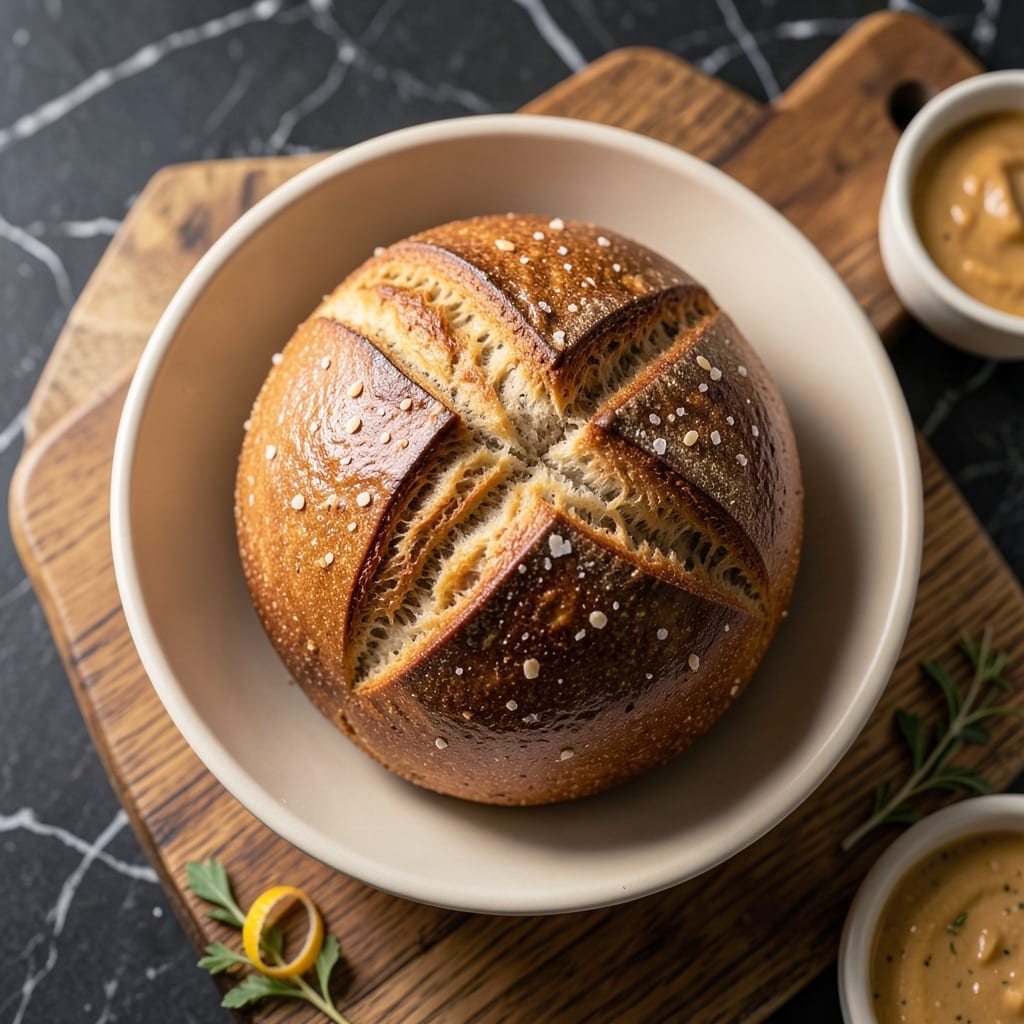
This gut-friendly bread delivers the comfort of fresh-baked loaf without the lectins. A careful blend of almond flour and psyllium husk creates structure while keeping it gluten-free and grain-free.
The process is straightforward—mix the dry ingredients, add wet components, and let the batter rest briefly. Baking at 350°F ensures even cooking without drying out the crumb.
What emerges is a slightly dense but tender loaf with a mild, nutty flavor. It slices cleanly and holds up well for sandwiches or toast.
This recipe aligns with Dr. Gundry’s principles while satisfying that craving for fresh bread. Perfect for those monitoring their lectin intake.
Ingredients for Dr Gundry Bread
A select blend of gut-friendly ingredients creates this lectin-conscious loaf with nutty depth and sturdy texture.
| Ingredient | Amount | Notes |
|---|---|---|
| Blanched Almond Flour 🌰 | 3 cups | Fine, sifted for best texture |
| Psyllium Husk Powder 🌿 | ½ cup | Not whole husks, essential for structure |
| Baking Soda 🧂 | 1 tsp | Aluminum-free preferred |
| Sea Salt 🧂 | 1 tsp | Fine grain for even distribution |
| Large Eggs 🥚 | 4 whole | Room temperature, pastured if available |
| Unsweetened Almond Milk 🥛 | ½ cup | Or other non-dairy milk |
| Apple Cider Vinegar 🍏 | 1 tbsp | Raw, unfiltered for best results |
| Extra-Virgin Olive Oil 🫒 | ¼ cup | Melted coconut oil as alternative |
| Avocado Oil 🥑 | 1 tbsp | For greasing the loaf pan |
| Warm Water 💧 | ½ cup | Filtered, about 105°F |
The almond flour is non-negotiable here—Bob’s Red Mill or Anthony’s are reliable brands. Psyllium husk powder (not the whole husks) is critical for structure; find it at Whole Foods or Thrive Market. Egg quality matters more than you’d think—pastured eggs yield a richer crumb. For the almond milk, unsweetened is key to avoid added sugars that might feed unwanted gut bacteria.
No psyllium husk? Ground flaxseed at a 1:1 ratio works in a pinch, though the texture won’t be identical. Out of almond flour? Tigernut flour is the closest lectin-free substitute. Apple cider vinegar can be swapped with white vinegar or lemon juice—just maintain the acidity. For egg-free, flax eggs (1 tbsp ground flax + 3 tbsp water per egg) work, but the loaf may be denser.
Store the loaf wrapped in a clean kitchen towel at room temperature for up to 3 days. For longer storage, slice and freeze in an airtight container for up to 3 months. Toast slices directly from frozen for best texture. The batter rests for just 10 minutes, so don’t skip this step—it’s what gives the bread its structure.
Why You’ll Love This Recipe
- Five-Minute Mix: Honestly, it’s just dump, stir, bake—no yeast, no waiting, no fuss with the almond flour and psyllium doing all the work.
- Nutty Satisfaction: The toasted almond flavor from the blanched flour plus that subtle earthy note from the psyllium makes it ridiculously good.
- Sandwich Ready: I slice it thin for avocado toast at breakfast and stack it thick for burgers at dinner—same loaf, zero compromise.
- Stays Fresh: Bake it Sunday, and it’s still soft and sliceable by Thursday; no crusty leftovers or wasted loaves in my house.
Step-by-Step Instructions for Gut-Friendly Almond Flour Bread
This method ensures optimal texture and structure for your loaf every single time.
Step 1: Combine Dry Ingredients for Structure
In a large mixing bowl, whisk together the 3 cups Blanched Almond Flour, 0.5 cup Psyllium Husk Powder, 1 tsp Baking Soda, and 1 tsp Sea Salt until no lumps remain. I use a fine-mesh sieve for the almond flour to prevent graininess in the final loaf.
The psyllium husk powder acts as the binder in this grain-free recipe, so thorough distribution is critical. You’ll notice the mixture takes on a slightly fibrous appearance as the psyllium absorbs moisture from the air.
Step 2: Incorporate Wet Ingredients Gradually
In a separate bowl, beat the 4 whole Large Eggs lightly, then whisk in the 0.5 cup Unsweetened Almond Milk, 1 tbsp Apple Cider Vinegar, and 0.25 cup Extra-Virgin Olive Oil until emulsified. The vinegar reacts with the baking soda to create lift in this dense flour blend.
Create a well in the dry ingredients and pour in the wet mixture. Stir with a silicone spatula until just combined—overmixing develops the psyllium’s gummy texture too early. The batter will be thick, almost like cookie dough at this stage.
Step 3: Activate the Psyllium Gel
Add the 0.5 cup Warm Water to the bowl and stir vigorously for 30-45 seconds. You’ll see the mixture transform as the psyllium absorbs the liquid, becoming stretchy and elastic. This gel formation mimics gluten’s structure in traditional bread.
Let the batter rest for 2-3 minutes to fully hydrate. It should hold its shape when scooped and have a slightly sticky, taffy-like consistency. If it seems too thick, add warm water 1 tablespoon at a time until workable.
Step 4: Bake with Precise Technique
Preheat your oven to 350°F and generously grease a loaf pan with the 1 tbsp Avocado Oil. The high smoke point of avocado oil prevents burning during the long bake time. Transfer the batter to the pan, smoothing the top with wet hands to prevent sticking.
Bake on the center rack for 50-55 minutes until the top is deep golden brown and a toothpick inserted in the center comes out clean. The loaf should sound hollow when tapped on the bottom. Avoid opening the oven door during the first 40 minutes to prevent collapsing.
Step 5: Cool Completely Before Slicing
Remove the loaf from the pan immediately and transfer to a wire rack. Let it cool for at least 1 hour before slicing—this allows the structure to set fully. The interior will continue to firm up as it cools, achieving the ideal bread-like texture.
Use a serrated knife to slice into ½-inch thick pieces. For best results, toast slices lightly before serving to enhance the nutty almond flavor. Store in an airtight container at room temperature for up to 3 days, or freeze for longer storage.
Pro Tips For Making Dr Gundry Bread
- Preheat the Oven: Set your oven to 350°F and give it a full 15 minutes to stabilize—I learned this the hard way after pulling out a dense, undercooked loaf because I rushed it.
- Bloom the Psyllium: Mix the psyllium husk powder with the wet ingredients first and let it sit for 2-3 minutes to gel. Sounds weird, but it works: this prevents a gritty texture in the finished bread.
- Weigh Your Almond Flour: Scooping almond flour directly from the bag packs it down—use a scale for 200g per cup to avoid a dry, crumbly result. After burning three batches, I finally figured out this was the culprit.
- Cool Completely: Resist the urge to slice for at least 1 hour—yes, even if you’re impatient like me. Cutting too soon makes it gummy, and the structure sets as it cools.
Make-Ahead Tips for This Recipe
Batter Prep Ahead
You can mix the dry ingredients and wet components separately the night before. Store them covered in the fridge, then combine and add warm water in the morning. The psyllium activates best with fresh warm water, so don’t mix until ready to bake. 💡
Bake and Freeze
Bake the loaf completely, let it cool, then slice and freeze in a single layer on a tray. Once frozen, transfer slices to a gallon-size freezer bag with parchment between each. This prevents sticking and lets you toast directly from frozen.
Room Temp Storage
For daily use, wrap the cooled loaf in a clean kitchen towel and store on the counter. It stays fresh for 3 days this way. The towel allows airflow while keeping it from drying out, preserving that tender crumb.
Revive Stale Slices
If your bread loses freshness, sprinkle slices with a little water and toast in the oven at 300°F for 5-7 minutes. This revitalizes the texture beautifully. A toaster works too, but watch closely to avoid over-browning.
Double Batch Strategy
Make two loaves at once—the batter keeps its structure well when scaled. Bake one immediately and freeze the second unbaked batter in the greased pan, covered tightly. Thaw overnight in the fridge before baking as usual. ❄️
Portion Control
Pre-slice the loaf and freeze individual portions for quick breakfasts. This also helps with portion control, as you can grab just what you need. Each ½-inch slice reheats perfectly in 30 seconds in the toaster.
Nutrition Facts
Frequently Asked Questions
Why does this recipe use psyllium husk powder?
Psyllium husk powder acts as a binder, mimicking gluten’s structure in traditional bread. It creates the necessary elasticity for a bread-like texture without grains.
Can I substitute the almond flour?
Tigernut flour is the closest lectin-free alternative. Coconut flour isn’t recommended as it absorbs liquid differently and requires recipe adjustments.
How do I know when the bread is done?
Bake until the top is deep golden brown and a toothpick comes out clean. The loaf should sound hollow when tapped on the bottom.
What’s the best way to store leftovers?
Wrap the cooled loaf in a kitchen towel for room temperature storage up to 3 days. For longer storage, slice and freeze in an airtight container for up to 3 months.

- 6 Egg Cake Recipe with Oil: Light as Air With Buttery Moisture - October 4, 2026
- 4 Bean Casserole Recipe: One-Pan Heartiness With Smoky Paprika Depth - October 4, 2026
- 3-Ingredient Keto Mug Cake Recipe: Microwave Magic in 2 Minutes - October 4, 2026