
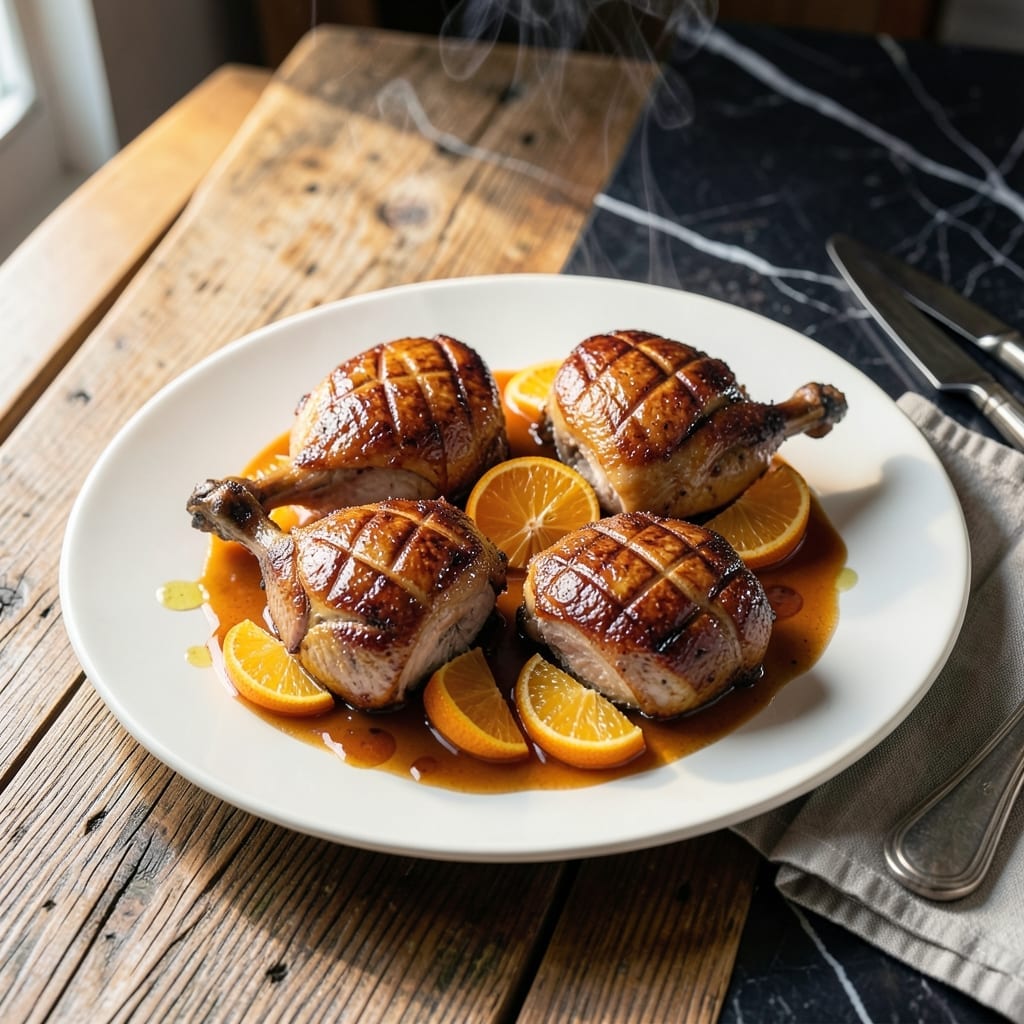
Mastering this classic French dish brings restaurant-quality elegance to your home kitchen. The balance of sweet and tangy orange glaze with perfectly crisp skin creates a dining experience worth the effort.
I developed this method after studying traditional techniques, focusing on achieving that signature glossy finish. The key is reducing the sauce to a syrupy consistency before glazing the duck during its final minutes in the oven.
You’ll end up with tender, juicy meat under a mahogany-colored crust, each bite delivering bright citrus notes against rich duck flavor. The presentation alone will impress any dinner guest.
Serve with roasted potatoes or seasonal vegetables to complete the meal. Here’s how to create this showstopping centerpiece.
Ingredients for Duck a L’orange Recipe Gordon Ramsay
Elegant yet approachable ingredients for a French classic worth mastering at home.
| Ingredient | Amount | Notes |
|---|---|---|
| Duck Legs 🦆 | 4 whole | Skin-on, excess fat trimmed |
| Navel Oranges 🍊 | 3 whole | Zested and juiced |
| Granulated Sugar 🍚 | ½ cup | For caramelizing sauce |
| White Wine Vinegar 🍷 | ¼ cup | Balances sweetness |
| Dry White Wine 🍾 | ½ cup | Sauvignon Blanc preferred |
| Chicken Stock 🥣 | 1 cup | Low-sodium for control |
| Unsalted Butter 🧈 | 4 tbsp | Cold, cubed for sauce |
| Shallots 🧅 | 2 whole | Finely minced |
| Fresh Thyme Sprigs 🌿 | 4 pieces | Plus extra for garnish |
| Kosher Salt 🧂 | 1 ½ tsp | Diamond Crystal preferred |
| Ground Black Pepper 🌶️ | ½ tsp | Freshly cracked |
| Grand Marnier 🥃 | 2 tbsp | Optional but authentic |
The duck matters most here. Muscovy duck legs from D’Artagnan or Whole Foods have the perfect fat-to-meat ratio for crisp skin. Look for skin that’s thick and unblemished (the good stuff, not the pre-packaged kind). Fresh thyme makes a difference—grab a bunch from the produce section rather than dried. The oranges should be firm and heavy for their size, signaling maximum juice.
No duck legs? Chicken thighs with skin work in a pinch, though the flavor won’t be as rich. Out of Grand Marnier? Cointreau or triple sec at half the amount gets you close. For the wine, any dry white works (Sauv Blanc, Pinot Grigio). The vinegar can be apple cider in a bind, but white wine vinegar’s sharper bite balances the orange best. Skip the pre-minced shallots—the texture’s all wrong.
The glaze can be made 1 day ahead and reheated gently. Duck legs keep in the fridge 2-3 days before cooking, or freeze for 3 months. Always bring the meat to room temperature before roasting—that’s non-negotiable for even cooking.
Why You’ll Love This Recipe
- One Pan Wonder: I sear the duck legs, then let the oranges and wine do the work—minimal cleanup, maximum flavor.
- Sweet-Tangy Magic: The caramelized sugar and vinegar create this glossy, citrusy glaze that clings to the duck like it was made for it.
- Dinner Party Star: Honestly, it looks fancy but takes less effort than you’d think—ideal for impressing guests without the stress.
- Leftovers? Even Better: The flavors deepen overnight, so I make extra just to savor that next-day richness.
Step-by-Step Instructions for Duck a l’Orange
This method delivers crisp skin and a perfectly balanced citrus sauce every time.
Step 1: Score and Season the Duck Legs
Pat the 4 whole Duck Legs completely dry with paper towels. Using a sharp knife, score the skin in a crosshatch pattern, being careful not to cut into the meat. This helps render the fat and creates crispy skin.
Season both sides generously with 1.5 tsp Kosher Salt and 0.5 tsp Ground Black Pepper. Place the duck legs skin-side up on a wire rack set over a plate and refrigerate uncovered for 1 hour. This drying step ensures maximum crispness.
Step 2: Sear and Render the Duck Fat
Place the duck legs skin-side down in a cold, heavy-bottomed skillet. Turn the heat to medium and cook undisturbed for 8-10 minutes until the skin is deep golden brown and much of the fat has rendered.
Flip the duck legs and cook for another 5-7 minutes until the meat is cooked through. Transfer the duck to a plate and pour off all but 2 tablespoons of the rendered fat from the skillet. The duck should reach an internal temperature of 165°F.
Step 3: Caramelize the Sugar for the Sauce
Return the skillet to medium heat and add the 0.5 cup Granulated Sugar. Cook without stirring until the sugar melts and turns a deep amber color, about 5-7 minutes. Watch carefully as it can burn quickly.
Immediately remove from heat and carefully add 0.25 cup White Wine Vinegar (it will bubble vigorously). Stir to dissolve any sugar clumps. Add the 2 whole Shallots and cook over medium-low heat for 2 minutes until softened.
Step 4: Build the Orange Sauce
Add the 0.5 cup Dry White Wine and 2 tbsp Grand Marnier to the skillet. Bring to a simmer and cook for 2-3 minutes until reduced by half. Add the 1 cup Chicken Stock, zest, and juice from 3 whole Navel Oranges, and 4 pieces Fresh Thyme Sprigs.
Simmer for 5-7 minutes until slightly thickened. Remove from heat and whisk in the 4 tbsp Unsalted Butter, one cube at a time, until the sauce is smooth and glossy. Strain the sauce through a fine-mesh sieve for a silky texture.
Step 5: Glaze and Serve
Return the duck legs to the skillet with the sauce. Spoon the sauce over the duck and simmer for 1-2 minutes to heat through and coat the legs evenly. The sauce should cling beautifully to the crisp skin.
Garnish with additional orange zest and fresh thyme sprigs. Serve immediately with the sauce spooned over each portion. The contrast of crisp skin, tender meat, and tangy-sweet sauce is what makes this dish exceptional.
Pro Tips For Making Duck A L’Orange Recipe Gordon Ramsay
- Score the Skin: Use a sharp knife to crosshatch the duck skin before cooking—this renders the fat evenly and gives you that crisp finish. I learned this the hard way after ending up with chewy skin my first few tries.
- Zest First, Juice Later: Grate the orange zest before halving and juicing the oranges—it’s nearly impossible to zest a juiced half. Sounds obvious, but I’ve ruined a few oranges by reversing the order.
- Reduce the Sauce Slowly: Let the wine, vinegar, and sugar simmer at medium-low for 10-12 minutes to thicken properly. High heat makes it reduce too fast and taste harsh—ask me how I know.
- Rest the Duck: Give the duck legs a solid 10 minutes under foil after cooking. It keeps the meat juicy while you finish the sauce, and yes, it’s worth the wait.
Creative Variations of This Recipe
Modern Bistro Twist
Swap navel oranges for blood oranges—their deep red flesh adds dramatic color and a slightly raspberry note. I also add 1 tsp pink peppercorns to the sauce for a subtle floral heat that pairs beautifully with the citrus. 🌟
Asian Fusion Version
Replace the Grand Marnier with 1 tbsp fresh ginger and add 2 star anise pods while reducing the sauce. Use Mandarin oranges for a sweeter, more aromatic profile. The result feels like a sophisticated take on Peking duck.
Spiced Winter Variation
Add 1 cinnamon stick and 3 whole cloves to the sauce as it simmers. These warming spices transform this into a perfect cold-weather dish. I find this version pairs wonderfully with roasted root vegetables.
Quick Weeknight Hack
Use duck breast instead of legs for a faster cook time—6-8 minutes per side in the pan. The sauce stays the same, but you’ll want to slice the breast thinly against the grain before glazing.
Vegan Adaptation
Replace duck with thick portobello mushroom caps. Sear them skin-side down first, then flip and glaze with the same sauce. The meaty texture of portobellos holds up surprisingly well to the bold orange flavors. 💡
Gourmet Garnish
For restaurant-worthy presentation, top each serving with candied orange slices and a sprinkle of flaky sea salt. I use Maldon salt for its delicate crunch and clean finish.
Nutrition Facts
Frequently Asked Questions
What’s the best way to get crispy skin?
Score the skin in a crosshatch pattern and refrigerate uncovered for 1 hour to dry it out. Sear skin-side down in a cold pan for 8-10 minutes without moving.
Can I make the sauce ahead of time?
Yes! Prepare the sauce up to 1 day in advance and store it in an airtight container in the fridge. Reheat gently before glazing.
What should I serve with this dish?
Pair it with roasted potatoes or seasonal vegetables. The rich, citrusy sauce also complements buttery mashed potatoes or wild rice.
Why did my sauce turn out bitter?
Caramelized sugar can burn if cooked too long. Remove the pan from heat immediately when the sugar reaches a deep amber color.

- 6 Egg Cake Recipe with Oil: Light as Air With Buttery Moisture - October 4, 2026
- 4 Bean Casserole Recipe: One-Pan Heartiness With Smoky Paprika Depth - October 4, 2026
- 3-Ingredient Keto Mug Cake Recipe: Microwave Magic in 2 Minutes - October 4, 2026