
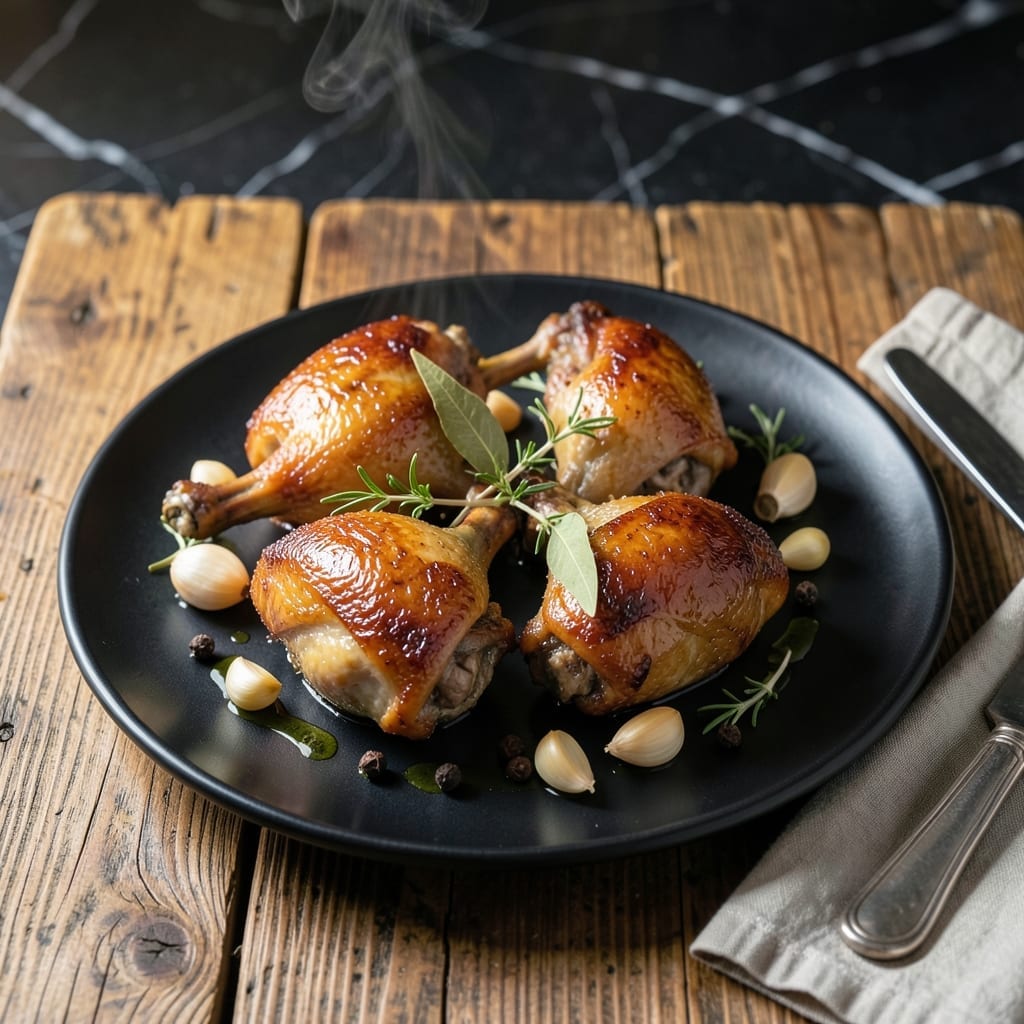
Mastering duck confit at home delivers restaurant-quality results with surprisingly simple techniques. This method transforms tough duck legs into silky, fall-off-the-bone meat under impossibly crispy skin, all while filling your kitchen with an irresistible aroma.
The secret lies in the slow cooking process, where duck legs are first cured with salt and herbs, then gently poached in their own fat. This traditional French technique preserves the meat while rendering the skin to perfect, golden crispness. The result is a dish that balances rich, tender meat with a satisfying crunch.
What emerges from the oven is duck confit with a deep, complex flavor that develops through the slow cooking process. The meat becomes fork-tender, while the skin achieves that coveted shatteringly crispy texture. Every bite offers a perfect contrast of textures and flavors.
Serve this as a main course with a simple green salad or roasted vegetables to let the duck shine. The technique may seem involved, but the hands-off cooking time makes it surprisingly approachable.
Ingredients for Duck Confit Recipe Gordon Ramsay
Restaurant-quality ingredients transform duck legs into silky, crispy perfection with traditional French technique.
| Ingredient | Amount | Notes |
|---|---|---|
| Duck Legs 🦆 | 4 whole | Skin-on, excess fat trimmed |
| Kosher Salt 🧂 | ½ cup | Diamond Crystal preferred |
| Fresh Thyme Sprigs 🌿 | 8 whole | Stems intact for curing |
| Bay Leaves 🍃 | 4 whole | Dried, whole leaves |
| Black Peppercorns 🌶️ | 1 tbsp | Lightly crushed |
| Garlic Cloves 🧄 | 6 cloves | Lightly smashed, unpeeled |
| Duck Fat 🫒 | 4 cups | Rendered, for confit |
| Shallots 🧅 | 4 whole | Peeled and halved |
| Juniper Berries 🌿 | 10 pieces | Lightly crushed |
| Fresh Rosemary Sprigs 🌿 | 4 whole | For aromatic depth |
| Dry White Wine 🍷 | ½ cup | For deglazing pan |
The duck legs are non-negotiable—source skin-on legs from a specialty butcher like D’Artagnan or Snake River Farms for optimal fat content. Kosher salt must be Diamond Crystal; its coarse texture dissolves evenly during the curing process. Fresh thyme and rosemary should be vibrant green, not woody. For duck fat, render your own from trimmings or purchase Epicurean or Fatworks brands.
No duck fat on hand? Replace with rendered goose fat or a mix of olive oil and butter (though the flavor won’t be as authentic). Juniper berries can be omitted, but they add the classic confit depth—crush them lightly to release oils. Shallots at twice the amount work if you’re doubling the batch. Avoid iodized salt; it imparts a metallic taste during the long cure.
Cured duck legs keep refrigerated in their fat for up to 3 weeks—the flavor deepens over time. Rendered duck fat stores indefinitely in the fridge. For best texture, bring legs to room temperature before the final crisping step. Use leftover fat for roasting potatoes or sautéing vegetables.
Why You’ll Love This Recipe
- Set and Forget: Honestly, just salt, herbs, and time do all the work—no babysitting required.
- Crispy Perfection: That skin shatters like glass, while the meat stays fall-off-the-bone tender thanks to the thyme and bay.
- Dinner Party Star: I serve this with roasted potatoes and a sharp salad, and suddenly I look like a pro.
- Leftovers for Days: The confit keeps in its fat for weeks, so I pull some out for quick meals when I’m too lazy to cook.
Step-by-Step Instructions for Duck Confit
Master the technique that transforms duck legs into tender, fall-off-the-bone perfection with crisp golden skin.
Step 1: Cure the Duck Legs with Aromatics
Begin by thoroughly rubbing the 4 whole Duck Legs with the 0.5 cup Kosher Salt on all sides, ensuring complete coverage. This dry cure draws out moisture while seasoning deeply. I use Diamond Crystal for its clean flavor and reliable results.
In a large dish, combine the salted duck legs with the 8 whole Fresh Thyme Sprigs, 4 whole Bay Leaves, 1 tbsp Black Peppercorns, 6 cloves Garlic Cloves, 10 pieces Juniper Berries, and 4 whole Fresh Rosemary Sprigs. The juniper adds a subtle piney depth that complements the richness of the duck.
Cover and refrigerate for 12-24 hours. This curing time is non-negotiable—it ensures proper seasoning throughout the meat and begins the preservation process that defines confit.
Step 2: Rinse and Dry the Duck Legs
After curing, remove the duck legs from the refrigerator and rinse them under cold water to remove the excess salt. Pat them completely dry with paper towels—any remaining moisture will interfere with the fat’s ability to properly confit the meat.
This drying step also helps achieve that coveted crisp skin later. I like to let the legs air-dry on a wire rack for 30 minutes at room temperature while I prepare the cooking vessel. The 4 cups Duck Fat should be at room temperature as well to prevent thermal shock when submerging the meat.
Step 3: Slow-Cook in Duck Fat
In a deep oven-safe dish or Dutch oven, melt the 4 cups Duck Fat over low heat. The fat should be just warm enough to melt but not hot. Submerge the duck legs completely in the fat, adding the 4 whole Shallots around them for additional flavor.
Place the dish in a preheated 300°F oven. The low temperature ensures gentle cooking without frying. Cook uncovered for 2-2.5 hours until the meat is fork-tender but not falling apart. You’ll know it’s ready when a knife slides in with no resistance and the meat pulls away from the bone easily.
Step 4: Crisp the Skin and Deglaze
Carefully remove the duck legs from the fat (save the fat for future cooking—it’s liquid gold). Place them skin-side down in a clean skillet over medium heat. The residual fat will render and crisp the skin to a deep golden brown in 3-4 minutes per side.
Once crisp, transfer the legs to a plate. Pour off excess fat from the skillet, then deglaze with the 0.5 cup Dry White Wine, scraping up all the browned bits. Reduce the wine by half to create a quick pan sauce that captures all the concentrated duck flavor.
Serve the duck legs immediately with the pan sauce drizzled over the top. The contrast of crisp skin and silky meat is what makes this dish extraordinary.
Pro Tips For Making Duck Confit Recipe Gordon Ramsay
- Salt Overnight: I learned this the hard way—give the duck legs a full 12-24 hours in the fridge with the salt, thyme, and peppercorns. Anything less and the cure won’t penetrate deep enough for that perfect texture.
- Use Enough Fat: Sounds obvious, but submerge those legs completely in duck fat or they’ll dry out. A deep pot helps—my first batch was half-exposed and came out tough.
- Low and Slow: Keep the oven at 150°C (300°F) max. Higher heat renders the fat too fast and leaves the meat stringy. I rushed it once and regretted it immediately.
- Save the Fat: After cooking, strain and store the fat—it’s liquid gold for roasting potatoes or frying eggs later. I used to toss it until I realized how much flavor it adds to other dishes.
Creative Variations of This Dish
Honey-Glazed Variation
For a sweet and savory twist, brush the crisped duck legs with 2 tbsp honey mixed with 1 tbsp Dijon mustard during the final 2 minutes of searing. The honey caramelizes beautifully, creating a glossy, sticky coating that contrasts with the rich meat. 💛
Asian Five-Spice
Add 1 tsp five-spice powder to the curing salt along with 1-inch piece of fresh ginger and 2 star anise pods. This Chinese-inspired version pairs wonderfully with steamed bok choy and jasmine rice. The aromatic spices infuse the fat for layers of complexity.
Herb-Crusted Confit
After crisping, press a mixture of ½ cup panko breadcrumbs, 2 tbsp chopped parsley, and 1 tbsp chopped chives onto the skin side. Return to the oven at 400°F for 3-4 minutes until golden. This adds a delightful textural contrast.
Duck Confit Tacos
Shred the crisped duck meat and serve in warm corn tortillas with pickled red onions, diced avocado, and a drizzle of crema. The rich duck pairs perfectly with the brightness of lime and cilantro. This fusion version is always a crowd-pleaser. 🔥
Cassoulet Style
Layer the confit duck legs with white beans, sausage, and tomato paste in a Dutch oven. Bake at 325°F for 1 hour until bubbly. This hearty French casserole showcases the duck’s ability to elevate rustic dishes.
Citrus-Infused Confit
Add 2 strips orange zest and 1 strip lemon zest to the curing salt. The citrus brightens the richness of the duck, making it perfect for spring or summer meals. I love this with a simple arugula salad with lemon vinaigrette.
Nutrition Facts
Frequently Asked Questions
Why cure the duck for so long?
The 12-24 hour cure draws out moisture and seasons the meat deeply. This step ensures the final dish has concentrated flavor and the signature confit texture.
Can I use chicken instead of duck?
Not recommended—chicken lacks the fat content needed for proper confit. Duck’s high fat content is what creates the signature silky texture and rich flavor.
What’s the best way to store leftovers?
Submerge cooled duck legs in their cooking fat in an airtight container. Stored this way in the fridge, they’ll keep for up to 3 weeks.
How do I get the skin extra crispy?
Pat the legs completely dry before the final sear. Use medium heat and press down lightly with a spatula during the 3-4 minutes per side.

- 6 Egg Cake Recipe with Oil: Light as Air With Buttery Moisture - October 4, 2026
- 4 Bean Casserole Recipe: One-Pan Heartiness With Smoky Paprika Depth - October 4, 2026
- 3-Ingredient Keto Mug Cake Recipe: Microwave Magic in 2 Minutes - October 4, 2026