
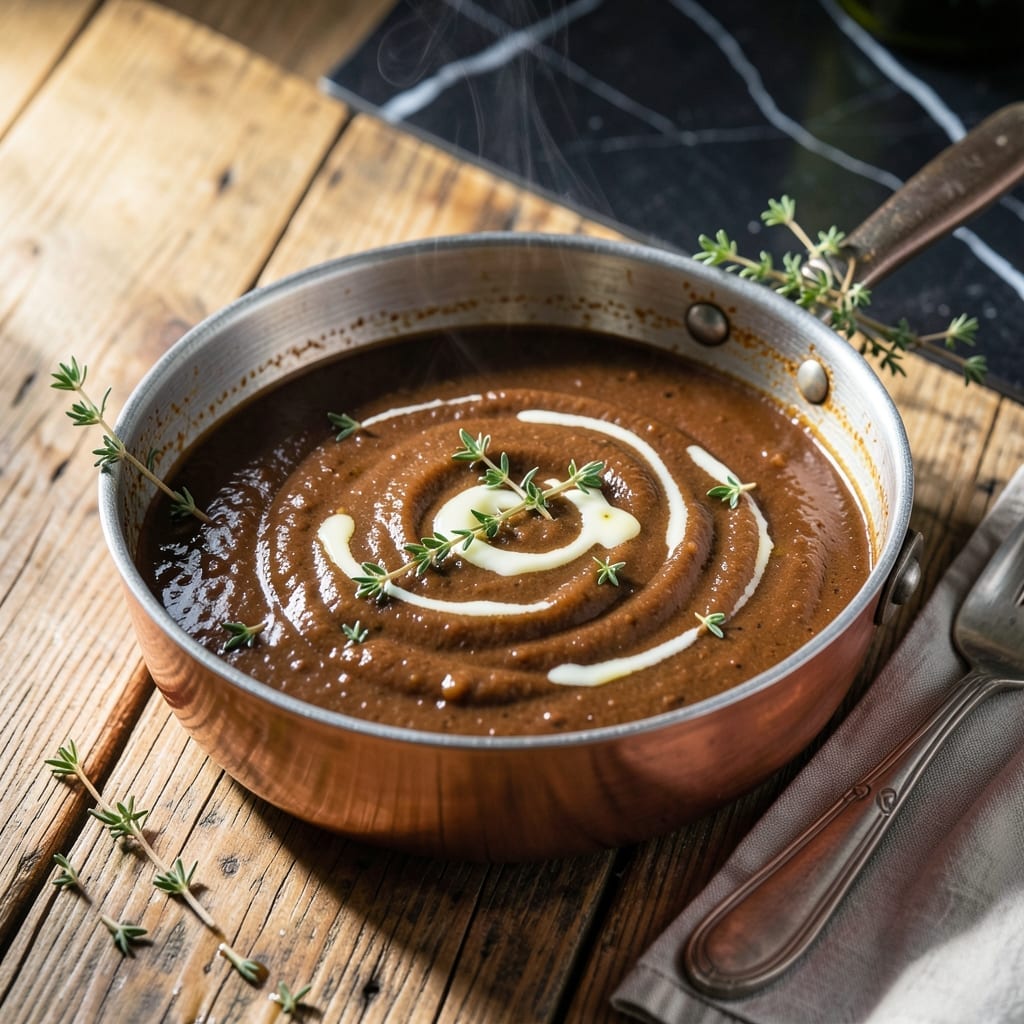
This duck gravy transforms your roast duck drippings into a rich, savory sauce that elevates every bite. No waste, just pure flavor extracted from the pan.
The process is straightforward: skim the fat, reduce the drippings with stock, and thicken to your preferred consistency. A splash of wine adds depth if you have it on hand.
What results is a glossy, umami-packed gravy with intense duck flavor. It clings beautifully to meat and potatoes without overpowering them.
Make a small batch fresh and use within 3 days, or freeze for later. The flavor only improves as it sits.
Ingredients for Duck Gravy
Transform pan drippings into this luxurious sauce with just eight ingredients.
| Ingredient | Amount | Notes |
|---|---|---|
| Duck Drippings 🦆 | 1 cup | From roasted duck, fat skimmed |
| Duck or Chicken Stock 🥣 | 1 ½ cups | Low-sodium preferred for control |
| Dry Red Wine 🍷 | ¼ cup | Optional but adds depth |
| All-Purpose Flour 🌾 | 2 tbsp | For thickening the gravy |
| Unsalted Butter 🧈 | 2 tbsp | Cold, cubed for finishing |
| Fresh Thyme Leaves 🌿 | 1 tsp | Or 0.5 tsp dried thyme |
| Kosher Salt 🧂 | ½ tsp | Adjust to taste after reducing |
| Freshly Ground Black Pepper 🌶️ | ½ tsp | Adds subtle heat and aroma |
The drippings are everything here. After roasting duck, strain and skim off excess fat—you want the flavorful juices, not the grease. Use homemade duck stock if you’ve got it, but a good low-sodium chicken stock (like Swanson or Imagine) works just fine. The wine is optional but adds a layer of complexity—Cabernet Sauvignon or Merlot are solid picks.
No wine? Substitute with extra stock and a splash of balsamic vinegar. Out of fresh thyme? Dried thyme at half the amount works, or skip it entirely if needed. The flour is for thickening, but for gluten-free, cornstarch slurry (1 tbsp cornstarch + 1 tbsp water) works too. If your gravy is too thin, simmer longer. Too thick? Thin with a bit more stock.
Fresh gravy keeps in the fridge for 3 days—the flavor deepens as it sits. Freeze in airtight containers for up to 3 months. Reheat gently on the stove, adding a splash of water or stock if it thickens too much. Always skim any solidified fat before reheating.
Why You’ll Love This Recipe
- One Pan Wonder: I just use the drippings from roasting the duck—no extra pots, no extra mess.
- Rich & Deep: The red wine and duck stock create this velvety, savory depth that’s honestly restaurant-quality.
- Holiday to Weeknight: I’ve served it with Christmas duck and also just poured it over mashed potatoes on a random Tuesday.
- Stretches the Meal: A little flour and butter turn those precious drippings into enough gravy to feed everyone at the table.
Step-by-Step Instructions for Duck Gravy
Transform your roast duck experience with this simple yet sophisticated sauce that comes together in minutes.
Step 1: Skim and Measure the Duck Drippings
After roasting your duck, carefully pour the drippings from the pan into a measuring cup. I always let it settle for 2-3 minutes so the fat separates from the juices. You’ll need exactly 1 cup of these rich duck drippings for the base of your gravy.
If you have more than a cup, skim off the excess fat from the top—this prevents your gravy from becoming greasy. The rendered fat is liquid gold for flavor, but too much will make the sauce heavy rather than velvety.
Step 2: Create a Roux with Flour and Drippings
Return 1 cup Duck Drippings to your roasting pan or a saucepan over medium heat. Whisk in the 2 tbsp All-Purpose Flour until completely smooth and free of lumps. This mixture will start to bubble and thicken after about 2 minutes of constant whisking.
Keep the heat at medium—too high and you risk burning the flour, which would give your gravy a bitter taste. You want the roux to cook until it turns a light golden color, which develops a subtle nutty depth that complements the duck beautifully.
Step 3: Deglaze and Simmer with Wine and Stock
Slowly pour in the 1.5 cups Duck or Chicken Stock while whisking continuously to prevent clumping. Then add the 0.25 cup Dry Red Wine, which adds a sophisticated depth to the sauce. Bring the mixture to a gentle simmer.
At this point, add the 1 tsp Fresh Thyme Leaves, 0.5 tsp Kosher Salt, and 0.5 tsp Freshly Ground Black Pepper. Simmer for 8-10 minutes until the gravy thickens enough to coat the back of a spoon. The alcohol from the wine will cook off, leaving behind a rich, rounded flavor.
Step 4: Finish with Cold Butter for Silkiness
Remove the gravy from heat and let it sit for 30 seconds to stop the cooking process. Now whisk in the 2 tbsp Unsalted Butter, one cube at a time, until fully melted and emulsified. The cold butter creates a glossy, velvety texture that elevates the gravy from good to extraordinary.
Taste and adjust seasoning if needed—remember that duck drippings can vary in saltiness depending on how your bird was seasoned. The gravy should be rich and deeply savory with a hint of herbal brightness from the thyme.
Serve immediately while hot, as it will thicken slightly as it cools. This gravy pairs perfectly with slices of roast duck, mashed potatoes, or even a simple crusty bread for soaking up every last drop.
Pro Tips For Making Duck Gravy
- Skim the Fat First: I learned this the hard way—duck drippings are rich, but too much fat makes greasy gravy. Spoon off the clear fat from the drippings before making your roux, leaving just the flavorful juices.
- Deglaze While Hot: After roasting, pour the red wine into the hot pan immediately to scrape up all those sticky brown bits—this is where the deep, meaty flavor hides.
- Whisk Constantly: When adding stock to your flour-butter roux, whisk nonstop over medium heat to prevent lumps. Sounds tedious, but it’s the only way to get that silky texture.
- Use Cold Stock: Adding cold stock slowly to your hot roux gives you more control over thickening. Hot stock can cause clumping, and nobody wants lumpy duck gravy.
Troubleshooting Great duck gravy
Gravy Too Thin
If your gravy isn’t thickening, simmer it longer over medium-low heat. I find 5-7 additional minutes usually does the trick. For faster results, mix 1 tbsp cornstarch with 1 tbsp cold water and whisk it in. 💡
Gravy Too Thick
When it’s too thick, whisk in ¼ cup warm Duck or Chicken Stock at a time until it reaches your desired consistency. Avoid adding cold liquid, as it can cause the gravy to seize up. Stir well between additions.
Lumpy Gravy
Lumps often form if the flour isn’t fully incorporated. Fix this by straining the gravy through a fine-mesh sieve. For stubborn lumps, a quick blend with an immersion blender smooths it out perfectly.
Greasy Gravy
If your gravy looks greasy, it means too much fat was left in the drippings. Skim the surface with a paper towel or ladle off the excess fat. Chilling the gravy and removing the solidified fat also works. ❄️
Bland Flavor
Boost the flavor with a splash of Dry Red Wine or a pinch of Kosher Salt. A dash of Worcestershire sauce adds depth if you have it on hand. Taste as you go to avoid over-seasoning.
Gravy Separated
If the gravy separates, whisk in 1 tbsp cold Unsalted Butter to bring it back together. Keep the heat low and stir constantly. This emulsifies the fat and liquid for a silky finish.
Nutrition Facts
Frequently Asked Questions
Can I make this ahead of time?
Yes! Prepare the gravy up to 3 days ahead and store it in an airtight container in the fridge. Reheat gently on the stove, adding a splash of stock if it thickens too much.
What if I don’t have duck drippings?
Use 2 cups chicken stock with 1 tbsp duck fat or butter for richness. While not identical, this still creates a delicious sauce. Simmer with thyme for depth.
How do I fix gravy that’s too salty?
Stir in 1-2 tbsp unsalted stock or water to dilute. Adding a splash of red wine or a pinch of sugar can balance the saltiness.
Can I freeze the gravy?
Freeze in airtight containers for up to 3 months. Thaw overnight in the fridge and reheat slowly, stirring occasionally.

- 6 Egg Cake Recipe with Oil: Light as Air With Buttery Moisture - October 4, 2026
- 4 Bean Casserole Recipe: One-Pan Heartiness With Smoky Paprika Depth - October 4, 2026
- 3-Ingredient Keto Mug Cake Recipe: Microwave Magic in 2 Minutes - October 4, 2026