
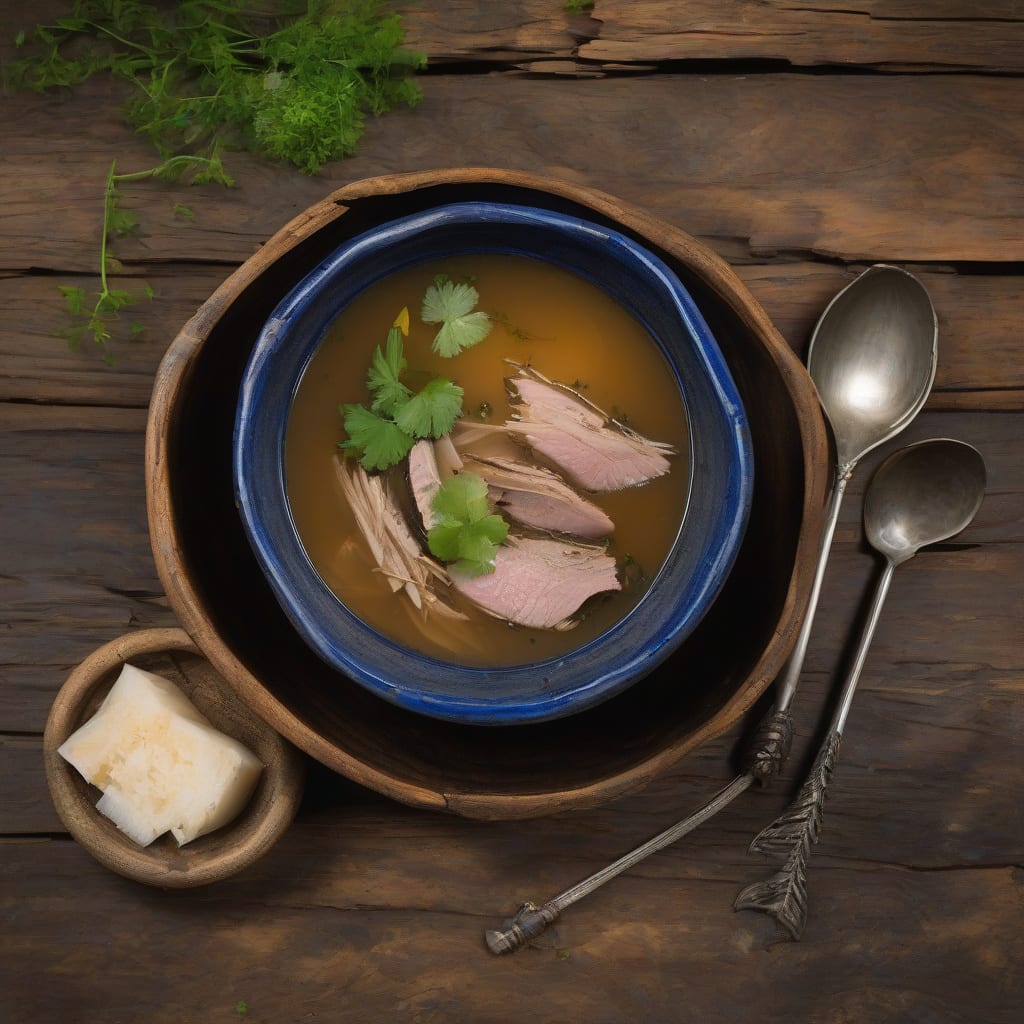
Transforming a duck carcass into a rich, comforting soup is a culinary art that reduces waste and delivers incredible flavor. By simmering the bones with vegetables and aromatics, you create a nourishing broth that’s both satisfying and resourceful.
This duck soup recipe showcases the value of using every part of the bird, resulting in a delicious meal that’s ready in about 1.5 hours, with most of that time being hands-off simmering.
Ingredients for Duck Soup Recipe from Carcass
Simple, nourishing ingredients come together to create this comforting duck soup.
| Ingredient | Amount | Notes |
|---|---|---|
| Duck Carcass 🍗 | 1 whole | From roasted duck, bones broken |
| Carrots 🥕 | 2 whole | Peeled, roughly chopped |
| Celery Stalks 🥕 | 2 stalks | Roughly chopped |
| Onion 🧅 | 1 whole | Peeled, quartered |
| Garlic Cloves 🧄 | 4 cloves | Peeled, smashed |
| Bay Leaves 🌿 | 2 whole | Fresh or dried |
| Thyme Sprigs 🌿 | 4 sprigs | Fresh, tied with kitchen twine |
| Black Peppercorns 🌶️ | 1 tsp | Whole, not ground |
| Salt 🧂 | 1 tsp | Kosher salt preferred |
| Water 💧 | 8 cups | Cold, filtered water |
| Fresh Parsley 🌿 | ¼ cup | Chopped, for garnish |
The duck carcass is the star here—make sure to break it into pieces for maximum flavor. Most butchers will give you necks and backs if you ask nicely. For vegetables, organic carrots and celery work best. I usually grab mine from Whole Foods when I’m doing a big batch.
No fresh thyme? Dried thyme works at one-third the amount. Want more depth? Roast the vegetables 20 minutes before simmering. The bay leaves can be skipped if you don’t have them—the soup will still be delicious. If using dried bay leaves, use one-third the amount as fresh.
This soup improves with time—24 hours in the fridge is best. Keeps for 4-5 days refrigerated, freezes for 3 months. I portion it into containers so lunches are sorted for the week. Reheat gently to preserve the delicate flavors.
Why You’ll Love This Recipe
- Quick Start: I can get this duck soup simmering in under 30 minutes, and it’s honestly a weeknight lifesaver.
- Rich Flavor: The combination of roasted duck carcass, caramelized onions, and sautéed garlic cloves creates a depth of flavor that’s ridiculously good.
- Meal Prep Magic: I make a big batch on Sunday and enjoy it throughout the week – it’s perfect for busy days when I need a comforting, protein-packed lunch.
- Zero Waste: Using the duck carcass to make soup feels like I’m getting two meals for the price of one, and that’s a major win in my book.
Step-by-Step Instructions for Duck Soup from Carcass
Here’s the method to create a rich, comforting soup using every last bit of your roasted duck.
Step 1: Prepare the Carcass and Vegetables
Start by breaking down the 1 whole Duck Carcass into smaller pieces if it isn’t already. I like to use kitchen shears for this job—they make quick work of cutting through bones. Next, prepare the vegetables: peel and roughly chop the 2 whole Carrots, roughly chop the 2 stalks Celery Stalks, and quarter the 1 whole Onion. These rough cuts are perfect because they’ll be strained out later.
Smash the 4 cloves Garlic Cloves with the flat of your knife to release their flavor. I always use the side of my chef’s knife for this—it helps release the natural oils. Make sure you have the 2 whole Bay Leaves and 4 sprigs Thyme Sprigs ready; if your thyme sprigs aren’t already tied together with kitchen twine, take a moment to do that now.
Step 2: Simmer the Broth
In a large stockpot (at least 12-quart capacity), combine the broken 1 whole Duck Carcass, chopped 2 whole Carrots, 2 stalks Celery Stalks, quartered 1 whole Onion, smashed 4 cloves Garlic Cloves, 2 whole Bay Leaves, and 4 sprigs Thyme Sprigs. Pour in the 8 cups Water—make sure it’s cold and filtered. Add the 1 tsp Black Peppercorns and 1 tsp Salt. I prefer using kosher salt for its cleaner flavor profile.
Bring the mixture to a gentle boil over medium heat, then reduce to a simmer. Skim off any impurities that rise to the surface during the first 20 minutes of simmering. Let the broth cook for at least 2 hours, or longer if you have time—the longer it simmers, the richer it becomes. You’ll know it’s ready when the broth is deeply flavored and the vegetables are completely tender.
Step 3: Strain and Clarify the Broth
After the broth has finished simmering, remove the pot from the heat and let it cool slightly. Strain the broth through a fine-mesh sieve into a clean pot or large bowl, discarding the solids. I like to do this in batches if necessary to avoid overcrowding the sieve. If you have time, refrigerate the broth for a few hours or overnight to allow the fat to solidify on top, then skim it off.
For a clearer broth, you can strain it again through a cheesecloth-lined sieve. This step is optional but gives you a beautifully clear soup. Bring the strained broth back to a gentle simmer before serving.
Step 4: Serve the Soup
Ladle the hot broth into bowls. I like to garnish with a sprinkle of the 0.25 cup Fresh Parsley, chopped just before serving. You can also add cooked noodles, rice, or vegetables if you like a heartier soup. The broth should be rich and deeply flavored, with a velvety texture from the duck’s bones. Serve immediately and enjoy!
Pro Tips For Making Duck Soup Recipe From Carcass
- Brown the Carcass: Get a good sear on the duck carcass before adding vegetables – it makes a real difference in the depth of flavor. I learned this the hard way after making it without browning first, and the difference is night and day.
- Chop Veggies Uniformly: Make sure your carrots, celery, and onion are roughly the same size so they cook evenly. This isn’t the prettiest method, but it ensures you don’t end up with some veggies mushy and others still crunchy.
- Don’t Overcook: Resist the urge to keep simmering the soup for hours – after about an hour and a half, the flavors have melded together and the meat is tender. Letting it go longer can make the meat fall off the bone, but it can also make the soup cloudy.
- Strain for Clarity: Strain the soup through a fine-mesh sieve before serving to get rid of excess fat and solids, making it look more appealing. I skip this when I’m lazy, but the soup is noticeably better when I don’t.
Wine and Beer Pairings for duck soup recipe from carcass
White Wine Pairings
For duck soup, a dry white wine with good acidity works beautifully. I recommend a Pinot Gris from Alsace or Oregon—its subtle notes of pear and spice complement the rich duck flavors without overpowering them. Alternatively, a Sauvignon Blanc from the Loire Valley adds a crisp, herbaceous contrast that cuts through the soup’s richness. 🍷
Beer Pairings
When it comes to beer, a light to medium-bodied option works best. I find that a Belgian Witbier or a crisp Pilsner cleanses the palate between spoonfuls. For something with a bit more complexity, try a German Kellerbier—its malty sweetness and moderate hop bitterness balance the savory duck broth nicely. The beer’s carbonation helps cut through the richness. 🍺
Consider the Flavor Profile
When choosing a beverage to pair with your duck soup, consider the dominant flavors. If you’ve added strong aromatics like garlic and thyme, a wine or beer with herbal notes will complement these flavors. If the soup has a clear, light broth, a crisp beverage will enhance its delicate nature. I often adjust my pairing based on the final seasoning and garnishes used in the soup.
Serving Temperature Matters
Serve your chosen wine or beer at the right temperature to enhance the experience. For white wines, aim for 45-55°F. Beers are more flexible, but keep them chilled: 40-50°F is ideal. This ensures that the beverage remains refreshing and complements the warm soup without overwhelming it.
Personal Preference
Ultimately, the best pairing is one you enjoy. I love experimenting with different wines and beers to find the perfect match for my duck soup. Whether you prefer a classic pairing or something more adventurous, the most important thing is that it tastes good to you. So don’t be afraid to try new options and discover your favorite combination!
Nutrition Facts
Frequently Asked Questions
Can I use a frozen duck carcass for this soup recipe?
Yes, you can use a frozen duck carcass, but
How long can I store the duck soup in the refrigerator?
You can store the duck soup in the refrigerator for up to 4-5 days.
Can I freeze the duck soup for later use?
Absolutely! You can freeze the duck soup for up to 3 months. Cool the soup completely, then transfer it to airtight containers or freezer bags. Label and date them, and store in the freezer. When you’re ready to eat it, thaw overnight in the refrigerator and reheat gently.
What can I add to make the soup more substantial?
You can add cooked noodles, rice, or vegetables to make the soup heartier. Some popular options include egg noodles, barley, or diced carrots and celery. Add your chosen ingredients just before serving and adjust the seasoning as needed.

- 6 Egg Cake Recipe with Oil: Light as Air With Buttery Moisture - October 4, 2026
- 4 Bean Casserole Recipe: One-Pan Heartiness With Smoky Paprika Depth - October 4, 2026
- 3-Ingredient Keto Mug Cake Recipe: Microwave Magic in 2 Minutes - October 4, 2026