
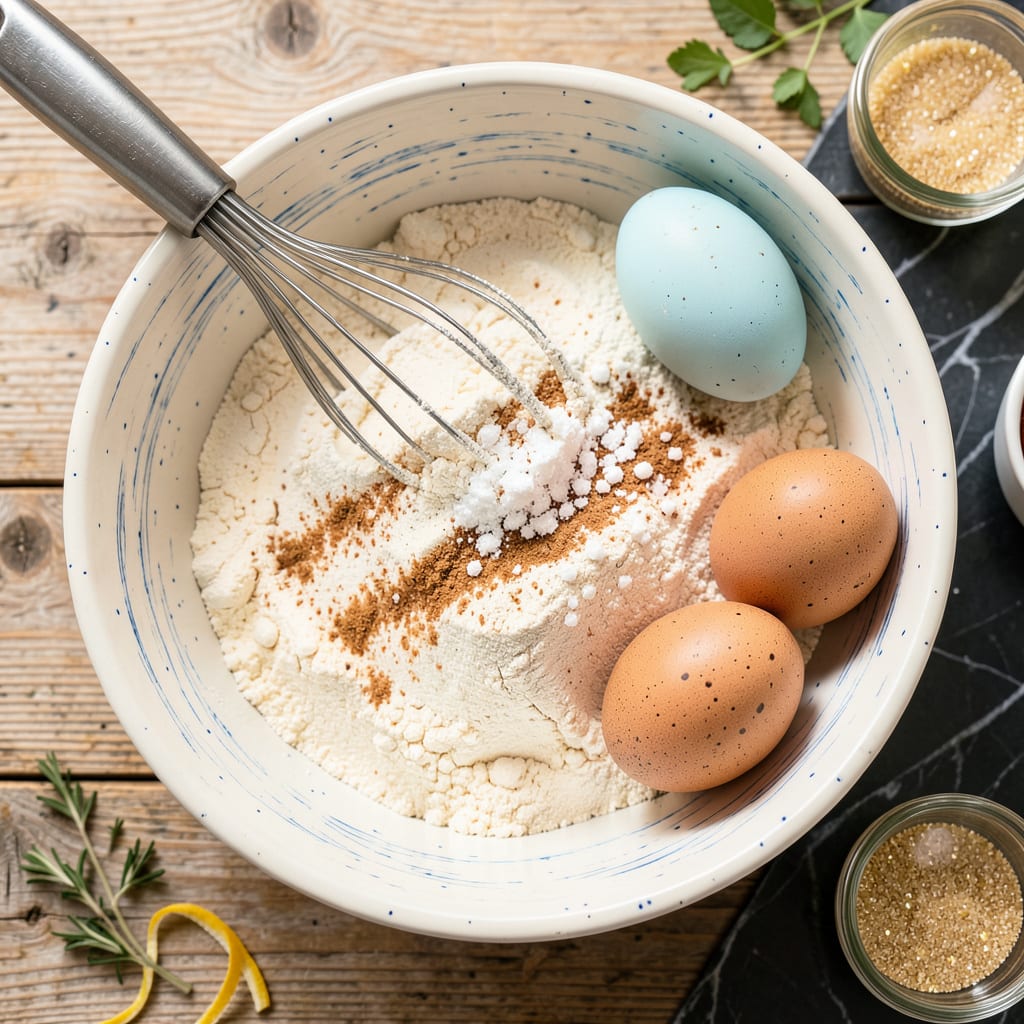
Baked donuts deliver all the indulgence of fried versions without the mess or guilt. This recipe simplifies the process using basic pantry ingredients and a standard donut pan—no yeast, no frying, and no complicated techniques required. The result is light, fluffy donuts with a tender crumb that bakes to golden perfection in under 20 minutes.
The vanilla glaze takes these from simple to spectacular, adding just enough sweetness without overwhelming the delicate cake base. What makes this method foolproof is the precise balance of wet and dry ingredients, ensuring consistent texture every time. Whether you’re making breakfast special or satisfying an afternoon craving, these donuts prove that homemade can be both effortless and extraordinary.
Ingredients for Easy Baked Donuts
Basic pantry staples transform into light, fluffy donuts with a delicate vanilla glaze—no yeast or frying required.
| Ingredient | Amount | Notes |
|---|---|---|
| All-Purpose Flour 🌾 | 1 ½ cups | Spoon and level for accuracy |
| Granulated Sugar 🍚 | ¾ cup | Fine white granulated preferred |
| Baking Powder 🧂 | 2 tsp | Aluminum-free for best rise |
| Ground Nutmeg 🌰 | ¼ tsp | Freshly grated for optimal aroma |
| Salt 🧂 | ½ tsp | Fine sea salt recommended |
| Large Eggs 🥚 | 1 whole | Room temperature for even mixing |
| Whole Milk 🥛 | ¾ cup | 2% or whole for richness |
| Unsalted Butter 🧈 | 3 tbsp | Melted and slightly cooled |
| Pure Vanilla Extract 🌿 | 1 tsp | High-quality for best flavor |
| Powdered Sugar 🍚 | 1 ½ cups | Sifted for smooth glaze |
| Heavy Cream 🥛 | 2 tbsp | Or whole milk for lighter glaze |
| Vegetable Oil Spray 🫒 | 1 can | For greasing donut pan |
[recipeingredientscaler]
The flour and leavening agents determine texture. King Arthur Flour provides consistent protein content for reliable rise, while aluminum-free baking powder prevents metallic aftertaste. Nutmeg should be freshly grated—pre-ground loses potency within 3 months. For dairy, organic whole milk enhances richness without overpowering. Butter quality matters: European-style (like Plugrá) offers higher fat content for tender crumb.
No whole milk? Unsweetened almond milk with 1 tsp vinegar mimics acidity. Egg substitute requires ¼ cup applesauce plus ½ tsp baking soda. For gluten-free adaptation, Bob’s Red Mill 1:1 blend works best—add 1 tbsp xanthan gum. Vanilla extract alternatives include vanilla bean paste (use half quantity) or 1 tsp vanilla sugar. Powdered sugar substitutes must be confectioners’ blend—regular granulated won’t dissolve properly in glaze.
Store dry ingredients in airtight containers at room temperature for up to 6 months. Refrigerate dairy components immediately after use. Prepared donuts keep 2 days at room temperature in sealed container, though glaze may soften. For longer storage, freeze unglazed donuts 1 month—thaw and glaze fresh. Always bring refrigerated ingredients to room temperature before mixing for optimal texture.
Why You’ll Love This Recipe
- No Yeast, No Stress: I’ve burned my share of fried donuts waiting for oil to heat—this one’s just mix, pipe, bake. The baking powder does all the lifting, so you skip the proofing and still get that perfect rise. Honestly, it’s the only donut recipe I’ll make on a whim now.
- Warm Spice Magic: That pinch of nutmeg in the batter? It’s the secret. The sugar caramelizes just enough in the oven, so you get this cozy, almost cinnamon-roll-like warmth without any fancy spices. My kids call them “cookie donuts” and fight over the last one.
- Breakfast or Dessert?: I’ve served these dusted with powdered sugar for weekend brunch and glaze-dipped as an after-school treat. They’re just sweet enough to feel indulgent but not so rich you’ll regret it. (Yes, even on a Tuesday night.)
- Pantry Staple Hero: No last-minute grocery runs—flour, sugar, baking powder, and that neglected jar of nutmeg in your cabinet are all you need. Double the batch and freeze extras; they reheat in 10 seconds and taste freshly baked. Saved me more than once when unexpected guests showed up.
Step-by-Step Instructions for Baked Donuts
This streamlined method delivers tender, cake-like donuts with minimal effort and maximum flavor.
Step 1: Prepare the Donut Batter
In a large mixing bowl, whisk together the 1.5 cups All-Purpose Flour, 2 tsp Baking Powder, 0.25 tsp Ground Nutmeg, and 0.5 tsp Salt until thoroughly combined. I recommend spooning and leveling the flour for accurate measurement—this prevents dense donuts. The nutmeg adds warmth without overpowering the vanilla flavor.
In a separate bowl, combine the 0.75 cup Granulated Sugar, 1 whole Large Egg, 0.75 cup Whole Milk, 3 tbsp Unsalted Butter (melted and cooled), and 1 tsp Pure Vanilla Extract. Whisk vigorously for 1-2 minutes until the mixture is smooth and slightly frothy. The sugar should be completely dissolved before proceeding.
Step 2: Combine Wet and Dry Ingredients
Create a well in the center of your dry ingredients and pour the wet mixture into it. Using a silicone spatula, fold the ingredients together with gentle, sweeping motions. Mix just until the flour is incorporated—overmixing will develop gluten and result in tough donuts. The batter should be thick but pourable, similar to pancake batter.
Let the batter rest for 5 minutes while you prepare your donut pan. This brief rest allows the baking powder to activate slightly and the flour to fully hydrate. You’ll notice the batter thickens slightly during this time, which is exactly what you want for proper structure.
Step 3: Pipe and Bake the Donuts
Preheat your oven to 350°F and thoroughly coat a donut pan with Vegetable Oil Spray. Transfer the batter to a piping bag or zip-top bag with one corner snipped off. Pipe the batter into each donut cavity, filling them about ⅔ full. This leaves room for rising without spilling over.
Bake for 10-12 minutes until the donuts spring back when lightly pressed and the edges are just beginning to turn golden brown. Avoid overbaking—they’ll continue to cook slightly from residual heat after removal. Let them cool in the pan for 3 minutes before transferring to a wire rack to cool completely.
Step 4: Prepare the Vanilla Glaze
While the donuts cool, whisk together the 1.5 cups Powdered Sugar and 2 tbsp Heavy Cream in a medium bowl. The glaze should be thick but pourable—adjust consistency by adding more powdered sugar for thickness or a splash of milk to thin. For optimal smoothness, sift the powdered sugar before mixing.
Dip the cooled donuts into the glaze, allowing excess to drip off. Place them on a parchment-lined tray and let the glaze set for 10 minutes before serving. The glaze should form a smooth, slightly crackly shell that contrasts beautifully with the tender crumb.
Pro Cooking Tips for This Recipe
Perfect Batter Consistency
The secret to light, fluffy donuts lies in the batter’s texture—it should resemble thick pancake batter. If yours feels too stiff, add 1-2 tbsp additional milk to loosen it. Conversely, if it’s too runny, fold in 1 tbsp extra flour. I always test by letting a spoonful drop from the spatula—it should hold its shape for 2 seconds before slowly melting back into the bowl. 💡
Pan Preparation Trick
Even with nonstick pans, I double-coat each cavity with vegetable oil spray and then dust lightly with flour. This creates a micro-thin barrier that ensures clean release every time. Tap out excess flour before adding batter. For extra insurance, let the pan warm in the oven for 2 minutes before piping—this helps the batter adhere properly during baking.
Baking Time Precision
Oven temperatures vary, so I start checking at 9 minutes by gently pressing a donut’s top. If it springs back immediately, they’re done. For even baking, rotate the pan 180 degrees halfway through. The edges should be just turning golden when you pull them—overbaking by even 1 minute can make them dry. I set my timer for 10 minutes and watch closely after that.
Glaze Temperature Control
Warm donuts absorb glaze better, but too hot and it will slide right off. Let them cool for exactly 5 minutes on the rack before dipping—they should feel warm but not hot to touch. For the glaze itself, if your kitchen is cold, warm the cream slightly (10 seconds in microwave) to prevent graininess. The ideal glaze temperature is 75-80°F for smooth application.
Piping Bag Hack
No piping bag? Use a gallon zip-top bag with one corner snipped off—cut a ½-inch opening for perfect control. Fold the top edges over to create a cuff, making it easier to fill without spills. I actually prefer this method because I can see exactly how much batter remains. For neater donuts, pipe in a continuous spiral starting from the center outward.
Second-Day Revival
If you have leftovers, revive them by placing on a baking sheet at 300°F for 3-4 minutes. This restores the just-baked texture without drying them out. For glazed donuts, store them separately from unglazed ones—the moisture in the glaze can make the others soggy. I keep them in a single layer in an airtight container with parchment between layers to prevent sticking. ✨
Nutrition Facts

- 6 Egg Cake Recipe with Oil: Light as Air With Buttery Moisture - October 4, 2026
- 4 Bean Casserole Recipe: One-Pan Heartiness With Smoky Paprika Depth - October 4, 2026
- 3-Ingredient Keto Mug Cake Recipe: Microwave Magic in 2 Minutes - October 4, 2026