
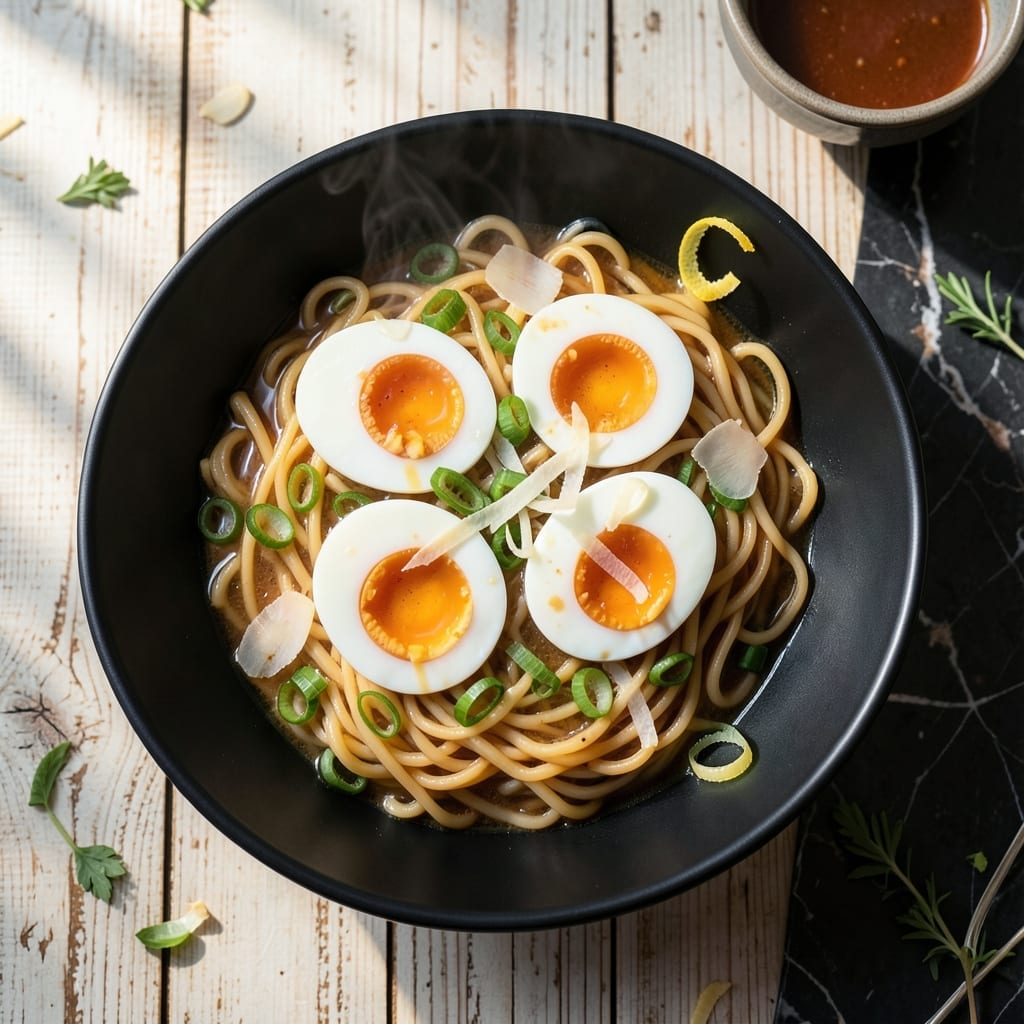
There’s something deeply satisfying about the combination of silky boiled eggs and slurpy noodles in a single bowl. This dish transforms humble ingredients into pure comfort food that warms both body and soul.
The secret lies in precise timing—achieving eggs with firm whites and creamy yolks while cooking noodles to the perfect al dente texture. A simple seasoned broth ties everything together, creating a cohesive dish that’s greater than the sum of its parts.
What emerges is a bowl of comfort that’s both hearty and delicate. The eggs add richness, the noodles provide substance, and the broth delivers layers of flavor with every spoonful.
Perfect for quick lunches or late-night meals when you need something nourishing without fuss. This recipe delivers consistent results every time.
Ingredients for Egg Boil Recipe with Noodles
Simple ingredients create this comforting bowl of silky eggs and springy noodles in rich broth.
| Ingredient | Amount | Notes |
|---|---|---|
| Large Eggs 🥚 | 4 whole | Room temperature for even cooking |
| Egg Noodles 🍜 | 8 oz | Dried, wide or medium width |
| Chicken Broth 🍲 | 4 cups | Low-sodium preferred for control |
| Garlic Cloves 🧄 | 4 cloves | Thinly sliced for broth infusion |
| Fresh Ginger 🌿 | 1 tbsp | Peeled and grated finely |
| Green Onions 🧅 | 4 whole | Thinly sliced, white and green parts separated |
| Soy Sauce 🫒 | 2 tbsp | Low-sodium or regular as preferred |
| Sesame Oil 🫒 | 1 tsp | Toasted for depth of flavor |
| Salt 🧂 | 1 tsp | Divided for seasoning broth and eggs |
| Black Pepper 🌶️ | ½ tsp | Freshly ground for best results |
| White Vinegar 🍶 | 1 tbsp | For egg poaching stability |
| Sesame Seeds 🌾 | 1 tsp | Toasted, for garnish |
The eggs are everything here. Use the freshest large eggs you can find—older eggs peel easier but the whites won’t hold as firmly. Costco or local farmers’ markets often have the best quality. For the noodles, Reames frozen egg noodles work in a pinch (thaw before cooking), but dried egg noodles from the pasta aisle give the best texture. Don’t skip the vinegar in the boiling water—it helps the whites coagulate faster.
No green onions? Chives or scallions work just as well. Out of fresh ginger? Ground ginger at half the amount can substitute, though the flavor won’t be as bright. For a vegetarian version, vegetable broth with a splash of mushroom soy sauce adds depth. The sesame oil is non-negotiable for that nutty aroma—look for Kadokawa or Kadoya brands at Asian markets.
Leftovers keep surprisingly well. Store the eggs in their broth for up to 3 days—the yolks will firm up slightly but the flavor deepens. Noodles absorb liquid, so add a splash of hot water when reheating. The broth can be frozen for 1 month if you want to prep ahead.
Why You’ll Love This Recipe
- One Pot Meal: I just dump everything in a pot—eggs, noodles, broth—and let the garlic and ginger work their magic.
- Rich Broth Base: The chicken broth soaks into the noodles while the eggs absorb all that savory flavor.
- Weeknight Hero: Honestly, this is my go-to for busy evenings when I need dinner fast.
- Budget Stretcher: Eggs and noodles are cheap, but the ginger and garlic make it taste like a fancy bowl.
Step-by-Step Instructions for Egg Boil with Noodles
Master this technique for tender eggs and perfectly cooked noodles in a rich, aromatic broth.
Step 1: Prepare the Aromatic Broth Base
In a large pot, combine the 4 cups chicken broth, 4 cloves garlic cloves (thinly sliced), and 1 tbsp fresh ginger. Bring to a gentle simmer over medium heat—you want small bubbles, not a rolling boil.
Let this infuse for 5 minutes to develop the foundational flavors. The garlic should soften slightly and the ginger will release its pungent aroma. This step creates the backbone of your dish’s comforting depth.
Add ½ tsp salt and the white parts of the 4 whole green onions. Simmer for an additional 3 minutes to meld the flavors together completely.
Step 2: Create the Silky Poached Eggs
In a separate bowl, gently crack the 4 whole large eggs and add 1 tbsp white vinegar to the simmering broth. The vinegar helps the egg whites coagulate quickly for neater poaching.
One at a time, slip each egg into the broth. Maintain the water at a gentle simmer—too vigorous and the eggs will break apart. Cook for 6-7 minutes for runny yolks or 8 minutes for firmer yolks.
Use a slotted spoon to carefully transfer the poached eggs to a plate once done. The whites should be fully set while the yolks remain silky and fluid—this contrast is key to the dish’s appeal.
Step 3: Cook the Noodles in the Flavored Broth
Return the broth to a full simmer and add the 8 oz egg noodles. Cook according to package directions, typically 8-10 minutes, until the noodles are tender but still slightly firm to the bite.
Stir occasionally to prevent sticking, but not so much that you break the noodles. The starch released from the noodles will slightly thicken the broth, creating a velvety texture that coats each strand beautifully.
During the last 2 minutes of cooking, stir in the 2 tbsp soy sauce and 1 tsp sesame oil. These additions transform the simple broth into a rich, umami-packed base for your dish.
Step 4: Assemble and Garnish
Divide the cooked noodles among four serving bowls. Place one poached egg on top of each portion, then ladle the hot broth over everything. The residual heat will continue cooking the eggs slightly—account for this in your timing.
Garnish each bowl with the green parts of the green onions, a sprinkle of 0.5 tsp black pepper, and the 1 tsp sesame seeds. The green onions add freshness, while the sesame seeds provide a nutty crunch.
Serve immediately while hot. The eggs should glisten invitingly, and the noodles should be perfectly slurpy in the savory broth. Each bite should deliver a harmonious blend of textures and flavors.
Pro Tips For Making Egg Boil Recipe With Noodles
- Boil Eggs First: Add your eggs to the chicken broth at the start so they absorb flavor while cooking—8 minutes for firm but tender yolks.
- Parcook Noodles: Cook the egg noodles 2 minutes less than package instructions, then finish them in the hot broth to soak up every bit of garlic and ginger.
- Slice Aromatics Thin: I learned this the hard way—thinly slice the garlic and ginger so their flavors infuse the broth quickly without overpowering the dish.
- Use Room-Temp Eggs: Skip the fridge-cold eggs; let them sit out 10 minutes before boiling to prevent cracking and ensure even cooking.
Common Mistakes When Making This Dish
Overcooking the Eggs
Eggs continue cooking even after you remove them from hot liquid. For perfect silky yolks, pull them at 6-7 minutes and transfer to a plate immediately. I learned this the hard way with 8-minute eggs that turned completely firm by serving time. 💡
Skipping the Vinegar
That 1 tbsp white vinegar in your poaching water isn’t optional. It helps the egg whites coagulate faster, preventing them from spreading into wispy strands. Without it, you’ll struggle to get those neat, compact egg shapes that look so appealing in the bowl.
Boiling the Broth
Never let your broth reach a rolling boil when poaching eggs. The turbulence will break apart the delicate whites. Keep it at a gentle simmer with small bubbles—just enough to cook the eggs without agitating them. I use medium-low heat for perfect control.
Noodle Timing
Add the 8 oz egg noodles only after removing the eggs. If you cook them together, the noodles will absorb too much liquid and turn mushy. The starch released during cooking should thicken the broth slightly, not turn it into paste.
Cold Ingredients
Always start with room temperature eggs to ensure even cooking. Cold eggs straight from the fridge will lower the broth temperature and can lead to uneven doneness. I take mine out 30 minutes before cooking for consistent results.
Neglecting the Garnish
Those final touches matter more than you think. The green onion greens, sesame seeds, and black pepper add freshness, texture, and visual appeal. Skipping them leaves your dish looking and tasting flat. 🌟
Nutrition Facts
Frequently Asked Questions
Can I use a different type of noodle?
While egg noodles work best, udon or ramen noodles can substitute. Avoid thin pasta like spaghetti, as it won’t hold up as well in the broth.
How do I know when the eggs are done?
The whites should be fully set with slightly jiggly yolks. For runny yolks, cook for 6-7 minutes. For firmer yolks, extend to 8 minutes.
Can I make this ahead of time?
Yes, but store the eggs and noodles separately. Reheat the broth and noodles together, then add the eggs just before serving to keep yolks silky.

- 6 Egg Cake Recipe with Oil: Light as Air With Buttery Moisture - October 4, 2026
- 4 Bean Casserole Recipe: One-Pan Heartiness With Smoky Paprika Depth - October 4, 2026
- 3-Ingredient Keto Mug Cake Recipe: Microwave Magic in 2 Minutes - October 4, 2026