
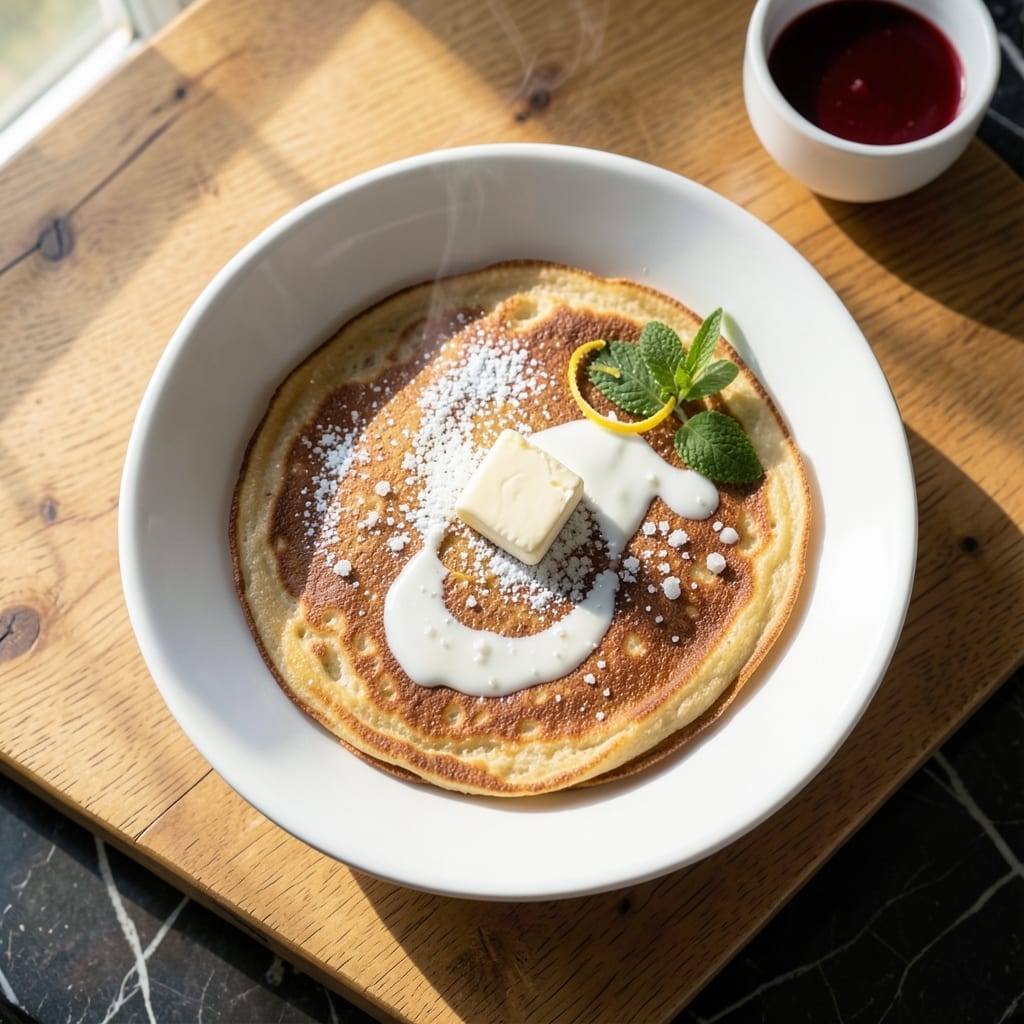
There’s nothing like a warm English pancake for breakfast, especially when it’s made just for you. This single-serve recipe delivers a light, lacy texture with minimal effort and maximum flavor.
With just a few basic ingredients and 5 minutes of prep, you’ll have a delicate pancake ready to enjoy. The batter comes together quickly, and the cooking process is simple, making it perfect for busy mornings.
What sets this apart is its thin, tender texture, perfect for rolling up with fresh fruit or a sprinkle of sugar. It’s a fast, satisfying way to start your day without fuss.
No special equipment is needed—just a pan and a spatula. Let’s get started.
Ingredients for English Pancake Recipe for One
A handful of pantry basics whips up into something magical for breakfast.
| Ingredient | Amount | Notes |
|---|---|---|
| All-Purpose Flour 🌾 | ½ cup | Sifted for smoothness |
| Large Egg 🥚 | 1 whole | Room temperature preferred |
| Whole Milk 🥛 | ¾ cup | Any percentage works |
| Unsalted Butter 🧈 | 1 tbsp | Melted, plus extra for pan |
| Granulated Sugar 🍚 | 1 tbsp | Optional for sweetness |
| Salt 🧂 | 0.125 tsp | Pinch of fine salt |
| Vanilla Extract 🌿 | ¼ tsp | Pure extract recommended |
The flour is the foundation—King Arthur or Bob’s Red Mill give great results. Use room temp eggs and milk (they blend smoother). I grab my dairy from Whole Foods when I want organic, but any grocery store brand works fine. Butter is non-negotiable for that rich flavor in the pan. Salted works in a pinch, but unsalted lets you control the seasoning better.
No milk? Any plant-based milk at the same amount works. Out of vanilla? Skip it—still delicious. The sugar can be omitted for savory pancakes. Using self-rising flour? Skip the salt, it’s already in there. The batter should be thin, like heavy cream—add a splash more milk if yours seems thick.
Batter keeps in the fridge for 24 hours if you want to prep ahead. Cooked pancakes? Best eaten fresh, but you can hold them in a 200°F oven for 10-15 minutes while you finish the batch. Leftovers reheat okay, but they lose that lacy texture.
Why You’ll Love This Recipe
- Five-Minute Mix: I can stir the flour, egg, milk, and sugar together faster than the kettle boils, and the pan’s hot before I even finish.
- Buttery Crisp Edges: That sizzle when the batter hits the melted butter, then the lacey, caramelized rim? It’s what I crave every Sunday morning.
- Solo Feast: Honestly, it’s my secret treat when everyone’s out—I fold it around jam or a squeeze of lemon and feel like I’ve eaten at a café.
- Pantry Staples Only: Between us, I’ve never bought anything special for this: flour, milk, an egg, and a knob of butter always live in my kitchen.
Step-by-Step Instructions for English Pancakes
Here’s the method. Straightforward, tested, works every time.
Step 1: Combine Dry Ingredients
In a medium bowl, whisk together the 0.5 cup All-Purpose Flour, 1 tbsp Granulated Sugar, and 0.125 tsp Salt. I always sift the flour first to prevent lumps in the batter, which is especially important for thin pancakes like these.
This step ensures even distribution of the sugar and salt, so every bite is perfectly seasoned. The sugar adds just enough sweetness to complement the vanilla, while the salt balances the flavors beautifully.
Step 2: Mix Wet Ingredients
Create a well in the center of the dry ingredients. Add the 1 whole Large Egg, 0.75 cup Whole Milk, 1 tbsp Unsalted Butter (melted), and 0.25 tsp Vanilla Extract to the well. Using a fork, gradually incorporate the dry ingredients into the wet until just combined.
The batter should be smooth and the consistency of heavy cream. If it looks too thick, add a splash more milk. A few small lumps are fine—overmixing will make the pancakes tough. I like to let the batter rest for 5 minutes while the pan heats up.
Step 3: Heat the Pan and Cook
Place a non-stick skillet over medium heat and add a small knob of extra butter. Once the butter melts and starts to foam but not brown, pour in about ¼ cup of batter. Immediately tilt the pan in a circular motion to spread the batter thinly and evenly.
Cook for 1-2 minutes until the edges start to pull away from the pan and the surface looks set with small bubbles. There’s no need to flip—these pancakes cook through on one side. The bottom should be light golden brown with delicate lacy edges.
Step 4: Serve Warm
Slide the pancake onto a plate and repeat with the remaining batter, adding more butter to the pan as needed. Stack the pancakes as you go—they’ll stay warm briefly while you finish cooking.
Serve immediately while still warm. These English pancakes are traditionally enjoyed with a squeeze of lemon juice and a sprinkle of sugar, or with your favorite fresh fruit and a drizzle of maple syrup. The thin texture makes them perfect for rolling up with sweet or savory fillings.
Pro Tips For Making English Pancake Recipe For One
- Heat the Pan First: Get your pan screaming hot before adding butter—medium-high heat for at least 2 minutes. I learned this the hard way after too many pale, greasy pancakes.
- Whisk the Batter Hard: Beat the egg and milk into the flour for a full 30 seconds until completely smooth. Sounds tedious, but it prevents those annoying little lumps that ruin the texture.
- Skip the Overmixing: Once the batter rests for 5 minutes, give it one quick stir and stop. Overworking it after resting makes the pancakes tough instead of tender.
- Use Cold Butter: Drop a small pat of cold butter into the pan right before pouring the batter—about 1 teaspoon. It browns beautifully without burning, adding that classic English pancake richness.
Regional Styles of This english pancake recipe for one
British Classic
In England, these thin pancakes are a Shrove Tuesday tradition, often called “pancake day”. The recipe stays true to its roots with simple ingredients: flour, eggs, milk. I love how the thin texture soaks up sweet or savory toppings beautifully.
French Crêpe Style
Across the channel, this same batter becomes a French crêpe. The technique is nearly identical, though crêpes often use buckwheat flour for a nutty depth. I find adding 1 tbsp buckwheat flour gives an authentic touch while keeping the delicate texture. 🥞
Scottish Variation
Scots make a version called “clapshot” where the pancake is thicker and often served with savory fillings. To adapt, reduce milk to ½ cup and add 1 tsp baking powder for lift. The result is heartier but still tender.
Irish Touch
Irish pancakes sometimes include a splash of Guinness for richness. Replace ¼ cup milk with stout for a malty depth. The carbonation creates extra lacy edges, and the flavor pairs wonderfully with caramelized apples.
Welsh Rarebit
Welsh cookbooks often serve these with a cheesy rarebit sauce for a savory twist. Melt ¼ cup cheddar with 1 tbsp ale and 1 tsp mustard, then drizzle over the warm pancake. It’s comfort food at its finest. 💛
Nutrition Facts
Frequently Asked Questions
Can I make the batter ahead of time?
Yes, you can mix the batter up to 24 hours in advance. Store it in an airtight container in the fridge. Give it a quick stir before using.
What if my pancakes tear when flipping?
These pancakes are meant to be cooked on one side only. If you must flip, wait until the edges are fully set. Use a thin spatula and flip quickly.
Can I use a different type of flour?
Self-rising flour works—just omit the salt. For a nuttier flavor, replace 2 tablespoons of all-purpose with buckwheat flour.

- 6 Egg Cake Recipe with Oil: Light as Air With Buttery Moisture - October 4, 2026
- 4 Bean Casserole Recipe: One-Pan Heartiness With Smoky Paprika Depth - October 4, 2026
- 3-Ingredient Keto Mug Cake Recipe: Microwave Magic in 2 Minutes - October 4, 2026