
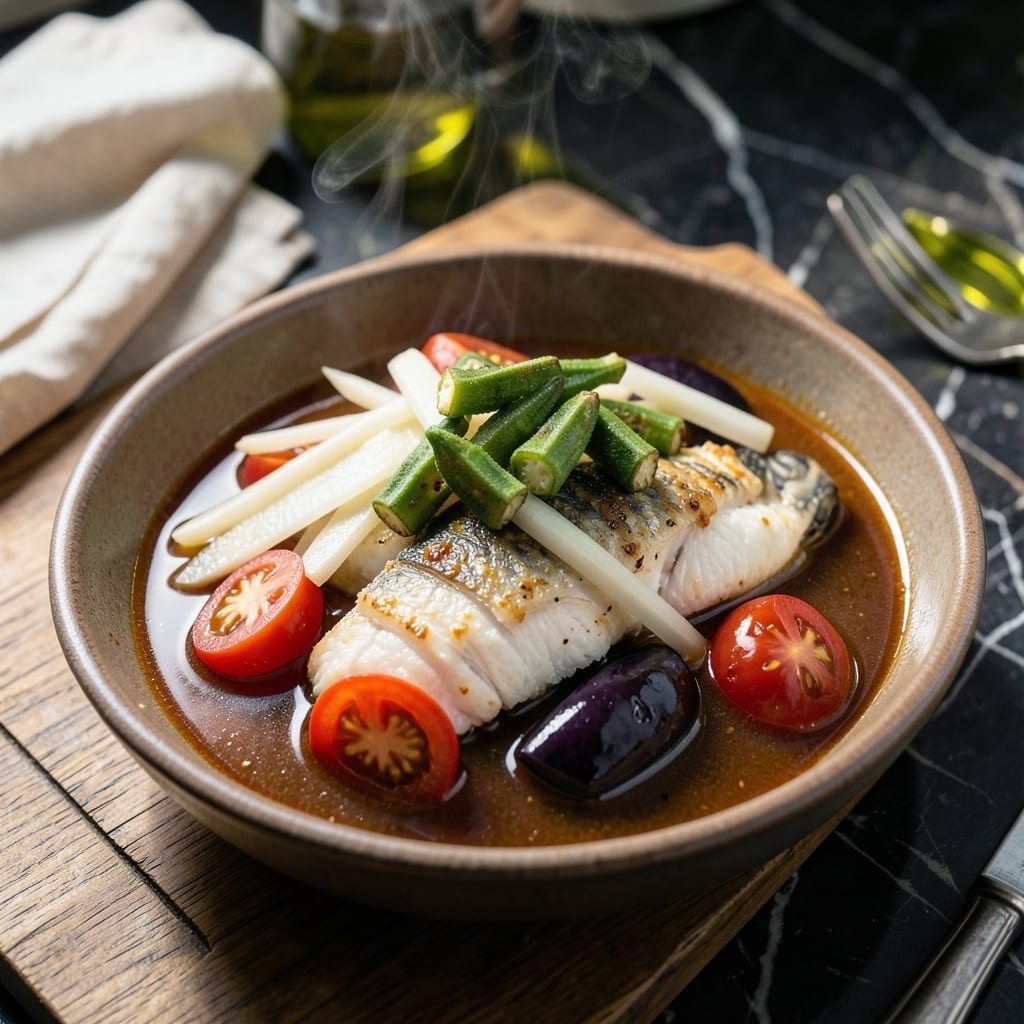
This sinigang delivers the authentic Filipino sour soup experience with tender fish swimming in a tangy tamarind broth.
Traditional techniques and simple ingredients create a perfectly balanced dish that highlights fresh seafood and bold sour flavors.
Ingredients for Fish Recipe Filipino Food
Fresh fish and tamarind create this vibrant Filipino sour soup with bold traditional flavors.
| Ingredient | Amount | Notes |
|---|---|---|
| White Fish Fillets 🐟 | 1 ½ lb | Firm white fish like cod or snapper |
| Tamarind Paste 🌿 | ½ cup | For authentic sour base |
| Daikon Radish 🥬 | 1 whole | Peeled and sliced into rounds |
| Eggplant 🍆 | 1 whole | Cut into bite-sized pieces |
| Okra 🌱 | 8 pieces | Trimmed at both ends |
| Tomatoes 🍅 | 2 whole | Quartered for broth |
| Onion 🧅 | 1 whole | Thinly sliced for aroma |
| Long Green Chili 🌶️ | 2 pieces | Optional for heat adjustment |
| Fish Sauce 🫒 | 2 tbsp | Patis for umami depth |
| Water 💧 | 6 cups | For tamarind broth dilution |
| Salt 🧂 | 1 tsp | Adjust to taste preference |
| Black Pepper 🌶️ | ½ tsp | Freshly ground preferred |
The fish selection is critical for authenticity. Firm white varieties like cod, snapper, or tilapia hold up best to the tamarind broth. Asian markets often carry whole fish perfect for this—ask them to clean and cut it for you. The tamarind paste should be pure, without added sugar. Filipino grocers like Seafood City always stock it. Freshness matters most with the vegetables—look for firm daikon and glossy eggplant.
No tamarind paste? Guava puree or calamansi juice can substitute in a pinch, though the flavor profile shifts slightly. Out of daikon? Regular radish or even potatoes work (cut larger to prevent mushiness). The okra can be replaced with green beans if unavailable. For heat adjustment, reduce or omit the chili—Filipino sinigang is traditionally mild with sour as the star.
This soup tastes even better the next day once flavors meld. Store in the fridge for up to 3 days—the tamarind may make the fish break down further. Reheat gently to avoid overcooking the fish. Freezing isn’t recommended as the vegetables lose texture. Always use the freshest fish possible for optimal results.
Why You’ll Love This Recipe
- One Pot Meal: I just toss the fish, tamarind, and veggies together—no juggling multiple pans or complicated steps.
- Tangy Perfection: The tamarind paste cuts through the richness of the fish, and the daikon soaks up that sour-sweet sauce like a dream.
- Weeknight Hero: Honestly, this is my go-to when I need something hearty but hands-off for busy evenings. (Yes, even on a Tuesday night)
- Budget Stretcher: One batch feeds my family of four with leftovers for lunch the next day, and the ingredients won’t break the bank.
Step-by-Step Instructions for Authentic Sinigang With Tangy Tamarind Broth
This traditional method delivers the perfect balance of sour, savory, and fresh flavors in every bowl.
Step 1: Prepare the Tamarind Broth Base
In a large pot, combine the 6 cups water with the 0.5 cup tamarind paste. Stir well to dissolve the paste completely, ensuring no lumps remain. This creates the signature sour foundation of the dish.
Bring the mixture to a gentle boil over medium-high heat, then reduce to medium heat. The broth should have a tangy aroma and a slightly thick consistency. This step develops the authentic sour profile that defines sinigang.
Step 2: Add Aromatics and Vegetables
Add the thinly sliced onion, quartered tomatoes, and 1 whole daikon radish (peeled and sliced into rounds) to the simmering broth. These ingredients build the aromatic base and add natural sweetness to balance the tamarind’s tartness.
After 5 minutes, add the eggplant (cut into bite-sized pieces) and 8 pieces okra (trimmed at both ends). Simmer for another 5 minutes until the daikon radish starts to soften but still holds its shape. The vegetables should be tender yet firm to the bite.
Step 3: Incorporate the Fish and Seasonings
Gently place the 1.5 lb white fish fillets into the pot, ensuring they are fully submerged in the broth. Fish like cod or snapper works best here, as their firm texture holds up well to the tangy liquid.
Add the 2 tbsp fish sauce, 1 tsp salt, and 0.5 tsp black pepper. If using, include the 2 pieces long green chili for a subtle heat that complements the dish’s sourness. Simmer for 8-10 minutes until the fish is opaque and flakes easily with a fork.
Step 4: Adjust and Serve
Taste the broth and adjust seasoning if needed. The ideal balance is a bright, tangy flavor with a savory depth from the fish sauce and umami from the vegetables. Avoid overcooking the fish, as it can become tough and lose its delicate texture.
Ladle the sinigang into bowls, making sure each serving includes a generous portion of the fish and vegetables. The broth should be steaming hot, with a vibrant color from the tamarind and fresh ingredients. Serve immediately with steamed rice to soak up the flavorful liquid.
Pro Tips For Making Fish Recipe Filipino Food
- Soak the Fish: Pat the white fish fillets completely dry before cooking—I learned this the hard way after my first few batches turned out watery and steamed instead of seared.
- Balance the Tamarind: Tamarind paste can overpower the dish, so start with 1 tablespoon, taste, and adjust; I was skeptical until I tried it and realized less really does more.
- Salt the Vegetables: Sprinkle the daikon, eggplant, and okra with salt and let them sit for 10 minutes before cooking to draw out excess moisture and keep them from turning mushy.
- Cook Eggplant First: Eggplant soaks up oil like a sponge, so fry it separately first, then set aside—this keeps the fish from steaming in the pan and actually changes the outcome.
Make-Ahead Tips for This Dish
🔪 Week Before
Start by preparing the tamarind base for your sinigang up to 5-7 days ahead. Soak tamarind pulp in warm water, strain, and store the extract in an airtight container in the fridge. This step saves time and lets the sour flavor deepen. Also, make a shopping list for fresh ingredients like fish (mackerel, milkfish, or snapper), kangkong (water spinach), radishes, and eggplants, which are best bought closer to cooking day. Pro tip 💡: Freeze any extra tamarind extract for future batches!
🍳 Day Before
Chop all vegetables—slice onions, tomatoes, radishes, and eggplants—and store them in sealed containers in the fridge. This reduces prep time on cooking day. If using a souring agent like guava or calamansi, prep these as well. For the fish, clean and gut it, then pat dry and store in the fridge (or freeze if prepping earlier). ⏰ Reminder: Keep fish refrigerated for no more than 24 hours for optimal freshness.
⏰ Day Of
Assemble the broth by sautéing onions, tomatoes, and radishes in a pot. Add the tamarind extract and water, then simmer for 10-15 minutes before adding the fish. Cook the fish for 5-8 minutes, then add the remaining vegetables. Time this step so the dish is ready to serve fresh and hot.
✨ Last-Minute Tasks
Taste and adjust the sourness with additional tamarind or a splash of vinegar if needed. Garnish with fresh chili peppers or a sprinkle of fish sauce for extra depth. Serve immediately with steamed rice to soak up the tangy broth. 🎯 Pro tip: Add a pinch of sugar to balance the flavors if the broth is too sharp!
Nutrition Facts

- 6 Egg Cake Recipe with Oil: Light as Air With Buttery Moisture - October 4, 2026
- 4 Bean Casserole Recipe: One-Pan Heartiness With Smoky Paprika Depth - October 4, 2026
- 3-Ingredient Keto Mug Cake Recipe: Microwave Magic in 2 Minutes - October 4, 2026