
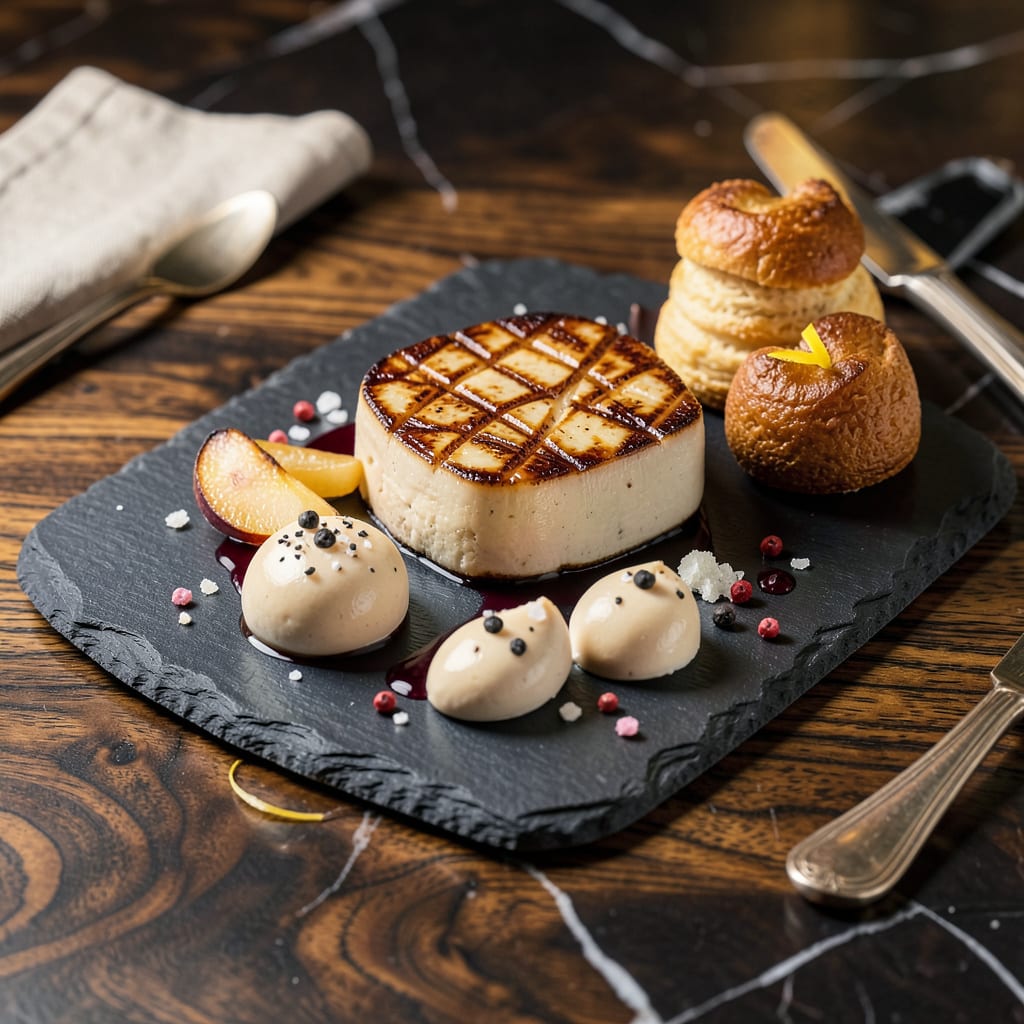
Foie gras represents the pinnacle of culinary luxury, and mastering its preparation at home delivers restaurant-quality results with surprisingly simple techniques. This delicate ingredient demands precision—proper cleaning, careful temperature control, and confident searing transform raw liver into velvety, buttery perfection that melts on the tongue.
The secret lies in maintaining the ideal balance between crisp exterior and creamy interior. With just 5 minutes of active cooking and attention to detail, you’ll achieve a sear that locks in richness while preserving the signature silky texture. Pair with sweet-tart accompaniments and serve immediately for an unforgettable appetizer experience.
Ingredients for Foie Gras
Grade A foie gras and six complementary ingredients create this luxurious dish requiring precision and minimal preparation time.
| Ingredient | Amount | Notes |
|---|---|---|
| Grade A Foie Gras Lobe 🍖 | 1 whole | Approximately 1.5 lb, veins cleaned |
| Diamond Crystal Kosher Salt 🧂 | 1 ½ tsp | Divided for seasoning and curing |
| Granulated Sugar 🍚 | 1 tsp | For balancing richness |
| Black Peppercorns 🌶️ | ½ tsp | Freshly cracked for serving |
| Unsalted Butter 🧈 | 2 tbsp | European-style preferred, chilled |
| Neutral Oil 🫒 | 1 tbsp | Grapeseed or avocado oil for searing |
| Port Wine 🍷 | ¼ cup | Ruby or tawny, for deglazing |
| Aged Balsamic Vinegar 🫒 | 2 tbsp | 12+ year aged for reduction |
| Fresh Thyme Sprigs 🌿 | 4 whole | For garnish and aroma |
| Sourdough Bread 🍞 | 4 slices | Toasted for accompaniment |
| Fig Jam 🍇 | ½ cup | High-quality, seedless preferred |
| Fleur de Sel 🧂 | ½ tsp | For finishing, optional but recommended |
The foie gras quality is paramount. Optimal results require Grade A lobes from reputable purveyors like D’Artagnan or Hudson Valley Foie Gras. Each lobe should weigh approximately 1.5 lb with minimal blemishes. The cleaning process—removing veins while preserving structure—demands patience. Professional kitchens use vein pullers, but a sharp paring knife works for home cooks. The butter must be European-style (82-86% fat) for proper searing without burning.
Substitutions compromise the dish’s integrity but can accommodate dietary needs. Replace port wine with pomegranate juice reduced with red wine vinegar for non-alcoholic versions. Grapeseed oil may be swapped for clarified butter if avoiding dairy. The balsamic reduction can utilize sherry vinegar at a 1:1 ratio. For the fig jam, quince paste offers similar sweetness with textural contrast. Never substitute the foie gras itself—its unique fat content and texture are irreplaceable.
Storage requires meticulous temperature control. Keep raw foie gras below 40°F and use within 3 days of purchase. Seared portions hold at room temperature for 15 minutes maximum before serving. The balsamic reduction and port deglazing liquid can be refrigerated for 1 week in airtight containers. Toasted bread should be stored separately to maintain crispness. Always bring foie gras to room temperature 30 minutes before cooking for even rendering.
Why You’ll Love This Recipe
- Five-Ingredient Luxe: Honestly, the ingredient list looks fancy, but it’s just foie gras, salt, sugar, pepper, and butter. No hunting for obscure spices or last-minute grocery runs—just what’s already in my pantry (well, except maybe the foie gras, but that’s the point).
- That First Bite: The way the sugar caramelizes against the seared foie gras while the butter bastes it into submission? Ridiculously good. It’s rich without being cloying, with that black pepper bite cutting through the silkiness like a perfect contrast.
- Holiday Hero (or Tuesday): I’ve served this at Christmas dinner and also, yes, on a random Tuesday when I wanted to feel fancy. It’s equally at home on a charcuterie board or plopped onto toast with jam—no stress, all impress.
- Leftovers? Unheard Of: Between us, I’ve never had leftovers. But if you somehow do, cold foie gras on a baguette the next day with flaky salt? Spot-on. Or melt it into scrambled eggs—game over. (Not that it’ll last that long.)
Step-by-Step Instructions for Foie Gras
Mastering this luxurious preparation requires precision and respect for the delicate ingredient.
Step 1: Prepare and Cure the Foie Gras Lobe
Begin by carefully separating the Grade A foie gras lobe into two equal portions along its natural seam. This exposes more surface area for even cooking and presentation. Using a sharp knife, score the top of each portion in a crosshatch pattern, being careful not to cut through the flesh.
Combine the Diamond Crystal kosher salt, granulated sugar, and half of the reserved salt in a small bowl. Gently press this curing mixture onto all surfaces of the foie gras, including the scored top. Place the seasoned lobes on a wire rack set over a plate and refrigerate uncovered for exactly 1 hour. This dry-curing process draws out excess moisture while preserving the delicate texture.
Step 2: Sear the Foie Gras with Precision
After curing, gently pat the foie gras dry with paper towels to remove any residual moisture. Heat a heavy skillet over medium-low heat and add the neutral oil. When the oil shimmers but doesn’t smoke, carefully place the foie gras lobes in the pan, scored side down.
Sear undisturbed for 2 minutes until a deep golden crust forms. The fat will begin to render, creating a rich fond in the pan. Add the unsalted butter to the pan and baste the foie gras continuously for another 1-2 minutes until the edges become crisp and the center reaches 120°F internal temperature. The exterior should be caramelized while the interior remains silky and pink.
Step 3: Create the Port Wine Reduction
Transfer the seared foie gras to a warm plate and immediately deglaze the pan with the Port wine. Use a wooden spoon to scrape up all the browned bits from the bottom of the pan. Simmer the wine for 3-4 minutes until reduced by half, then add the aged balsamic vinegar and fresh thyme sprigs.
Continue reducing the sauce over medium heat for another 2-3 minutes until it coats the back of a spoon. The finished reduction should be glossy and slightly syrupy, with a balance of sweet and acidic notes that complement the richness of the foie gras. Strain the sauce through a fine-mesh sieve to remove the thyme sprigs before serving.
Step 4: Assemble and Present with Accompaniments
Toast the sourdough bread slices until golden and crisp. Warm the fig jam slightly to make it more spreadable. Place each seared foie gras lobe on a warm plate, drizzle with the port reduction, and sprinkle with freshly cracked black peppercorns.
Serve immediately with the toasted sourdough bread and fig jam on the side. The contrast of textures—crispy bread, silky foie gras, and smooth jam—creates the perfect bite. For an elevated finish, sprinkle a pinch of fleur de sel over each serving just before presenting to enhance the natural flavors without overpowering them.
Essential Equipment for Perfect Results
Premium Skillet Selection
For searing foie gras, I swear by a heavy-bottomed stainless steel skillet—specifically the All-Clad D3 12-inch model. The even heat distribution prevents hot spots that could burn the delicate fat. Avoid nonstick pans as they can’t reach the necessary medium-low heat precision. A well-seasoned cast iron skillet works too, but requires extra attention to temperature control. 🔥
Precision Thermometers
Temperature accuracy is non-negotiable with foie gras. I use a ThermoWorks ThermoPop for instant-read accuracy to ±0.7°F. The target internal temperature of 120°F must be hit perfectly—any higher and you risk losing that signature creamy texture. Digital probe thermometers with thin tips work best for delicate proteins like this.
Veining Tools
Cleaning foie gras veins requires specialized tools. Professional chefs use vein pullers, but for home cooks, I recommend a sharp paring knife (like the Wüsthof Classic) and tweezers with fine tips. The process takes patience—expect to spend 15-20 minutes carefully removing veins while preserving the lobe’s structure.
Fine-Mesh Strainer
A fine-mesh strainer (like the OXO Good Grips 5-inch) is essential for achieving silky-smooth port reductions. It removes thyme sprigs and any coagulated proteins from the sauce, creating that restaurant-quality glossy finish. I also use it to strain the rendered foie gras fat for other culinary applications—never waste that liquid gold!
Warm Serving Plates
Foie gras loses its luxurious quality if served cold. I keep ceramic plates in a 200°F oven for 10 minutes before plating. This maintains the ideal serving temperature of 110-115°F at the table. The warmth also helps the port reduction maintain its perfect consistency when drizzled over the seared lobes.
Specialty Garnishing Tools
For that final flourish, I use a microplane for freshly cracked pepper and a flake salt grinder for the fleur de sel. The Microplane Premium Zester creates the perfect pepper dusting, while a Maldon salt mill delivers delicate salt flakes. These small details elevate the presentation from excellent to extraordinary. ✨
Nutrition Facts
Frequently Asked Questions
Why is my foie gras turning out too greasy?
This usually happens when the pan temperature is too high. Foie gras should be seared over medium-low heat for 2 minutes per side maximum. The fat renders quickly, so use a heavy skillet and pat the lobes completely dry before cooking to prevent excess oiliness.
Can I skip the curing step?
Never skip curing! The 1-hour salt-sugar cure is essential for drawing out moisture and creating that perfect crisp exterior. Without it, the foie gras will steam instead of sear, resulting in a mushy texture rather than the desired creamy center.
What’s the best wine pairing?
A sweet white wine like Sauternes or a rich red such as Pinot Noir complements the dish beautifully. The sweetness balances the foie gras’s richness, while the acidity cuts through the fat. Avoid overly tannic wines that can clash with the delicate flavor.
How do I store leftover seared foie gras?
Seared foie gras doesn’t keep well—it’s best enjoyed immediately. However, you can refrigerate uncooked portions for 2-3 days in an airtight container. For longer storage, vacuum-seal and freeze raw lobes for up to 3 months, but quality diminishes after thawing.
Why does my sauce break when making the reduction?
Sauce separation occurs when the butter emulsifies improperly. The key is maintaining medium heat and whisking constantly when adding butter. If it breaks, remove from heat and whisk in 1 tsp cold water to bring it back together before serving.

- 6 Egg Cake Recipe with Oil: Light as Air With Buttery Moisture - October 4, 2026
- 4 Bean Casserole Recipe: One-Pan Heartiness With Smoky Paprika Depth - October 4, 2026
- 3-Ingredient Keto Mug Cake Recipe: Microwave Magic in 2 Minutes - October 4, 2026