
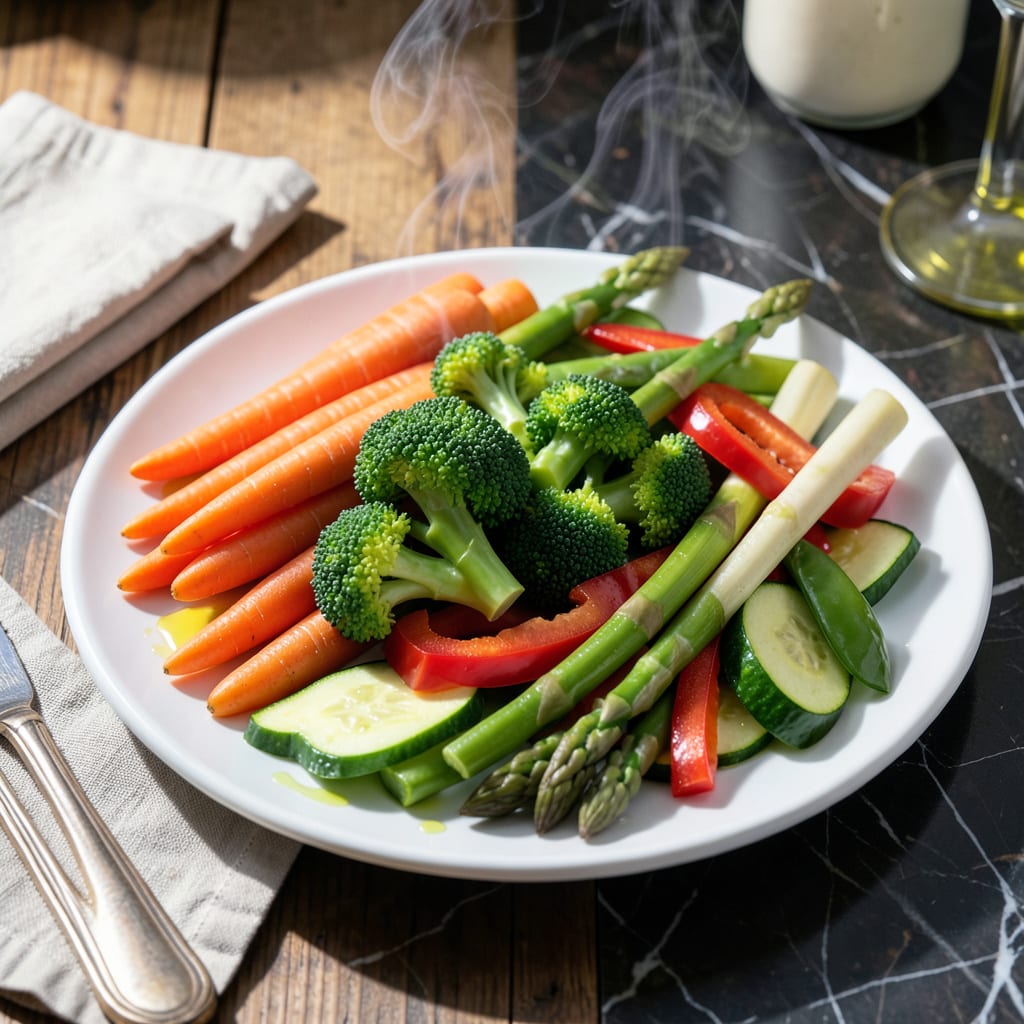
Steaming vegetables preserves their natural colors, textures, and nutrients better than any other cooking method. This approach guarantees moist, vibrant results every time without losing water-soluble vitamins to boiling water.
With precise timing and proper layering in your food steamer, you’ll achieve perfectly tender yet crisp produce. The gentle heat maintains the integrity of delicate vegetables while enhancing their natural sweetness.
Ingredients for Food Steamer
Fresh, vibrant vegetables and a few pantry staples bring this dish to life beautifully.
| Ingredient | Amount | Notes |
|---|---|---|
| Baby Carrots 🥕 | 1 lb | Peeled, uniform size for even cooking |
| Broccoli Florets 🥦 | 4 cups | Cut into even, bite-sized pieces |
| Asparagus Spears 🌱 | 1 lb | Woody ends trimmed, tips intact |
| Red Bell Pepper 🌶️ | 2 whole | Sliced into thin strips |
| Zucchini 🥒 | 2 whole | Sliced into half-moons |
| Fresh Snap Peas 🌿 | 2 cups | Strings removed, left whole |
| Cauliflower Florets 🥬 | 3 cups | Cut into uniform florets |
| Kosher Salt 🧂 | 1 tsp | Diamond Crystal preferred for texture |
| Fresh Lemon Juice 🍋 | 2 tbsp | For brightening finished vegetables |
| Extra-Virgin Olive Oil 🫒 | 2 tbsp | For drizzling post-steaming |
| Fresh Dill 🌿 | ¼ cup | Chopped, for garnish |
| Garlic Cloves 🧄 | 3 cloves | Minced, for optional flavor boost |
| Toasted Sesame Seeds 🌰 | 1 tbsp | For nutty garnish finish |
The key here is freshness—farmers market veggies or Whole Foods produce section (the one with the misting system) give the best results. Look for bright colors and firm textures. Baby carrots from Trader Joe’s are consistently good and save prep time. For the asparagus, thicker spears hold up better to steaming than pencil-thin ones (worth the extra minute to sort through the bunch).
No baby carrots? Use regular carrots cut into thin sticks. Frozen broccoli works in a pinch—just don’t thaw it first. Short on snap peas? Green beans steam at the same rate. The olive oil can be swapped for avocado oil if that’s your preference. Want more flavor? Toss in a few lemon slices or fresh ginger while steaming.
Steamed veggies keep 4-5 days in the fridge in airtight containers. They’re best eaten warm, but hold up well for meal prep. Reheat quickly in the microwave with a splash of water to revive. Freezing isn’t ideal—veggies get mushy when thawed.
Why You’ll Love This Recipe
- Set It and Forget: I toss the carrots, broccoli, and asparagus in the steamer basket, walk away, and 12 minutes later it’s done—no babysitting required.
- Bright, Clean Bite: The zucchini and bell pepper keep their snap, and that first crunch with a sprinkle of salt is just pure veggie satisfaction.
- Meal Prep MVP: I make a double batch on Sunday and it’s my lunchbox hero all week—still crisp, never soggy.
- Wallet-Friendly Feast: Five fresh veggies for less than a takeout salad, and I use every last piece.
Step-by-Step Instructions for Food Steamer Veggies
Here’s how to steam these vegetables to vibrant, tender perfection every time.
Step 1: Prep All Vegetables for Even Cooking
Start by prepping each vegetable as specified in the ingredients list. The baby carrots need peeling, while the asparagus spears require trimming of woody ends. For the red bell pepper and zucchini, slice into uniform pieces so they cook at the same rate.
I always keep the broccoli florets and cauliflower florets similar in size—about 1-inch pieces. The fresh snap peas just need their strings removed. This uniform prep ensures everything finishes cooking simultaneously without some pieces turning mushy while others stay raw.
Step 2: Layer Vegetables in the Steamer Basket
Fill your steamer pot with 1-2 inches of water and bring to a boil. While waiting, arrange the vegetables in the steamer basket in a single layer if possible. Place the denser vegetables like baby carrots and cauliflower florets on the bottom where the steam is hottest.
Put the more delicate items—asparagus spears, broccoli florets, fresh snap peas, red bell pepper, and zucchini—on top. This layering technique ensures the heartier vegetables get more direct heat while the tender ones steam gently. Don’t overcrowd the basket or the vegetables will steam unevenly.
Step 3: Steam Until Tender-Crisp
Once the water reaches a rolling boil, place the basket in the pot and cover tightly with a lid. Steam the vegetables for 8-10 minutes until they’re vibrant in color and tender-crisp—they should yield slightly when pierced with a fork but still have some bite.
Check the baby carrots first, as they often take the longest. The asparagus spears and broccoli florets should be bright green, while the zucchini and red bell pepper should be slightly softened but still hold their shape. If using multiple baskets, rotate them halfway through for even cooking.
Step 4: Finish with Aromatics and Garnishes
Transfer the steamed vegetables to a serving platter and immediately sprinkle with the 1 tsp kosher salt. While still hot, drizzle with the 2 tbsp extra-virgin olive oil and the 2 tbsp fresh lemon juice. The heat will help the flavors meld beautifully.
For the finishing touch, sprinkle the 0.25 cup fresh dill evenly over the top. If you’re using the optional 3 cloves garlic cloves, mince them finely and scatter over the vegetables now. Finally, add the 1 tbsp toasted sesame seeds for a nutty crunch. Serve immediately while the vegetables are at their peak texture and temperature.
Pro Tips For Making Food Steamer
- Cut Evenly: Slice all veggies to similar thicknesses—about 1/4-inch for zucchini and bell pepper—so they steam at the same rate. I learned this the hard way after pulling out mushy carrots and undercooked broccoli.
- Start With Boiling Water: Always bring the water to a rolling boil before adding the steamer basket. Sounds obvious, but I wasted 10 minutes once waiting for lukewarm water to heat up with the veggies already in.
- Skip the Overcrowding: Leave space between the asparagus and broccoli—if they’re packed too tight, they’ll steam unevenly. Spread them out in a single layer, even if it means doing two batches.
- Salt After Steaming: Sprinkle flaky salt over the veggies right as they come out of the steamer. It sticks better to the hot surfaces and actually tastes saltier, so you’ll use less.
Essential Equipment for This Recipe
Bamboo Steamer Baskets
I swear by 10-inch bamboo steamer baskets for their natural, breathable material that allows steam to circulate perfectly. They come in 2-tier or 3-tier sets—I use the 3-tier from EcoNest for larger batches. Soak them in water for 10 minutes before first use to prevent cracking. 💡
Electric Steamers
For hands-off convenience, an electric food steamer like the Cuisinart STM-1000 is my go-to. It has a 60-minute timer and 5.5-quart capacity, perfect for family meals. The auto-shutoff gives me peace of mind when multitasking.
Stovetop Steamer Pots
A stainless steel steamer pot with a fitted lid is a kitchen workhorse. I use the All-Clad 3-Ply with a 2.5-quart insert. The heavy base prevents hot spots, and the lid’s tight seal traps steam efficiently.
Steamer Liners
To prevent sticking and make cleanup easier, line your basket with parchment paper or cabbage leaves. Cut the parchment to fit with small holes for steam flow. Reusable silicone liners from OXO are another great option. 🌟
Essential Tools
A tongs set with silicone tips helps arrange hot vegetables safely. I keep a meat thermometer nearby to check water temperature—212°F is ideal. A timer ensures I don’t overcook delicate veggies.
Space-Saving Options
For small kitchens, a collapsible silicone steamer fits in drawers and expands to 8 inches when needed. The Joseph Joseph model works in any pot. It’s my travel companion for healthy meals on the go.
Nutrition Facts
Frequently Asked Questions
What if I don’t have a steamer basket?
Use a colander or heatproof sieve set over a pot of boiling water. Ensure it fits securely and doesn’t touch the water. Cover with a tight lid to trap the steam properly.
How do I prevent vegetables from getting mushy?
Cut all pieces to uniform size and don’t overcrowd the basket. Steam for the minimum time (8-10 minutes), then check for doneness. Remove items as they finish cooking.
Can I season the water in the steamer?
Yes! Add herbs, citrus slices, or 1-2 teaspoons of salt to the water for subtle flavor infusion. Avoid strong spices that might overpower the vegetables’ natural taste.
Why are my steamed veggies bland?
Finish them with salt, acid (like lemon juice), and fat (such as olive oil) immediately after steaming. These elements enhance natural flavors beautifully.

- 6 Egg Cake Recipe with Oil: Light as Air With Buttery Moisture - October 4, 2026
- 4 Bean Casserole Recipe: One-Pan Heartiness With Smoky Paprika Depth - October 4, 2026
- 3-Ingredient Keto Mug Cake Recipe: Microwave Magic in 2 Minutes - October 4, 2026