
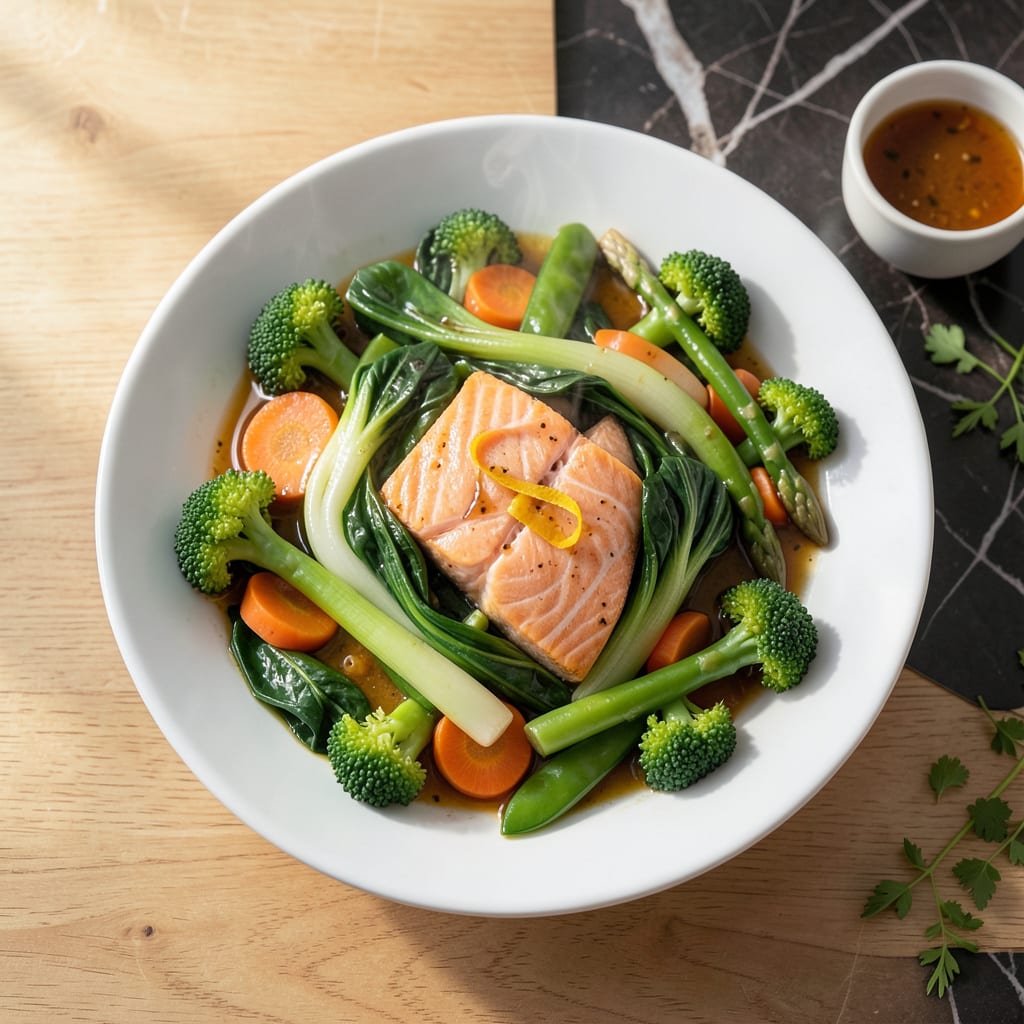
Steaming is one of the simplest ways to lock in flavor and nutrients. I’ve found it transforms everything from vegetables to fish into tender, vibrant dishes without fuss.
This method keeps foods moist and preserves their natural taste. With just a basket and boiling water, you can create nutrient-packed meals in minutes.
Ingredients for Foods You Steam
Fresh vegetables and fish come together for bright, steamed perfection in no time.
| Ingredient | Amount | Notes |
|---|---|---|
| Broccoli Florets 🥦 | 4 cups | Fresh, trimmed into even pieces |
| Carrots 🥕 | 4 whole | Peeled, sliced into sticks |
| Salmon Fillets 🐟 | 1 ½ lb | Skin-on, boneless preferred |
| Asparagus Spears 🌱 | 1 lb | Woody ends trimmed |
| Snow Peas 🌿 | 2 cups | Fresh or thawed frozen |
| Baby Bok Choy 🥬 | 4 whole | Halved lengthwise |
| Lemon 🍋 | 1 whole | Sliced for serving |
| Fresh Ginger 🌿 | 1 tbsp | Peeled, minced |
| Soy Sauce 🫙 | 2 tbsp | Low-sodium preferred |
| Sesame Oil 🫒 | 1 tsp | Toasted for depth |
| Garlic Cloves 🧄 | 3 cloves | Thinly sliced |
| Red Pepper Flakes 🌶️ | ½ tsp | Adjust to taste |
The salmon should be wild-caught if possible—look for bright, firm fillets at Whole Foods or your local fishmonger. For the vegetables, organic produce isn’t mandatory, but it does make a difference with leafy greens like bok choy. I grab mine at Trader Joe’s for the best balance of quality and price. Don’t skip trimming the asparagus (bend the spears—they’ll snap at the right spot).
No salmon? Cod or trout work just as well (same cooking time, same tenderness). Snow peas can be swapped for snap peas or green beans—just adjust the size so they cook evenly. If you’re out of soy sauce, tamari or coconut aminos add a similar depth. The ginger is key for brightness, but ground ginger at half the amount works in a pinch (it’s not as vibrant, but it’s fine).
Steamed veggies keep in the fridge for 3-4 days, but they’re best fresh. The salmon? Eat it within 2 days for peak flavor. Reheat gently to avoid drying it out. Leftovers make a killer next-day salad (add the lemon for a bright finish).
Why You’ll Love This Recipe
- Minimal Effort: I just toss the broccoli, carrots, and salmon in the steamer basket—no stir-fry flipping or oven timing to stress over.
- Bright, Clean Taste: The salmon stays moist, the asparagus stays crisp, and the snow peas? They pop with freshness.
- Meal Prep Magic: I steam a big batch on Sunday and mix it into lunches all week—salmon on salads, veggies with rice.
- Budget Stretcher: A single salmon fillet and a bag of frozen veggies feed us for two nights, no waste.
Step-by-Step Instructions for Steamed Nutrient-Packed Meals
Here’s my tested approach to perfect steaming—simple, quick, and packed with flavor.
Step 1: Prepare the Steaming Base and Aromatics
Fill a large pot with 2 inches of water and bring it to a rolling boil. While the water heats, combine the 1 tablespoon Fresh Ginger, 3 cloves Garlic Cloves, 2 tbsp Soy Sauce, and 1 tsp Sesame Oil in a small bowl. This aromatic blend will infuse your dish with depth.
I like to mince the ginger finely and slice the garlic thinly so their flavors disperse evenly through the steam. Add the 0.5 tsp Red Pepper Flakes to the bowl if you want a subtle kick. Stir everything together and set it aside—you’ll use this to finish the dish later.
Step 2: Arrange the Vegetables for Even Cooking
Place the 4 cups Broccoli Florets, 4 whole Carrots, 1 lb Asparagus Spears, 2 cups Snow Peas, and 4 whole Baby Bok Choy in a steamer basket or on a heatproof plate that fits inside your pot. Arrange them in a single layer, ensuring they don’t overlap too much.
The baby bok choy should be halved lengthwise so the steam penetrates evenly. The carrots, sliced into sticks, will cook through in the same time as the other vegetables. If your steamer basket has multiple tiers, place the denser vegetables, like carrots, on the bottom tier where the steam is strongest.
Step 3: Steam the Vegetables to Vibrant Perfection
Once the water is boiling, place the steamer basket or plate inside the pot, cover it tightly with a lid, and steam the vegetables for 5-7 minutes. You’ll know they’re done when they turn bright vibrant colors and a knife slides through them easily without resistance.
Keep an eye on the water level—if it starts to run low, add more hot water to the pot to maintain the steam. Don’t overcrowd the basket, or the vegetables will steam unevenly. The goal is to retain their crispness while making them tender.
Step 4: Add the Salmon for Gentle Cooking
After the vegetables have steamed for 3 minutes, carefully place the 1.5 lb Salmon Fillets on top of them in the steamer basket. The salmon should sit above the water, not submerged. Cover the pot again and steam for an additional 8-10 minutes.
The salmon is done when it flakes easily with a fork and turns opaque throughout. Avoid overcooking—it should still be moist and tender. The residual steam from the vegetables will gently cook the salmon, infusing it with their flavors.
Step 5: Finish and Serve with Lemon
Once everything is cooked, transfer the vegetables and salmon to a serving platter. Drizzle the reserved ginger, garlic, and soy sauce mixture over the top. The heat from the steamed ingredients will mellow the aromatics and create a light, flavorful sauce.
Garnish with slices from the 1 whole Lemon and serve immediately. The lemon adds a bright, citrusy finish that complements the rich, umami flavors of the soy and sesame. Enjoy while hot for the best texture and taste.
Pro Tips For Making Foods You Steam
- Cut Evenly: Slice carrots and broccoli into uniform pieces—about 1-inch florets and thin sticks—so they cook at the same rate. I learned this the hard way after pulling out half the batch early because the thick carrots weren’t done.
- Start With Boiling: Bring your steaming water to a full rolling boil before adding the basket. Sounds obvious, but I used to rush it, and the salmon would sit in lukewarm steam, turning dry and sad.
- Skip the Overcrowding: Leave space between salmon fillets and veggies so steam circulates. Pack it too tight, and you’ll end up with soggy asparagus and unevenly cooked fish—ask me how I know.
- Shock the Greens: Plunge snow peas and broccoli into ice water right after steaming to stop the cooking. They stay bright green and crisp, not that dull, mushy version I served for years before figuring this out.
Flavor Customization for foods you steam
Asian-Inspired Flavors
Boost your steamed dishes with a drizzle of the ginger-garlic-soy mixture. Add extra sesame oil for depth, or swap in oyster sauce for a richer finish. I love this combo with bok choy and snow peas. 💛
Mediterranean Twist
Replace soy sauce with olive oil and lemon zest, then sprinkle with dried oregano. Toss steamed asparagus and carrots with this mix for a bright, herbaceous flavor. A pinch of feta cheese on top adds saltiness.
Spicy Kick
Increase the red pepper flakes to 1 tsp or add sriracha to the finishing sauce. This works especially well with salmon and broccoli. For extra heat, serve with chopped jalapeños on the side.
Citrus Brightness
Zest the lemon into the ginger-garlic mixture before drizzling. The citrus oils add a fragrant lift. Pair with steamed salmon for a refreshing contrast to the rich fish. A squeeze of fresh juice just before serving enhances the flavor.
Herb-Infused Steam
Add fresh herbs like cilantro or thyme to the steaming water. The aroma infuses the entire dish. I often use 2-3 sprigs for a subtle but noticeable effect. Remove herbs before serving to avoid bitterness.
Umami Boost
Stir 1 tsp miso paste into the finishing sauce for a deeper, savory note. This pairs beautifully with steamed vegetables and salmon. A sprinkle of toasted sesame seeds adds crunch and visual appeal. ✨
Nutrition Facts
Frequently Asked Questions
What’s the best way to keep veggies crisp when steaming?
Steam for the shortest time possible—most vegetables need just 5-7 minutes. Use a large pot with a tight lid to maintain consistent heat, and avoid overcrowding the basket.
Can I steam frozen vegetables directly?
Yes, but add 1-2 extra minutes to the cooking time. For best results, thaw them first in cold water to ensure even cooking.
Why does my steamed fish taste bland?
Steam with aromatics like ginger or lemon in the water. Finish with a flavorful sauce or drizzle of soy sauce to enhance taste.
How do I prevent a watery texture in steamed dishes?
Pat ingredients dry before steaming and avoid lifting the lid during cooking. This traps steam effectively and prevents excess moisture.

- 6 Egg Cake Recipe with Oil: Light as Air With Buttery Moisture - October 4, 2026
- 4 Bean Casserole Recipe: One-Pan Heartiness With Smoky Paprika Depth - October 4, 2026
- 3-Ingredient Keto Mug Cake Recipe: Microwave Magic in 2 Minutes - October 4, 2026