
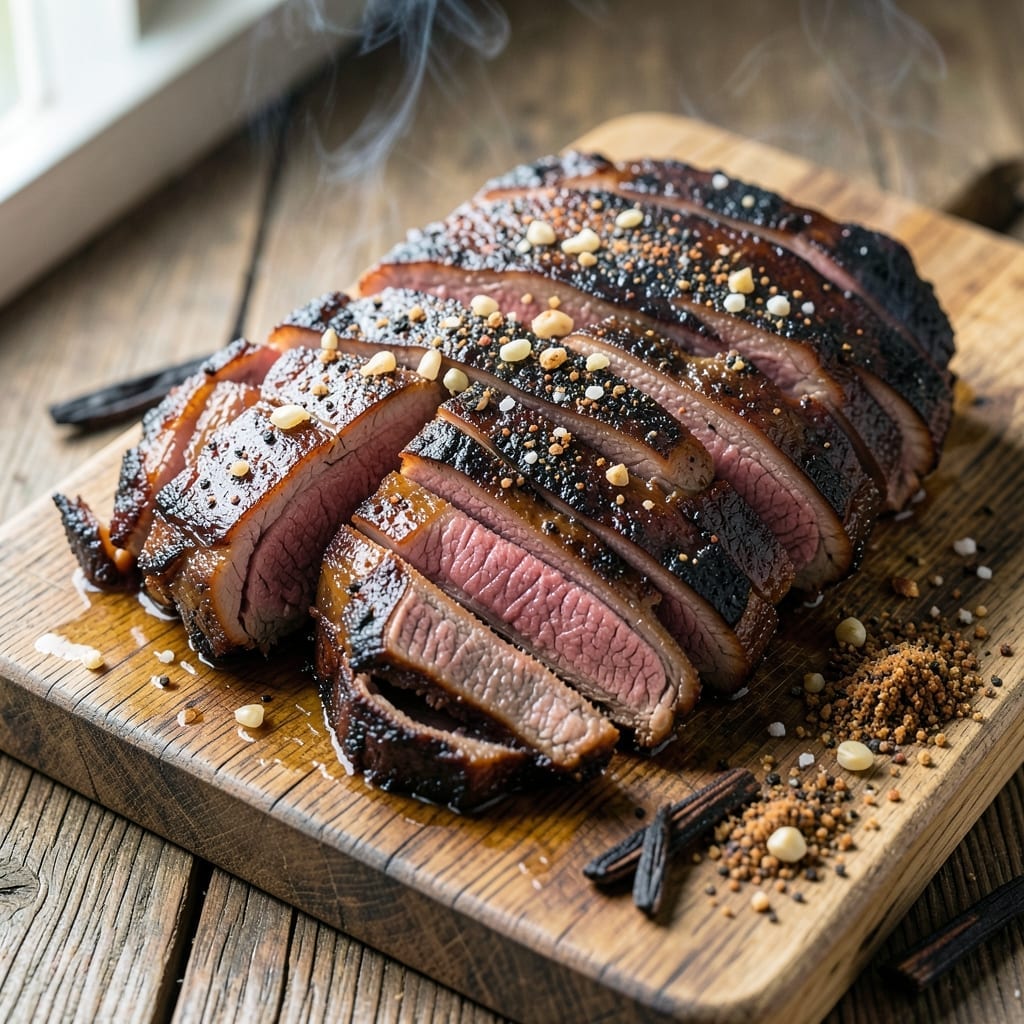
Texas-style brisket demands precision, and this method delivers that signature smoke ring and tender texture every time. The process transforms tough beef into melt-in-your-mouth perfection through low, slow cooking.
I’ve refined this approach to balance traditional smokehouse techniques with home-friendly adjustments. The key is maintaining consistent 225°F heat and using quality wood for authentic flavor.
What you’ll achieve is a brisket with a dark, flavorful bark outside and juicy, fall-apart tender meat inside. The rest period is non-negotiable—this is where the magic happens.
Serve with pickles, white bread, and a cold drink for the full Texas experience. Here’s how to master it.
Ingredients for Franklin’s Bbq Brisket
This is Texas BBQ at its finest—just beef, smoke, and a handful of spices.
| Ingredient | Amount | Notes |
|---|---|---|
| Beef Brisket 🥩 | 12 lb | Whole packer cut, untrimmed |
| Coarse Kosher Salt 🧂 | ½ cup | Diamond Crystal preferred |
| Coarse Black Pepper 🌶️ | ½ cup | Freshly ground, 16 mesh |
| Granulated Garlic 🧄 | 2 tbsp | Not garlic powder |
| Granulated Onion 🧅 | 2 tbsp | Not onion powder |
| Paprika 🌶️ | 2 tbsp | Sweet or smoked variety |
| Brown Sugar 🍚 | ¼ cup | Light or dark, packed |
| Yellow Mustard 🟡 | ½ cup | Binder for rub, cheap brand |
| Beef Tallow 🫒 | 4 oz | For moisture, optional |
| Post Oak Wood 🪵 | 8 lb | Split logs, seasoned |
| Apple Cider Vinegar 🍏 | ½ cup | For spritzing during cook |
| Apple Juice 🍎 | ½ cup | For spritzing during cook |
| Unsalted Butter 🧈 | ½ cup | For finishing, melted |
The brisket itself is non-negotiable. Whole packer cut (point and flat together) from a reputable butcher—Costco or H-E-B carry good options if you don’t have a local smokehouse. Look for USDA Prime grade with heavy marbling (the fat veins should look like a spiderweb). Avoid pre-trimmed briskets; the fat cap protects the meat during the long cook. I always ask for the cryovac to be left on until I’m ready to season.
No post oak? Hickory or pecan work in a pinch, but avoid mesquite—it overpowers. Out of granulated garlic? Fresh minced at half the volume, but the texture won’t be ideal. The mustard is just a binder; olive oil or water can substitute if you’re in a bind. Skip the sugar entirely if you prefer a salt-and-pepper-only bark. The vinegar spritz keeps the surface moist—white vinegar works too.
Seasoned brisket can rest overnight in the fridge (uncovered, so the surface dries). Cooked brisket needs a 2-4 hour rest in a cooler before slicing—this is mandatory. Leftovers keep 5 days wrapped in butcher paper, or freeze for 3 months. Reheat gently in a steamer or wrapped in foil with a splash of beef broth.
Why You’ll Love This Recipe
- Set It and Forget: I rub the brisket with salt, pepper, garlic, and onion, then let the smoker do the work—no babysitting required.
- Smoky Perfection: That coarse black pepper crust with the tender, juicy meat inside? It’s the reason I make this every weekend.
- Feeds the Whole Crew: One brisket, a dozen happy people—birthdays, game days, or just because.
- Leftovers for Days: Honestly, the sandwiches I make from the leftovers might be even better than the first meal.
Step-by-Step Instructions for Texas-Style Smoked Brisket
This is the method that separates good brisket from legendary—patience and technique are everything.
Step 1: Trim and Season the Beef Brisket
Start with the whole packer cut and trim the fat cap to about ¼ inch thickness. I use a sharp boning knife for precision, leaving just enough fat to protect the meat during the long cook. Remove any hard fat or membrane from the lean side.
In a bowl, combine the 0.5 cup Coarse Kosher Salt, 0.5 cup Coarse Black Pepper, 2 tbsp Granulated Garlic, 2 tbsp Granulated Onion, 2 tbsp Paprika, and 0.25 cup Brown Sugar. Coat the entire brisket with 0.5 cup Yellow Mustard as a binder, then apply the rub aggressively, pressing it into the meat. Let it rest at room temperature for 1 hour before smoking.
Step 2: Set Up Your Smoker with Post Oak Wood
Load your smoker with the 8 lb Post Oak Wood and preheat to 225-250°F. I prefer a offset smoker for this, but any smoker that maintains consistent low heat will work. Place a water pan inside to stabilize the temperature and add moisture.
Once the smoker is at temperature and producing thin, blue smoke, place the brisket fat-side up on the grate. The fat cap will render down during cooking, basting the meat and creating a beautiful bark. Close the lid and resist the urge to peek—every time you open it, you lose heat and smoke.
Step 3: Smoke and Spritz for Bark Development
Smoke the brisket undisturbed for the first 6-8 hours. After that, begin spritzing every 45-60 minutes with a 50/50 mix of the 0.5 cup Apple Cider Vinegar and 0.5 cup Apple Juice. This keeps the surface moist and helps build the bark.
Monitor the internal temperature with a probe thermometer. When it hits 165-170°F, you’ll notice the brisket stalls as moisture evaporates from the surface. This is normal—just power through it. If using the 4 oz Beef Tallow for moisture, now is the time to add it to the meat.
Step 4: Wrap and Finish to Probe-Tender Perfection
When the brisket reaches 180°F internally, wrap it tightly in pink butcher paper. This step, called the Texas Crutch, helps push through the stall while preserving the bark. Return it to the smoker and continue cooking.
The brisket is done when it reaches an internal temperature of 200-205°F and a probe slides in like butter with no resistance. This usually takes another 4-6 hours, but trust the feel over the thermometer—tenderness is what matters most.
Step 5: Rest and Slice Against the Grain
Transfer the wrapped brisket to a cooler or warm oven and let it rest for at least 1 hour (I prefer 2 hours). This allows the juices to redistribute and the collagen to fully render, ensuring every bite is tender and moist.
Unwrap the brisket and locate the grain direction—you’ll see lines running through the meat. Slice against the grain into ¼-inch thick slices. Brush with melted 0.5 cup Unsalted Butter for extra richness before serving. The flat and point have different grain directions, so adjust your slicing angle accordingly.
Pro Tips For Making Franklin’S Bbq Brisket
- Salt Overnight: I learned this the hard way—coat that brisket with salt, pepper, garlic, and onion the night before. It gives the seasoning time to penetrate deep into the meat.
- Low and Slow: After burning my first brisket at high heat, I finally figured out that 225°F is the sweet spot. Any hotter and the outside dries out before the inside is done.
- Skip the Trim: Resist the urge to trim all the fat off the brisket before cooking. That fat cap keeps the meat moist during the long smoke.
- Rest 2 Hours: Sounds weird, but it works: let the brisket rest wrapped in foil for at least 2 hours after cooking. It redistributes the juices—my grandmother swore by this, and she was right.
Health Benefits of franklins bbq brisket
Protein Powerhouse
Brisket is packed with high-quality protein—about 50 grams per 4-ounce serving—essential for muscle repair and growth. This slow-cooked cut delivers all nine essential amino acids your body needs to thrive. I notice my energy levels stay steady after enjoying this dish. 💪
Rich in Iron
Beef brisket is an excellent source of heme iron, the type your body absorbs most easily. A single serving provides about 20% of your daily iron needs, helping prevent fatigue and supporting healthy blood production.
B Vitamin Boost
This dish is loaded with B vitamins, including B12, B6, and niacin, which play vital roles in metabolism and nervous system function. Brisket’s high concentration of these nutrients helps convert food into energy efficiently.
Zinc for Immunity
You’ll get a healthy dose of zinc from brisket, which supports immune function and wound healing. A 4-ounce serving provides about 40% of your daily zinc needs, making it a great choice for overall wellness.
Collagen Benefits
The long, slow cooking process breaks down collagen in the meat into gelatin, which supports joint health and skin elasticity. This natural process enhances the dish’s tenderness while providing additional nutritional benefits. 🥩
Low-Carb Option
Brisket is naturally low in carbohydrates, making it ideal for keto or low-carb lifestyles. With 0 grams of carbs per serving, it’s a satisfying option that aligns with various dietary needs. Focus on the meat and skip sugary sauces.
Nutrition Facts
Frequently Asked Questions
What’s the ideal smoker temperature?
Maintain a consistent 225-250°F throughout the cook. This low-and-slow approach ensures even rendering of fat and collagen breakdown. Fluctuations can extend cook time or dry the meat.
How long does it take to smoke a brisket?
Plan for 1-1.5 hours per pound at 225°F. A 12 lb packer typically takes 12-18 hours total, including the stall. Don’t rush it—patience is key.
Can I use a different wood instead of post oak?
Hickory or pecan work well, but avoid mesquite—it can overpower the beef. Each wood imparts a unique flavor, so choose based on preference.
Why wrap the brisket in butcher paper?
Wrapping at 180°F (the Texas Crutch) speeds up cooking while preserving the bark. Butcher paper allows some steam to escape, unlike foil, which can make the bark soggy.

- 6 Egg Cake Recipe with Oil: Light as Air With Buttery Moisture - October 4, 2026
- 4 Bean Casserole Recipe: One-Pan Heartiness With Smoky Paprika Depth - October 4, 2026
- 3-Ingredient Keto Mug Cake Recipe: Microwave Magic in 2 Minutes - October 4, 2026