
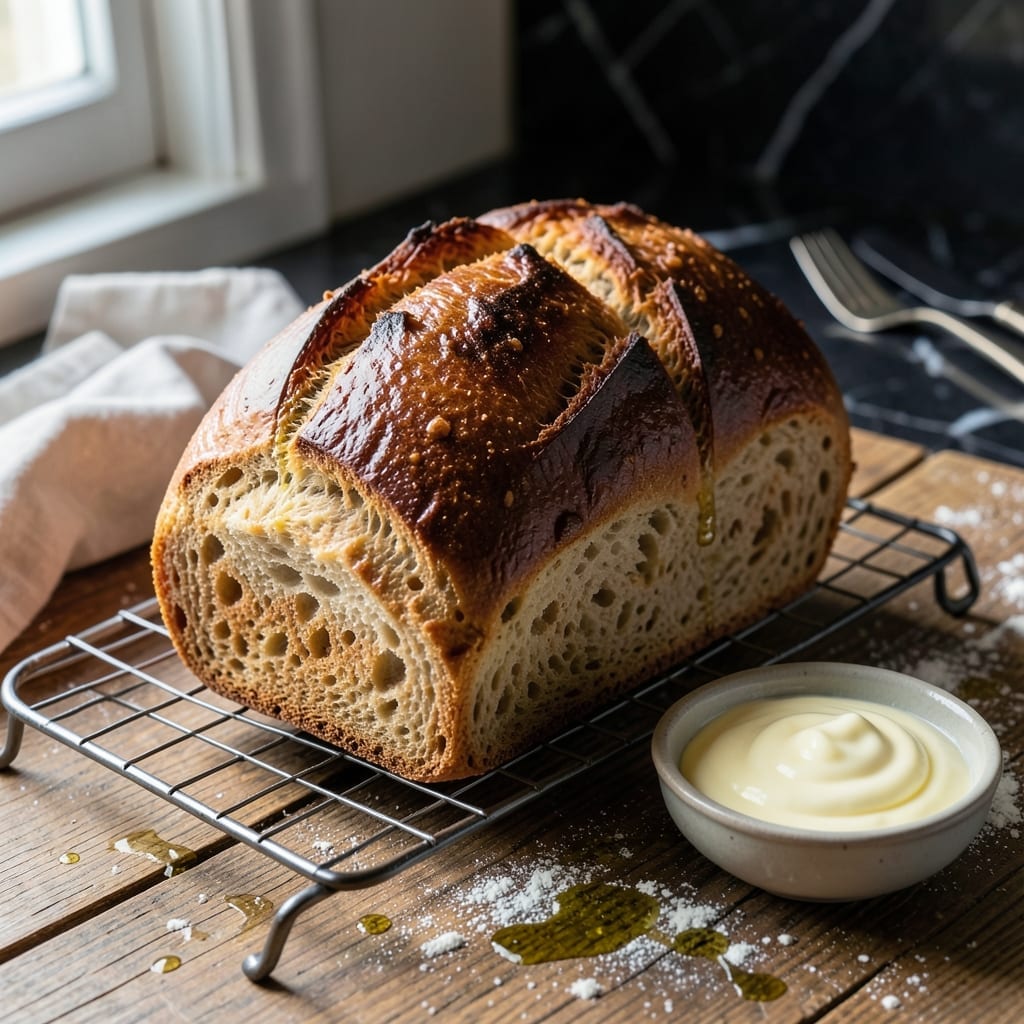
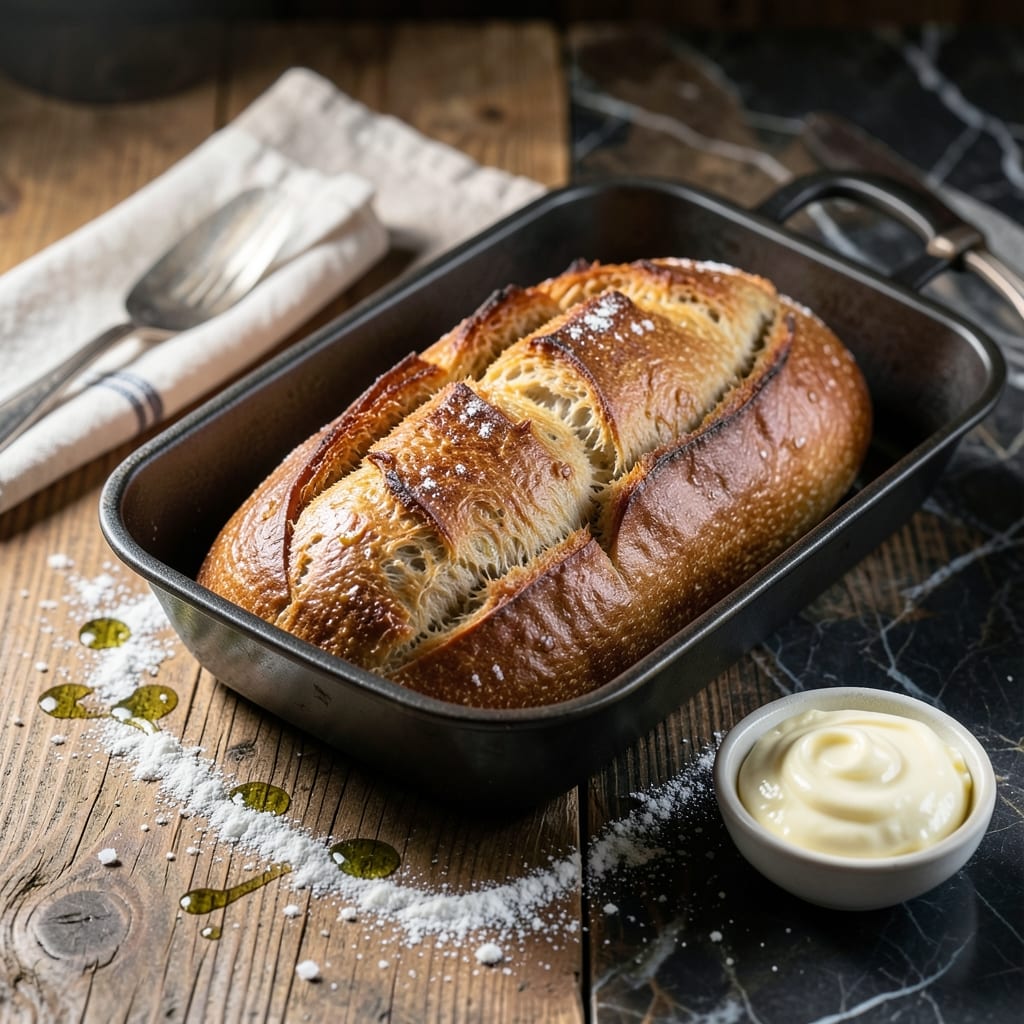
There’s nothing like the aroma of fresh-baked bread filling your kitchen, and this method makes it effortless. Using a bread maker takes the guesswork out of French bread, delivering consistent results every time.
You’ll achieve a golden crust and light, airy interior without the traditional hands-on work. This approach brings bakery-quality loaves to your table with minimal effort and maximum reward.
Ingredients for French Bread Recipe Bread Maker
Just a handful of pantry staples and your bread maker does all the work.
| Ingredient | Amount | Notes |
|---|---|---|
| Bread Flour 🌾 | 3 ¼ cups | High-protein for structure |
| Water 💧 | 1 ¼ cups | Warm, about 110°F |
| Active Dry Yeast 🍞 | 2 ¼ tsp | Or one packet |
| Granulated Sugar 🍚 | 1 tbsp | Feeds the yeast |
| Salt 🧂 | 1 ½ tsp | Fine sea salt preferred |
| Unsalted Butter 🧈 | 1 tbsp | Softened, for crust |
| Cornmeal 🌽 | 2 tbsp | For dusting pan |
| Egg White 🥚 | 1 whole | Optional, for shine |
| All-Purpose Flour 🌾 | ½ cup | For dusting surface |
| Olive Oil 🫒 | 1 tsp | For greasing pan |
The flour is non-negotiable here. Bread flour (I like King Arthur for consistency) gives you that chewy interior and golden crust. Most grocery stores carry it in the baking aisle—look for the higher protein content (around 12-14%). The yeast needs to be fresh; if it’s been in your pantry for over a year, grab a new packet. Fleischmann’s or Red Star are reliable brands.
No bread flour? All-purpose works in a pinch—just add 1 tbsp vital wheat gluten per cup. Out of yeast? Check the expiration date first—old yeast is the #1 reason bread maker loaves don’t rise. The cornmeal can be swapped for semolina (or skip entirely if you don’t have it). The egg white wash is optional but gives that bakery shine (or use milk or water).
Store flour in an airtight container for up to 6 months. Yeast keeps in the fridge for 1 year unopened, 3 months once opened. The dough can be shaped and frozen before baking—just thaw and rise before baking.
Why You’ll Love This Recipe
- Set and Forget: I toss the flour, water, yeast, sugar, and salt into the bread maker and let it do all the work—no kneading, no babysitting.
- Crispy Golden Crust: That first crackle when I slice into it? The yeast and sugar work magic for a flavor that’s simple but impossible to resist.
- Sandwich Hero: Honestly, it’s my go-to for lunchbox staples, dinner sides, or even garlic bread—this loaf fits every meal.
- Pennywise Perfection: Five basic ingredients, one affordable loaf. I save a trip to the bakery and still get that fresh-baked taste.
Step-by-Step Instructions for French Bread Bread Maker
Here’s the method I use to create that perfect bakery-style loaf with minimal effort.
Step 1: Prepare the Bread Maker Pan and Ingredients
Begin by lightly greasing the bread maker pan with the 1 tsp Olive Oil. This prevents sticking and ensures easy removal once baked. I always use a pastry brush for even coverage, making sure to get into all the corners of the pan.
Next, dust the bottom of the pan evenly with the 2 tbsp Cornmeal. This adds texture to your crust and prevents the bread from sticking. The cornmeal should form a thin, even layer—don’t skip this step, as it’s crucial for that authentic bakery feel.
Step 2: Add Liquids and Fat to the Pan
Pour the 1.25 cups Water into the pan first, followed by the 1 tbsp Unsalted Butter. I place the butter in one of the corners so it melts gradually as the machine starts. This order matters because the liquids need to be at the bottom for the yeast to activate properly.
Make sure the water is at the right temperature—around 110°F. If it’s too hot, it can kill the yeast; if too cold, the yeast won’t activate. I test it by dipping my finger in; it should feel warm but not hot.
Step 3: Layer Dry Ingredients and Yeast
Add the 3.25 cups Bread Flour on top of the liquids, spreading it evenly to cover the water completely. Then sprinkle the 1.5 tsp Salt and 1 tbsp Granulated Sugar over the flour. The salt should be kept away from direct contact with the yeast to avoid inhibiting its growth.
Finally, make a small well in the center of the flour and add the 2.25 tsp Active Dry Yeast. This separation ensures the yeast activates at the right time. The sugar will feed the yeast, while the bread flour’s high protein content creates the perfect structure for your loaf.
Step 4: Select and Start the Bread Maker Program
Insert the pan into the bread maker and close the lid. Select the “French Bread” or “Basic Bread” setting, depending on your machine’s options. I use the standard crust setting for a perfect balance of crispness and softness.
Start the program. The bread maker will handle the kneading, rising, and baking automatically. The process typically takes about 3-4 hours, but this can vary by model. Resist the urge to open the lid during the cycle—this can cause the bread to collapse.
Step 5: Finish with Optional Egg White Wash
Once the bread maker signals the end of the baking cycle, carefully remove the pan. If you want a glossy, golden finish, brush the top of the loaf with the 1 whole Egg White beaten lightly with a fork. This step is optional but adds a professional bakery-style shine.
Let the bread cool in the pan for 5 minutes, then transfer it to a wire rack to cool completely. Slicing too soon can result in a gummy texture. The loaf should have a crisp crust and a light, airy interior with an open crumb structure. Enjoy it fresh for the best flavor and texture.
Pro Tips For Making French Bread Recipe Bread Maker
- Warm Your Water: Use water at 110°F—any hotter kills the yeast, any colder slows the rise. I learned this the hard way after a loaf refused to proof.
- Measure Flour Right: Spoon bread flour into your cup and level it off—scooping straight from the bag packs it down and makes dense bread.
- Skip Packed Yeast: Always check the expiration on your yeast packets. Sounds obvious, but I wasted three batches before realizing mine had died.
- Add Sugar Last: Hold the sugar until the yeast is foamy in warm water—this prevents it from activating too early and running out of steam.
Creative Variations of This Recipe
🔥 Spicy Texas Style
Give your French bread a bold kick with a Tex-Mex twist! Add 1 teaspoon of smoked paprika, ½ teaspoon of cayenne pepper, and 1 tablespoon of chopped jalapeños to the dough during the kneading cycle. For extra flair, brush the crust with melted butter and sprinkle ½ cup of shredded cheddar cheese before the final rise. The result? A warm, spicy loaf perfect for pairing with chili or barbecue. 🌶️
🍯 Sweet and Savory Fusion
Blend sweet and savory flavors by incorporating 2 tablespoons of honey and 1 teaspoon of cinnamon into the dough. After baking, drizzle with a glaze made from ½ cup powdered sugar and 1 tablespoon of milk. This variation is ideal for breakfast or as a unique dessert bread. The subtle sweetness complements the classic French bread texture beautifully.
🥗 Healthy Lighter Version
For a lighter take, replace 1 cup of all-purpose flour with 1 cup of whole wheat flour and add 1 tablespoon of flaxseeds for extra fiber. Reduce the salt by half and use 1 teaspoon of olive oil instead of butter. The bread will be slightly denser but packed with nutrients and a nutty flavor. Perfect for those watching their carb intake! 💪
🍂 Seasonal Twist
Embrace the seasons with a pumpkin-spiced French loaf. Add ½ cup of pure pumpkin puree and 1 teaspoon of pumpkin pie spice to the dough. The bread will have a warm, aromatic flavor, making it a cozy treat for fall. Brush the top with a light egg wash for a golden, crispy finish. Pair it with a cup of hot cider for the ultimate autumn experience. 🍁
Nutrition Facts

- 6 Egg Cake Recipe with Oil: Light as Air With Buttery Moisture - October 4, 2026
- 4 Bean Casserole Recipe: One-Pan Heartiness With Smoky Paprika Depth - October 4, 2026
- 3-Ingredient Keto Mug Cake Recipe: Microwave Magic in 2 Minutes - October 4, 2026