
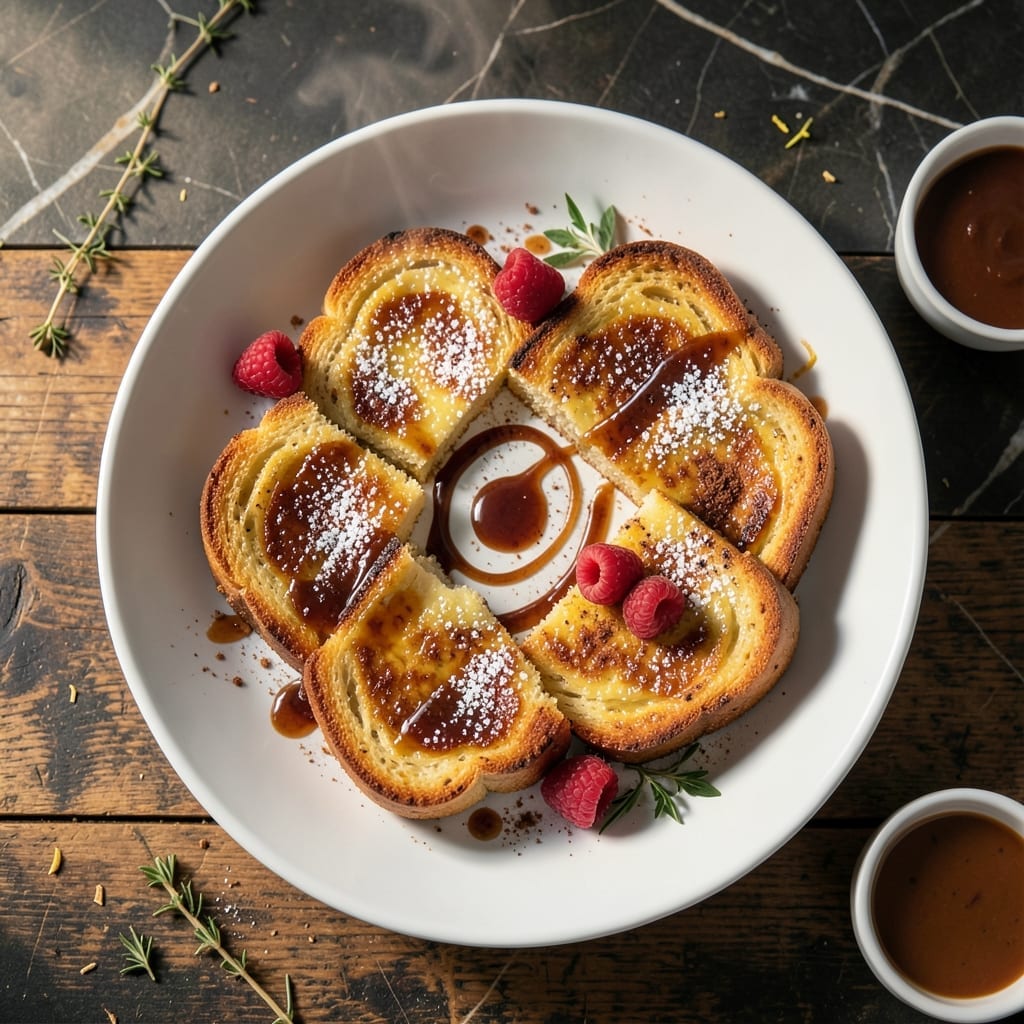
I created this milk-free French toast after realizing how many people need a rich, custardy breakfast without dairy. The secret lies in using extra eggs and a touch of water to achieve the perfect soaking liquid.
This method delivers crisp edges and a tender interior, proving you don’t need milk for authentic French toast. The egg-rich custard creates a golden crust while keeping the center soft and flavorful.
Each slice absorbs just enough custard to develop that classic French toast texture. The results are so satisfying, you won’t miss the milk at all.
Serve with maple syrup or fresh fruit for a complete breakfast experience. Here’s how to make this dairy-free version perfectly every time.
Ingredients for French Toast Recipe Without Milk
Eggs and bread are the stars here. Add sugar, vanilla, and you’re halfway there.
| Ingredient | Amount | Notes |
|---|---|---|
| Thick-Sliced Bread 🍞 | 8 slices | Day-old or stale works best |
| Large Eggs 🥚 | 6 whole | Room temperature preferred |
| Water 💧 | ½ cup | For custard consistency |
| Granulated Sugar 🍚 | 2 tbsp | Adjust to taste preference |
| Vanilla Extract 🌿 | 1 tsp | Pure extract for best flavor |
| Ground Cinnamon 🌶️ | ½ tsp | Optional for warmth |
| Salt 🧂 | ¼ tsp | Balances sweetness |
| Unsalted Butter 🧈 | 2 tbsp | For cooking (or vegan butter) |
| Pure Maple Syrup 🍁 | ½ cup | For serving |
| Fresh Berries 🍓 | 1 cup | Optional garnish |
| Powdered Sugar 🧂 | 2 tbsp | For dusting (optional) |
The bread is key here. Brioche or challah gives that rich, custardy texture even without milk. Day-old is ideal (or toast fresh slices lightly to dry them out). Whole Foods and most bakeries sell thick-cut loaves. I always grab Dave’s Killer Bread for this—it’s sturdy enough to soak up the custard without falling apart. The eggs should be fresh, but room temp works better for even mixing.
No vanilla extract? Almond extract at half the amount works in a pinch. Out of cinnamon? Pumpkin pie spice adds a nice warmth. For extra richness, swap the water for coconut milk (use the canned kind, not carton). If you’re avoiding dairy entirely, vegan butter like Miyoko’s browns beautifully. The sugar can be swapped for maple syrup right in the custard if you prefer.
Leftovers keep in the fridge for 2-3 days—reheat in a toaster oven to revive the crispness. The custard mix is best used immediately, but you can prep dry ingredients the night before. Freezes well too, layered between parchment paper for up to 1 month.
Why You’ll Love This Recipe
- No-Fuss Mix: I just whisk eggs, water, sugar, and vanilla—no last-minute store runs for milk.
- Sweet Vanilla Bite: The sugar and vanilla in the egg wash give it that classic diner flavor without dairy.
- Breakfast or Brunch: Works for lazy Sundays or a quick weekday morning when I’m short on time.
Step-by-Step Instructions for French Toast Without Milk
This method delivers rich, custardy centers with perfectly crisp edges every time.
Step 1: Whisk the Egg Custard Base
In a large, shallow bowl, crack all 6 whole Large Eggs and whisk vigorously until the yolks and whites are fully combined. I like to use a fork for this—it gives you more control than a whisk.
Add the 0.5 cup Water, 2 tbsp Granulated Sugar, 1 tsp Vanilla Extract, 0.5 tsp Ground Cinnamon, and 0.25 tsp Salt. Whisk until the sugar dissolves and the mixture looks silky with no streaks. This water-based custard soaks into the bread beautifully without milk.
Step 2: Soak the Bread Thoroughly
Working with one slice at a time, dip each of the 8 slices Thick-Sliced Bread into the custard mixture. Let it soak for 20-30 seconds per side until the bread absorbs the liquid but doesn’t fall apart.
Here’s the thing—day-old or stale bread works best because it holds up to the soaking without getting soggy. You’ll know it’s ready when the slice feels heavy and saturated but still maintains its shape when lifted. Let any excess drip back into the bowl before cooking.
Step 3: Cook to Golden Perfection
Heat a large skillet over medium heat and melt 1 tbsp Unsalted Butter, swirling to coat the pan evenly. When the butter foams but isn’t brown, add as many bread slices as fit comfortably without crowding.
Cook for 3-4 minutes per side until deep golden brown with crisp edges. Don’t flip too early—wait until the first side is truly golden and releases easily from the pan. Add the remaining 1 tbsp Unsalted Butter between batches as needed.
Step 4: Serve Warm with Toppings
Transfer the cooked French toast to a plate and keep warm in a 200°F oven while you finish the remaining slices. Serve immediately while still hot and crisp.
Drizzle with 0.5 cup Pure Maple Syrup and top with 1 cup Fresh Berries for a fresh contrast. For an extra touch, dust with 2 tbsp Powdered Sugar. The berries add a bright, juicy pop against the rich, custardy French toast.
Pro Tips For Making French Toast Recipe Without Milk
- Soak, Don’t Drown: Dip the bread for about 20-30 seconds per side—long enough to saturate but not so long that it falls apart. I learned this the hard way after my first batch turned into soggy egg pudding.
- Use Day-Old Bread: Fresh bread soaks up too much liquid and gets mushy. A slightly stale, thick-sliced loaf holds its shape and gives you that perfect crisp edge.
- Heat the Pan First: Start with a medium-hot pan and about 1 tablespoon of butter or oil. After burning three batches, I finally figured out that cold pans make greasy, unevenly cooked toast.
- Add a Pinch of Salt: Sounds weird, but it works—mix a pinch of salt into your egg-water batter. My grandmother swore by this, and it balances the sweetness of the sugar and vanilla.
Essential Equipment for This Recipe
Non-Stick Skillet
A 10-12 inch non-stick skillet is my top choice for even browning without sticking. I use Calphalon Classic—it distributes heat beautifully and cleans up easily. The non-stick surface ensures your French toast develops that perfect golden crust without tearing.
Shallow Mixing Bowl
You need a wide, shallow bowl (at least 8 inches across) for soaking the bread properly. I love my Pyrex glass mixing bowl because you can see the custard color and monitor soaking progress. A deep bowl makes dipping awkward and messy.
Flexible Spatula
A thin, heat-resistant silicone spatula is essential for flipping delicate custard-soaked bread. I use OXO Good Grips—it slides under slices without tearing them. The flexibility helps release any stuck bits from the pan.
Whisk or Fork
For mixing your egg custard, a balloon whisk creates the smoothest texture, but I often just use a fork for simplicity. Either works as long as you beat the eggs thoroughly until no streaks remain. The key is getting that silky consistency.
Toaster Oven
For keeping batches warm, a toaster oven at 200°F works perfectly. I use my Breville Smart Oven to hold finished slices while I cook the rest. This prevents sogginess that can happen with a covered plate. 💡
Measuring Tools
Have measuring cups and spoons ready for precise custard mixing. I keep a set of OXO stainless steel measures in my drawer—they nest nicely and last forever. Accurate measurements ensure consistent texture every time.
Nutrition Facts
Frequently Asked Questions
What can I use instead of water in the custard?
Try coconut milk or almond milk for a richer flavor. These add creaminess while keeping it dairy-free. Just use the same 0.5 cup measurement.
Why does my French toast turn out soggy?
Soggy toast usually means the bread soaked too long or wasn’t stale enough. Stick to 20-30 seconds per side and use day-old bread. The pan should be hot enough to sizzle when bread hits it.
Can I make this ahead of time?
Yes! Mix the custard the night before and store in the fridge. Soak and cook the bread in the morning for freshest results. Leftovers reheat well in a toaster oven at 350°F for 5-10 minutes.

- 6 Egg Cake Recipe with Oil: Light as Air With Buttery Moisture - October 4, 2026
- 4 Bean Casserole Recipe: One-Pan Heartiness With Smoky Paprika Depth - October 4, 2026
- 3-Ingredient Keto Mug Cake Recipe: Microwave Magic in 2 Minutes - October 4, 2026