
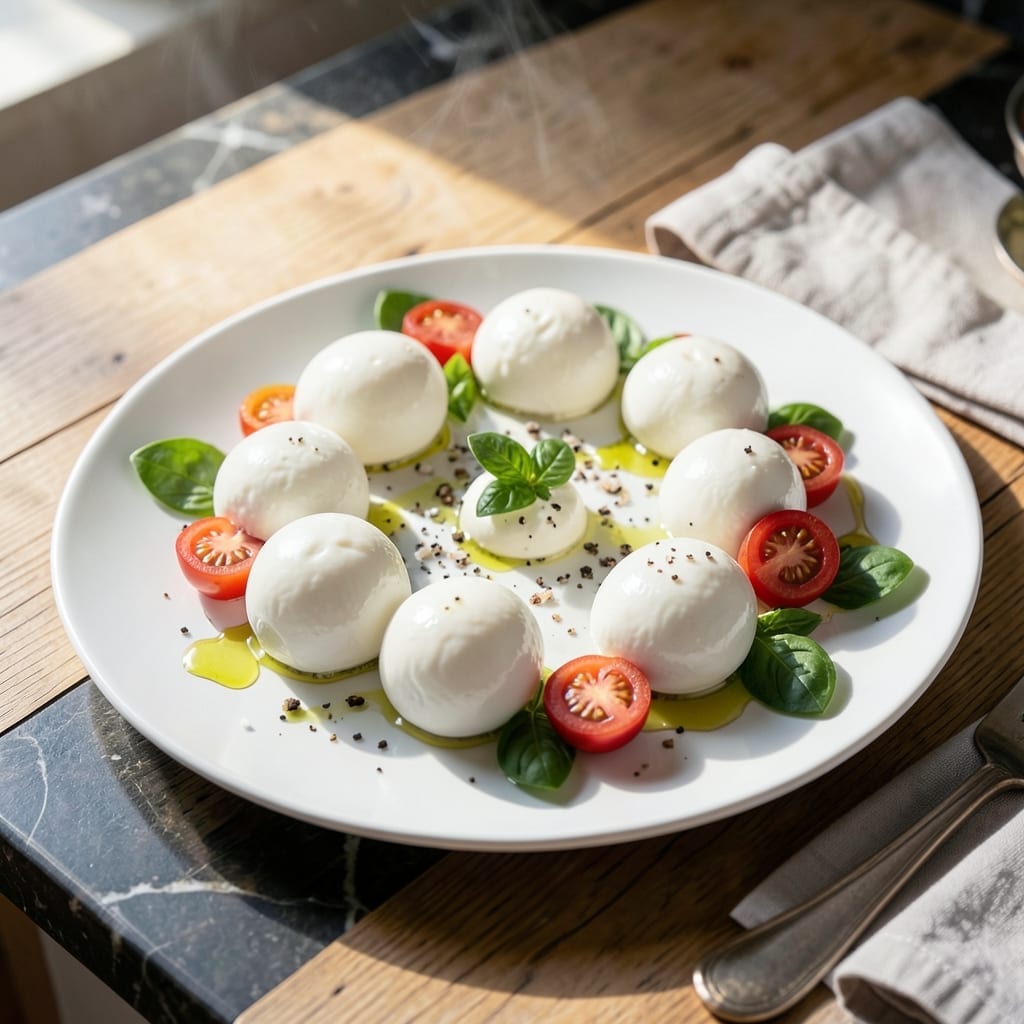
There’s an art to crafting fresh mozzarella that feels both magical and entirely achievable at home. This recipe demystifies the process, turning simple milk and rennet into silky, tender balls suspended in a light brine.
With precise temperatures and gentle stretching, you’ll create cheese that rivals any specialty shop. The key lies in patience and attention to detail—curdling the milk properly and working the curds until they reach the perfect elasticity.
The result is a batch of delicate mozzarella balls with a subtle milky sweetness, ready to elevate salads, antipasti, or enjoy on their own. Their texture is best fresh, making them a true homemade luxury.
Store them in brine to preserve their freshness and flavor. Here’s how to begin.
Ingredients for Fresh Mozzarella Balls
Simple milk transformed into delicate, silky cheese with just a few key ingredients.
| Ingredient | Amount | Notes |
|---|---|---|
| Whole Milk 🥛 | 1 gal | Not ultra-pasteurized, fresh preferred |
| Citric Acid 🧪 | 1 ½ tsp | Dissolved in cold water |
| Rennet 🧪 | ¼ tsp | Vegetarian liquid rennet |
| Ice Water 💧 | 2 cups | For cooling curds |
| Salt 🧂 | 1 tsp | Kosher or sea salt |
| Calcium Chloride 🧪 | ¼ tsp | Optional for store-bought milk |
| Brine Water 💧 | 4 cups | Lightly salted for storage |
| Brine Salt 🧂 | 1 tbsp | Non-iodized preferred |
The milk quality is non-negotiable here. Whole milk from a local dairy (not ultra-pasteurized) yields the best curd formation. New England Cheesemaking Supply offers reliable vegetarian rennet and calcium chloride. Citric acid is widely available at brewing supply stores or Amazon. Avoid any milk labeled ‘ultra’—it simply won’t set properly for cheesemaking.
No rennet? Lemon juice or vinegar can work in a pinch, but expect a softer curd and less stretch. Calcium chloride isn’t strictly necessary for raw milk, but add it for store-bought. The brine ratio is flexible—adjust salt to taste, but keep it light. If you’re making a large batch, maintain the same proportions for consistent results.
Fresh mozzarella is best consumed within 3-4 days, stored in its brine in the fridge. The texture changes slightly after the first day, becoming firmer. Brine can be reused once or twice for new batches. Always use non-reactive containers for storage to preserve flavor and texture.
Why You’ll Love This Recipe
- Minimal Ingredients: I only need milk, citric acid, rennet, and salt—things I already have in my pantry.
- Melt-in-Your-Mouth Freshness: That first bite of creamy, just-made mozzarella with its delicate milky sweetness? Honestly, store-bought can’t compare.
- Endless Meal Potential: I stretch it over caprese salads, tuck it into sandwiches, or serve it with crusty bread and tomatoes.
- Budget-Friendly Luxury: A gallon of milk turns into multiple batches for the cost of one store-bought ball.
Step-by-Step Instructions for Fresh Mozzarella Balls
Master the technique for perfect texture and flavor with this professional method.
Step 1: Acidify and Heat the Whole Milk
Pour the 1 gal Whole Milk into a stainless steel pot. Dissolve the 1.5 tsp Citric Acid in ¼ cup of cold water, then stir it into the milk. Add the 0.25 tsp Calcium Chloride if using—this helps firm the curds when working with store-bought milk.
Place the pot over medium heat and warm the milk to 55°F, stirring gently to distribute the acid. Continue heating slowly to 90°F—you’ll notice the milk beginning to thicken slightly. This gradual process ensures even acidification without scorching.
Step 2: Add Rennet and Form Curds
Remove the pot from heat and let the milk cool to 80°F. Add the 0.25 tsp Rennet diluted in ¼ cup of cold water, stirring gently for 30 seconds to incorporate. Cover and let sit undisturbed for 30-45 minutes.
The milk will set into a firm gelatin-like consistency. Test by inserting a clean knife at an angle—if it comes out clean with a defined break, the curds are ready. Cut the curds into ½-inch cubes using a long knife, working in a grid pattern across the entire surface.
Step 3: Cook and Stretch the Curds
Return the pot to medium-low heat and warm the curds to 105°F, stirring gently to prevent sticking. Maintain this temperature for 30-45 minutes, stirring occasionally. The curds will shrink, expel whey, and develop a slightly springy texture.
Drain the curds in a colander, then transfer them to a microwave-safe bowl. Microwave for 30-45 seconds to heat the curds to 135°F. Using food-safe gloves, knead and fold the curds gently until they become smooth, shiny, and elastic—this stretching process develops the signature mozzarella texture.
Step 4: Shape into Balls and Cool
Once the curds reach the proper consistency, divide the mass into 16 equal portions for bite-sized balls. Roll each portion quickly between your palms to form smooth spheres. If the cheese becomes too cool to stretch, reheat briefly in the microwave.
Prepare the 2 cups Ice Water with the 1 tsp Salt dissolved in it. Submerge the shaped balls in the ice bath for 15-20 minutes to set their shape and cool them completely. This rapid cooling stops the cooking process and firms up the exterior.
Step 5: Brine for Storage and Flavor
Combine the 4 cups Brine Water with the 1 tbsp Brine Salt in a clean container, stirring until the salt dissolves completely. Transfer the cooled mozzarella balls to the brine solution, ensuring they’re fully submerged.
Refrigerate for at least 4 hours before serving to allow the flavors to develop. The brine preserves the cheese and enhances its mild, milky taste. Store in the brine in the refrigerator for up to 1 week, changing the brine every 2-3 days for optimal freshness.
Pro Tips For Making Fresh Mozzarella Balls
- Heat Milk Slowly: Bring the whole milk to 90°F first—any hotter and the citric acid won’t set properly, and I learned this the hard way after my first three batches turned to rubber.
- Use Fresh Rennet: Check the expiration date on your rennet; old or weak rennet won’t coagulate the milk tightly enough, and you’ll end up with a sad, crumbly mess.
- Shock in Ice Water: Plunge the curds into ice water for at least 2 minutes—it stops the cooking instantly and makes them easier to shape into smooth balls.
- Salt the Brine: Dissolve 1 teaspoon of salt per cup of ice water for the soak; it seasons the mozzarella evenly and keeps it from tasting bland, even if you’re tempted to skip it.
Pro Cooking Tips for fresh mozzarella balls
Precision Temperature Control
Use a digital thermometer for exact readings—55°F for acid, 90°F for curdling, and 105°F for cooking curds. Even 5°F off can ruin your batch. I swear by my ThermoWorks Instant Read.
Curd Cutting Technique
Use a long, thin cheese knife or offset spatula to cut clean ½-inch cubes. Cut in a grid pattern without stirring. This creates uniform curds that cook evenly and stretch beautifully later.
Stretching Secret
Microwave curds to 135°F before stretching—this is the magic temperature where they become pliable. If they cool, reheat for 10-15 seconds and continue. Food-safe gloves protect your hands from the heat. 🌡️
Brine Balance
Your brine should taste like mild seawater. Use 1 tbsp salt per 4 cups water. Too salty and it overpowers; too weak and it won’t preserve. I taste and adjust before adding the cheese.
Equipment Essentials
A stainless steel pot prevents reactions with the acid. Avoid aluminum. A microwave-safe bowl and colander are must-haves. Invest in a cheese-making kit from New England Cheesemaking Supply for rennet and citric acid. 💡
Timing Matters
Don’t rush the 30-45 minute rest after adding rennet. The curds need this time to set properly. Similarly, the 15-20 minute ice bath is crucial for texture. Patience pays off with perfect mozzarella.
Nutrition Facts
Frequently Asked Questions
Can I use pasteurized milk instead of raw?
Yes, but add ¼ tsp calcium chloride to help firm the curds. Ultra-pasteurized milk won’t work at all. Store-bought pasteurized milk works fine with this adjustment.
Why didn’t my curds stretch properly?
Most likely the temperature wasn’t 135°F during stretching. Also, ensure you used rennet, not just acid. Food-safe gloves help you work the curds longer.
How long can I store the mozzarella?
In brine, they’ll keep for 1 week in the fridge. Change the brine every 2-3 days for best texture and flavor. Freshness peaks within 3-4 days.
Can I make larger mozzarella balls?
Divide into fewer, larger portions when shaping. Remember, larger balls need more time in the ice bath to cool completely. Uniform size ensures even cooking.

- 6 Egg Cake Recipe with Oil: Light as Air With Buttery Moisture - October 4, 2026
- 4 Bean Casserole Recipe: One-Pan Heartiness With Smoky Paprika Depth - October 4, 2026
- 3-Ingredient Keto Mug Cake Recipe: Microwave Magic in 2 Minutes - October 4, 2026