
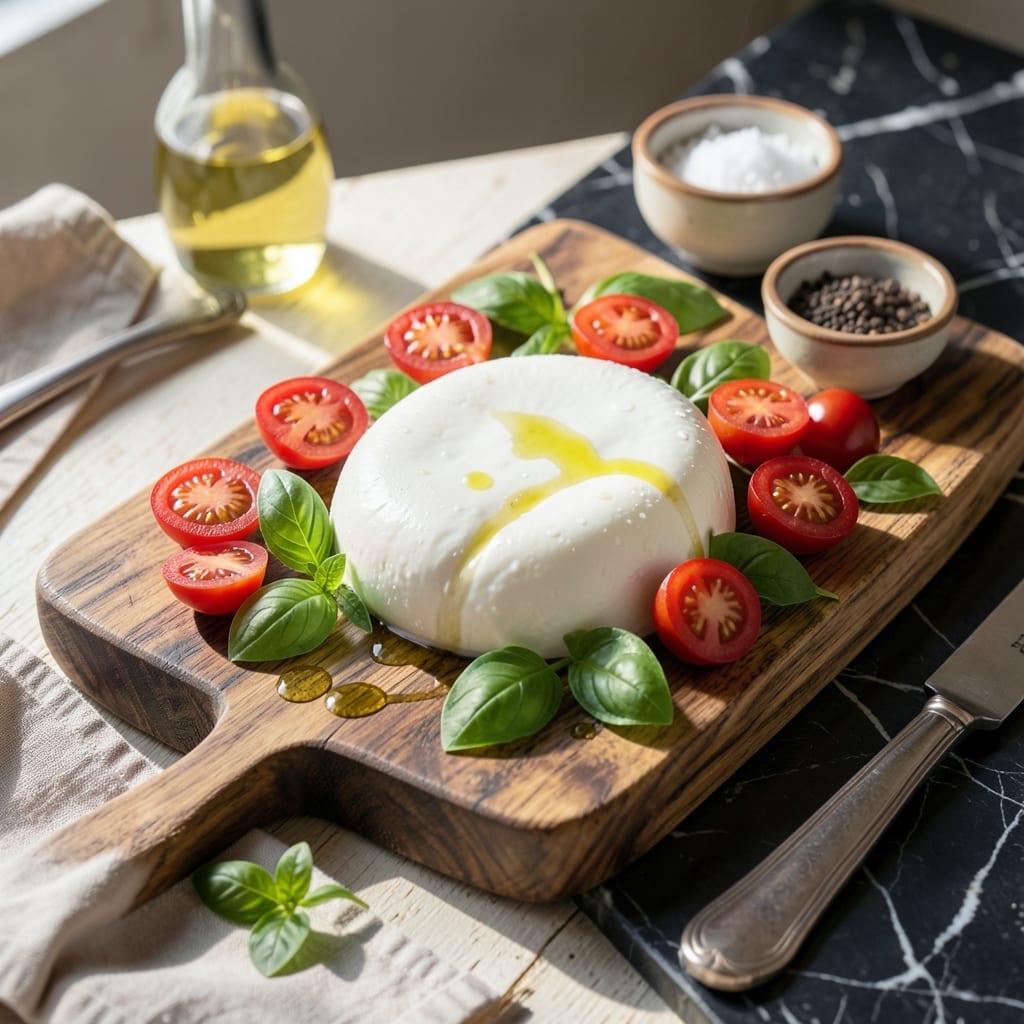
Making fresh mozzarella at home transforms your kitchen into a cheese-making studio with surprisingly simple techniques.
This process requires just a few ingredients and 30 minutes of active time, delivering silky smooth curds that put store-bought versions to shame. The key lies in precise temperature control and gentle handling of the curds.
What emerges is cheese so fresh and delicate it barely needs seasoning—just a sprinkle of salt brings out its natural sweetness. The texture is impossibly soft yet holds its shape beautifully when sliced.
Perfect for caprese salads, pizzas, or eating straight from the bowl. Here’s how to create this artisanal cheese in your own kitchen.
Ingredients for Fresh Mozzarella
Just milk, cream, and a few special ingredients make this artisanal cheese at home possible.
| Ingredient | Amount | Notes |
|---|---|---|
| Whole Milk 🥛 | 1 cup | Not ultra-pasteurized, full-fat |
| Heavy Cream 🥛 | ½ cup | Full-fat for richness |
| Citric Acid 🧪 | 1 ½ tsp | Dissolved in water first |
| Rennet Tablets 🧀 | ¼ piece | Vegetarian rennet preferred |
| Ice Cubes ❄️ | 4 cups | For chilling curds |
| Kosher Salt 🧂 | 1 tsp | Fine grain for even seasoning |
| Distilled Water 💧 | ¼ cup | For dissolving citric acid |
| Cheese Salt 🧂 | ½ tsp | Optional for finishing |
| Lemon Juice 🍋 | 1 tsp | Freshly squeezed, backup acid |
The milk is everything here. Whole, non-ultra-pasteurized is non-negotiable—grab it from Whole Foods or a local dairy if you can. The heavy cream boosts the fat content for that signature stretch. Junket rennet tablets are widely available and work perfectly. If you’re avoiding animal products, vegetarian rennet (microbian-based) is your go-to. Don’t skip the ice—cold water stops the cooking process instantly.
No rennet? Lemon juice or vinegar can work in a pinch, but the texture won’t be as smooth. Citric acid is sold as canning acid at most grocery stores if you can’t find it labeled as such. Skip the ultra-pasteurized milk—it won’t set properly. If you’re doubling the batch (and you’ll want to), scale all ingredients equally. The salt amount can be adjusted to taste—start light, you can always add more.
Fresh mozzarella is best eaten within 3 days (if it lasts that long). Store it submerged in lightly salted whey or water in the fridge. The whey left over from making the cheese? Save it for ricotta or smoothies—it’s packed with protein. Don’t freeze—it’ll lose that perfect texture.
Why You’ll Love This Recipe
- No Fancy Equipment: I just need a pot, a thermometer, and those rennet tablets to turn whole milk into creamy mozzarella.
- Milk to Magic: The citric acid and heavy cream create that fresh, slightly tangy flavor that store-bought can’t touch.
- Salad or Pizza Night: I stretch it over caprese salads or melt it on homemade pie—equally perfect.
- Half the Cost: Making my own with whole milk saves me a fortune compared to buying those little fresh balls.
Step-by-Step Instructions for Fresh Mozzarella
Here’s the method. Straightforward, tested, works every time.
Step 1: Prepare the Acid Solution and Heat the Milk
Dissolve the 1.5 tsp citric acid in the 0.25 cup distilled water and set it aside. Pour the 1 cup whole milk and 0.5 cup heavy cream into a stainless steel pot. Stir in the citric acid solution and set the pot over medium heat.
Gently heat the mixture to 90°F, stirring occasionally to distribute the acid. You’ll notice the milk starting to curdle slightly—that’s the acid working. Don’t let it boil; we’re aiming for slow, controlled heating. This step ensures the proteins are properly acidified for clean curd formation.
Step 2: Add Rennet and Form the Curds
Remove the pot from heat and let it cool to 55°F. Meanwhile, dissolve the 0.25 piece rennet tablets in 1 tsp lemon juice (this helps activate it). Stir the rennet mixture into the milk for 30 seconds, then stop stirring and cover the pot.
Let it sit undisturbed for 5-10 minutes until the milk sets into a firm, custard-like gel. You’ll know it’s ready when you can insert a clean knife and it comes out with a clean break. If it doesn’t set, wait another 5 minutes—temperature and timing can vary slightly.
Step 3: Cut and Cook the Curds
Once the gel is firm, cut it into 1-inch cubes using a long knife. Return the pot to medium-low heat and warm the curds to 105°F, stirring gently to keep them from sticking. This step expels whey and firms up the curds.
Maintain the temperature at 105°F for 5-10 minutes, stirring occasionally. You’ll see the curds shrink and the whey become clearer. The curds should be firm but still slightly springy when pressed. If the temperature climbs too high, remove the pot from heat briefly to cool it down.
Step 4: Drain and Stretch the Curds
Drain the curds in a colander lined with cheesecloth, reserving the whey. Rinse the curds briefly under cool water to remove excess acid, then transfer them to a microwave-safe bowl. Microwave for 30-45 seconds until the curds reach 135°F—this makes them pliable for stretching.
Add the 1 tsp kosher salt and knead the curds gently with your hands (use gloves if the mixture is too hot). If the curds are too stiff, microwave for another 15-20 seconds. Once stretchy, shape into balls and submerge in a bowl of 4 cups ice cubes to cool and set.
Step 5: Finish with Cheese Salt and Serve
Remove the mozzarella from the ice bath and pat dry with paper towels. Sprinkle with the 0.5 tsp cheese salt if using, which enhances the flavor and helps preserve the cheese. Your mozzarella should be smooth, slightly shiny, and springy to the touch.
Serve immediately for the best texture, or store in the refrigerator in a sealed container with a little whey to keep it moist. It’s perfect for caprese salads, pizza, or eating fresh with a drizzle of olive oil and a sprinkle of black pepper.
Pro Tips For Making Fresh Mozzarella
- Use Raw Milk: I learned this the hard way—ultra-pasteurized milk just won’t form proper curds. Seek out raw or at least pasteurized (not ultra) whole milk for curds that actually hold together.
- Dissolve Citric Acid First: Stir the citric acid into cool water before adding it to the warm milk—this prevents clumping and guarantees even acid distribution for consistent curd formation.
- Keep It Warm: Maintain the milk at 90°F while adding rennet, and don’t let it dip below 85°F during the 30-minute set. A too-cool bath gives you weak, crumbly curds.
- Shock with Ice: After cutting the curds, plunge them into ice water for 5 minutes—this stops the cooking instantly and makes the cheese easier to stretch without turning rubbery.
Make-Ahead Tips for This Recipe
Prep Ahead Strategy
You can prepare the acid solution and measure all ingredients the night before. Store the citric acid mixture in a sealed container at room temperature, and keep the whole milk and heavy cream refrigerated until ready to use. This cuts your active prep time in half the next day. 💡
Curd Formation Timing
The rennet setting stage is the most unpredictable part. If you’re making this for a specific meal, start the process 2-3 hours before serving to account for any variations in setting time. The curds can rest in whey at room temperature for up to 1 hour without issue.
Storing Fresh Mozzarella
Submerge the finished cheese in lightly salted whey or water in an airtight container. This keeps it fresh for up to 3 days in the fridge. Change the liquid daily to maintain the best texture and flavor. ❄️
Reheating for Stretching
If your curds firm up too much before stretching, microwave in 15-second bursts until they reach 135°F. Work quickly—this small window is when the cheese is most pliable. I keep a bowl of ice water ready to cool the cheese immediately after shaping.
Freezing Advice
While not ideal, you can freeze mozzarella for up to 1 month if necessary. Wrap it tightly in plastic wrap and place in a freezer bag. Thaw in the fridge overnight, but expect a slightly grainier texture. It works best for cooked dishes like pizza.
Whey Utilization
Don’t discard the leftover whey! Use it to make ricotta cheese by heating it to 185°F with a splash of vinegar. It’s also excellent in smoothies or as a protein-rich liquid for baking bread. Every drop counts in home cheese-making.
Nutrition Facts
Frequently Asked Questions
Why do I need non-ultra-pasteurized milk?
Ultra-pasteurized milk is heated to higher temps, which prevents proper curd formation. Whole, non-ultra-pasteurized milk contains the necessary proteins and enzymes for cheese-making to work.
Can I use lemon juice instead of citric acid?
Yes, but the texture won’t be as smooth. Use 3 tbsp fresh lemon juice for every 1.5 tsp citric acid. The flavor may be slightly tangier, but it works in a pinch.
How do I know when the curds are ready to stretch?
They should reach 135°F and feel pliable like warm taffy. If too stiff, microwave for 15-20 seconds more. Overheating makes them dry and rubbery.
What if my mozzarella doesn’t melt properly?
This usually means the curds weren’t heated enough during stretching. Ensure they reach 135°F and knead thoroughly. Properly made cheese will melt beautifully on pizza.

- 6 Egg Cake Recipe with Oil: Light as Air With Buttery Moisture - October 4, 2026
- 4 Bean Casserole Recipe: One-Pan Heartiness With Smoky Paprika Depth - October 4, 2026
- 3-Ingredient Keto Mug Cake Recipe: Microwave Magic in 2 Minutes - October 4, 2026