
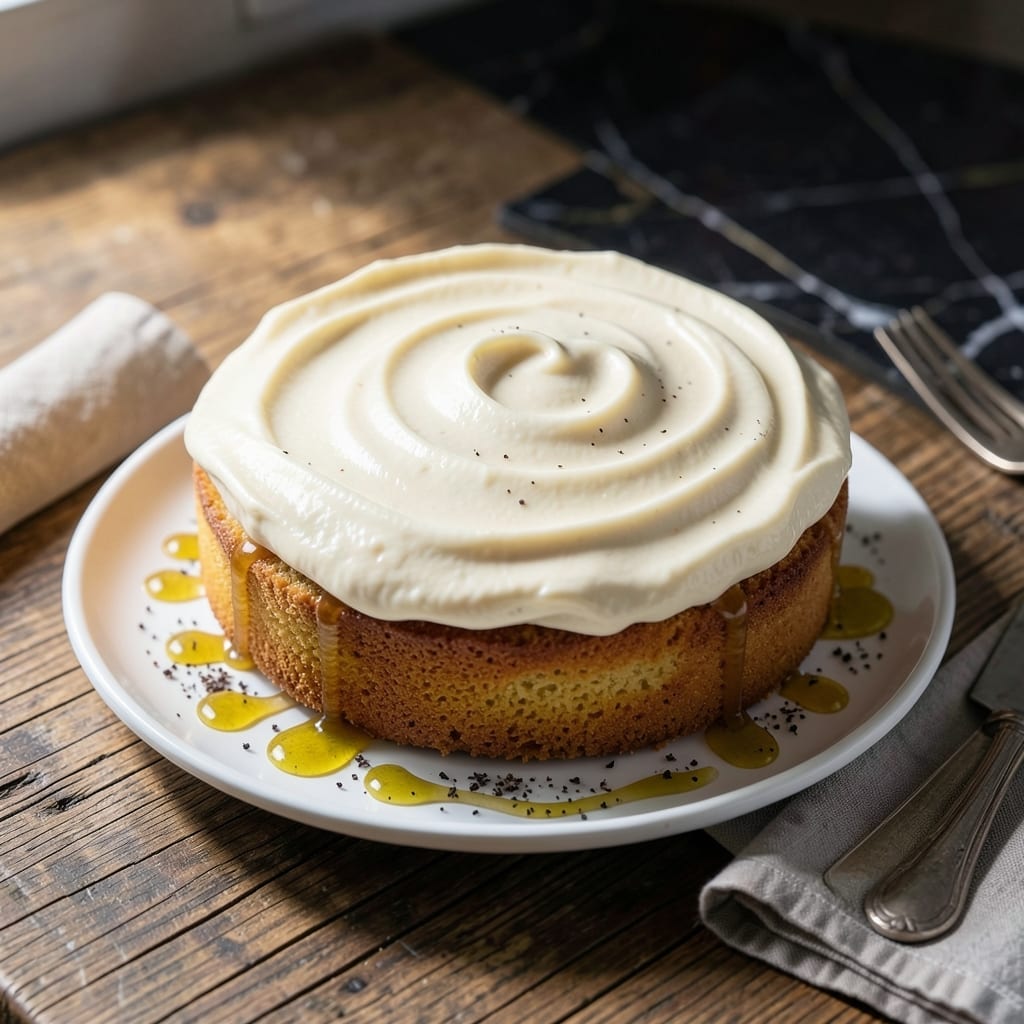
I developed this frosting to offer a smooth, spreadable alternative that skips the powdered sugar entirely. The key lies in dissolving granulated sweetener properly to avoid any grainy texture.
This method creates a silky glaze that works beautifully for cakes, cupcakes, or cookies. It maintains stability while offering the same sweet satisfaction without the traditional ingredient.
Ingredients for Frosting Recipe No Powdered Sugar
Seven simple ingredients transform granulated sugar into a silky, spreadable glaze without powdered sugar.
| Ingredient | Amount | Notes |
|---|---|---|
| Granulated Sugar 🍚 | 2 cups | White or organic, fully dissolved |
| Whole Milk 🥛 | ½ cup | Or substitute 2% for lighter texture |
| Unsalted Butter 🧈 | ½ cup | Room temperature for smooth melting |
| Corn Syrup 💧 | 2 tbsp | Light variety prevents crystallization |
| Vanilla Extract 🌿 | 2 tsp | Pure vanilla for best flavor |
| Salt 🧂 | ¼ tsp | Fine sea salt balances sweetness |
| Heavy Cream 🥛 | ¼ cup | Optional for richer consistency |
The sugar quality matters here—Domino or C&H dissolve most reliably without residue. Use organic granulated if avoiding additives, but standard white sugar works perfectly. Whole milk provides the fat needed for stability; skim will thin the frosting too much. For the butter, Land O’Lakes or Kerrygold unsalted ensures no salt interference with your sweetness balance.
No corn syrup? Honey or agave at equal amounts works, though it may darken the color slightly. Substitute half-and-half for whole milk if that’s what you have on hand. The vanilla extract should be pure, not imitation—the flavor difference is noticeable in this simple preparation. For a dairy-free version, coconut milk and vegan butter make excellent substitutes.
This glaze sets at room temperature but stays spreadable for 2-3 hours. Store in an airtight container in the fridge for up to 5 days—reheat gently in a double boiler to restore smoothness. Freezing isn’t recommended as it can separate upon thawing.
Why You’ll Love This Recipe
- No Fuss Cooking: I just melt butter, sugar, and milk on the stove—no sifting, no powdered sugar mess.
- Rich Caramel Notes: The corn syrup and vanilla give it that deep, buttery sweetness I can’t get enough of.
- Cakes to Cookies: I’ve slathered this on birthday cakes, cupcakes, even cinnamon rolls with zero complaints.
- Stays Soft: Honestly, it keeps for days in the fridge and spreads just as smooth when I pull it back out.
Step-by-Step Instructions for Frosting Without Powdered Sugar
This method delivers a glossy, spreadable glaze using standard pantry ingredients and precise technique.
Step 1: Combine and Dissolve the Granulated Sugar
In a medium saucepan, combine the 2 cups Granulated Sugar with the 0.5 cup Whole Milk and 2 tbsp Corn Syrup. The light corn syrup is essential—it prevents crystallization and ensures a smooth final texture.
Place the saucepan over medium heat and stir constantly with a silicone spatula until the sugar fully dissolves. You’ll know it’s ready when the mixture becomes clear and translucent, with no visible sugar granules remaining. This should take 5-7 minutes. Avoid high heat, as it can cause scorching.
Step 2: Incorporate Butter and Bring to a Simmer
Once the sugar is dissolved, add the 0.5 cup Unsalted Butter, which should be at room temperature for even melting. Stir until the butter is completely incorporated and the mixture is smooth.
Increase the heat to medium-high and bring the mixture to a gentle boil. Let it simmer for 3-4 minutes without stirring—this allows the sugar to reach the proper concentration. Watch for the edges to bubble consistently; this indicates it’s ready for the next step.
Step 3: Temper and Finish with Flavorings
Remove the saucepan from heat and let the mixture cool for 2-3 minutes to prevent separating when adding the cold liquids. Stir in the 2 tsp Vanilla Extract and 0.25 tsp Salt. The vanilla adds depth, while the salt balances the sweetness.
For a richer consistency, slowly whisk in the 0.25 cup Heavy Cream until fully combined. The glaze will thicken slightly as it cools. If it appears too thin, let it sit for an additional 5 minutes—it will reach the ideal spreading consistency.
Step 4: Cool and Apply the Glaze
Transfer the glaze to a heatproof bowl and let it cool to room temperature, stirring occasionally. This should take 15-20 minutes. The glaze is ready when it coats the back of a spoon and drizzles slowly in a thick, steady stream.
Use immediately while still slightly warm for easy spreading. Apply to cakes, cupcakes, or pastries with a spatula or by pouring. The glaze will set to a smooth, semi-firm finish as it cools completely, creating an elegant, professional-quality topping.
Pro Tips For Making Frosting Recipe No Powdered Sugar
- Boil to 238°F: Use a candy thermometer and cook the sugar-milk mixture to exactly 238°F—any lower and your frosting will be runny, any higher and it’ll turn grainy. I learned this the hard way after ruining two batches by guessing.
- Use room-temp butter: Make sure your unsalted butter is truly soft, about 65-68°F, before creaming. Cold butter won’t blend smoothly with the hot syrup, and melted butter makes the frosting greasy.
- Skip the stirring: Resist the urge to stir the sugar syrup while it’s cooking—it can cause crystallization. Just swirl the pan gently if you need to check the color.
- Add corn syrup last: Stir in the corn syrup only after the sugar and milk reach a rolling boil. Adding it too early can prevent the mixture from reaching the right temperature. Sounds weird, but it works.
Common Mistakes When Making Great frosting recipe no powdered sugar
🔥 Using Cold Ingredients
Starting with cold butter or cream cheese can lead to lumpy, uneven frosting. These ingredients need to be soft and pliable to blend smoothly with granulated sugar alternatives.
Fix: Take butter and cream cheese out of the fridge 1-2 hours before making the frosting. They should be room temperature but not melted.
🍳 Overmixing the Batter
Mixing too long after adding granulated sugar can incorporate excess air, making the frosting grainy or runny. Overmixing also risks separating the fats from the liquids.
Fix: Mix just until the sugar dissolves and the frosting is smooth, usually 3-5 minutes on medium speed.
🌡️ Skipping the Dissolving Step
Granulated sugar doesn’t dissolve as easily as powdered sugar, leading to a gritty texture. Without proper dissolution, your frosting won’t achieve that silky consistency.
Fix: Dissolve granulated sugar in a small amount of warm liquid (like milk or cream) before adding it to the butter mixture.
✨ Ignoring the Sweetness Balance
Granulated sugar is sweeter than powdered sugar, so using a 1:1 ratio can make your frosting cloyingly sweet. This can overpower the other flavors in your dessert.
Fix: Start with 25% less granulated sugar than the powdered sugar amount in traditional recipes, then adjust to taste.
Nutrition Facts

- 6 Egg Cake Recipe with Oil: Light as Air With Buttery Moisture - October 4, 2026
- 4 Bean Casserole Recipe: One-Pan Heartiness With Smoky Paprika Depth - October 4, 2026
- 3-Ingredient Keto Mug Cake Recipe: Microwave Magic in 2 Minutes - October 4, 2026