
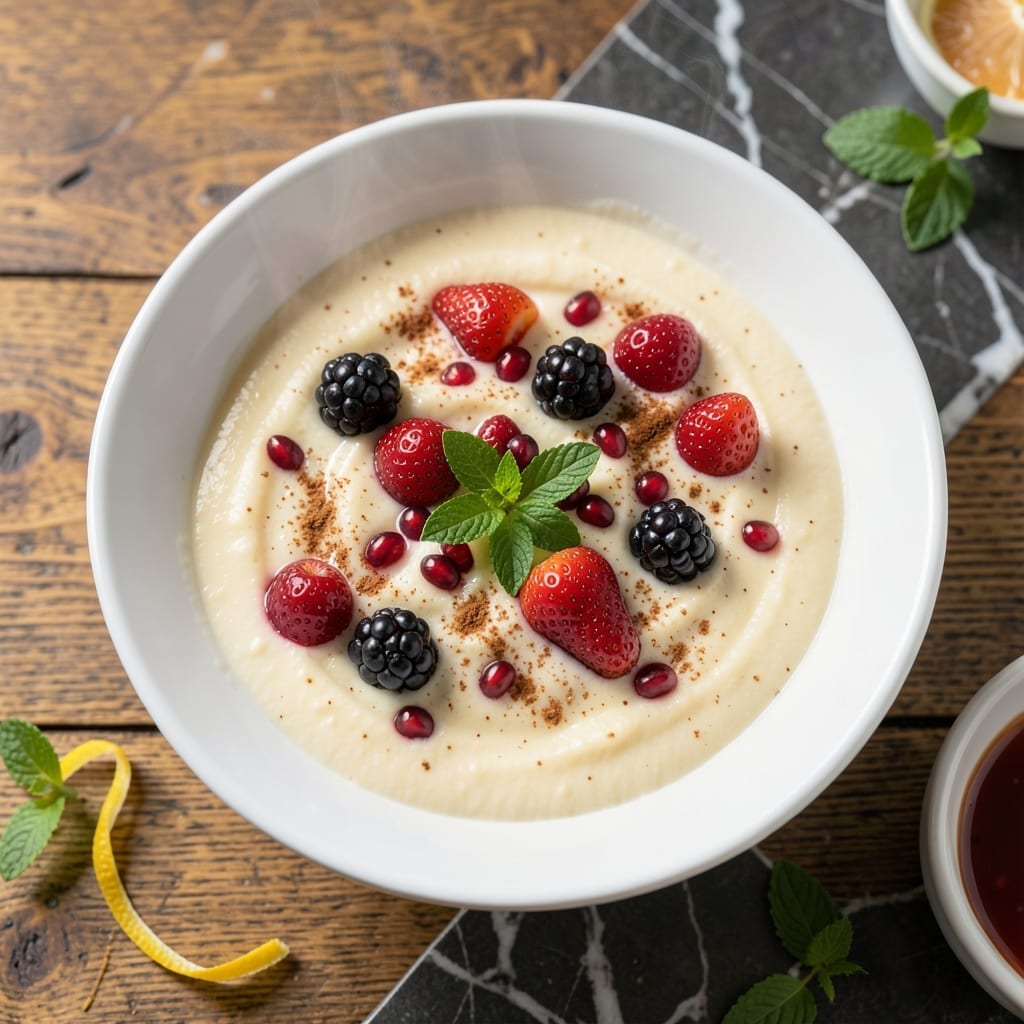
There’s a simpler way to achieve silky custard without relying on powdered mixes. This method uses eggs as the natural thickener, creating a velvety texture that rivals traditional versions.
The process is straightforward—whisk eggs with milk and sugar, then cook gently until thickened. The result is a smooth, creamy base that pairs perfectly with fresh or canned fruit.
Unlike store-bought powders, this approach gives you full control over sweetness and flavor. It’s a foolproof technique that delivers professional results with basic pantry staples.
Ready in under 20 minutes, this custard is ideal for desserts, parfaits, or enjoying on its own. Here’s how to make it right every time.
Ingredients for Fruit Custard Recipe Without Custard Powder
Basic staples transform into velvety custard with eggs as the natural thickener.
| Ingredient | Amount | Notes |
|---|---|---|
| Whole Milk 🥛 | 4 cups | Full-fat for richest texture |
| Granulated Sugar 🍚 | ¾ cup | Adjust to taste preference |
| Large Eggs 🥚 | 4 whole | Room temperature preferred |
| Pure Vanilla Extract 🌿 | 2 tsp | Real vanilla, not imitation |
| Cornstarch 🌾 | 2 tbsp | For stability and thickness |
| Salt 🧂 | ¼ tsp | Fine sea salt preferred |
| Unsalted Butter 🧈 | 2 tbsp | For finishing and richness |
| Mixed Fresh Fruit 🍓 | 3 cups | Diced, berries or tropical |
| Fresh Lemon Juice 🍋 | 1 tbsp | Brightens custard flavor |
| Ground Cinnamon 🌶️ | ¼ tsp | Optional, for warmth |
The milk quality directly impacts texture. Whole milk from a trusted dairy like Organic Valley or Darigold yields the creamiest results, while reduced-fat versions may thin the custard. Eggs should be fresh—older eggs have weaker emulsifying power. For a richer finish, heavy cream can replace one cup of milk (the custard will be noticeably thicker).
No whole milk? Half-and-half plus half water works in a pinch. Swap granulated sugar for coconut sugar at 1:1 ratio for a deeper flavor. For a lighter version, 2% milk can be used, but expect a slightly less luxurious mouthfeel. The cornstarch stabilizes the custard—arrowroot powder can substitute at the same quantity if preferred.
Custard keeps well refrigerated for 3-4 days in an airtight container. To prevent a skin from forming, press plastic wrap directly onto the surface. Best served chilled, though it can be enjoyed warm. Freezing is not recommended as it may separate upon thawing.
Why You’ll Love This Recipe
- One Pot Magic: I love that I can make this in a single saucepan—no fancy equipment, just milk, eggs, and cornstarch working their magic.
- Velvety Vanilla Dream: The vanilla shines through with such warmth, and the custard turns out so rich it feels like a hug in a bowl.
- Dessert for Days: Honestly, it keeps beautifully in the fridge for up to 3 days, so I can prep it ahead and just add fresh fruit when serving.
- Budget-Friendly Luxe: Here’s what sold me—it uses pantry staples I already have, yet tastes like something from a high-end bakery.
Step-by-Step Instructions for Fruit Custard Without Custard Powder
This method ensures a silky, luxurious texture using simple egg-based thickening techniques.
Step 1: Create the Cornstarch Slurry
In a small bowl, whisk together the 2 tbsp Cornstarch with ¼ cup of the Whole Milk until completely smooth. This slurry prevents lumps from forming when added to hot liquid later. I always use a fork for this—it breaks up any stubborn bits better than a spoon.
Set this mixture aside while you prepare the rest of the base. The cornstarch will start to hydrate, making it more effective at thickening. Don’t skip this step; adding dry cornstarch directly to hot milk creates impossible-to-remove clumps.
Step 2: Heat the Milk and Temper the Eggs
In a heavy saucepan, combine the remaining 3¾ cups Whole Milk with the 0.75 cup Granulated Sugar and 0.25 tsp Salt. Heat over medium heat until small bubbles form at the edges and steam begins to rise—about 5 minutes.
While the milk heats, whisk the 4 whole Large Eggs in a separate bowl until uniform in color. Slowly pour about 1 cup of the hot milk mixture into the eggs while whisking constantly. This tempering process prevents the eggs from curdling when added to the hot liquid. Pour the tempered egg mixture back into the saucepan.
Step 3: Thicken the Custard Base
Return the saucepan to medium-low heat and stir in the cornstarch slurry. Cook, stirring constantly with a wooden spoon, for 5-7 minutes until the mixture thickens enough to coat the back of the spoon. You’ll notice it transforms from a thin liquid to a velvety, pudding-like consistency.
The custard should reach 160°F on an instant-read thermometer, ensuring the eggs are fully cooked. Remove from heat immediately once thickened—overcooking at this stage can cause the custard to separate or become grainy.
Step 4: Finish and Cool the Custard
Stir in the 2 tsp Pure Vanilla Extract, 2 tbsp Unsalted Butter, and 0.25 tsp Ground Cinnamon until the butter melts completely. The vanilla adds depth, while the butter gives the custard a rich, glossy finish. The cinnamon is optional but adds a warm, aromatic note.
Transfer the custard to a heatproof bowl and press plastic wrap directly onto the surface to prevent a skin from forming. Chill in the refrigerator for at least 2 hours, or until completely cold. This cooling step is crucial for achieving the perfect creamy texture.
Step 5: Incorporate the Fruit
Just before serving, gently fold in the 3 cups Mixed Fresh Fruit and 1 tbsp Fresh Lemon Juice. The lemon juice brightens the overall flavor and balances the sweetness of the custard and fruit. Use a spatula and fold just until combined—overmixing can break down the fruit.
Serve immediately, either warm or chilled. The custard will continue to thicken slightly as it sits, so if it becomes too firm, stir in a splash of milk to loosen it to your desired consistency.
Pro Tips For Making Fruit Custard Recipe Without Custard Powder
- Temper the Eggs: Whisk your eggs with sugar first, then slowly pour in 1/2 cup of hot milk while stirring—this keeps them from scrambling when added to the pot. I learned this the hard way after ruining two batches with lumps.
- Bloom the Cornstarch: Mix cornstarch with 2 tablespoons of cold milk before adding it to the warm mixture. Sounds weird, but it works: prevents clumping and gives that silky texture.
- Skip the Boil: Cook the custard on medium-low heat and remove it just before it starts to boil. After burning three batches, I finally figured out that boiling makes it curdle.
- Chill Before Serving: Let the custard cool to room temperature, then refrigerate for at least 2 hours. My grandmother swore by this, and she was right: it thickens perfectly and tastes better cold.
Storing and Reheating This Dish
Refrigerator Storage
Let your custard cool completely at room temperature for no more than 2 hours, then transfer to an airtight container. I use glass containers with snap-tight lids for best results. Store in the fridge at 40°F or below for up to 4 days. ❄️
Prevent Skin Formation
To avoid that unappetizing skin on top, press plastic wrap directly onto the custard surface before sealing the container. This creates a barrier that prevents air from drying out the top layer. The custard will stay silky smooth until ready to serve.
Freezing Not Recommended
While you can technically freeze this custard, I don’t recommend it. The texture changes significantly upon thawing, often becoming watery or grainy. The egg base doesn’t handle freezing as well as powdered custard versions might.
Reheating Gently
To serve warm, transfer individual portions to a small saucepan and heat over low heat, stirring constantly. Add 1-2 tbsp milk to restore creaminess if needed. Never microwave at full power—this can cause separation. Heat in 20-second intervals at 50% power instead. 🔥
Fruit Addition Timing
For best texture, add fresh fruit just before serving. If storing with fruit, choose firmer options like diced apples or pineapple rather than berries, which can release too much liquid. Drain any excess juice before mixing into the custard.
Nutrition Facts
Frequently Asked Questions
Can I use almond milk instead of whole milk?
Yes, but use unsweetened almond milk and add 1 tbsp extra cornstarch to compensate for the thinner consistency. The flavor will be slightly nuttier.
Why did my custard turn out lumpy?
Lumps usually mean the eggs curdled or cornstarch wasn’t fully dissolved. Always temper eggs slowly and whisk the slurry until smooth before adding.
How can I make this custard vegan?
Replace eggs with 3 tbsp cornstarch mixed with 3 tbsp water and use coconut milk. Cook at medium-low heat to prevent separation.
Can I prepare this the night before?
Make the custard base and store it in an airtight container for up to 4 days. Add fruit just before serving.

- 6 Egg Cake Recipe with Oil: Light as Air With Buttery Moisture - October 4, 2026
- 4 Bean Casserole Recipe: One-Pan Heartiness With Smoky Paprika Depth - October 4, 2026
- 3-Ingredient Keto Mug Cake Recipe: Microwave Magic in 2 Minutes - October 4, 2026