
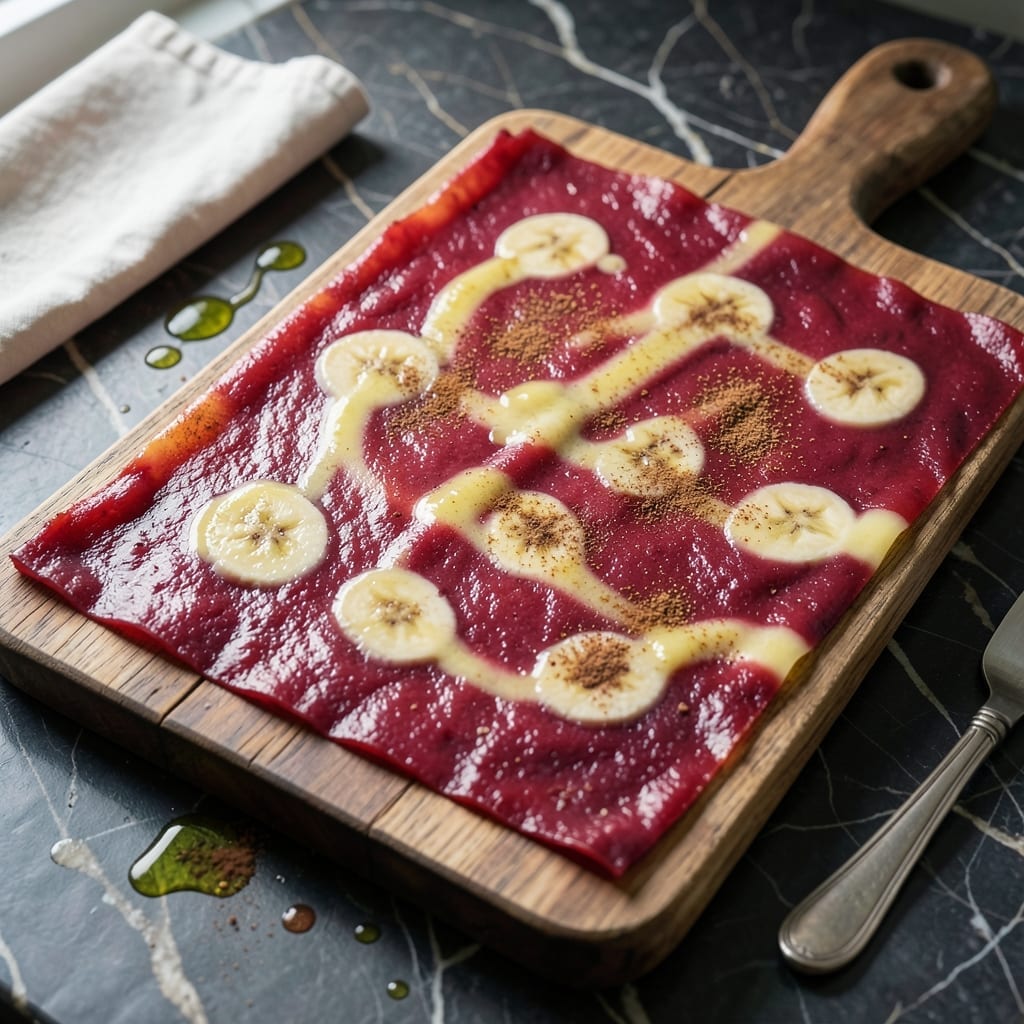
Making fruit leather in a dehydrator transforms fresh fruit into a naturally sweet, chewy snack without added sugars. This method preserves the fruit’s vibrant flavor and nutrients.
With just a few simple steps, you’ll create thin, flexible sheets that are perfect for lunchboxes or hiking trips. The dehydrator ensures even drying and consistent texture every time.
Ingredients for Fruit Leather Recipe Dehydrator
Fresh fruit and a few pantry staples create these chewy, naturally sweet sheets. Simple, wholesome, and delicious.
| Ingredient | Amount | Notes |
|---|---|---|
| Fresh Strawberries 🍓 | 4 cups | Hulled and quartered |
| Ripe Bananas 🍌 | 2 whole | Peeled and sliced |
| Unsweetened Applesauce 🍏 | 1 cup | Smooth variety preferred |
| Lemon Juice 🍋 | 2 tbsp | Freshly squeezed preferred |
| Ground Cinnamon 🌿 | 1 tsp | Ceylon or cassia variety |
| Vanilla Extract 🌿 | 1 tsp | Pure extract for best flavor |
| Water 💧 | ¼ cup | As needed for blending |
| Parchment Paper 📄 | 1 sheet | For dehydrator trays |
| Plastic Wrap 🧻 | 1 sheet | For rolling puree |
| Granulated Sugar 🍬 | 0 tbsp | Optional, omit for sugar-free |
The quality of fruit is paramount here. Farmers market strawberries and bananas with some brown spotting (indicating peak sweetness) will yield the best flavor. Organic applesauce is worth seeking out if you want to avoid added preservatives. For the cinnamon, Penzeys offers exceptional quality, but any grocery store brand will work in a pinch. Avoid overripe fruit with mold or excessive bruising.
No dehydrator? An oven set to its lowest temperature (usually 170°F) works, though results may be less consistent. Out of strawberries? Peaches or mangoes make excellent substitutes. For a tropical twist, swap bananas for ripe pineapple. The lemon juice isn’t just for flavor—it helps prevent browning. If using sugar, reduce to 1 tsp for a subtle sweetness boost.
Store finished leather in an airtight container with parchment between layers. Keeps at room temperature for 1 week, in the fridge for 2 weeks, or frozen for 3 months. For hiking trips, pre-cut into strips and wrap in parchment for easy, mess-free snacking.
Why You’ll Love This Recipe
- One Bowl Wonder: I just blend the strawberries, bananas, applesauce, a squeeze of lemon, and cinnamon—no fancy steps.
- Sweet & Tangy: The strawberries and cinnamon give it this warm, cozy flavor, while the lemon juice keeps it bright.
- Lunchbox Hero: My kids beg for these in their school lunches, and honestly, I sneak a few for my own snack stash.
- Zero Waste: I use overripe bananas and strawberries that are about to turn, so nothing goes to waste.
Step-by-Step Instructions for Fruit Leather in a Dehydrator
Precise technique and patience transform fresh fruit into perfectly chewy, vibrant leather every time.
Step 1: Prepare and Blend the Fruit Base
Combine the 4 cups Fresh Strawberries, 2 whole Ripe Bananas, 1 cup Unsweetened Applesauce, 2 tbsp Lemon Juice, 1 tsp Ground Cinnamon, and 1 tsp Vanilla Extract in a high-speed blender. Start on low speed to break up the larger pieces, then increase to high for 1-2 minutes until completely smooth.
If the mixture is too thick to blend easily, add the 0.25 cup Water in 1-tablespoon increments as needed. The final puree should be thick but pourable, like a smoothie. Avoid adding extra water beyond the specified amount—too much liquid extends drying time and produces a sticky rather than chewy texture.
Step 2: Test and Adjust the Puree Consistency
Pour a small amount of puree onto the parchment paper and spread it thinly. If it holds its shape without running, the consistency is correct. If it spreads too thinly or runs, blend in more of the Unsweetened Applesauce to thicken it slightly.
This step ensures even drying. A puree that’s too thin creates brittle leather, while one that’s too thick may not dry evenly in the center. The natural sweetness of the Fresh Strawberries and Ripe Bananas means no additional sweetener is needed, aligning with the sugar-free approach.
Step 3: Spread the Puree Evenly on Dehydrator Trays
Line your dehydrator trays with the parchment paper, ensuring it fits snugly without overlapping. Pour portions of the fruit puree onto the trays and use a spatula to spread it into an even layer, approximately ⅛-inch thick. Leave at least 1 inch of space around the edges to prevent spillage.
For perfectly uniform thickness, I use an offset spatula and make long, even strokes. Check for any thin spots or bubbles—these areas will dry faster and may burn. The Lemon Juice in the mixture helps preserve the vibrant color of the Fresh Strawberries during the drying process.
Step 4: Dehydrate at the Correct Temperature
Set your dehydrator to 135°F—this is the optimal temperature for fruit leather. Higher temperatures can cause the edges to dry too quickly while the center remains underdone, while lower temperatures extend the drying time unnecessarily. Arrange the trays in the dehydrator, leaving space between them for proper airflow.
Dehydrate for 4-6 hours, rotating the trays every 90 minutes to ensure even drying. The leather is ready when it peels away cleanly from the parchment paper and is no longer tacky to the touch. It should be pliable but not sticky, with a uniform, matte finish.
Step 5: Cool, Cut, and Store the Leather
Remove the trays from the dehydrator and let the leather cool completely on the parchment paper for 30 minutes. This cooling period allows it to set fully. Once cooled, peel the leather away and use kitchen shears to cut it into 1-inch-wide strips for easy portioning.
For storage, roll the strips in the plastic wrap, twisting the ends to seal. Keep in an airtight container at room temperature for up to 2 weeks, or refrigerate for up to 1 month. The absence of Granulated Sugar means the flavor of the fruit remains pure and unadulterated, with a natural chewiness from the dehydrated Ripe Bananas and Unsweetened Applesauce.
Pro Tips For Making Fruit Leather Recipe Dehydrator
- Set Low and Slow: I learned this the hard way—keep your dehydrator at 135°F for 6-8 hours. Any hotter and the edges dry too fast while the center stays sticky.
- Blend Bananas First: Mash the bananas before adding strawberries to break down their fibers. This prevents chewy bits in your leather and gives a smoother finish.
- Skip Thick Pouring: Spread the puree no thicker than 1/8 inch on the tray. After burning a batch, I finally figured out thick layers just trap moisture and turn gummy.
- Acid Balance: Use 1 tablespoon lemon juice per cup of fruit—it brightens the flavor and keeps colors from dulling. My grandmother swore by this, and she was right.
Health Benefits of This fruit leather recipe dehydrator
Nutrient-Packed Snacking 🥗
Fruit leather made in a dehydrator retains most of the vitamins and minerals from fresh fruit. Unlike store-bought versions, homemade fruit leather skips added sugars and preservatives, giving you a pure, fiber-rich treat. This makes it an excellent choice for a quick, wholesome snack.
Natural Energy Boost 💪
The natural carbohydrates in fruit leather provide a steady energy release, perfect for a pre- or post-workout snack. The fiber content also helps maintain stable blood sugar levels, keeping you energized without the crash.
Supports Digestive Health 🍎
Packed with dietary fiber, fruit leather aids digestion and promotes gut health. The dehydration process concentrates the fruit’s fiber, making it an easy way to support your daily intake.
Hydration Helper 📊
Fruits like strawberries, oranges, and watermelon contain high water content, even after dehydration. Snacking on fruit leather can contribute to your daily hydration needs while delivering essential nutrients.
Nutrition Facts

- 6 Egg Cake Recipe with Oil: Light as Air With Buttery Moisture - October 4, 2026
- 4 Bean Casserole Recipe: One-Pan Heartiness With Smoky Paprika Depth - October 4, 2026
- 3-Ingredient Keto Mug Cake Recipe: Microwave Magic in 2 Minutes - October 4, 2026