
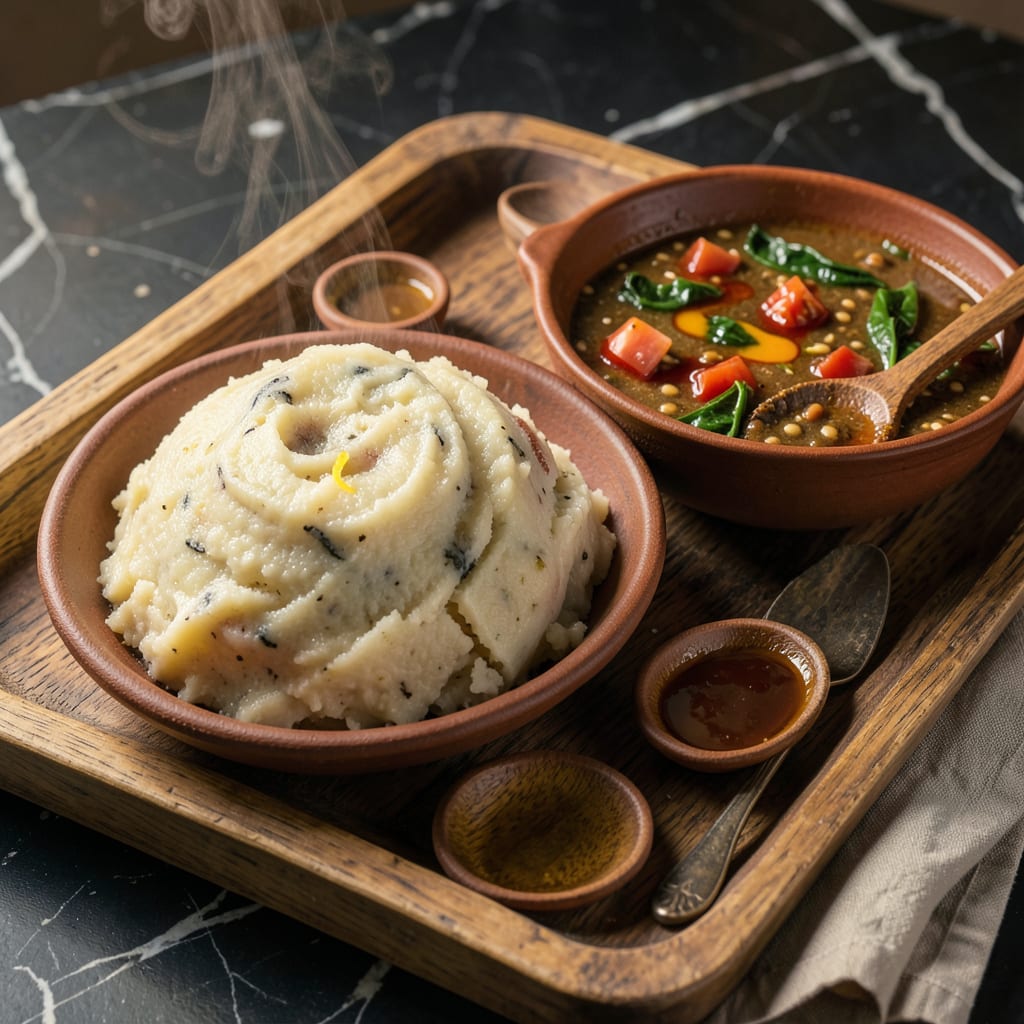
Fufu and egusi soup represent the heart of West African comfort food, combining smooth, stretchy dough with a rich, nutty stew that satisfies on every level. This dish carries deep cultural significance, often served at gatherings and enjoyed by hand—a tradition that turns meals into shared experiences. The contrast between the mild fufu and the bold, aromatic egusi creates a balance that’s both nourishing and deeply comforting.
The recipe brings together simple ingredients through authentic techniques: pounding cassava or yam into silky fufu, then pairing it with a stew of ground melon seeds, leafy greens, and palm oil. While traditional methods emphasize patience and skill, modern adaptations—like using a food processor for fufu or pre-ground egusi—make this dish accessible without sacrificing its soul. Whether served vegan or with added proteins, it delivers warmth in every bite.
Ingredients for Fufu and Egusi
This recipe celebrates West African tradition with simple, plant-based ingredients that deliver rich, comforting flavors in every bite.
| Ingredient | Amount | Notes |
|---|---|---|
| Cassava 🌰 | 2 lb | Peeled and cut into chunks |
| Yam 🍠 | 1 lb | Peeled and cut into chunks |
| Ground Melon Seeds (Egusi) 🎃 | 1 ½ cups | Pre-ground for convenience |
| Red Palm Oil 🫒 | ½ cup | Unrefined for authentic flavor |
| Spinach 🍃 | 4 cups | Fresh or frozen, chopped |
| Bitter Leaf 🌿 | 1 cup | Dried or fresh, washed |
| Onion 🧅 | 1 whole | Medium-sized, finely chopped |
| Scotch Bonnet Pepper 🌶️ | 1 whole | Seeded and minced (adjust for heat) |
| Tomatoes 🍅 | 2 whole | Medium-sized, diced |
| Vegetable Stock 🥫 | 4 cups | Low-sodium preferred |
| Ground Crayfish 🦞 | ¼ cup | Optional for umami depth |
| Salt 🧂 | 1 tsp | Adjust to taste |
| Locust Beans (Iru) 🌱 | 2 tbsp | Fermented, for depth (optional) |
| Smoked Paprika 🌶️ | 1 tsp | For smoky undertones |
| Ground Nutmeg 🌰 | ¼ tsp | Freshly grated preferred |
[recipeingredientscaler]
The cassava and yam form the foundation of authentic fufu. Optimal quality requires fresh, unblemished roots—look for firm texture and vibrant color at African markets or well-stocked international grocers. Pre-cut or frozen varieties compromise texture. For the egusi, pre-ground melon seeds from brands like Afro-Caribbean Foods ensure consistent results without labor-intensive grinding. Red palm oil must be unrefined to achieve the stew’s signature hue and depth; Trader Joe’s occasionally carries it, but specialty stores are more reliable.
Substitutions maintain authenticity when mindful. Replace bitter leaf with kale or collard greens if unavailable, though flavor will differ slightly. For heat adjustments, habanero peppers can stand in for Scotch bonnet at a 1:1 ratio. Vegetable stock should be robust—Better Than Bouillon No Chicken Base offers excellent depth. Omit crayfish for strict vegan preparation, but compensate with extra smoked paprika or liquid smoke (sparingly) to preserve complexity.
Storage demands attention to freshness. Prepared fufu keeps 2 days refrigerated but loses its signature stretchiness; reheat gently with water. Egusi soup stores 4-5 days and freezes beautifully for 3 months. Palm oil solidifies when chilled—warm slightly before using. For make-ahead convenience, prepare stew base without leafy greens, then add fresh spinach or bitter leaf when reheating to maintain vibrant color and texture.
Why You’ll Love This Recipe
- No Fancy Tools Needed: I make this with just a pot, a wooden spoon, and my hands—no blender, no food processor. The egusi thickens itself while the fufu comes together with nothing but elbow grease and warm water.
- That Palm Oil Magic: Here’s what sold me—the way red palm oil turns the egusi soup this deep golden color, then you hit it with spinach at the end for freshness. It’s rich but balanced, like a warm hug with a little green brightness.
- Feeds My People Twice: One batch of this stretches further than you’d think. The fufu firms up overnight (great for frying next day), and the egusi soup actually tastes better reheated—if there’s any left.
- Cheaper Than Takeout: Between us, a bag of egusi and a yam cost me less than a fast-food run. And it’s way more filling. I’ve served this to six adults with leftovers, using ingredients that won’t spoil if plans change.
Step-by-Step Instructions for Fufu and Egusi
This method ensures authentic West African flavors with perfectly smooth fufu and rich, nutty egusi stew.
Step 1: Prepare the Vegetables and Aromatics
Begin by finely chopping the onion, mincing the Scotch Bonnet Pepper (remove seeds for milder heat), and dicing the tomatoes. Wash the bitter leaf thoroughly if using fresh, or rehydrate if using dried. Chop the spinach into bite-sized pieces.
In a large pot, heat the red palm oil over medium heat until it shimmers but doesn’t smoke. Add the chopped onion and sauté for 3-4 minutes until translucent and fragrant. Stir in the minced Scotch Bonnet pepper and diced tomatoes, cooking for another 5 minutes until the tomatoes break down and release their juices.
Step 2: Build the Egusi Stew Base
Add the ground melon seeds (Egusi) to the pot and stir continuously for 2-3 minutes to toast slightly. This enhances the nutty flavor. Pour in the vegetable stock and bring to a gentle simmer. Add the locust beans (Iru), ground crayfish, smoked paprika, ground nutmeg, and salt.
Simmer uncovered for 15 minutes, allowing the flavors to meld. The stew should thicken slightly as the egusi absorbs liquid. Add the chopped spinach and bitter leaf, stirring to incorporate. Reduce heat to low and let simmer for another 10 minutes while you prepare the fufu.
Step 3: Prepare the Fufu Dough
In a separate pot, add the peeled and chunked cassava and yam. Cover with water by 2 inches and bring to a boil over high heat. Reduce to medium heat and cook for 20-25 minutes until both are fork-tender. Drain thoroughly in a colander, pressing out excess moisture.
Return the cooked cassava and yam to the pot. Using a sturdy wooden spoon or potato masher, vigorously pound and stir the mixture until completely smooth and elastic. This should take 8-10 minutes of continuous pounding. The fufu is ready when it forms a cohesive, stretchy dough that pulls away cleanly from the sides of the pot.
Step 4: Final Adjustments and Serving
Taste the egusi stew and adjust seasoning if needed. The ideal consistency should coat the back of a spoon but still flow easily. If too thick, add ¼ cup of water or stock. Keep warm over low heat while you shape the fufu.
Wet your hands with cold water and form the fufu into 4 equal balls, about the size of a tennis ball. Serve immediately in shallow bowls with generous portions of the hot egusi stew. The fufu should be smooth and slightly sticky, perfect for scooping up the rich, vegetable-packed stew.
Common Mistakes When Making This Dish
Overworking the Fufu
One of the most common mistakes is pounding the fufu too long after it’s already smooth. I’ve seen people keep working the dough for 15+ minutes, which makes it gummy and tough. The perfect fufu should take just 8-10 minutes of pounding—stop as soon as it pulls away cleanly from the pot and has a smooth, elastic texture. 💪
Skipping the Palm Oil Toast
Many cooks rush the egusi stew by adding ingredients too quickly. The red palm oil needs to heat until shimmering before adding onions, and the ground melon seeds must toast for 2-3 minutes to develop their nutty flavor. Skipping this step leaves your stew tasting flat and one-dimensional.
Undercooking the Roots
The cassava and yam must be fork-tender before pounding—no firm centers allowed! I test by piercing with a fork; it should slide in effortlessly. Undercooked roots create lumpy fufu that falls apart. If unsure, boil for the full 25 minutes rather than risking it.
Overthickening the Stew
Egusi stew should coat a spoon but still flow easily. A common error is letting it reduce too much during simmering. If yours resembles paste, stir in ¼ cup vegetable stock to loosen. Remember, the stew continues thickening as it cools, so aim for a slightly looser consistency while cooking. 🥄
Neglecting the Bitter Leaf
Fresh bitter leaf requires thorough washing to remove its intense bitterness. I soak mine in 3 changes of water, squeezing each time. Using dried bitter leaf? Rehydrate in warm water for 10 minutes and rinse well. Skipping this step makes the stew unpleasantly bitter rather than pleasantly earthy.
Incorrect Heat Levels
Both components need precise heat control. The egusi stew should simmer gently—never boil vigorously, which makes the melon seeds separate. For fufu, maintain medium heat while boiling roots to prevent uneven cooking. I use a thermometer to keep my stew at 180-190°F for perfect results.
Nutrition Facts

- 6 Egg Cake Recipe with Oil: Light as Air With Buttery Moisture - October 4, 2026
- 4 Bean Casserole Recipe: One-Pan Heartiness With Smoky Paprika Depth - October 4, 2026
- 3-Ingredient Keto Mug Cake Recipe: Microwave Magic in 2 Minutes - October 4, 2026