
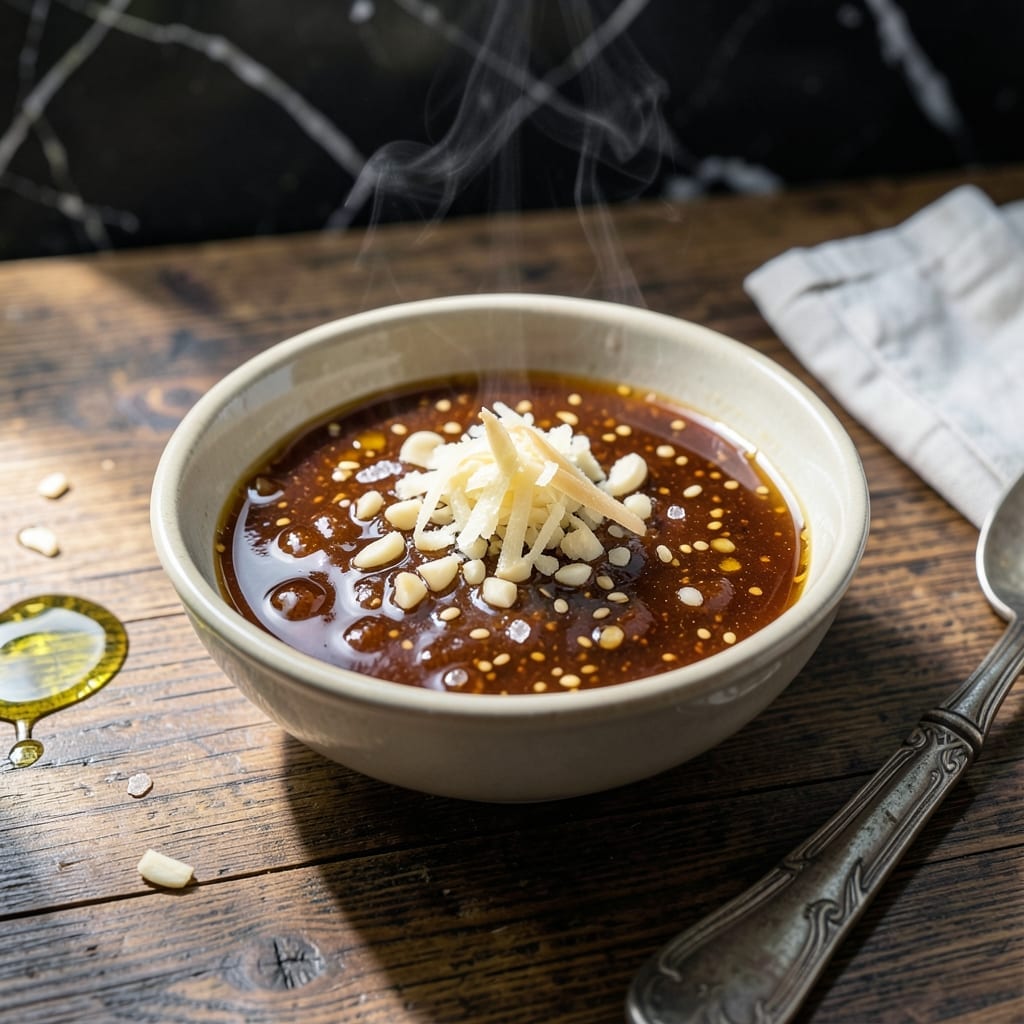
This homemade stir fry sauce brings restaurant-quality flavor to your kitchen with minimal effort. I developed this to replicate the balanced sweet-savory profile of popular sugar-free sauces, but with complete control over ingredients.
The secret lies in the umami layering—soy sauce provides the salty base while garlic, ginger, and a touch of acidity create depth. It comes together in 5 minutes with pantry staples you likely already have on hand.
Use it to transform simple proteins and vegetables into a quick weeknight meal that tastes like takeout. The sauce clings perfectly to ingredients and reduces into a glossy glaze as it cooks.
Make a batch to keep in your fridge for instant flavor whenever stir fry cravings hit. The possibilities are endless with this versatile sauce.
Ingredients for G Hughes Stir Fry Sauce
Pantry staples plus fresh aromatics deliver that signature sweet-savory umami punch in minutes.
| Ingredient | Amount | Notes |
|---|---|---|
| Low-Sodium Soy Sauce 🫒 | ½ cup | Salty umami base layer |
| Rice Vinegar 🍶 | 2 tbsp | Tangy acidity balance |
| Fresh Garlic Cloves 🧄 | 4 cloves | Minced for pungent depth |
| Fresh Ginger Root 🌿 | 1 tbsp | Finely grated for zing |
| Sesame Oil 🫒 | 1 tbsp | Toasted for nutty aroma |
| Erythritol Sweetener 🍚 | 2 tbsp | Sugar-free sweetness option |
| Water 💧 | ¼ cup | To thin consistency |
| Cornstarch 🌾 | 1 tbsp | Slurry thickener |
| Red Pepper Flakes 🌶️ | ½ tsp | Adjustable heat level |
The soy sauce is your foundation. Kikkoman low-sodium is my go-to for consistent flavor without overpowering saltiness. Fresh garlic and ginger are non-negotiable—skip the jarred stuff (it’s muddy and weak). Look for plump, firm garlic heads and ginger with smooth, taut skin. Asian markets often have the best selection, but any well-stocked grocery store works fine.
No erythritol? Monk fruit sweetener or allulose at a 1:1 ratio works. Prefer real sugar? Brown sugar at half the amount balances the salt and acid beautifully. If you’re out of rice vinegar, apple cider vinegar is a decent substitute (slightly more assertive). The sesame oil can be swapped for avocado oil if needed, but you’ll lose that distinctive nutty note.
Sauce keeps in an airtight container in the fridge for 2 weeks. The flavors meld and deepen over time. Freeze in ice cube trays for up to 3 months—pop out a cube or two whenever you need a quick flavor boost.
Why You’ll Love This Recipe
- Five Minute Mix: I toss everything in a bowl and whisk—no simmering, no fuss, just fresh garlic and ginger doing their thing.
- Umami Bomb: That first hit of soy and sesame oil with the zing of rice vinegar? Honestly, it’s the reason I keep making it.
- Weeknight Hero: I’ve stirred it into chicken, tofu, and even scrambled eggs. Between us, it saves dinner every time.
- Fridge Staple: One batch lasts me two weeks in the fridge, and I’ll be real: it’s cheaper than takeout every single time.
Step-by-Step Instructions for G Hughes Stir Fry Sauce
This method ensures a perfectly balanced sauce with rich umami flavor every time.
Step 1: Bloom the Aromatics in Sesame Oil
Heat a small saucepan over medium heat and add the 1 tbsp Sesame Oil. Once it shimmers, add the 4 cloves Fresh Garlic Cloves (minced) and 1 tbsp Fresh Ginger Root (finely grated).
Stir constantly for 30-45 seconds until the mixture becomes fragrant and the garlic turns golden at the edges. Be careful not to let the garlic burn—it should sizzle gently, not smoke. This step builds the flavor foundation of your sauce.
Step 2: Combine the Liquid Base
Pour in the 0.5 cup Low-Sodium Soy Sauce, 2 tbsp Rice Vinegar, and 2 tbsp Erythritol Sweetener. Stir well to dissolve the sweetener completely. The soy sauce provides the salty umami base, while the vinegar adds the necessary tangy balance.
Add the 0.5 tsp Red Pepper Flakes and bring the mixture to a gentle simmer. Let it cook for 2-3 minutes so the flavors meld together and the sweetener fully incorporates. You’ll notice the sauce darken slightly as it reduces.
Step 3: Create and Add the Cornstarch Slurry
In a small bowl, whisk together the 1 tbsp Cornstarch and 0.25 cup Water until smooth and free of lumps. This slurry will thicken the sauce to the perfect consistency for coating your stir-fry ingredients.
Slowly pour the slurry into the simmering sauce while stirring constantly. Continue to cook for 1-2 minutes until the sauce thickens enough to coat the back of a spoon. The transformation should be noticeable—it’ll go from thin and liquid to glossy and slightly syrupy.
Step 4: Finish and Cool the Sauce
Remove the saucepan from heat and let the sauce cool for 5 minutes. It will thicken slightly more as it cools. Give it a final stir to ensure everything is well combined and smooth.
Taste and adjust if needed—though with these proportions, you should have a perfectly balanced sweet, tangy, and umami-packed sauce ready to elevate any stir-fry. Use it immediately or store it in an airtight container in the refrigerator for up to 1 week.
Pro Tips For Making G Hughes Stir Fry Sauce
- Bloom the Aromatics: Cook the minced garlic and ginger in sesame oil for 30-45 seconds until fragrant—I learned this the hard way after burning three batches by walking away.
- Balance the Soy: Use low-sodium soy sauce and taste as you go; I skip the salt shaker entirely and adjust with a splash of rice vinegar if it needs brightness.
- Skip the Bottled Stuff: Fresh ginger and garlic make a real difference here; the jarred minced versions taste flat and muddy in this sauce.
- Rest the Sauce: Let it sit for 10 minutes after mixing to let the flavors meld—sounds weird, but it actually changes the outcome.
Wine and Beer Pairings for This Dish
Light Beer Pairings
Crisp Asian lagers like Sapporo or Asahi are my top picks. Their clean, slightly sweet profile complements the sauce’s umami without overpowering it. The light body cuts through the richness beautifully.
Wheat Beer Options
A German hefeweizen with its banana and clove notes adds interesting contrast. I particularly enjoy Weihenstephaner—the effervescence refreshes your palate between bites. The citrus undertones balance the sauce’s sweetness. 🍺
Dry White Wines
Pinot Grigio from Northern Italy works wonderfully, with its bright acidity mirroring the rice vinegar in the sauce. Look for bottles from Alto Adige—they’re consistently crisp and clean.
Rosé Alternatives
A dry Provence rosé offers red fruit notes that complement the sauce’s complexity. The subtle berry flavors don’t compete with the stir fry’s bold umami. Serve it slightly chilled for best results.
Sparkling Options
For a celebratory touch, try a dry prosecco. The bubbles cleanse your palate, making each bite of your stir fry taste fresh. I recommend La Marca for its consistent quality and affordable price point. ✨
Non-Alcoholic Pairing
Sparkling yuzu soda or ginger beer provides the same palate-cleansing effect as alcohol. The citrus notes in yuzu particularly enhance the sauce’s flavor profile. I keep Fever-Tree ginger beer on hand for this purpose.
Nutrition Facts
Frequently Asked Questions
Can I use regular soy sauce instead of low-sodium?
Yes, but reduce it to 1/3 cup and add 2 tbsp water to balance the saltiness. The flavor will be more intense, so taste before adding other ingredients.
What can I substitute for erythritol?
Swap in 2 tbsp brown sugar or 1 tbsp honey for a similar sweetness level. Adjust to taste—the sauce should balance sweet and salty notes.
How do I thicken the sauce if it’s too thin?
Mix 1 tsp cornstarch with 1 tbsp cold water and stir into simmering sauce. Cook for 1-2 minutes until it reaches your desired consistency.
Can I make this sauce spicier?
Increase the red pepper flakes to 1 tsp or add 1/2 tsp sriracha for extra heat. For smokiness, try 1/4 tsp cayenne instead.

- 6 Egg Cake Recipe with Oil: Light as Air With Buttery Moisture - October 4, 2026
- 4 Bean Casserole Recipe: One-Pan Heartiness With Smoky Paprika Depth - October 4, 2026
- 3-Ingredient Keto Mug Cake Recipe: Microwave Magic in 2 Minutes - October 4, 2026