
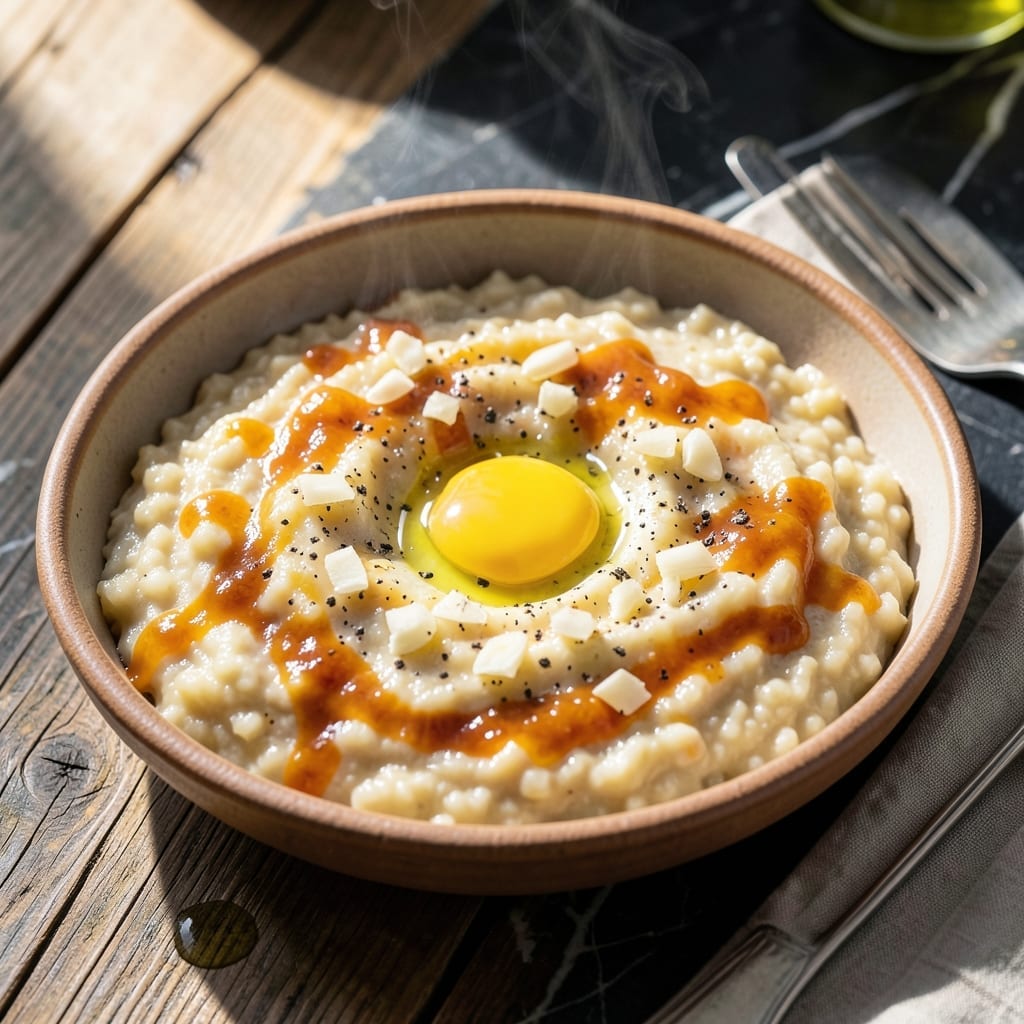
This Southern classic transforms humble grits into a creamy, indulgent masterpiece with just a few simple ingredients.
I’ve perfected this method to ensure the grits cook low and slow, absorbing every bit of flavor from the garlic and cheese. The result is a dish rich in texture and depth, with a velvety finish that’s hard to resist.
The garlic infuses the grits with a subtle warmth, while sharp cheddar melts into a smooth, savory sauce. It’s comfort food at its finest—warm, satisfying, and deeply flavorful.
Serve it as a side or a hearty main. This recipe delivers every time.
Ingredients for Garlic Cheese Grits
Stone-ground grits, sharp cheddar, and garlic create this Southern comfort in a bowl.
| Ingredient | Amount | Notes |
|---|---|---|
| Stone-Ground Grits 🌾 | 1 cup | Uncooked, quick or regular |
| Water 💧 | 4 cups | For cooking grits |
| Whole Milk 🥛 | 1 cup | Full-fat for creaminess |
| Unsalted Butter 🧈 | 4 tbsp | Divided for cooking and finishing |
| Garlic Cloves 🧄 | 4 cloves | Minced for maximum flavor |
| Sharp Cheddar Cheese 🧀 | 8 oz | Shredded from block |
| Parmesan Cheese 🧀 | ½ cup | Freshly grated for depth |
| Salt 🧂 | 1 tsp | Kosher or sea salt |
| Black Pepper 🌶️ | ½ tsp | Freshly ground preferred |
| Heavy Cream 🥛 | ½ cup | Optional for extra richness |
The grits are non-negotiable—stone-ground gives you that authentic texture and slow-cooked creaminess. Bob’s Red Mill is widely available and reliable, but any Southern brand from your local Publix or Kroger works. For the cheddar, Cabot or Tillamook sharp cheddar melts beautifully. Avoid pre-shredded (it’s coated in anti-caking agents that make it grainy). Freshly grated Parmesan adds umami depth that pre-grated just can’t match.
No sharp cheddar? Gouda or Monterey Jack melt well and have similar richness. For a lighter version, swap whole milk for 2% or oat milk (though the texture won’t be as luxurious). Out of fresh garlic? Garlic powder at one-quarter the amount works in a pinch, but fresh is ideal. If you’re avoiding dairy entirely, nutritional yeast can mimic the cheesy flavor, but it won’t be the same velvety experience.
Leftover grits thicken as they cool. Stir in a splash of milk or water to loosen before reheating. Stores in the fridge for 3-4 days—best reheated gently on the stove. Not freezer-friendly, but honestly, there’s rarely any left to freeze.
Why You’ll Love This Recipe
- One Pot Wonder: I just dump everything in a single saucepan—grits, milk, butter, and minced garlic—then let it simmer while I set the table.
- Rich & Garlicky: The whole milk and butter make it creamy, and the fresh garlic gives it that bold, savory kick I crave.
- Brunch or Dinner: Honestly, it’s just as good under poached eggs at breakfast as it is beside grilled shrimp for dinner.
- Keeps Like a Dream: Leftovers reheat beautifully with a splash of milk, so I always make extra for lazy mornings.
Step-by-Step Instructions for Garlic Cheese Grits
Here’s the method I rely on for ultra-creamy, rich grits with bold garlic and cheese flavor.
Step 1: Cook the Grits to Silky Perfection
In a heavy saucepan, bring the 4 cups Water and 1 cup Stone-Ground Grits to a boil over medium-high heat. Stir constantly during the first minute to prevent clumping. Once boiling, reduce heat to low and cover the pot.
Cook the grits for 18-20 minutes, stirring every 5 minutes to prevent sticking. Stone-ground grits take longer than quick grits, so don’t rush this step. You’ll know they’re ready when the mixture thickens to a porridge-like consistency and the grits are tender when tasted.
Real talk: Low and slow is the secret to that signature creamy texture. If the mixture becomes too thick before the grits are tender, add a splash of hot water and continue cooking.
Step 2: Infuse with Butter and Garlic
While the grits cook, mince the 4 cloves Garlic Cloves finely. In a small skillet, melt 2 tbsp Unsalted Butter over medium heat. Add the minced garlic and cook for 1-2 minutes until fragrant and just beginning to turn golden.
Be careful not to let the garlic brown too much, or it will turn bitter. This step deepens the flavor and ensures the garlic is evenly distributed throughout the dish. Remove the skillet from heat as soon as the garlic is fragrant.
Stir the garlic butter into the cooked grits along with the remaining 2 tbsp Unsalted Butter. The fat from the butter will enrich the grits and create a luxurious base for the cheese.
Step 3: Add Dairy for Creaminess
Gradually stir in the 1 cup Whole Milk and 0.5 cup Heavy Cream to the grits. This step is crucial for achieving that velvety texture promised in the title. Heat the mixture over low for an additional 2-3 minutes, stirring constantly.
You’ll notice the grits become glossy and smooth as the dairy melts in. If the mixture seems too thick, add a splash of warm milk to reach your desired consistency. The goal is a creamy, flowing texture that coats the back of a spoon.
Step 4: Melt in the Cheeses
Reduce the heat to its lowest setting. Add the 8 oz Sharp Cheddar Cheese and 0.5 cup Parmesan Cheese to the grits, stirring constantly until both cheeses are fully melted and the mixture is homogeneous. This should take 3-4 minutes.
Shredding the cheese from a block ensures it melts smoothly without clumping. Avoid pre-shredded cheese, as it often contains anti-caking agents that can make the sauce grainy. Taste and adjust seasoning with the 1 tsp Salt and 0.5 tsp Black Pepper.
Here’s the thing—you want the cheese flavor to be bold but balanced. The sharp cheddar adds tang, while the Parmesan contributes a salty depth.
Step 5: Rest and Serve
Remove the pot from heat and let the grits rest for 2-3 minutes. This allows the flavors to meld together and the mixture to thicken slightly. Stir once more before serving to redistribute the creaminess.
Serve immediately while hot, as the grits will continue to thicken as they cool. For the best experience, portion into bowls and garnish with an extra sprinkle of Parmesan or a pat of butter. The result should be a rich, decadent dish with layers of garlic and cheese in every bite.
Pro Tips For Making Garlic Cheese Grits
- Whisk Constantly: Stone-ground grits clump fast—keep a whisk in that pot the whole time, especially in the first 10 minutes. I learned this the hard way after scraping burnt bits off the bottom one too many times.
- Sauté Garlic First: Cook the minced garlic in butter for 1-2 minutes until fragrant before adding liquids. Sounds simple, but raw garlic leaves a harsh bite that ruins the creamy finish.
- Use Hot Water: Start with boiling water, not cold, to cut the cooking time nearly in half. Cold water makes grits gummy and takes forever—yes, even if you’re impatient like me.
- Add Milk Slowly: Temper the grits with warm milk a little at a time to prevent curdling. Dumping it all in at once turns your pot into a lumpy mess, and nobody wants that.
Troubleshooting This Dish
Lumpy Grits
If your grits turn out lumpy, it’s likely because you didn’t stir enough during initial cooking. Stone-ground grits need constant attention for the first 2-3 minutes of boiling. I use a whisk during this phase to break up any clumps that form. 💡
Grainy Cheese Sauce
This usually happens with pre-shredded cheese. The anti-caking agents prevent smooth melting. Always grate sharp cheddar and Parmesan from blocks. If it’s too late, stir in 1-2 tbsp warm milk to help smooth it out.
Too Thick
Grits thicken as they cool. If they become cement-like, stir in warm liquid—¼ cup at a time. Whole milk maintains creaminess, but water works in a pinch. I often add a splash right before serving to restore that silky texture.
Bitter Garlic
Burnt garlic is the culprit. Cook minced garlic over medium heat for only 1-2 minutes until fragrant but not browned. If it’s already bitter, balance with ½ tsp sugar or extra cheese to mask the harshness. 🔥
Bland Flavor
Underseasoned grits need salt. Start with ½ tsp kosher salt, taste, then add more if needed. Remember, cheese adds saltiness too. I always season in layers—after cooking grits, after adding dairy, and finally after melting cheese.
Curdled Appearance
This occurs when dairy is added too quickly to very hot grits. Temper the milk and cream by warming them slightly before stirring in. If curdling happens, immediately reduce heat to low and stir vigorously to reincorporate.
Nutrition Facts
Frequently Asked Questions
What kind of grits work best?
Use stone-ground grits for authentic texture. Quick grits cook faster but lack the same creaminess. Avoid instant grits, as they turn mushy.
Can I make this ahead of time?
Yes, but they thicken as they cool. Store in the fridge for 3-4 days. Reheat gently with a splash of milk to restore creaminess.
Why did my cheese sauce turn grainy?
Pre-shredded cheese often contains anti-caking agents. Always grate cheese fresh from a block for smooth melting.
Can I use a different cheese?
Try Gouda or Monterey Jack for similar results. Avoid mild cheeses, as they won’t provide enough flavor depth.

- 6 Egg Cake Recipe with Oil: Light as Air With Buttery Moisture - October 4, 2026
- 4 Bean Casserole Recipe: One-Pan Heartiness With Smoky Paprika Depth - October 4, 2026
- 3-Ingredient Keto Mug Cake Recipe: Microwave Magic in 2 Minutes - October 4, 2026