
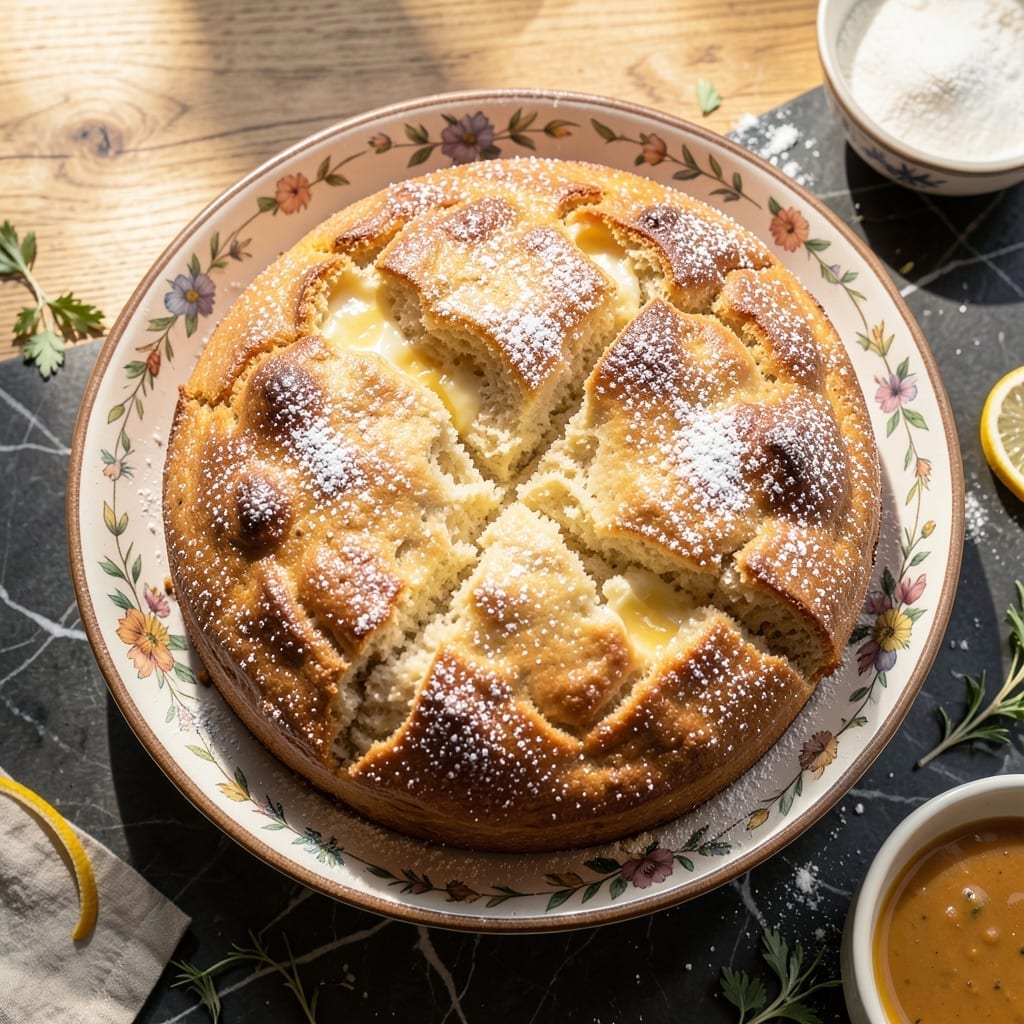
There’s nothing quite like the taste of a traditional German kuchen, passed down through generations with a warmth that still fills kitchens today. This coffee cake captures the essence of old-world baking with a tender, buttery crumb and a rustic charm that’s hard to resist.
The secret lies in its simplicity—basic pantry staples transformed into something extraordinary through time-tested techniques. The dough rises slowly, allowing flavors to develop depth, while a generous layer of fruit or streusel adds a comforting, homey touch.
What emerges from the oven is a golden, slightly domed cake with a soft, cake-like texture and a sweet, fragrant topping. It’s the kind of dessert that pairs perfectly with a cup of coffee and feels like a hug on a plate.
Serve it warm or at room temperature, and watch as it brings a little piece of tradition to your table.
Ingredients for German Kuchen
Basic pantry staples come together for this warm, traditional coffee cake.
| Ingredient | Amount | Notes |
|---|---|---|
| All-Purpose Flour 🌾 | 4 cups | Sifted for lighter texture |
| Granulated Sugar 🍚 | 1 cup | Plus extra for topping |
| Active Dry Yeast 🍞 | 2 ¼ tsp | One 0.25 oz package |
| Warm Milk 🥛 | 1 cup | Heated to 110°F |
| Unsalted Butter 🧈 | ½ cup | Melted and cooled |
| Large Eggs 🥚 | 2 whole | Room temperature preferred |
| Salt 🧂 | 1 tsp | Fine sea salt works best |
| Vanilla Extract 🌿 | 1 tsp | Pure extract recommended |
| Ground Cinnamon 🌶️ | 1 tsp | For streusel topping |
| Baking Powder 🧂 | 1 tsp | Ensures proper rise |
| Fresh Apples 🍎 | 2 whole | Peeled, diced for filling |
| Brown Sugar 🍚 | ½ cup | Packed, for streusel |
| Old-Fashioned Oats 🌾 | ¾ cup | For crumb topping |
The flour and yeast are your foundation here. King Arthur Flour gives consistent results, and any active dry yeast works—just check the expiration date. Warm milk (not hot!) activates the yeast perfectly. I always use whole milk for richness, but 2% works too. Butter should be melted and cooled slightly—too hot and it’ll cook the eggs prematurely.
No apples on hand? Pears or peaches work beautifully in season. Brown sugar can be swapped for white in a pinch, though the molasses notes add depth. For the streusel, quick oats will do, but old-fashioned gives better texture. Vanilla extract is worth the splurge—McCormick or Nielsen-Massey are my go-tos.
Store leftovers at room temperature for up to 3 days or refrigerate for 5 days. Freezes beautifully for 3 months—just wrap slices tightly. Best served warm, but honestly it’s delicious cold too.
Why You’ll Love This Recipe
- One Bowl Wonder: I love that I can mix the yeast, warm milk, and butter right in one bowl—no fancy equipment, just my hands and a wooden spoon.
- Buttery Sweet Magic: The combination of sugar and butter in the dough creates this melt-in-your-mouth richness that’s honestly hard to resist.
- Breakfast or Dessert: I’ll serve it warm with coffee for breakfast or dust it with powdered sugar for a simple dessert—so versatile.
- Budget Friendly: Flour, sugar, and yeast are pantry staples, so this kuchen costs pennies to make but tastes like a bakery special.
Step-by-Step Instructions for German Kuchen
This traditional method delivers the authentic coffee cake texture grandma used to make.
Step 1: Activate the Yeast and Prepare the Dough
In a large mixing bowl, combine the 2.25 tsp active dry yeast with the 1 cup warm milk heated to 110°F. Let it sit for 5 minutes until foamy—that’s how you know the yeast is alive and ready to work.
Add the 1 cup granulated sugar, 0.5 cup unsalted butter (melted and cooled), 2 whole large eggs, 1 tsp salt, and 1 tsp vanilla extract. Mix until just combined. Then gradually add all 4 cups all-purpose flour and the 1 tsp baking powder. The dough will be soft but not sticky.
Step 2: First Rise Until Doubled
Cover the bowl with a clean kitchen towel and let the dough rise in a warm, draft-free spot for 1-2 hours. I like to place it near a sunny window or on top of the fridge. You’re looking for the dough to double in size—it should be puffy and spring back slowly when pressed.
This first rise develops the flavor and texture that makes traditional kuchen special. Don’t rush it; the yeast needs time to work its magic. If your kitchen is cold, it might take the full 2 hours, but the wait is worth it for that perfect airy crumb.
Step 3: Prepare the Apple Filling and Streusel Topping
While the dough rises, peel and dice the 2 whole fresh apples into small, even pieces. Toss them with a bit of the 1 cup granulated sugar (save the rest for the dough) to macerate slightly. For the streusel, mix the 0.5 cup brown sugar, 0.75 cup old-fashioned oats, and 1 tsp ground cinnamon in a small bowl until crumbly.
The apples should soften just enough to release some juices, which will create a moist, flavorful filling. The streusel should hold together when pressed but still be loose and crumbly. This combination of textures is what makes kuchen so irresistible.
Step 4: Assemble and Second Rise
Once the dough has doubled, punch it down gently to release the air. Press it into a greased 9×13-inch pan (or two 9-inch round pans if preferred). Spread the diced apples evenly over the dough, then sprinkle the streusel topping generously over the apples, covering them completely.
Let the assembled kuchen rise again for 30-45 minutes until puffy. This second rise ensures the dough will bake up light and fluffy, even with the weight of the apples and streusel on top. You’ll see the streusel start to rise with the dough—that’s your sign it’s ready for the oven.
Step 5: Bake to Golden Perfection
Preheat your oven to 350°F. Bake the kuchen for 35-40 minutes until the top is golden brown and the center springs back when lightly pressed. If the top starts browning too quickly, tent it loosely with aluminum foil.
The edges should pull away slightly from the pan, and a toothpick inserted in the center should come out clean. Let it cool in the pan for 15 minutes before slicing—this gives the streusel time to set so it doesn’t crumble off when you serve it. Best enjoyed warm with a cup of coffee.
Pro Tips For Making German Kuchen
- Test Your Yeast: I learned this the hard way—always bloom your yeast in the warm milk with a pinch of sugar first. If it doesn’t foam in 5-10 minutes, your kuchen won’t rise, and you’ll waste the whole batch.
- Room Temp Butter: Sounds weird, but it works: take your unsalted butter out at least an hour before mixing. Cold butter tears the dough, and your kuchen ends up dense instead of light.
- Skip Cold Drafts: After burning three batches, I finally figured out that letting the dough rise near a warm spot (like the oven with the light on) guarantees a consistent, fluffy texture—no sad, flat kuchen.
- Use Fresh Flour: My grandmother swore by this, and she was right: old flour loses its lift. Check the date on your all-purpose flour, or your yeast might be fighting an uphill battle.
Troubleshooting This Dish
Dough Won’t Rise
If your dough stays flat, the yeast might be dead. Check your milk temperature—it should be 110°F, not hotter. Expired yeast is another culprit. I always proof mine in warm water with a pinch of sugar first to test activity.
Overly Dense Cake
This usually means insufficient rising time. Let it double during both rises, even if it takes 2 full hours. Also, avoid overmixing the dough—just combine until ingredients are incorporated. Cold ingredients can also slow yeast activity.
Streusel Sinks In
If your topping disappears into the cake, the dough might have overproofed. Watch it closely during the 30-45 minute second rise—it should look puffy but not collapsed. Sprinkle streusel right before baking for better results.
Burnt Top, Raw Center
Your oven might run hot. Tent with foil after 20 minutes if browning too fast. For even baking, ensure your pan is centered in the oven. A toothpick test should come out clean at 35-40 minutes. 🌡️
Dry or Crumbly Texture
Overbaking is the likely issue. Check at 35 minutes—the center should spring back when touched. If using fruit, don’t overmacere the apples or they’ll release too much moisture, making the cake soggy.
Streusel Too Hard
This happens when the butter in your streusel is too warm. Keep ingredients cold when mixing. If it browns too quickly, reduce oven temp by 25°F and extend bake time by 5 minutes. 💡
Nutrition Facts
Frequently Asked Questions
What’s the best pan size for this?
A 9×13-inch pan works perfectly for even baking. Two 9-inch round pans also work if you prefer a taller cake.
Can I make this ahead of time?
Yes! Bake it the day before, store at room temperature, and reheat slices in the oven at 300°F for 10 minutes.
Can I use a different fruit?
Try pears, peaches, or berries in place of apples. Adjust sugar if fruit is very tart.
Why did my streusel sink into the cake?
Overproofed dough is usually the culprit. Watch the 30-45 minute second rise closely and add streusel just before baking.

- 6 Egg Cake Recipe with Oil: Light as Air With Buttery Moisture - October 4, 2026
- 4 Bean Casserole Recipe: One-Pan Heartiness With Smoky Paprika Depth - October 4, 2026
- 3-Ingredient Keto Mug Cake Recipe: Microwave Magic in 2 Minutes - October 4, 2026