
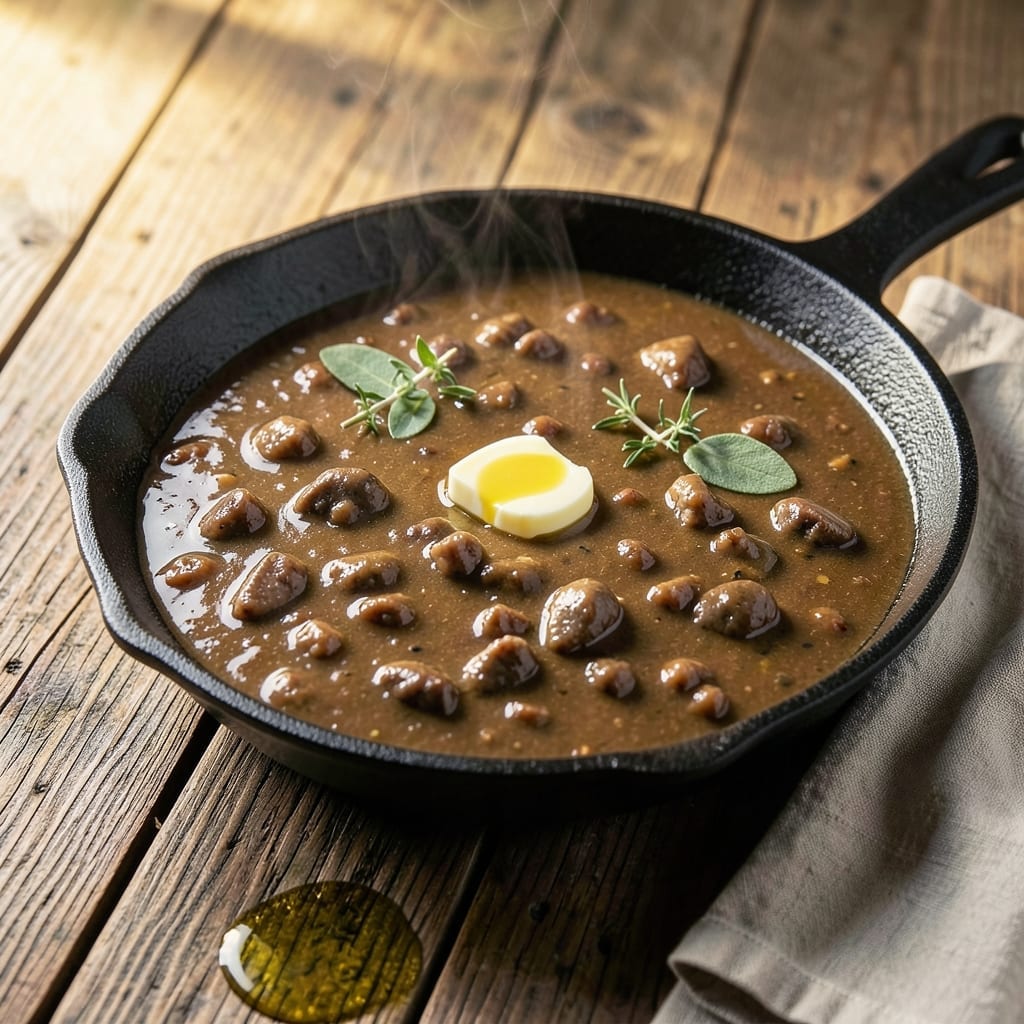
There’s a reason Southern giblet gravy remains a cherished tradition at holiday tables and Sunday suppers. This rich, deeply flavorful sauce transforms pan drippings into something extraordinary with just a few simple additions.
I’ve perfected this method over years of Thanksgiving dinners, learning that the key lies in properly cooking down the giblets first. The slow simmering process extracts maximum flavor, creating a base that’s unmistakably traditional and satisfying.
The result is a velvety gravy with layers of savory depth that only comes from using every part of the bird. It’s the kind of sauce that makes mashed potatoes, biscuits, or rice taste like a celebration.
This version stays true to its roots while being simple enough for any home cook to master. Here’s how to make it properly.
Ingredients for Giblet Gravy Recipe Southern
Traditional Southern gravy starts with giblets, drippings, and a handful of classic pantry staples transformed.
| Ingredient | Amount | Notes |
|---|---|---|
| Chicken Giblets 🍗 | 1 lb | Heart, liver, gizzard, neck |
| Pan Drippings 💧 | 2 cups | From roasted turkey or chicken |
| All-Purpose Flour 🌾 | ½ cup | For thickening gravy |
| Chicken Stock 🥣 | 2 cups | Low-sodium preferred |
| Unsalted Butter 🧈 | 4 tbsp | For enriching flavor |
| Yellow Onion 🧅 | ½ whole | Finely diced for base |
| Garlic Cloves 🧄 | 2 cloves | Minced for depth |
| Fresh Sage Leaves 🌿 | 6 pieces | Chopped, traditional herb |
| Fresh Thyme Sprigs 🍃 | 3 pieces | Leaves stripped from stems |
| Kosher Salt 🧂 | 1 tsp | Diamond Crystal preferred |
| Black Pepper 🌶️ | ½ tsp | Freshly ground for best flavor |
The giblets are non-negotiable for authentic flavor. Source them fresh from a trusted butcher or with your whole turkey during the holidays. Look for vibrant color and minimal odor—fresh giblets should smell clean, not gamey. Most grocery stores carry them in the poultry section, especially around Thanksgiving. If you’re processing a whole bird yourself, reserve the neck and organs as you break it down.
No giblets on hand? Chicken livers alone can work in a pinch, though the texture won’t be as complex. For the stock, homemade turkey stock is ideal, but quality store-bought (like Swanson) will do. The flour can be swapped for cornstarch at half the amount for a gluten-free version, though the gravy may lack the same body. Fresh herbs are traditional, but dried at one-third the quantity works if that’s what you’ve got.
Gravy is best served fresh but keeps in the fridge for 3-4 days. Reheat gently to avoid breaking the emulsion. Freeze for up to 3 months (it’ll separate slightly but whisk back together when warm). Always skim the fat from the drippings before using—this is key for a velvety texture.
Why You’ll Love This Recipe
- One Pot Wonder: I love how it all comes together in the same pan I roasted the chicken in—no extra dishes, just rich, savory gravy from the drippings.
- Deep Southern Flavor: That combination of giblets and butter gives it a hearty, almost nutty depth you just can’t get from regular gravy.
- Holiday Hero: Between us, this is my secret for Thanksgiving and Sunday suppers alike—everyone thinks I slaved over it.
- Budget Stretcher: Honestly, using giblets instead of pricier cuts makes this gravy taste luxurious without breaking the bank.
Step-by-Step Instructions for Giblet Gravy
Master this traditional Southern technique for a rich, velvety gravy that elevates any holiday meal.
Step 1: Simmer the Giblets with Aromatics
Place the 1 lb Chicken Giblets in a saucepan with the 2 cups Chicken Stock, 0.5 whole Yellow Onion, 2 cloves Garlic Cloves, 6 pieces Fresh Sage Leaves, and 3 pieces Fresh Thyme Sprigs. Bring to a boil over medium-high heat, then reduce to a simmer.
Cook for 45-60 minutes until the giblets are tender and the liquid has reduced slightly. The onion should be translucent and the herbs deeply aromatic. Strain the mixture through a fine-mesh sieve, reserving both the cooked giblets (to be finely chopped) and the flavorful broth for the gravy base.
Step 2: Create a Roux with Pan Drippings
In a heavy-bottomed skillet or saucepan, heat the 2 cups Pan Drippings over medium heat. Gradually whisk in the 0.5 cup All-Purpose Flour, creating a smooth paste. This roux is the foundation of your gravy—it should be thick but pourable.
Cook the roux for 5-7 minutes, stirring constantly with a wooden spoon, until it reaches a deep, nutty brown color. The mixture will bubble gently and develop a rich, toasted aroma. Be vigilant; a roux can burn quickly if left unattended. This step ensures your gravy has depth and body.
Step 3: Incorporate the Giblet Broth
Slowly pour the reserved giblet broth into the roux, whisking continuously to prevent lumps from forming. The mixture will thicken immediately as the liquid combines with the roux. Maintain medium heat and continue whisking until the gravy is smooth and begins to simmer.
Add the finely chopped cooked giblets back into the gravy. Stir in the 1 tsp Kosher Salt and 0.5 tsp Black Pepper, adjusting seasoning to taste. The gravy should coat the back of a spoon and have a velvety texture. If it’s too thick, thin it with a small amount of warm water or additional chicken stock.
Step 4: Finish with Butter for Richness
Reduce the heat to low and stir in the 4 tbsp Unsalted Butter, one tablespoon at a time, until fully melted and incorporated. This final step adds a luxurious richness and glossy finish to the gravy. Taste once more and adjust the seasoning if needed.
Let the gravy simmer for an additional 5 minutes to allow the flavors to meld completely. The result should be a smooth, deeply flavored gravy with a consistent, pourable texture. Serve hot over mashed potatoes, biscuits, or roasted meats for an authentic Southern experience.
Pro Tips For Making Giblet Gravy Recipe Southern
- Brown the Giblets: Cook the giblets in butter over medium-high heat until deeply browned, about 8-10 minutes—this builds the rich, meaty base flavor that defines Southern giblet gravy.
- Use the Drippings: Don’t pour off all the fat after cooking the giblets; leave about 3-4 tablespoons of drippings in the pan to mix with your flour for the roux.
- Whisk Constantly: When adding flour to the drippings, whisk continuously for 2-3 minutes to prevent lumps and ensure a smooth, velvety roux.
- Thin Gradually: Pour in the chicken stock a little at a time while whisking—adding it too fast can create clumps that are hard to break up, even with vigorous stirring.
Pro Cooking Tips for This Dish
Giblet Prep Matters
Always rinse giblets under cold water and pat dry before cooking. I trim any excess fat or connective tissue from the liver and gizzard—this prevents bitterness. For the neck, I crack it with a cleaver to expose more surface area for flavor extraction during simmering. 💡
Roux Perfection
Use a heavy-bottomed saucepan (I swear by my All-Clad) to prevent hot spots. The key is equal parts fat to flour—here, 2 cups drippings to ½ cup flour. Whisk constantly and keep the heat at a steady medium to avoid scorching.
Strain Thoroughly
After simmering giblets, strain through a fine-mesh sieve, pressing gently with a spatula to extract all flavor. I line my sieve with cheesecloth for crystal-clear gravy. Discard the solids or finely chop the giblets to add back later for texture.
Seasoning Timing
Wait to season until the very end. Pan drippings vary in saltiness, especially if from a brined bird. I use Diamond Crystal kosher salt and taste in small increments—remember, you can always add more but can’t take it out. 🌡️
Butter Finish
The final 4 tbsp butter should be cold when added—this creates a glossy emulsion. I cut mine into small cubes for even melting. Remove from heat before adding to prevent the butter from separating.
Consistency Check
If your gravy is too thick, thin with warm stock, 1 tbsp at a time. Too thin? Make a quick slurry with 1 tbsp flour and 1 tbsp cold water, then whisk in. The ideal texture should coat a spoon but still drip slowly.
Nutrition Facts
Frequently Asked Questions
Can I use store-bought broth instead of simmering giblets?
You can, but the flavor won’t be as rich. For best results, use low-sodium chicken broth and add a splash of soy sauce or Worcestershire for depth. Simmering giblets extracts unmatched savory notes that define authentic Southern style.
How do I fix lumpy gravy?
Whisk vigorously to break up lumps, or strain through a fine-mesh sieve. To prevent lumps, add liquid to the roux slowly while whisking constantly. A quick fix is blending with an immersion blender for 10 seconds.
Why does my gravy taste bitter?
Bitterness often comes from overcooked roux or giblet parts like the gizzard or liver. Rinse giblets well and remove any gallbladder remnants. Balance bitterness with a pinch of sugar or extra butter.

- 6 Egg Cake Recipe with Oil: Light as Air With Buttery Moisture - October 4, 2026
- 4 Bean Casserole Recipe: One-Pan Heartiness With Smoky Paprika Depth - October 4, 2026
- 3-Ingredient Keto Mug Cake Recipe: Microwave Magic in 2 Minutes - October 4, 2026