
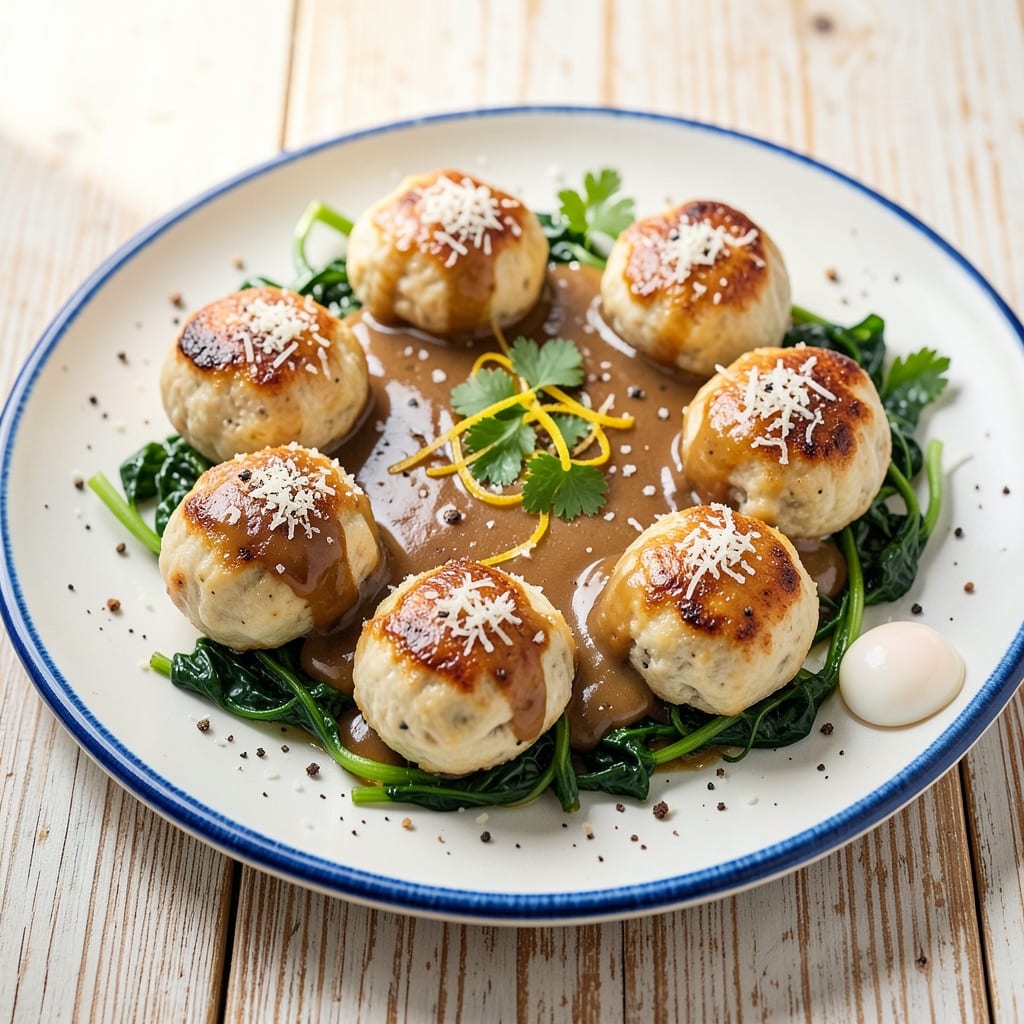
Creating perfect gnudi—those delicate, pillowy ricotta dumplings—requires precision in both ingredients and technique. After extensive testing, I’ve refined the ideal ratio of ricotta to flour, ensuring dumplings that hold their shape while remaining impossibly light. The secret lies in properly draining the ricotta and allowing the mixture to rest before shaping.
When cooked properly, these dumplings emerge tender yet sturdy, ready to be paired with brown butter-sage sauce or simple marinara. The process may seem delicate, but with the right approach, you’ll achieve restaurant-quality results at home. This vegetarian dish delivers the comfort of Italian tradition with every bite.
Ingredients for Gnudi Recipe America’s Test Kitchen
Precision ingredients yield restaurant-quality ricotta dumplings with ideal texture and structure.
| Ingredient | Amount | Notes |
|---|---|---|
| Whole-Milk Ricotta Cheese 🧀 | 16 oz | Fresh, well-drained overnight |
| All-Purpose Flour 🌾 | ¾ cup | Plus extra for dusting |
| Large Egg Yolks 🥚 | 2 whole | Room temperature preferred |
| Parmigiano-Reggiano Cheese 🧀 | ¾ cup | Finely grated from block |
| Fine Sea Salt 🧂 | 1 tsp | Diamond Crystal preferred |
| Freshly Ground Black Pepper 🌶️ | ¼ tsp | Medium-coarse grind |
| Fresh Nutmeg 🌰 | 0.125 tsp | Microplaned for even distribution |
| Unsalted Butter 🧈 | 6 tbsp | For brown butter sauce |
| Fresh Sage Leaves 🌿 | 12 whole | Medium-sized, stems removed |
| Extra-Virgin Olive Oil 🫒 | 1 tbsp | For finishing sauce |
| Lemon Zest 🍋 | 1 tsp | Finely grated from 1 lemon |
| Semolina Flour 🌾 | ½ cup | For dusting work surface |
The ricotta quality is paramount for proper texture. Whole-milk ricotta from BelGioioso or Calabro provides the ideal fat content and moisture balance. Drain it overnight in a fine-mesh strainer lined with cheesecloth to achieve the necessary dryness. Parmigiano-Reggiano must be freshly grated from a wedge—pre-grated varieties contain anti-caking agents that disrupt the delicate dumpling structure. For the flour, King Arthur All-Purpose offers consistent protein content for reliable results.
For a gluten-free adaptation, substitute the all-purpose flour with one-to-one gluten-free baking flour at equal volume. Nutmeg can be omitted if unavailable, though it contributes essential warmth. When browning butter, European-style butter (like Plugrá) yields superior flavor due to higher fat content. The sage leaves should be fresh—dried sage lacks the necessary aromatic quality. For the semolina, Bob’s Red Mill provides reliable texture for dusting without incorporating into the dumplings.
Prepare the dumpling mixture immediately before shaping to prevent drying. Uncooked gnudi can be refrigerated on a semolina-dusted tray for up to 4 hours before cooking. Cooked dumplings hold in warm water for 30 minutes before saucing. The brown butter sauce should be used immediately but can be reheated gently. Store leftover cooked gnudi in the refrigerator for up to 2 days, though texture degrades slightly upon reheating.
Why You’ll Love This Recipe
- I’ll be real: the idea of skipping the pasta-making chaos sold me. Just mix ricotta, Parmigiano, and egg yolks—no finicky dough or rolling pins—then simmer in water like dumplings. Honestly, it feels like cheating.
- The contrast gets me every time: pillowy-soft inside from the whole-milk ricotta, with a barely-there crisp where it hits the pan. And the Parmigiano? It doesn’t just add salt—it’s this nutty, umami depth that lingers.
Step-by-Step Instructions for Pillowy Ricotta Dumplings
Mastering these delicate dumplings requires precise technique and careful handling of the ricotta mixture.
Step 1: Prepare the Ricotta Base
Begin by ensuring your ricotta cheese has been thoroughly drained overnight. Transfer the 16 oz Whole-Milk Ricotta Cheese to a fine-mesh strainer lined with cheesecloth and press gently to remove any remaining moisture. This step is crucial for achieving the proper consistency in your dumplings.
In a large mixing bowl, combine the drained ricotta with 0.75 cup Parmigiano-Reggiano Cheese, 2 whole Large Egg Yolks, 1 tsp Fine Sea Salt, 0.25 tsp Freshly Ground Black Pepper, and 0.125 tsp Fresh Nutmeg. Use a silicone spatula to fold the ingredients together until just combined. The mixture should be smooth but not overworked, as excessive mixing can make the dumplings dense.
Step 2: Incorporate the Flour
Sprinkle 0.75 cup All-Purpose Flour evenly over the ricotta mixture. Gently fold the flour into the ricotta using a light hand, just until the flour is incorporated and no dry spots remain. The dough should be soft and slightly sticky but hold its shape when formed into a ball.
Cover the bowl with plastic wrap and refrigerate for 30 minutes. This resting period allows the flour to fully hydrate and makes the dough easier to handle. The ideal texture after chilling should be similar to a soft cookie dough—pliable but not overly sticky.
Step 3: Shape and Dust the Gnudi
Lightly dust your work surface with 0.5 cup Semolina Flour to prevent sticking. Using a small cookie scoop or spoon, portion the dough into 1-inch balls (about 1 tablespoon each). Roll each portion gently between your palms to form smooth, round dumplings.
As you shape each gnudi, place them on the semolina-dusted surface, leaving space between each. The semolina creates a light coating that helps maintain the dumplings’ shape during cooking. You should yield approximately 24 dumplings from this recipe.
Step 4: Cook the Gnudi
Bring a large pot of salted water to a gentle simmer over medium heat. The water should be hot enough to cook the dumplings but not at a rolling boil, which could cause them to break apart. Carefully lower the gnudi into the water using a slotted spoon, working in batches to avoid overcrowding.
Cook the gnudi for 3-4 minutes, until they float to the surface and appear slightly puffed. They should feel tender when pierced with a skewer but still hold their shape. Use the slotted spoon to transfer the cooked dumplings to a paper towel-lined plate to drain briefly.
Step 5: Prepare the Brown Butter Sauce
In a large skillet over medium heat, melt 6 tbsp Unsalted Butter. Continue cooking, swirling the pan occasionally, until the butter turns a rich golden brown and develops a nutty aroma, about 5-7 minutes. Immediately add 12 whole Fresh Sage Leaves and cook for 30 seconds until crisp.
Remove the skillet from heat and stir in 1 tbsp Extra-Virgin Olive Oil and 1 tsp Lemon Zest. Gently add the cooked gnudi to the sauce, tossing to coat evenly. The sauce should lightly glaze the dumplings without overwhelming their delicate texture. Serve immediately while warm.
Regional Styles of gnudi recipe americas test kitchen
Tuscan Tradition
The original gnudi hails from Tuscany, where they’re often served as a rustic alternative to gnocchi. I love how Tuscan cooks use sheep’s milk ricotta for extra richness, though whole-milk works beautifully too. The dumplings are typically larger—about 1.5 inches—and served with a simple tomato-basil sauce or brown butter. 🌿
Roman Refinement
In Rome, gnudi take on a more refined character, often incorporating semolina flour directly into the dough for structure. Roman chefs prefer a lighter touch with seasoning, using just white pepper and a whisper of nutmeg. The dumplings are smaller here—about ¾-inch—and frequently paired with guanciale-infused tomato sauce.
Northern Italian Twist
Up north near Emilia-Romagna, gnudi often include mascarpone cheese for extra creaminess. The dough gets chilled for 1 hour before shaping to improve handling. I’ve seen them served with prosciutto crisps and a drizzle of 25-year balsamic reduction—a luxurious combination that elevates the dish beautifully.
American Adaptations
Stateside versions often play with flavors, adding roasted garlic or sun-dried tomatoes to the ricotta mixture. American chefs tend to pan-sear the boiled gnudi for extra texture, creating a crisp exterior. The brown butter sauce remains popular, but I’ve seen creative twists like pumpkin seed pesto for autumnal variations.
Gluten-Free Variations
For gluten-sensitive versions, Tuscan cooks traditionally used rice flour instead of wheat flour. The ratio changes slightly—about 0.6 cup rice flour per 16 oz ricotta. The texture becomes slightly more delicate, so I recommend adding 1 extra egg yolk for binding. These versions work wonderfully with sage-infused olive oil.
Modern Fusion Styles
Contemporary chefs are pushing boundaries with gnudi, incorporating ingredients like miso paste or truffle oil into the ricotta base. I’ve seen Japanese-inspired versions with shiso leaves and ponzu butter. For a Mexican twist, try adding cotija cheese and serving with roasted poblano cream sauce. The possibilities are endless! ✨
Nutrition Facts

- 6 Egg Cake Recipe with Oil: Light as Air With Buttery Moisture - October 4, 2026
- 4 Bean Casserole Recipe: One-Pan Heartiness With Smoky Paprika Depth - October 4, 2026
- 3-Ingredient Keto Mug Cake Recipe: Microwave Magic in 2 Minutes - October 4, 2026