
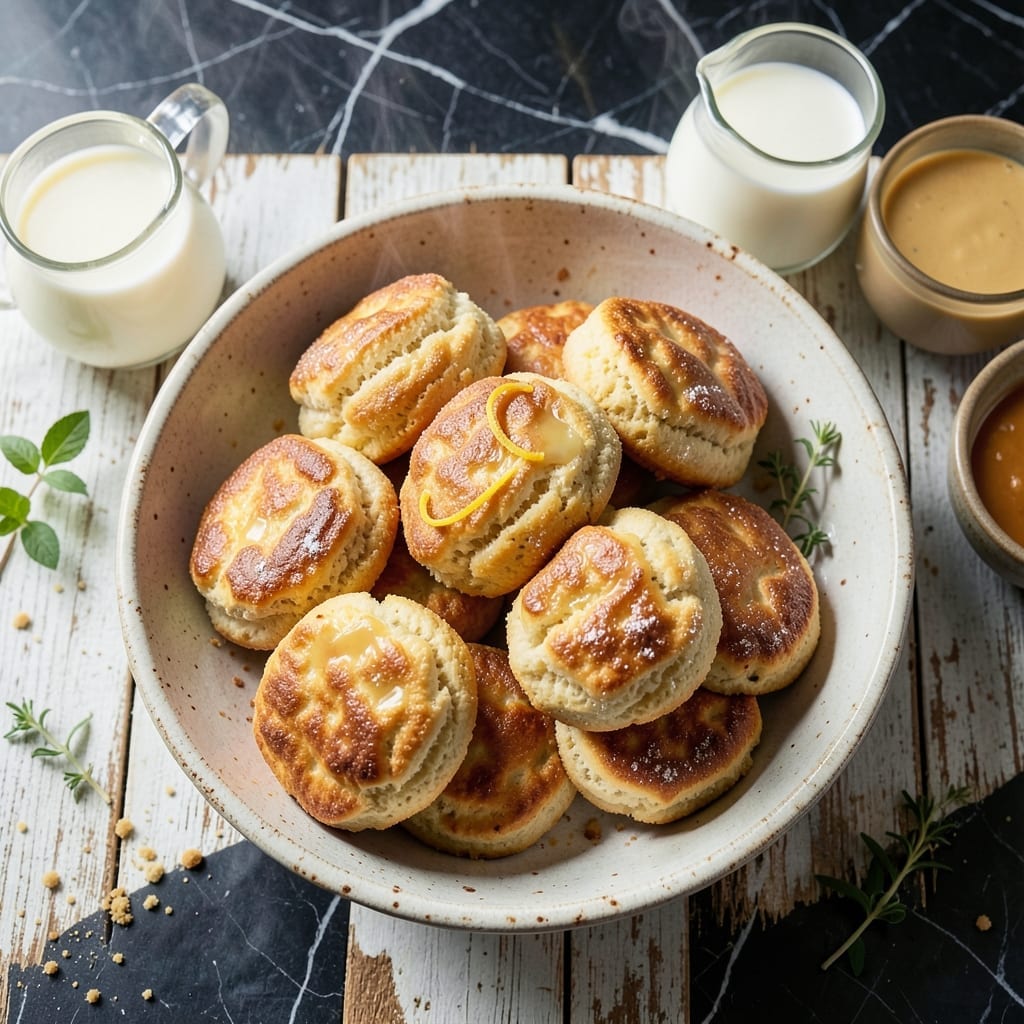
There’s a reason these biscuits earn gold medal status—self-rising flour does the heavy lifting, creating flaky layers with minimal effort. This method delivers consistent results every time.
The key is handling the dough gently, just until it comes together. Overworking it develops gluten, which toughens the texture. A quick fold before cutting creates those signature layers.
In 15 minutes, you’ll have warm, buttery biscuits with golden tops and a tender crumb. The self-rising flour eliminates the need for measuring baking powder and salt separately.
Perfect alongside soups, stews, or as a base for shortcake. Here’s how to make them right the first time.
Ingredients for Gold Medal Self Rising Flour Biscuit
Minimal ingredients create maximum flakiness with self-rising flour as the foundation.
| Ingredient | Amount | Notes |
|---|---|---|
| Gold Medal Self-Rising Flour 🌾 | 2 cups | Plus extra for dusting surface |
| Unsalted Butter 🧈 | ½ cup | Cold, cubed for flakiness |
| Whole Milk 🥛 | ¾ cup | Cold for best texture |
| Buttermilk 🥛 | ¼ cup | For extra tenderness |
| Baking Powder 🧂 | 1 tsp | Optional boost for extra rise |
| Salt 🧂 | ½ tsp | Fine sea salt preferred |
| Sugar 🧈 | 1 tbsp | Granulated, optional for sweetness |
| Cold Water 💧 | 1 tbsp | If dough is too dry |
The flour is non-negotiable here. Gold Medal Self-Rising Flour delivers consistent rise and texture every time—other brands can vary in leavening strength. For the butter, Plugrá or Land O’Lakes are reliable choices. Keep it ice-cold; warm butter won’t create those signature layers. Whole milk adds richness, but if you only have skim, add a tablespoon of melted butter to compensate.
No buttermilk? Whole milk plus 1 tsp lemon juice or vinegar does the trick (let it sit 5 minutes). Skip the baking powder if using self-rising flour—it’s redundant. For a richer flavor, swap half the milk for heavy cream. The sugar can be omitted entirely for savory applications, or increased to 2 tbsp for sweet biscuits.
Biscuits are best served warm, straight from the oven. Leftovers keep in an airtight container for 2 days—reheat in a 350°F oven for 5-10 minutes. Dough can be frozen, uncut, for up to 1 month; thaw overnight before baking.
Why You’ll Love This Recipe
- Mix and Roll: No measuring baking powder—Gold Medal Self-Rising Flour already has it, so I just cut in cold butter and pour milk.
- Buttery Layers: The unsalted butter and buttermilk create flaky, golden tops with a tender crumb inside.
- Breakfast to Dinner: I serve these with jam at dawn and alongside fried chicken at dinner—same batch, two totally different vibes.
- Pocket Change: A two-pound bag of flour and a stick of butter feed six for under three bucks.
Step-by-Step Instructions for Biscuits with Gold Medal Self Rising Flour
Master the technique for achieving those coveted flaky layers with this straightforward method.
Step 1: Combine Dry Ingredients and Cut in Butter
In a large mixing bowl, whisk together the 2 cups Gold Medal Self-Rising Flour, 1 tsp Baking Powder, 0.5 tsp Salt, and 1 tbsp Sugar until evenly distributed. This ensures all leavening agents are properly dispersed for consistent rise.
Add the 0.5 cup Unsalted Butter (cold and cubed) to the flour mixture. Using a pastry cutter or your fingertips, work the butter into the flour until the mixture resembles coarse crumbs with pea-sized butter pieces visible. This creates the flaky layers—don’t overwork it or the biscuits will be tough.
Step 2: Incorporate the Liquid Ingredients
Create a well in the center of the flour-butter mixture. Pour in the 0.75 cup Whole Milk and 0.25 cup Buttermilk. Using a fork, gently stir just until the dough begins to come together. The dough will be shaggy and slightly sticky—that’s perfect.
If the mixture seems too dry and crumbly, add the 1 tbsp Cold Water one teaspoon at a time until the dough holds together. Be careful not to overmix; stop as soon as the liquid is incorporated. Overmixing develops gluten, which results in dense rather than flaky biscuits.
Step 3: Fold and Laminate for Flaky Layers
Turn the dough out onto a lightly floured surface dusted with extra Gold Medal Self-Rising Flour. Gently pat it into a 1-inch thick rectangle. Fold the dough in half like a book, then rotate it 90 degrees and gently pat it down again. Repeat this folding and turning process two more times.
This lamination technique creates multiple thin layers of butter between layers of dough, which expands during baking to produce those desirable flaky layers. The dough should remain cool throughout this process—if it becomes warm or sticky, briefly chill it for 5-10 minutes before continuing.
Step 4: Cut and Arrange for Baking
Pat the dough to a final thickness of about ¾ inch. Using a 2½-inch biscuit cutter (or a glass), cut out biscuits, pressing straight down without twisting. Twisting seals the edges and prevents proper rise. Gather the scraps, gently pat them together, and cut additional biscuits.
Place the biscuits on a parchment-lined baking sheet with their sides touching. This helps them rise upward rather than outward, creating taller, flakier biscuits. For the best results, chill the cut biscuits for 15 minutes before baking to solidify the butter.
Step 5: Bake to Golden Perfection
Preheat your oven to 450°F. Bake the biscuits on the middle rack for 12-15 minutes, or until they’re golden brown on top and the layers are visibly separated. Rotate the pan halfway through baking to ensure even browning.
Remove the biscuits from the oven and brush the tops with a little melted butter if desired. Let them cool on the baking sheet for 2-3 minutes, then transfer to a wire rack. Serve warm for the ultimate flaky texture, splitting them open to reveal the beautiful layers inside.
Pro Tips For Making Gold Medal Self Rising Flour Biscuit
- Chill the Butter: Cube your unsalted butter and freeze it for 10 minutes before cutting it into the flour—this keeps it from melting too soon and gives you those flaky layers.
- Use Buttermilk Only: Skip the whole milk and go all-in on buttermilk; the extra tang makes the biscuits lighter and more flavorful, and the acidity reacts better with the self-rising flour.
- Don’t Overwork Dough: I learned this the hard way—mix just until the dough comes together, or your biscuits will turn out tough instead of tender.
- Bake Immediately: Once you’ve cut the biscuits, get them in the oven right away; the baking powder starts working as soon as it hits liquid, and waiting too long kills the rise.
Make-Ahead Tips for This gold medal self rising flour biscuit
Prep the Dough Ahead
Mix your dry ingredients and cut in the butter the night before. Store the mixture in an airtight container in the fridge. The cold butter stays firm, preserving those flaky layers. In the morning, just add your liquids and proceed. 💡
Shape and Chill
After folding and laminating, pat the dough into a ¾-inch thick rectangle, wrap it tightly in plastic, and refrigerate for up to 24 hours. Chilling relaxes the gluten, making the biscuits even more tender when baked.
Freeze for Later
Cut your biscuits and place them on a parchment-lined tray. Freeze until solid (1-2 hours), then transfer to a freezer bag. They’ll keep for 1 month. Bake straight from frozen, adding 3-5 minutes to the baking time.
Overnight Rise
For extra fluffiness, shape your biscuits and place them on a baking sheet. Cover with a damp towel and refrigerate overnight. The cold, slow rise enhances flavor and texture. Bake as usual in the morning.
Warm Holding Tip
If baking for a crowd, hold finished biscuits in a 200°F oven on a wire rack for up to 30 minutes. They’ll stay warm and crisp without over-browning. Brush with melted butter just before serving.
Reheating Leftovers
Wrap biscuits in foil and warm in a 350°F oven for 5-10 minutes. For a quick fix, microwave for 20-30 seconds, but the oven method preserves the flaky texture better. 🔥
Nutrition Facts
Frequently Asked Questions
Can I use all-purpose flour instead?
No, all-purpose lacks the leavening agents. For each 1 cup of all-purpose flour, add 1½ tsp baking powder and ¼ tsp salt to mimic self-rising. Results may vary slightly.
Why are my biscuits dense instead of flaky?
Overworking the dough develops gluten, creating toughness. Handle gently, fold only 3 times, and avoid twisting the cutter. Cold butter is key for layers.
How do I know when they’re done?
Bake until golden brown on top, about 12-15 minutes at 450°F. The layers should separate visibly, and the bottoms should be lightly browned.
Can I make these without buttermilk?
Yes! Use 1 cup whole milk plus 1 tsp lemon juice or vinegar as a substitute. Let it sit for 5 minutes before using.

- 6 Egg Cake Recipe with Oil: Light as Air With Buttery Moisture - October 4, 2026
- 4 Bean Casserole Recipe: One-Pan Heartiness With Smoky Paprika Depth - October 4, 2026
- 3-Ingredient Keto Mug Cake Recipe: Microwave Magic in 2 Minutes - October 4, 2026