
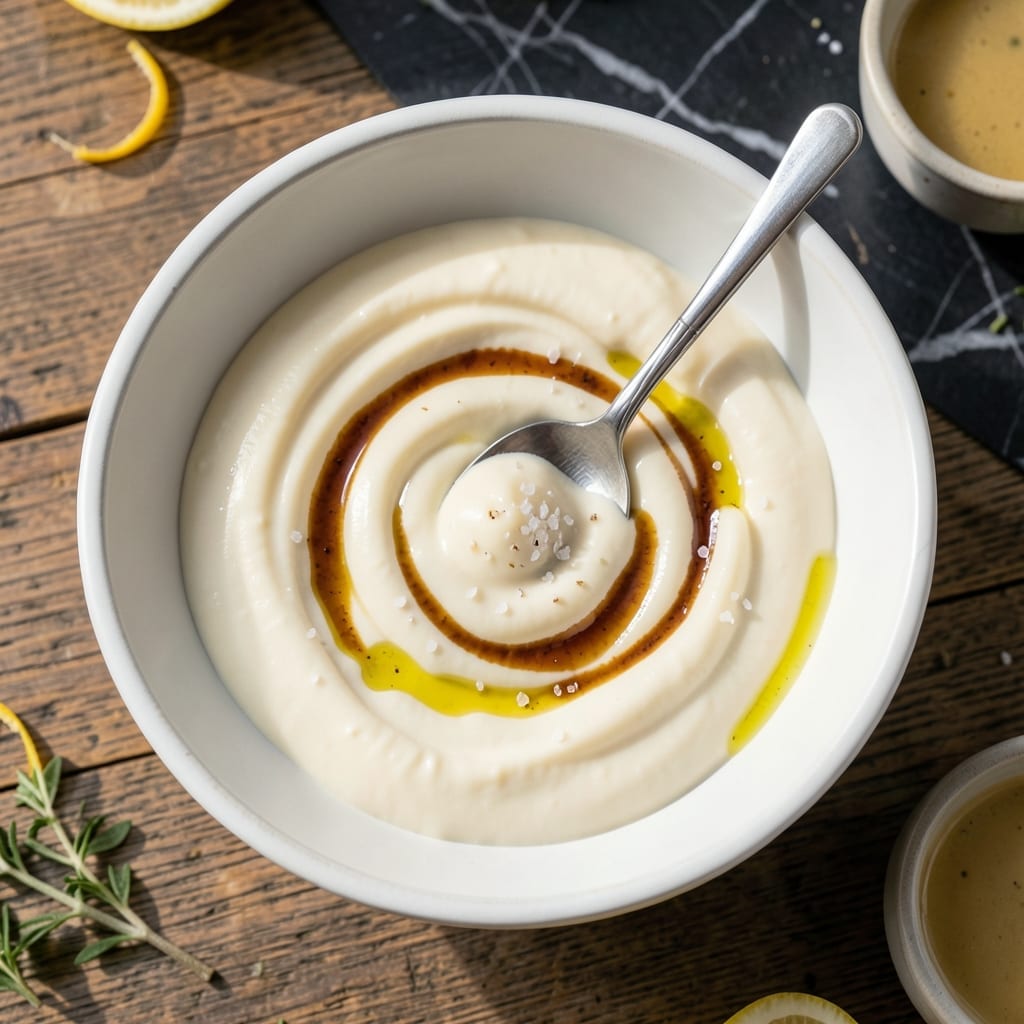
Mastering homemade mayonnaise is a game-changer for any home cook. This recipe delivers a silky, stable emulsion that puts store-bought versions to shame.
The secret lies in precise technique—slowly incorporating oil into egg yolks while maintaining constant motion. A touch of Dijon mustard and bright lemon create that signature tangy depth.
What you get is a creamy, luxurious condiment with perfect texture and balanced flavor. It’s versatile enough for sandwiches, dips, or salad dressings.
Once you try this method, you’ll never go back to the jarred stuff. The difference in quality is undeniable.
Ingredients for Gordon Ramsay Mayonnaise
Eight ingredients transform into a silky, luxurious emulsion with bright, balanced flavor.
| Ingredient | Amount | Notes |
|---|---|---|
| Large Egg Yolks 🥚 | 2 whole | Room temperature for best emulsion |
| Dijon Mustard 🟡 | 1 tsp | High-quality for tangy depth |
| White Wine Vinegar 🍷 | 1 tbsp | Balances richness with acidity |
| Fresh Lemon Juice 🍋 | 1 tbsp | Bright citrus for zing |
| Neutral Oil 🫒 | 1 ½ cups | Light olive or avocado oil preferred |
| Kosher Salt 🧂 | ½ tsp | Diamond Crystal for even seasoning |
| White Pepper ⚪ | ¼ tsp | Freshly ground for subtle heat |
| Cold Water 💧 | 1 tsp | As needed for consistency |
The oil is critical—use a neutral option like avocado or light olive oil (avoid extra-virgin as its flavor can overpower). Egg yolks at room temperature emulsify more smoothly, so take them out 30 minutes before starting. Diamond Crystal kosher salt dissolves evenly, but any fine salt works. For the Dijon, Maille or Grey Poupon deliver that sharp, tangy punch this recipe demands.
No white wine vinegar? Apple cider vinegar at the same amount works, though the flavor profile shifts slightly. Out of fresh lemon? Bottled lemon juice in a pinch (but fresh is superior). For a lighter mayo, replace half the oil with water—emulsion will be thinner but still stable. If you’re worried about raw eggs, use pasteurized yolks (available at most Whole Foods locations).
Homemade mayo keeps 5-7 days in the fridge—store in a glass jar with a tight lid. If it separates, just whisk in 1 tsp cold water to bring it back. For longer storage, freeze in ice cube trays for up to 3 months (thaw in fridge overnight).
Why You’ll Love This Recipe
- No-Fuss Whisking: I can make this in one bowl with just a whisk and a slow drizzle of oil—no fancy gadgets needed.
- Bright, Tangy Kick: The mix of lemon juice and white wine vinegar cuts through the richness, and the Dijon gives it this sharp, satisfying depth.
- Endless Pairings: Honestly, it’s my secret weapon for sandwiches, fries, or even as a base for creamy dressings.
- Keeps for Days: One batch lasts me all week in the fridge, and it’s way cheaper than store-bought with no weird additives.
Step-by-Step Instructions for Gordon Ramsay Mayonnaise
Master the emulsion technique and you’ll achieve restaurant-quality mayonnaise with a perfect silky texture every time.
Step 1: Whisk the Yolks and Mustard to Create the Base
In a medium bowl, combine the 2 whole Large Egg Yolks and 1 tsp Dijon Mustard. Whisk vigorously for 30-45 seconds until the mixture turns pale yellow and slightly thickens. This initial emulsification is critical—it creates the foundation that will hold all the oil.
I always use room temperature yolks for this step. Cold eggs can cause the emulsion to break prematurely. The mustard acts as a natural emulsifier, but its primary role here is adding that signature tangy depth to the finished product.
Step 2: Incorporate the Acidic Elements
Add the 1 tbsp White Wine Vinegar and 1 tbsp Fresh Lemon Juice to the yolk mixture. Whisk for another 20-30 seconds until fully combined. The vinegar provides a mellow acidity that balances the richness, while the lemon juice adds that bright zing mentioned in the title.
At this stage, your mixture should look slightly thickened but still liquid. The acidity also helps stabilize the emulsion, which is why professional mayonnaise recipes always include this step before adding the oil.
Step 3: Slowly Emulsify the Neutral Oil
Begin adding the 1.5 cups Neutral Oil in the thinnest possible stream while whisking constantly. I mean constantly—don’t stop whisking for even a second during this process. Start with just a few drops at a time, then gradually increase to a thin stream as the emulsion forms.
After adding about ½ cup of oil, the mixture will begin to thicken noticeably. This is when you can start adding the oil slightly faster, but maintain that steady whisking. If the mixture ever looks like it’s starting to separate, stop adding oil and whisk vigorously until it comes back together.
The oil should be at room temperature. Cold oil can shock the emulsion and cause it to break.
Step 4: Season and Adjust Consistency
Once all the oil is incorporated, add the 0.5 tsp Kosher Salt and 0.25 tsp White Pepper. Whisk to combine. Taste and adjust seasoning if needed—remember that mayonnaise flavors develop over time, so it should taste slightly under-seasoned at this point.
If your mayonnaise is too thick, whisk in the 1 tsp Cold Water, 1 teaspoon at a time, until it reaches your desired consistency. The finished product should be creamy and spreadable, with a glossy appearance and no signs of separation.
Step 5: Rest and Verify the Emulsion
Let the mayonnaise rest at room temperature for 10-15 minutes before using. This allows the flavors to meld together and the emulsion to fully stabilize.
To verify your emulsion was successful, the mayonnaise should hold its shape when you scoop some onto a spoon. If it’s too thin, you can attempt to save it by whisking in another egg yolk, but prevention through proper technique is always better than fixing a broken emulsion.
Pro Tips For Making Gordon Ramsay Mayonnaise
- Room Temp Yolks: Take your egg yolks out 30 minutes before starting—cold yolks resist emulsifying, and I learned this the hard way with a split mayo.
- Slow Oil Drizzle: Pour the neutral oil in a thin, steady stream, especially at first; about 1 drop per second until it thickens, then you can speed up slightly.
- Acid Balance: Use 1 teaspoon each of white wine vinegar and lemon juice—more than that and the mayo turns thin, less and it tastes flat.
- Skip the Blender: A whisk and a bowl give you better control than a blender; I was skeptical until I tried it and finally got that perfect creamy texture.
Flavor Customization for gordon ramsay mayonnaise
Herb-Infused Twist
Blend in 2 tbsp finely chopped fresh dill or tarragon after the emulsion is complete. The herbs add a bright, aromatic layer that pairs beautifully with the lemon. I love this version with grilled fish or chicken sandwiches. 🌿
Garlic Lovers’ Version
Add 1 minced garlic clove to the yolk mixture before incorporating the oil. For a milder flavor, roast the garlic first. This creates a rich, savory depth perfect for aioli-style dips or burger spreads.
Spicy Kick
Stir in ½ tsp cayenne pepper or 1 tsp sriracha at the end for heat. The spice complements the creamy texture and adds a fun contrast. Adjust the amount to your preferred heat level.
Smoky Flavor
Replace ¼ cup of the neutral oil with smoked paprika-infused oil. Alternatively, add ½ tsp smoked paprika directly to the finished mayo. This works wonders for barbecue sandwiches or as a dip for fries.
Citrus Variation
Swap the white wine vinegar for apple cider vinegar and add 1 tsp orange zest. The citrusy brightness pairs well with seafood or as a base for coleslaw dressing. 🍊
Sweet Touch
For a unique twist, whisk in 1 tsp honey or maple syrup after seasoning. This subtle sweetness balances the acidity and works surprisingly well in chicken or turkey sandwiches.
Nutrition Facts
Frequently Asked Questions
Can I use a hand mixer instead of whisking by hand?
Yes, a hand mixer works perfectly for making mayonnaise. Use the whisk attachment and add the oil in a very slow, thin stream while mixing on medium speed. This method can actually create a more stable emulsion with less effort.
Why did my mayonnaise turn out too thin?
The most common cause is adding the oil too quickly. Start with drops not a stream, and ensure your bowl and utensils are completely dry. If it’s already thin, whisk in another yolk or 1 tsp cold water to thicken.
How long will this last in the fridge?
Properly stored in an airtight container, your homemade version stays fresh for 5-7 days. For longer storage, freeze in ice cube trays for up to 3 months. Thaw overnight in the fridge before using.

- 6 Egg Cake Recipe with Oil: Light as Air With Buttery Moisture - October 4, 2026
- 4 Bean Casserole Recipe: One-Pan Heartiness With Smoky Paprika Depth - October 4, 2026
- 3-Ingredient Keto Mug Cake Recipe: Microwave Magic in 2 Minutes - October 4, 2026