
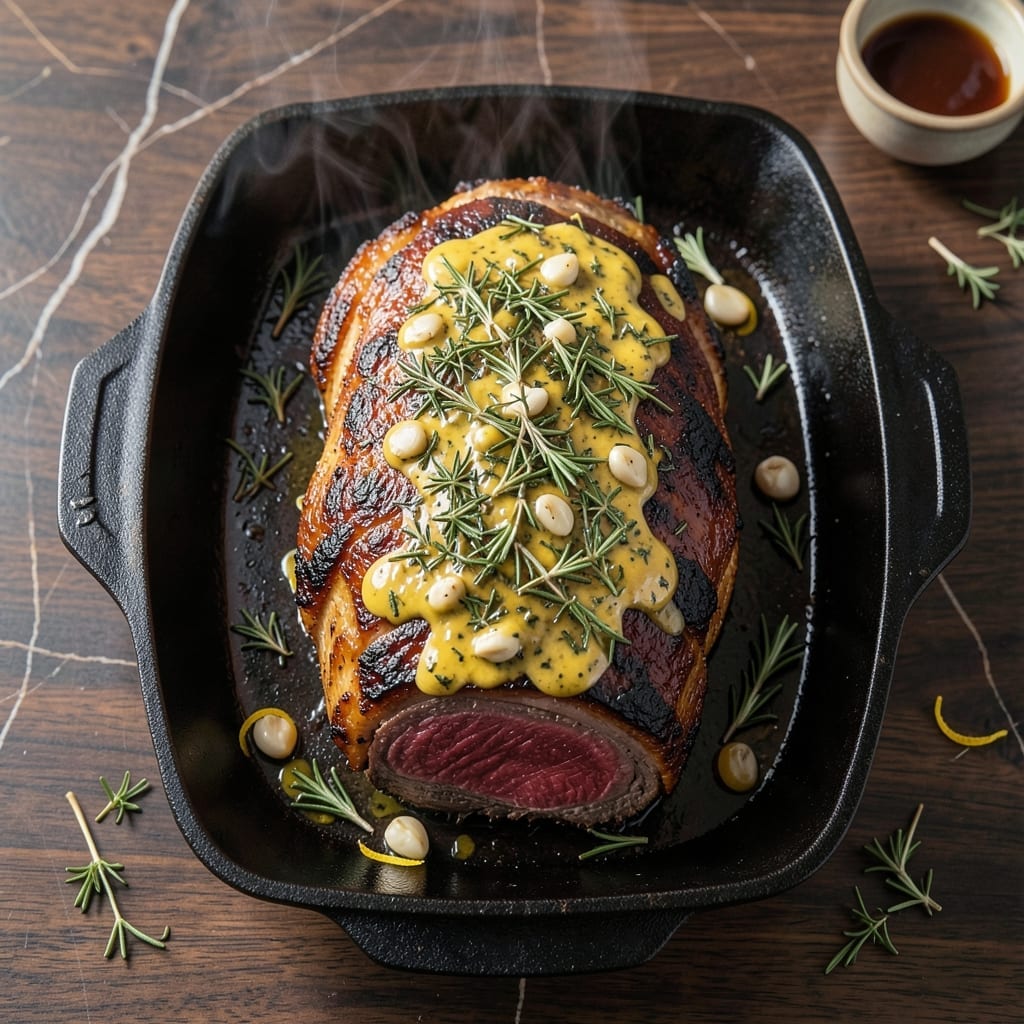
This prime rib delivers the perfect holiday centerpiece with minimal effort and maximum impact. A simple herb crust transforms a luxurious cut into a showstopping main course.
The technique is straightforward: sear the meat first to lock in juices, then finish it in the oven with a golden herb crust. This method ensures even cooking and a beautiful presentation every time.
You’ll achieve tender, juicy slices with a flavorful crust that impresses without stress. The aroma alone announces a special occasion before the first bite.
Serve it with classic sides like roasted potatoes and seasonal vegetables for a complete holiday meal worthy of any celebration.
Ingredients for Gordon Ramsay Prime Rib
Luxurious prime rib meets a fragrant herb crust for an unforgettable holiday centerpiece.
| Ingredient | Amount | Notes |
|---|---|---|
| Prime Rib Roast 🥩 | 5 lb | Bone-in, well-marbled preferred |
| Kosher Salt 🧂 | 2 tbsp | Diamond Crystal preferred for texture |
| Freshly Ground Black Pepper 🌶️ | 1 tbsp | Coarse grind for crust |
| Garlic Cloves 🧄 | 8 cloves | Minced for herb crust |
| Fresh Rosemary 🌿 | ¼ cup | Finely chopped, stems discarded |
| Fresh Thyme 🍃 | ¼ cup | Leaves stripped from stems |
| Dijon Mustard 🟡 | ¼ cup | High-quality smooth variety |
| Extra-Virgin Olive Oil 🫒 | ¼ cup | For searing and crust binding |
| Unsalted Butter 🧈 | 4 tbsp | Softened for herb mixture |
| Red Wine 🍷 | 1 cup | Dry variety for deglazing |
| Beef Stock 🥩 | 2 cups | Low-sodium preferred for control |
| All-Purpose Flour 🌾 | 2 tbsp | For thickening pan juices |
| Shallots 🧅 | 2 whole | Finely minced for sauce |
The prime rib must be bone-in for optimal flavor and presentation. Whole Foods or Costco typically carry well-marbled roasts—ask the butcher for the center cut of the ribeye roll. Look for bright red meat with abundant fat marbling. The beef stock should be high-quality; I recommend More Than Gourmet or homemade if available. Unsalted butter allows precise seasoning control—Plugrá or Kerrygold are excellent choices (trust me on the full-fat version).
No red wine? Substitute with additional beef stock plus 1 tbsp balsamic vinegar. Fresh herbs are non-negotiable for the crust, but dried herbs at one-third the amount work for the sauce if necessary. For the Dijon, Maille or Grey Poupon deliver the right sharpness. If avoiding wine entirely, beef broth with a splash of apple cider vinegar provides comparable depth. The flour can be omitted for gluten-free, though the sauce won’t thicken as well.
Prime rib benefits from dry brining overnight in the fridge—expose the meat to air uncovered for 12-24 hours. Store fresh herbs wrapped in damp paper towels for up to 5 days. Leftover prime rib makes incredible sandwiches and keeps 4-5 days refrigerated. Freeze sliced portions for up to 3 months (worth the extra minute to portion properly).
Why You’ll Love This Recipe
- One Pan Wonder: Honestly, it’s just season, sear, and roast—no complicated steps, and the rosemary and garlic do most of the work for you.
- Restaurant Quality: That crust from the kosher salt and black pepper with the tender, juicy center? I’ve served this to guests who swore it came from a steakhouse.
- Holiday Hero: Between us, this is my go-to for Christmas and birthdays—it feels fancy but doesn’t require me to chain myself to the kitchen all day.
- Leftovers Luxe: The next-day sandwiches with the cold prime rib, a smear of horseradish, and a crusty roll? I’ll be real: sometimes I make it just for those.
Step-by-Step Instructions for Herb-Crusted Prime Rib
Master this method for a showstopping centerpiece with perfectly rosy meat and a crust that crackles.
Step 1: Prepare the Herb Crust
In a bowl, combine the 0.25 cup Dijon mustard, 0.25 cup extra-virgin olive oil, 2 tbsp kosher salt, 1 tbsp freshly ground black pepper, 8 cloves minced garlic, 0.25 cup chopped fresh rosemary, and 0.25 cup fresh thyme leaves. Stir until the herbs are evenly distributed and the mixture thickens slightly.
The mustard acts as a binder while the oil helps the crust adhere to the 5 lb prime rib roast. I use a silicone spatula to press the mixture into the meat, ensuring every surface is coated. This step creates the foundation for that signature golden, aromatic crust.
Step 2: Sear and Coat the Roast
Preheat your oven to 450°F. Heat a large roasting pan over medium-high heat on the stovetop. Add the 5 lb prime rib roast fat-side down and sear for 3-4 minutes until deeply browned. This initial sear locks in juices and jumpstarts the crust formation.
Flip the roast and immediately brush the herb mixture all over the surface, including the sides. I use a pastry brush for even coverage, pressing gently so the crust adheres. The searing creates a sticky surface that helps the herb mixture cling to the meat during roasting.
Insert a meat thermometer into the thickest part of the roast, avoiding the bone. This ensures accurate temperature monitoring throughout the cooking process.
Step 3: Roast to Perfection
Place the pan in the preheated oven and roast for 20 minutes at 450°F. Then reduce the heat to 325°F and continue roasting. For a 5 lb prime rib roast, expect about 1.5 to 2 hours total cooking time, but rely on the thermometer rather than time.
You want to remove the roast when the internal temperature reaches 120-125°F for medium-rare. The temperature will rise 5-10°F during resting. Watch for the crust to turn a deep golden brown—this visual cue confirms the Maillard reaction is working its magic.
Step 4: Create the Red Wine Pan Sauce
Transfer the roast to a cutting board and tent loosely with foil. Place the roasting pan on the stovetop over medium heat. Add the 2 minced shallots and cook for 2 minutes until softened, stirring to scrape up the browned bits.
Sprinkle the 2 tbsp all-purpose flour over the shallots and stir for 1 minute to create a roux. Slowly pour in the 1 cup red wine, whisking constantly to prevent lumps. Add the 2 cups beef stock and 4 tbsp unsalted butter, then simmer for 5-7 minutes until the sauce thickens enough to coat the back of a spoon.
Strain the sauce through a fine-mesh sieve into a gravy boat. The result should be a rich, glossy sauce with deep, savory notes that complement the herb-crusted roast.
Step 5: Rest and Carve
Let the prime rib rest for at least 20 minutes before carving. This allows the juices to redistribute, ensuring every slice is moist and flavorful. I tent the roast with foil and place a towel over it to keep it warm.
To carve, slice between the bones to separate the ribs, then cut the meat into 1-inch thick slices against the grain. Serve immediately with the red wine pan sauce drizzled over the top. The crust should crackle slightly as you cut into it, revealing the perfectly pink interior.
Pro Tips For Making Gordon Ramsay Prime Rib
- Dry the Roast: Pat the prime rib completely dry with paper towels before seasoning—I learned this the hard way after my first attempt had a steamed, pale crust instead of that perfect golden sear.
- Use Room Temp: Take the roast out of the fridge 1-2 hours before cooking. Sounds weird, but it works: cold meat cooks unevenly, and you’ll end up with a dry exterior before the center’s done.
- Don’t Crown the Garlic: Crush the garlic cloves just enough to crack them, but leave them in their skins. My grandmother swore by this, and she was right: it infuses flavor without burning or turning bitter.
- Rest Under Foil: After pulling it from the oven, tent the prime rib with foil and give it a solid 20-30 minutes to rest—this isn’t the prettiest method, but it’s the tastiest, locking in juices before carving.
Wine and Beer Pairings for This gordon ramsay prime rib
Bold Red Wines
A full-bodied Cabernet Sauvignon from Napa Valley stands up to the rich, savory flavors of this dish. The tannins cut through the fat beautifully, while the dark fruit notes complement the herb crust. I recommend Caymus or Silver Oak for special occasions. 🍷
Elegant Alternatives
A Syrah from the Northern Rhône, like Guigal’s Côte-Rôtie, offers peppery notes that harmonize with the black pepper in the crust. The smoky undertones echo the seared exterior of the prime rib. Serve slightly below room temperature for best results.
Classic Pairings
You can’t go wrong with a traditional Bordeaux blend. The earthy, structured profile of a Saint-Julien or Pauillac enhances the beef’s natural umami. These wines have the acidity to balance the richness of the dish.
Beer Options
For beer lovers, a robust Imperial Stout like Founders KBS offers dark chocolate and coffee notes that pair surprisingly well. The carbonation cleanses your palate between bites. Alternatively, a Barleywine provides a malty sweetness that contrasts the savory crust. 🍺
Lighter Choices
A Pinot Noir from Oregon’s Willamette Valley works if you prefer reds with less tannin. The bright acidity and red fruit flavors won’t overpower the prime rib. I particularly enjoy Domaine Serene with this meal.
Non-Alcoholic
For a non-alcoholic option, try a dry sparkling cider like Martinelli’s Gold. The effervescence and crisp apple notes provide a refreshing contrast to the rich, herby flavors of this creation.
Nutrition Facts
Frequently Asked Questions
What internal temperature should I aim for?
Remove the roast at 120-125°F for perfect medium-rare. The temperature will rise 5-10°F while resting. Use a meat thermometer for accuracy—never guess!
Can I prepare this the day before?
Yes! Make the herb crust up to 24 hours ahead and store it refrigerated. Dry brine the roast overnight uncovered for enhanced flavor and texture.
Why rest the meat before slicing?
Resting for 20 minutes lets juices redistribute. Skipping this step means dry meat and a pool of lost juices on your cutting board.
What if my crust burns before the meat cooks?
Tent loosely with foil if the crust browns too quickly. Reduce oven temp to 300°F and extend cooking time. Always check internal temperature.

- 6 Egg Cake Recipe with Oil: Light as Air With Buttery Moisture - October 4, 2026
- 4 Bean Casserole Recipe: One-Pan Heartiness With Smoky Paprika Depth - October 4, 2026
- 3-Ingredient Keto Mug Cake Recipe: Microwave Magic in 2 Minutes - October 4, 2026