
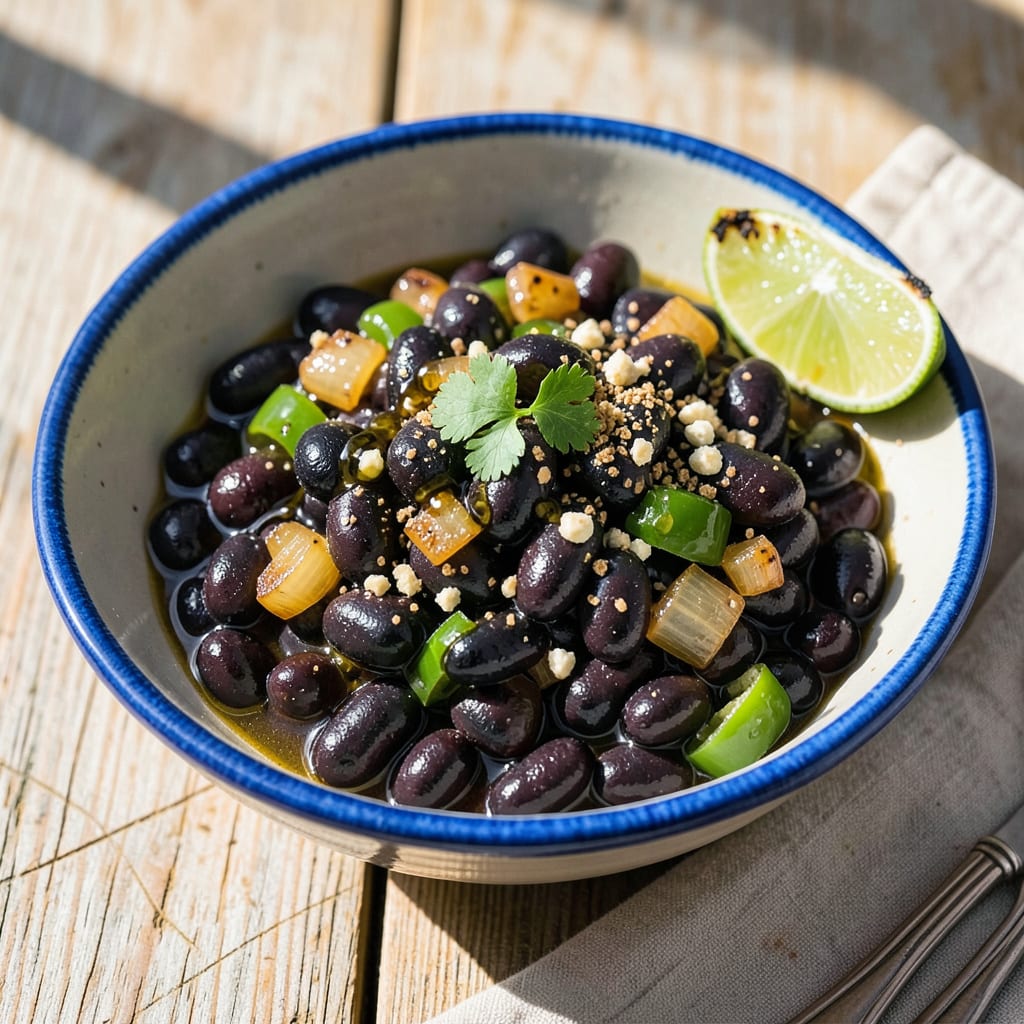
Cuban-style black beans achieve their signature creamy perfection through simple but precise techniques. This recipe delivers the authentic texture and depth of flavor you’d find in a Miami cocina, whether starting with dried beans or enhancing canned Goya beans for convenience. The foundation lies in properly building layers of flavor through sofrito and spices.
In just 30 minutes, you’ll create beans with a velvety consistency that holds its shape while being rich enough to stand alone. The method preserves the traditional potlikker for maximum creaminess without added dairy. Serve as a side with rice and plantains, or use as a base for hearty bowls and tacos.
Ingredients for Goya Black Beans
Authentic Cuban flavors begin with these carefully selected ingredients, balancing convenience with traditional technique for velvety results.
| Ingredient | Amount | Notes |
|---|---|---|
| Dried black beans 🫘 | 1 lb | Or 3 (15-oz) cans Goya black beans |
| Spanish olive oil 🫒 | 3 tbsp | Extra-virgin preferred for sofrito |
| Yellow onion 🧅 | 1 whole | Medium, finely diced for sofrito |
| Green bell pepper 🌶️ | 1 whole | Medium, finely diced for sofrito |
| Garlic cloves 🧄 | 6 cloves | Minced for maximum flavor infusion |
| Ground cumin 🌿 | 1 ½ tsp | Freshly toasted for optimal aroma |
| Dried oregano 🍃 | 1 ½ tsp | Mexican oregano preferred |
| Bay leaves 🌿 | 2 whole | Fresh or dried for depth |
| White vinegar 💧 | 1 tbsp | Balances richness of beans |
| Vegetable broth 🍲 | 3 cups | Low-sodium preferred for control |
| Kosher salt 🧂 | 1 ½ tsp | Diamond Crystal preferred for precision |
| Fresh cilantro 🌿 | ¼ cup | Chopped, for finishing garnish |
| Lime 🍋 | 1 whole | Juiced for bright finishing acidity |
The foundation rests on quality beans and proper sofrito preparation. Goya black beans (canned or dried) provide authentic texture, while Spanish olive oil—particularly Colavita or Goya brand—delivers the correct fat profile for flavor development. Fresh vegetables for the sofrito must be finely diced to integrate seamlessly; Whole Foods or Latin markets typically offer the best produce selection for this application. The cumin and oregano should be purchased from Penzeys or a bulk spice merchant to ensure potency, as supermarket spices often lack the necessary freshness for this dish’s complexity.
For dried beans, Camellia brand offers excellent quality and consistent cooking times. Canned beans require thorough rinsing to remove excess sodium. The sofrito vegetables may be substituted with equal volumes of pre-diced mirepoix mix (sold at Trader Joe’s), though fresh provides superior texture. Apple cider vinegar may replace white vinegar at a 1:1 ratio. For those sensitive to nightshades, omit the bell pepper and increase onion by 50%. The broth may be substituted with water plus 1 tsp vegetable bouillon paste (Better Than Bouillon recommended) without compromising the final texture.
Prepared beans maintain optimal quality for 5 days refrigerated in their cooking liquid, which continues to thicken upon standing. For longer storage, freeze in 2-cup portions for up to 6 months; thaw overnight in the refrigerator before reheating. The sofrito base may be prepared 24 hours in advance and refrigerated, allowing flavors to meld. Always reserve some potlikker when storing, as this starchy liquid is essential for reheating without drying. Garnishes should be added fresh upon serving to preserve texture and color.
Why You’ll Love This Recipe
- No Soaking Needed: Honestly, I used to skip dried beans because who remembers to soak them overnight? This recipe cuts that step entirely—just rinse, simmer with the sofrito base, and you’re golden. The beans turn out creamy, not mealy, every single time.
- That Sofrito Magic: Here’s what sold me—the sizzle of garlic, onion, and green pepper in Spanish olive oil. It’s not just flavor; it’s the smell that’ll have your neighbors asking for the recipe. The beans soak up every bit, making them rich without being heavy.
- Meal Prep MVP: I make a double batch Sunday and suddenly I’ve got lunches covered: over rice, stuffed in tacos, or straight from the fridge at midnight. My picky nephew even eats them cold with tortilla chips (don’t judge—it works).
- Pantry Lifesaver: Between us, a 1-pound bag of dried beans costs less than two cans, and this makes way more. Leftovers freeze perfectly, so I always have a backup for those “I forgot to grocery shop” nights. No waste, no stress.
Step-by-Step Instructions for Cuban-Style Black Beans
This method delivers perfectly creamy beans with authentic Cuban flavor in just 30 minutes.
Step 1: Prepare the Sofrito Base
Heat the 3 tbsp Spanish olive oil in a large pot over medium heat. Add the yellow onion and green bell pepper, both finely diced, and sauté for 6-8 minutes until the vegetables soften and become translucent. This slow cooking develops the sweetness of the onions and peppers, creating the aromatic foundation for your beans.
Add the 6 cloves garlic cloves, minced, and cook for 1 minute until fragrant but not browned. Stir in the 1.5 tsp ground cumin and 1.5 tsp dried oregano, toasting them briefly to release their essential oils. This step builds layers of flavor that will infuse into the beans as they cook.
Step 2: Simmer Beans with Aromatics
Add the 1 lb dried black beans (or drained and rinsed 3 (15-oz) cans Goya black beans) to the pot along with the 2 whole bay leaves and 3 cups vegetable broth. Bring the mixture to a gentle boil, then reduce heat to low and let it simmer uncovered for 15 minutes. The beans should be partially submerged in liquid, absorbing the sofrito flavors as they cook.
After 15 minutes, stir in the 1.5 tsp kosher salt and continue simmering for another 10 minutes. You’ll notice the liquid reducing slightly and the beans becoming more tender. If using dried beans that haven’t been pre-soaked, they’ll need additional cooking time until tender—check by pressing one against the side of the pot.
Step 3: Finish with Bright Acidity
Once the beans reach your desired tenderness, stir in the 1 tbsp white vinegar. This small amount of acidity brightens all the flavors and balances the richness of the beans. Let the mixture cook for an additional 2-3 minutes to allow the vinegar to incorporate fully.
For a creamier texture, use a wooden spoon to gently mash some of the beans against the side of the pot. This releases starches that will thicken the cooking liquid naturally. The finished beans should have a velvety consistency that coats the back of a spoon.
Step 4: Garnish and Serve
Remove the pot from heat and discard the bay leaves. Stir in half of the 0.25 cup fresh cilantro, chopped, reserving the rest for garnish. Squeeze in the juice from the 1 whole lime, stirring to distribute the bright citrus notes throughout the beans.
Transfer the beans to a serving bowl and garnish with the remaining cilantro. The beans should have a glossy sheen from the olive oil and a perfect balance of earthy, savory, and bright flavors. Serve immediately while hot, or let them rest for 10 minutes to allow the flavors to meld further before serving.
Storing and Reheating This Dish
Refrigerator Storage
After cooking, let your beans cool to room temperature for no more than 2 hours before transferring to an airtight container. I prefer glass containers like Pyrex because they don’t absorb odors. Store them with their cooking liquid—the potlikker keeps the beans moist and flavorful. They’ll maintain perfect texture for up to 5 days in the fridge. ❄️
Freezing for Later
For longer storage, portion the beans into 2-cup freezer-safe containers or heavy-duty ziplock bags. Leave about 1 inch of headspace to allow for expansion. I’ve found they freeze beautifully for up to 6 months without losing their creamy texture. Thaw overnight in the refrigerator before reheating—never microwave from frozen.
Stovetop Reheating
My preferred method is reheating on the stovetop over medium-low heat. Add the beans with their liquid to a saucepan and warm gently for 8-10 minutes, stirring occasionally. If they seem thick, add 2-3 tbsp vegetable broth to restore the creamy consistency. This method preserves the velvety texture better than any other.
Microwave Method
For quick meals, microwave individual portions in a microwave-safe bowl covered with a damp paper towel. Heat on 70% power for 2 minutes, stir, then continue in 30-second bursts until reaching 165°F. The damp towel prevents drying while allowing steam to circulate. Always taste and adjust seasoning after microwaving.
Reviving Leftovers
If your beans have thickened too much in storage, don’t worry—the potlikker is your secret weapon. Simply add ¼ cup hot water or broth and simmer for 5 minutes while mashing a few beans against the pot’s side. This releases starches that naturally restore the creamy consistency. A splash of lime juice at the end brightens the flavors beautifully.
Garnish Before Serving
Always add fresh garnishes after reheating to maintain their vibrant flavor and texture. I love sprinkling with chopped cilantro and a drizzle of extra-virgin olive oil. For extra brightness, add a squeeze of fresh lime juice just before serving. This final touch makes leftovers taste as fresh as day one. 💛
Nutrition Facts
Frequently Asked Questions
Can I use canned beans instead of dried?
Three 15-oz cans of Goya black beans work perfectly. Drain and rinse them first to remove excess sodium, then add them at the simmering step. They’ll need about 15 minutes of cooking time with the sofrito to absorb flavors.
Why are my beans still hard after cooking?
Dried beans often need more time, especially if not soaked. Simmer them for an additional 30-45 minutes with the lid slightly ajar. Check water level and add 1 cup hot broth if needed. Older beans may take even longer to soften.
What’s the best way to make them creamier?
Use a wooden spoon to mash about ¼ of the beans against the pot’s side. This releases natural starches that thicken the liquid. For extra richness, stir in 1 tbsp olive oil at the end—this mimics traditional Cuban techniques.
Can I make this in a slow cooker?
Yes! Sauté the sofrito first, then transfer everything to the slow cooker. Cook on low for 6-8 hours or high for 3-4 hours. Add vinegar and lime juice at the end to preserve their bright flavors.

- 6 Egg Cake Recipe with Oil: Light as Air With Buttery Moisture - October 4, 2026
- 4 Bean Casserole Recipe: One-Pan Heartiness With Smoky Paprika Depth - October 4, 2026
- 3-Ingredient Keto Mug Cake Recipe: Microwave Magic in 2 Minutes - October 4, 2026