
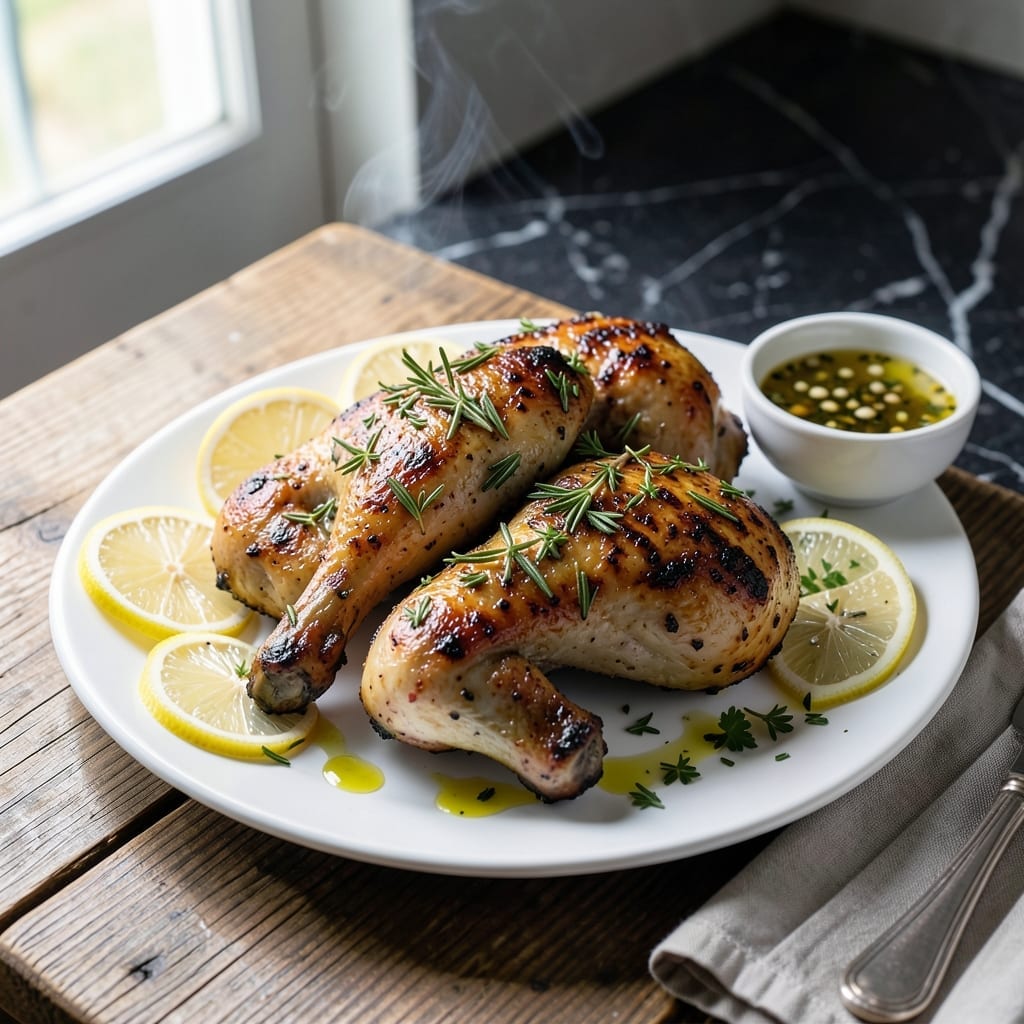
This marinade transforms ordinary chicken into a flavor-packed centerpiece with minimal effort. I developed it after years of experimenting with herb combinations, settling on a blend that delivers consistent, bold results every time.
The key is balancing fresh herbs with acid and oil, allowing the flavors to penetrate deeply. A 30-minute soak is enough to make a difference, though overnight yields the most dramatic improvement in both taste and tenderness.
What you’ll get is juicy, aromatic chicken with a golden crust when grilled. The herbs create a fragrant base, while the acid tenderizes without turning the meat mushy, ensuring perfect texture and flavor.
Double the batch and store in the fridge for up to a week, making weeknight cooking effortless.
Ingredients for Grilled Chicken Recipe Marinade
Nine ingredients create this bold, herb-infused marinade that elevates chicken effortlessly.
| Ingredient | Amount | Notes |
|---|---|---|
| Fresh Rosemary 🌿 | ¼ cup | Finely chopped, stems discarded |
| Fresh Thyme Leaves 🍃 | ¼ cup | Stripped from stems |
| Fresh Parsley 🌿 | ¼ cup | Flat-leaf variety preferred |
| Garlic Cloves 🧄 | 6 cloves | Minced for maximum flavor |
| Lemon Juice 🍋 | ½ cup | Freshly squeezed, no concentrate |
| Extra-Virgin Olive Oil 🫒 | 1 cup | High-quality, fruity profile |
| Dijon Mustard 🟡 | 2 tbsp | Smooth variety for emulsifying |
| Honey 🍯 | 2 tbsp | Balances acidity in marinade |
| Sea Salt 🧂 | 2 tsp | Fine grain for even distribution |
| Black Pepper 🌶️ | 1 tsp | Freshly ground preferred |
The herbs are everything here. Fresh rosemary, thyme, and parsley from the farmers market have the most vibrant flavor, but grocery store bunches work if they’re bright green and fragrant. I grab mine from Whole Foods or Trader Joe’s—their turnover is usually good. For the olive oil, spring for a high-quality extra-virgin; it carries the flavor. The lemon juice should be freshly squeezed (bottled tastes flat and can get bitter).
Out of fresh herbs? Dried work in a pinch—use one-third the amount and rehydrate in the warm marinade for 10 minutes. No Dijon? Whole-grain mustard adds texture but works flavor-wise. Swap honey for maple syrup if you’re vegan. The garlic is non-negotiable though—fresh only, and don’t skimp. Six cloves sounds like a lot, but it mellows beautifully when raw.
This keeps up to 1 week in the fridge—actually gets better as it sits. Freeze in portions for 3 months (olive oil can separate, but a quick shake remixes it). Always marinate chicken in a sealed bag or shallow dish so every surface gets coated (worth the extra minute).
Why You’ll Love This Recipe
- Minimal Chopping Required: I just toss the herbs and garlic into a bowl with lemon juice—no fancy prep work here.
- Herb-Infused Magic: The rosemary and thyme give it that fresh, garden-to-grill taste I can’t get enough of.
- Weeknight Lifesaver: I marinate a big batch on Sunday and grill it straight from the fridge all week.
- Leftovers? No Problem: Honestly, it tastes even better the next day in salads or wraps.
Step-by-Step Instructions for Grilled Chicken Marinade
Here’s my proven method for creating a marinade that transforms ordinary chicken into something extraordinary.
Step 1: Prepare and Combine the Fresh Herbs
Finely chop the 0.25 cup Fresh Rosemary and 0.25 cup Fresh Parsley, discarding any tough stems. Strip the 0.25 cup Fresh Thyme Leaves from their stems by pinching the top of the sprig and running your fingers down the length. This releases the aromatic oils that will infuse your marinade.
Combine these three herbs in a large bowl. The combination of rosemary’s piney notes, thyme’s earthy warmth, and parsley’s fresh brightness creates a complex herb base that will penetrate the chicken beautifully. I always use flat-leaf parsley for its superior flavor compared to the curly variety.
Step 2: Create the Emulsified Base
In the same bowl, add the 1 cup Extra-Virgin Olive Oil, 0.5 cup Lemon Juice, 2 tbsp Dijon Mustard, and 2 tbsp Honey. The mustard acts as an emulsifier, binding the oil and acidic lemon juice together so they won’t separate.
Whisk vigorously for 30-45 seconds until the mixture becomes slightly thickened and uniform. You’ll notice the color lighten as the ingredients incorporate. This emulsification ensures every bite of chicken will be coated with balanced flavor, not just pools of oil or lemon juice.
Step 3: Incorporate the Aromatics and Seasonings
Add the 6 cloves Garlic Cloves (minced), 2 tsp Sea Salt, and 1 tsp Black Pepper to the bowl. I recommend using freshly minced garlic for maximum pungency and even distribution throughout the marinade. The fine grain sea salt will dissolve completely, seasoning the chicken evenly.
The garlic will mellow slightly during marinating but still provide that essential allium punch. The salt not only seasons but also begins the process of breaking down proteins in the chicken, allowing the flavors to penetrate more deeply. Stir all ingredients together until the salt and pepper are fully dissolved.
Step 4: Marinate the Chicken for Maximum Flavor
Place your chicken pieces in a resealable plastic bag or shallow dish and pour the marinade over them. I prefer using a bag because it allows for better coverage with less marinade. Make sure every piece is thoroughly coated—massage the bag or turn the chicken in the dish to ensure complete coverage.
Refrigerate for at least 4 hours, but overnight is ideal. The longer the chicken marinates, the more pronounced the herb and citrus flavors will be. You’ll know it’s ready when the meat appears slightly opaque at the edges and smells intensely aromatic. Don’t exceed 24 hours or the acid in the lemon juice can begin to “cook” the chicken, making it mushy.
Pro Tips For Making Grilled Chicken Recipe Marinade
- Marinate Overnight: Give the chicken at least 4-6 hours in the marinade—preferably overnight. I learned this the hard way when my first attempt tasted more like lemon water than herb-infused perfection.
- Smash the Garlic: Crush the garlic cloves with the flat of your knife before chopping. After burning a few batches, I finally figured out that whole cloves just don’t release enough flavor into the marinade.
- Skip the Metal: Use a glass or ceramic bowl for marinating—metal can react with the lemon juice and give your chicken an off, metallic taste. Sounds weird, but it works.
- Strain the Herbs: After marinating, strain out the rosemary, thyme, and parsley stems before grilling. This isn’t the prettiest method, but it’s the tastiest—no one wants to chew on woody herbs.
Essential Equipment for This Dish
Quality Mixing Bowls
Invest in a large, non-reactive mixing bowl—I use a 5-quart stainless steel from All-Clad. The size gives you room to whisk without splashing, and stainless won’t react with acidic ingredients like lemon juice. A wide base also helps with thorough herb distribution. 💡
Precision Whisk
A balloon whisk with a comfortable handle is essential for emulsifying the oil and lemon juice. I prefer a 10-inch whisk—it covers more surface area and fits perfectly in my mixing bowl. Look for one with a sturdy construction that won’t bend under pressure.
Fine Grater
For the garlic, a microplane grater creates the finest mince with minimal effort. I’ve had my Microplane Premium for years—it’s dishwasher-safe and stays sharp. The ultra-fine texture helps the garlic distribute evenly throughout the marinade.
Marinating Containers
Use gallon-sized zip-top bags for marinating—they’re inexpensive and let you massage the marinade into every crevice. For larger batches, glass baking dishes with lids work well. Avoid metal containers, as they can react with acidic ingredients over time.
Storage Solutions
For storing extra marinade, 16-ounce mason jars are perfect. They’re airtight, easy to label, and the wide mouth makes scooping simple. I keep a dozen on hand for marinades, dressings, and sauces. These preserve freshness for up to 1 week in the fridge.
Measuring Tools
A set of stainless steel measuring cups and spoons ensures accuracy. I use OXO Good Grips—they nest together and have clear markings. Precise measurements matter, especially with strong flavors like Dijon mustard and sea salt. 🌟
Nutrition Facts
Frequently Asked Questions
Can I use dried herbs instead of fresh?
Yes, but reduce the amount to 1/3 of fresh and rehydrate in warm liquid for 10 minutes. Fresh herbs deliver the best flavor, but dried work in a pinch.
How long can I store leftover marinade?
Keep it in an airtight container in the fridge for up to 1 week. For longer storage, freeze for 3 months—just shake before using.
Why does the recipe include Dijon mustard?
It acts as an emulsifier, binding the oil and lemon juice together. This ensures even coating and balanced flavor in every bite.
Can I marinate chicken for just 30 minutes?
While 30 minutes adds some flavor, aim for at least 4 hours (or overnight) for maximum tenderness and taste.

- 6 Egg Cake Recipe with Oil: Light as Air With Buttery Moisture - October 4, 2026
- 4 Bean Casserole Recipe: One-Pan Heartiness With Smoky Paprika Depth - October 4, 2026
- 3-Ingredient Keto Mug Cake Recipe: Microwave Magic in 2 Minutes - October 4, 2026