
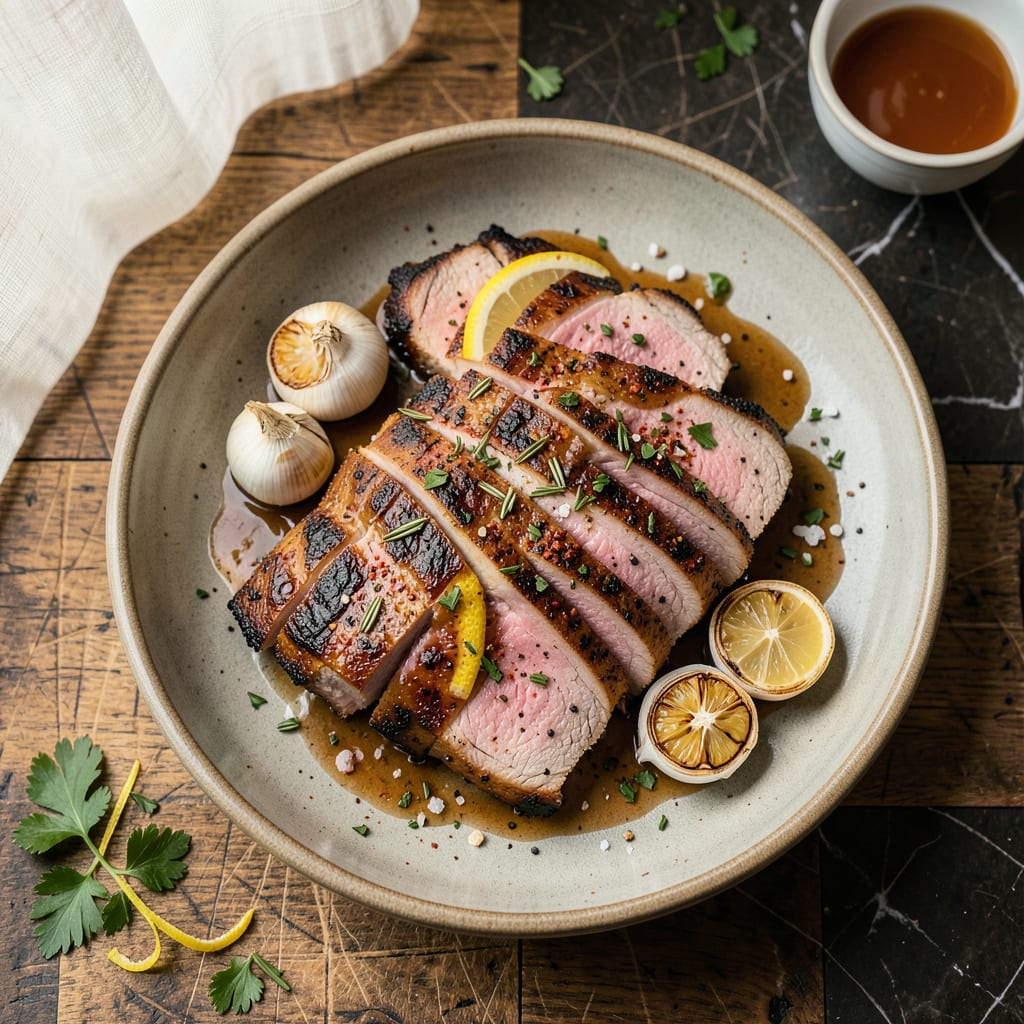
Achieving perfectly grilled pork loin with a juicy, herb-crusted exterior is simpler than you think. This method delivers restaurant-quality results every time, using a straightforward dry-rub technique and precise grill management. The key lies in balancing direct and indirect heat to create a flavorful crust while maintaining tender, moist meat inside.
With just 10 minutes of prep and 20 minutes on the grill, you’ll master this technique. The secret is monitoring internal temperature—145°F ensures ideal doneness without drying out the meat. Let the pork rest before slicing for maximum juiciness and serve with your favorite sides.
Ingredients for Grilled Pork Loin
Here’s everything you need for that juicy, herb-crusted pork loin you’ve been craving.
| Ingredient | Amount | Notes |
|---|---|---|
| Boneless Pork Loin 🥩 | 2 lb | Trimmed of excess fat |
| Kosher Salt 🧂 | 1 ½ tbsp | Diamond Crystal preferred |
| Freshly Ground Black Pepper 🌶️ | 1 tbsp | Coarse grind for crust |
| Garlic Powder 🧄 | 1 ½ tbsp | Not garlic salt |
| Dried Rosemary 🌿 | 1 tbsp | Crushed between fingers |
| Dried Thyme 🍃 | 1 tbsp | Rubbed to release oils |
| Smoked Paprika 🌶️ | 1 tbsp | Sweet or hot variety |
| Olive Oil 🫒 | 2 tbsp | Extra-virgin for binding |
| Fresh Garlic Cloves 🧄 | 4 cloves | Minced for paste |
| Fresh Sage Leaves 🌿 | 8 whole | Finely chopped |
| Dijon Mustard 🟡 | 2 tbsp | Smooth variety preferred |
| Lemon Zest 🍋 | 1 tbsp | From 1 medium lemon |
The pork loin is the star—look for 1.5-2 lb pieces with even thickness for consistent cooking. I grab mine from Whole Foods or Costco (their butchers trim it well). The spices matter too: freshly ground black pepper and Diamond Crystal kosher salt give the best crust. Don’t skip the smoked paprika—it adds that subtle grill-house flavor (Penzeys has great quality). The fresh herbs should be vibrant, not wilted (farmers market if possible).
Out of rosemary? Dried marjoram at half the amount works. No fresh sage? Dried sage at one-third the quantity—just rub it between your palms to wake it up. The Dijon can be swapped for whole-grain mustard (more texture), and if you’re missing lemon zest, a splash of juice works (though zest gives better flavor). Olive oil is flexible—any extra-virgin will do, but avoid “light” olive oil (it lacks flavor).
The dry rub keeps in a jar for 6 months—make extra and store it dark. Pork loin stays fresh 3-4 days in the fridge (wrap tightly) or freezes for 3 months. Prep the herb paste ahead, but don’t apply until ready to grill. Leftovers? Slice thin for sandwiches or toss with pasta.
Why You’ll Love This Recipe
- Five-Minute Seasoning: I love that the prep is just rubbing four ingredients—salt, pepper, garlic powder, and rosemary—onto the pork. No marinating overnight, no fancy brines, just straightforward flavor that sticks.
- That Smoky Garlic Crust: When the pork hits the grill, the garlic powder and rosemary caramelize into this ridiculously good crust. It’s crispy on the outside, juicy inside—honestly, I could eat it straight off the cutting board.
- Feeds a Crowd (or Just Me): This single cut works for everything: slice it thick for Sunday dinner, shred leftovers for tacos, or cube it cold for salads. I’ve served it at cookouts and also just eaten half for lunch the next day.
- Budget-Friendly Protein: A pork loin costs less than steak but feels just as special. One roast gives me three meals—grilled slices, sandwiches, then stir-fry—so I’m not constantly buying meat. Between us, it’s my secret for stretching grocery dollars.
Step-by-Step Instructions for Grilled Pork Loin
Here’s the foolproof method I use to get that perfect herb-crusted exterior and juicy interior every time.
Step 1: Prepare the Herb Crust Mixture
Start by crushing the 1 tbsp dried rosemary between your fingers and rubbing the 1 tbsp dried thyme between your palms to release their essential oils. In a small bowl, combine these with the 1.5 tbsp kosher salt, 1 tbsp freshly ground black pepper, 1.5 tbsp garlic powder, and 1 tbsp smoked paprika.
The key here is using coarse grind black pepper – it creates that beautiful crust texture we’re after. Mix thoroughly until all the dried herbs are evenly distributed throughout the salt and spices. This herb blend will form the flavor foundation for our pork loin.
Step 2: Create the Wet Rub Base
In a separate bowl, whisk together the 2 tbsp olive oil, 2 tbsp Dijon mustard, 1 tbsp lemon zest, and the 4 cloves fresh garlic cloves that you’ve minced into a paste. Add the finely chopped 8 whole fresh sage leaves – they’ll infuse the oil with their earthy aroma.
This wet rub serves multiple purposes: the oil helps the dry rub adhere, the mustard adds tang and helps tenderize, the lemon zest brightens the flavor, and the garlic creates that irresistible aroma. The mixture should be thick enough to cling to the pork but still spreadable.
Step 3: Apply the Rub and Let It Rest
Pat the 2 lb boneless pork loin completely dry with paper towels – this ensures maximum crust development. Place it on a wire rack set over a baking sheet. First, apply the wet rub mixture all over the pork, using your hands to massage it into every surface.
Then immediately follow with the dry herb mixture, pressing it firmly into the wet rub so it adheres completely. The pork should be completely coated with no bare spots. Let it rest at room temperature for 30 minutes while you preheat your grill to medium-high heat (about 400°F). This resting period allows the salt to begin penetrating the meat.
Step 4: Grill to Perfect Doneness
Place the pork loin on the preheated grill, positioning it so the fat cap faces up. Close the lid and grill for 15 minutes, then rotate the pork 90 degrees to create those beautiful crosshatch grill marks. Continue grilling for another 15 minutes with the lid closed.
After this initial searing, reduce the heat to medium (about 350°F) and continue grilling for 20-30 minutes, turning the pork every 5 minutes to ensure even cooking. The pork is done when it reaches an internal temperature of 145°F in the thickest part. You’ll notice the crust becomes deeply browned and fragrant when it’s ready.
Step 5: Rest and Slice for Maximum Juiciness
Transfer the pork loin to a cutting board and tent loosely with foil. Let it rest for 10 minutes – this crucial step allows the juices to redistribute throughout the meat. If you cut into it immediately, all those delicious juices will run out onto your cutting board instead of staying in the meat.
After resting, slice the pork against the grain into ½-inch thick slices. The interior should be just barely pink and incredibly juicy, while the exterior should have that perfect herb-crusted bark. Serve immediately while the crust is still crisp – the contrast between the textured exterior and tender interior is what makes this dish so special.
Essential Equipment for This Recipe
Grill Selection
For this recipe, I recommend a gas grill for precise temperature control—I use my Weber Genesis because it maintains even heat. If you prefer charcoal, a 22-inch kettle grill works beautifully, but you’ll need to manage the coals more carefully. Either way, ensure your grill has a lid for proper heat circulation. 🔥
Instant-Read Thermometer
A quality instant-read thermometer is non-negotiable for perfect pork loin. I swear by my ThermoWorks ThermoPop—it gives accurate readings in 2-3 seconds. Look for one with a thin probe that can reach the center without creating large holes. This tool prevents overcooking every time.
Grill Tools
Invest in long-handled tongs (at least 16 inches) to safely flip the pork without piercing it. I also keep a grill brush with brass bristles nearby for cleaning between uses. A meat fork helps test doneness, but don’t overuse it—each puncture releases precious juices.
Prep Essentials
You’ll need a wire cooling rack placed over a rimmed baking sheet for resting the pork. This setup allows air circulation while catching any drippings. I also keep aluminum foil on hand for tenting during the resting phase—it helps maintain the perfect crust texture.
Cutting Board
A large wooden cutting board (at least 12×18 inches) gives you ample space to slice the pork without crowding. I prefer bamboo for its durability and knife-friendly surface. The board should be stable enough to handle a 10-inch chef’s knife for clean, even slices.
Optional Extras
For serious grill enthusiasts, a grill surface thermometer helps monitor heat zones. I also love using grill mats for delicate items, though not needed here. If you’re smoking the pork, add wood chips (apple or hickory pair beautifully) in a smoke box or foil packet. ✨
Nutrition Facts

- 6 Egg Cake Recipe with Oil: Light as Air With Buttery Moisture - October 4, 2026
- 4 Bean Casserole Recipe: One-Pan Heartiness With Smoky Paprika Depth - October 4, 2026
- 3-Ingredient Keto Mug Cake Recipe: Microwave Magic in 2 Minutes - October 4, 2026