
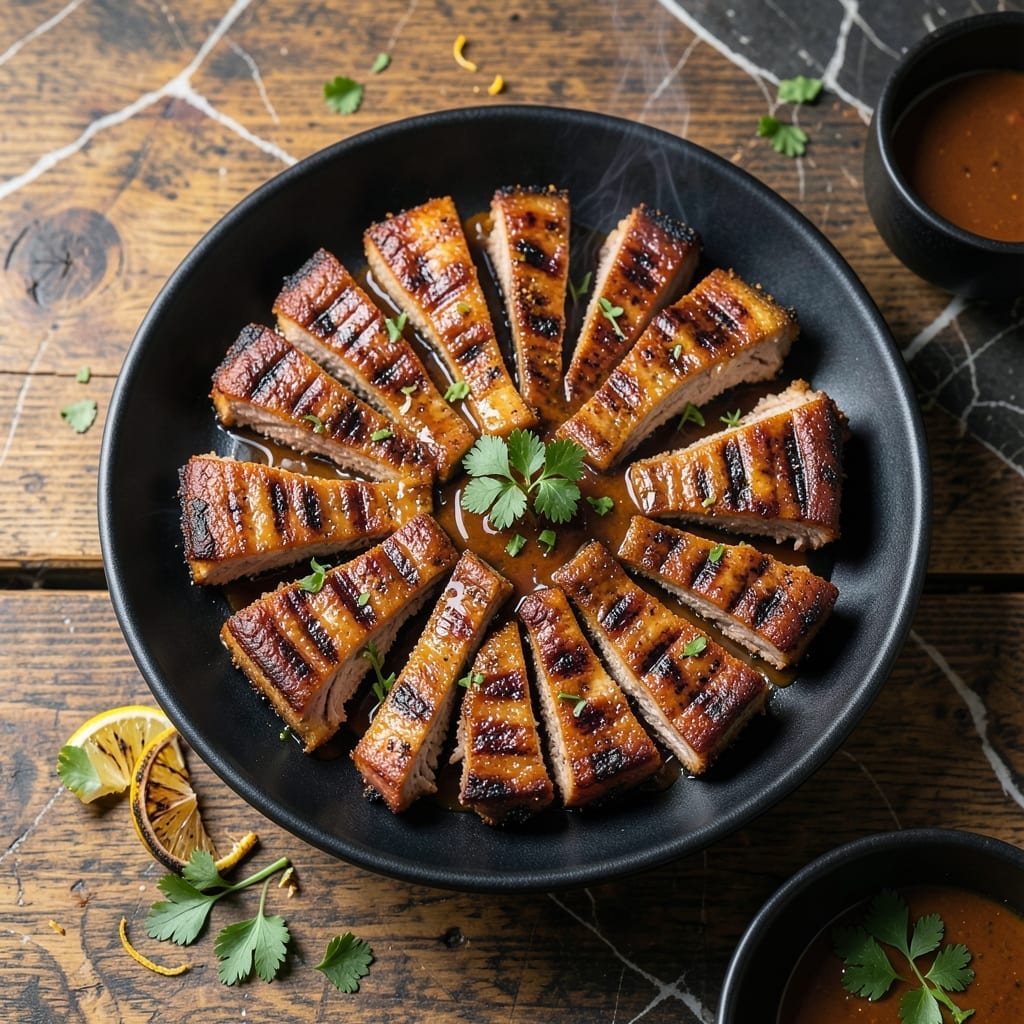
I’ve refined this grilling method over years of backyard cookouts to deliver consistently tender spare ribs with a char-glazed finish that’s impossible to resist. The process is straightforward but precise, ensuring every bite is packed with smoky, caramelized flavor.
The key lies in the balance of heat and time. Low and slow cooking breaks down the collagen, while a final sear locks in the juices and creates that signature crispy exterior. A simple dry rub enhances the pork’s natural richness without overpowering it.
What you’ll achieve is fall-off-the-bone meat with a sticky, slightly charred crust that’s the hallmark of great ribs. The aroma alone will draw a crowd, and the taste will have everyone reaching for seconds.
Pair with tangy coleslaw or cornbread to complete the meal. Let’s get started.
Ingredients for Grilled Pork Spare Ribs
Nothing exotic here—just ribs, spices, and a few pantry staples for that smoky finish.
| Ingredient | Amount | Notes |
|---|---|---|
| Pork Spare Ribs 🐖 | 3 lb | Full rack, membrane removed |
| Brown Sugar 🍚 | ½ cup | Light or dark variety |
| Paprika 🌶️ | 2 tbsp | Smoked paprika preferred |
| Garlic Powder 🧄 | 2 tsp | Fresh ground if available |
| Onion Powder 🧅 | 2 tsp | Fine powder texture |
| Salt 🧂 | 1 tbsp | Kosher or sea salt |
| Black Pepper 🌶️ | 1 tbsp | Freshly ground preferred |
| Chili Powder 🌶️ | 1 tsp | Mild or hot variety |
| Cumin 🌿 | 1 tsp | Ground cumin for rub |
| Apple Cider Vinegar 🍏 | ½ cup | For tangy mop sauce |
| Ketchup 🍅 | ½ cup | Quality brand recommended |
| Olive Oil 🫒 | ¼ cup | For basting ribs |
| Yellow Mustard 🟡 | 2 tbsp | For binder in rub |
The ribs are the star, so look for a full rack with good marbling. I grab mine from Costco—consistent quality and the price per pound can’t be beat. If your butcher doesn’t remove the membrane, do it yourself (it takes 30 seconds with a butter knife). The dry rub spices? Penzeys is my go-to, but any grocery store brand works if it’s fresh.
No smoked paprika? Regular paprika plus a pinch of liquid smoke gets you close. Out of apple cider vinegar? White vinegar with a teaspoon of sugar works in a pinch. The ketchup can be swapped for barbecue sauce, but cut back on the brown sugar—the sauce is already sweet. Fresh garlic instead of powder? Use one-third the amount and mince it fine.
Rub keeps in a jar for 6 months. The ribs? Cook and eat within 3-4 days of purchase, or freeze for 3 months. Leftovers reheat best wrapped in foil with a splash of water—keeps them moist.
Why You’ll Love This Recipe
- Set and Forget: The dry rub of brown sugar, paprika, and garlic powder takes seconds to mix, then the grill does all the work.
- Smoky Sweet Crust: That caramelized brown sugar with the spice kick from paprika? It forms this sticky-sweet crust that’s impossible to resist.
- Crowd Pleaser: I’ve served these at backyard BBQs and random Tuesday dinners—everyone from picky kids to my foodie uncle cleans their plate.
- Budget Stretch: Pork spare ribs are cheaper than baby backs, and this recipe turns them into something that tastes like it came from a pitmaster.
Step-by-Step Instructions for Grilled Pork Spare Ribs
Here’s the method that delivers fall-off-the-bone ribs with sticky, charred edges.
Step 1: Prepare the Dry Rub and Season the Ribs
In a small bowl, combine the 0.5 cup brown sugar, 2 tbsp paprika, 2 tsp garlic powder, 2 tsp onion powder, 1 tbsp salt, 1 tbsp black pepper, 1 tsp chili powder, and 1 tsp cumin. Mix until evenly distributed—the sugar should be fully incorporated so it doesn’t clump on the ribs.
Pat the 3 lb pork spare ribs dry with paper towels. I always remove the membrane first if it wasn’t done at the butcher—slide a butter knife under it, lift, then pull it off with a paper towel for grip. Brush the ribs lightly with 2 tbsp yellow mustard (this helps the rub stick), then coat both sides generously with the dry rub. Press it in so it forms a crust.
Step 2: Create the Mop Sauce for Basting
While the ribs come to room temperature, whisk together the 0.5 cup apple cider vinegar, 0.5 cup ketchup, and 0.25 cup olive oil in a bowl. The vinegar gives it tang, the ketchup adds sweetness and body, and the olive oil helps it cling to the ribs.
This sauce isn’t just for flavor—it keeps the ribs moist during grilling. I like to give it a taste here and adjust the balance if needed, though the recipe is well-tested. Transfer it to a small saucepan for easy basting access.
Step 3: Set Up the Grill for Indirect Heat
Preheat your grill to 275-300°F for indirect cooking. If you’re using charcoal, bank the coals to one side. For gas, turn off the center burners and leave the outer ones on. You want a zone with no direct heat under the ribs—this prevents burning while allowing slow cooking.
Place the ribs bone-side down on the grill grates over the indirect heat. Close the lid and let them cook undisturbed for 1 hour. Resist the urge to peek—every time you open the lid, you lose heat and add cooking time.
Step 4: Baste and Finish with Char
After the first hour, start basting the ribs with the mop sauce every 20-30 minutes. I use a silicone brush for this—it handles the heat better than a regular brush. Each time you baste, rotate the ribs to ensure even cooking and sauce distribution.
For the last 15 minutes, move the ribs over direct heat to develop that char. Watch closely here—the sugar in the sauce can burn quickly. You want deep caramelization and slight charring on the edges, not blackened bits. The ribs are done when the meat pulls back from the bones by about ¼ inch and bends slightly when picked up with tongs.
Step 5: Rest and Serve
Transfer the ribs to a cutting board and let them rest for 10 minutes under a loose foil tent. This lets the juices redistribute so they don’t run out when you cut into them. The internal temperature should read at least 195°F for perfect tenderness.
Slice between the bones and serve immediately while hot. The meat should be so tender it nearly slides off the bone, with a sticky, slightly crisp exterior from the charred sauce. These ribs are best enjoyed with plenty of napkins and maybe some extra mop sauce on the side.
Pro Tips For Making Grilled Pork Spare Ribs
- Pat Ribs Dry: I learned this the hard way—moisture is the enemy of a good crust, so blot the ribs with paper towels before applying your brown sugar rub.
- Low and Slow: After burning two racks on high heat, I finally figured out spare ribs need 225-250°F and 2.5-3 hours for that perfect tender-but-not-mushy texture.
- Skip Boiling Ribs: Sounds weird, but pre-boiling just washes away flavor—I now only use the dry rub (brown sugar, paprika, garlic, onion powder) and let the grill do the work.
- Rest Before Slicing: Give them a solid 10 minutes under foil after grilling—yes, even if you’re starving—it locks in the juices so they don’t run dry when you cut them.
Perfect Pairings for These Flavors
Classic BBQ Sides
Tangy coleslaw is my go-to—its crisp texture and vinegar bite cut through the richness perfectly. I mix 4 cups shredded cabbage with ½ cup mayo and 2 tbsp apple cider vinegar. Or try creamy mac and cheese with sharp cheddar for ultimate comfort. 🥗
Cornbread Pairing
Sweet cornbread soaks up every last bit of sauce beautifully. My favorite recipe uses 1 cup cornmeal and ¼ cup honey. Serve warm with butter melting on top—it’s the perfect sweet-savory contrast to the smoky ribs.
Refreshing Beverages
An ice-cold sweet tea with lemon balances the bold flavors, or go for a crisp lager beer like Budweiser. For non-alcoholic options, sparkling lemonade with mint adds a refreshing zing. Keep drinks chilled in a cooler nearby. 🍺
Grilled Vegetables
Grilled corn on the cob with chili-lime butter is a must. Brush 4 ears with melted butter mixed with 1 tsp chili powder and lime zest. The char on the corn mirrors the ribs’ smoky depth.
Simple Starches
Garlic mashed potatoes or buttery baked beans round out the meal. For beans, I simmer 2 cans pinto beans with ½ cup BBQ sauce and 1 diced onion. Both options are crowd-pleasers.
Nutrition Facts
Frequently Asked Questions
How do I know when the ribs are done?
The ribs are ready when the meat pulls back from the bones by about ¼ inch and bends slightly when lifted with tongs. The internal temperature should reach at least 195°F.
Can I use baby back ribs instead?
Yes, but adjust the cooking time. Baby back ribs are smaller and typically cook 30-45 minutes faster than spare ribs. Keep the temperature at 275-300°F for best results.
What if my grill doesn’t have indirect heat?
Create indirect heat by banking charcoal to one side or turning off the center burners on a gas grill. Place the ribs away from direct heat and close the lid to maintain 275-300°F.
Can I make the dry rub ahead of time?
The dry rub keeps well in an airtight container for up to 6 months. Just mix all the spices together and store in a cool, dry place.

- 6 Egg Cake Recipe with Oil: Light as Air With Buttery Moisture - October 4, 2026
- 4 Bean Casserole Recipe: One-Pan Heartiness With Smoky Paprika Depth - October 4, 2026
- 3-Ingredient Keto Mug Cake Recipe: Microwave Magic in 2 Minutes - October 4, 2026