
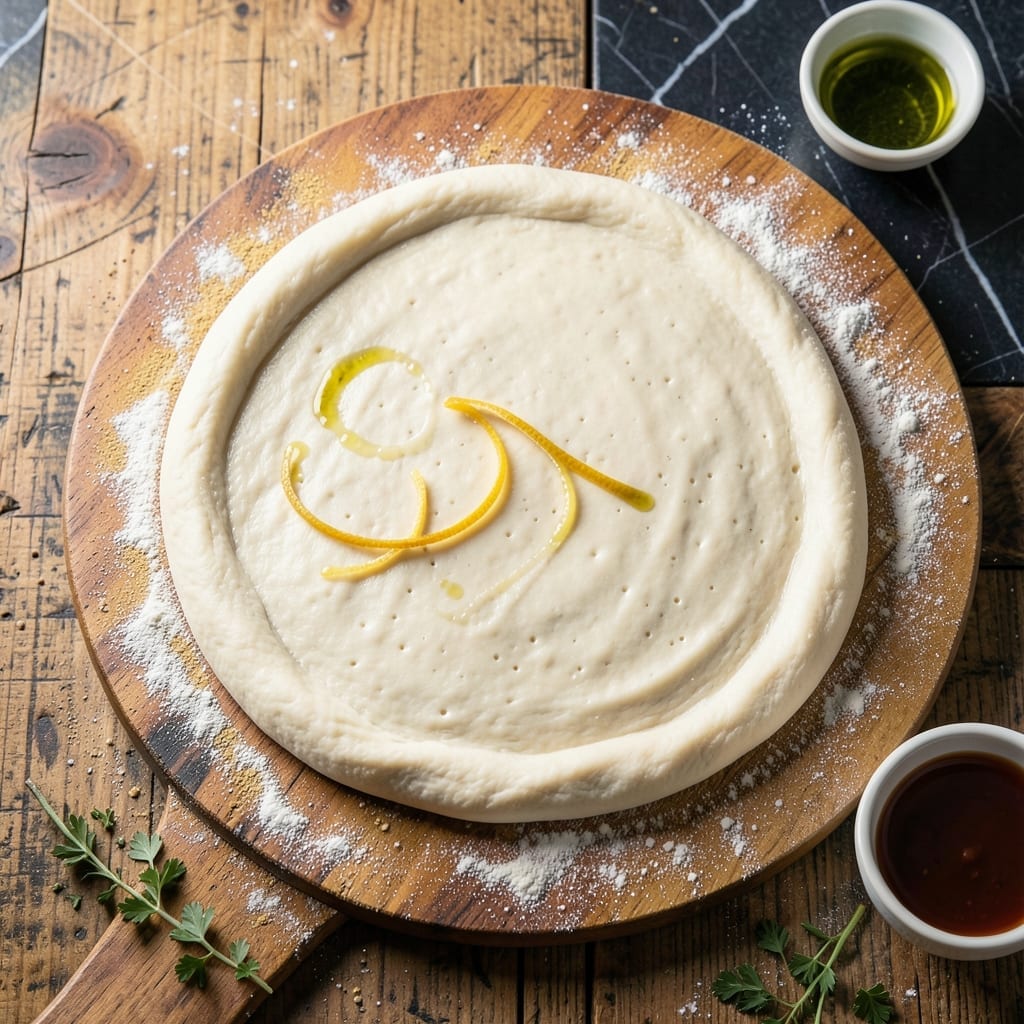
This dough recipe captures the essence of Grimaldi’s iconic coal-fired crust at home. The secret lies in a precise mix of flour, water, and a touch of olive oil, creating a foundation for authentic New York-style pizza.
After years of testing, I’ve refined this method to deliver a chewy yet crisp base that holds up to any topping. The dough requires minimal kneading and benefits from a slow, cold fermentation for maximum flavor development.
You’ll achieve a golden, slightly charred crust that’s thin in the center with a puffy edge. This process mirrors the traditional coal-fired ovens, bringing that unmistakable Grimaldi’s taste to your kitchen.
Let the dough rest overnight for best results. This ensures a texture that’s both tender and strong enough to support your favorite toppings.
Ingredients for Grimaldi’s Pizza Dough
Just a handful of simple ingredients to nail that iconic coal-fired pizza crust flavor.
| Ingredient | Amount | Notes |
|---|---|---|
| Bread Flour 🌾 | 3 ½ cups | High-protein for chewiness |
| Water 💧 | 1 ½ cups | Room temperature preferred |
| Active Dry Yeast 🍞 | 1 tsp | One packet or 2.25 tsp |
| Sea Salt 🧂 | 2 tsp | Fine grain for even distribution |
| Extra-Virgin Olive Oil 🫒 | 2 tbsp | For richness and elasticity |
| Granulated Sugar 🍚 | 1 tsp | Feeds the yeast |
| Semolina Flour 🌾 | ½ cup | For dusting work surface |
| All-Purpose Flour 🌾 | ½ cup | Optional for softer texture |
The flour is everything here. King Arthur Bread Flour is my go-to—high protein for that chewy bite Grimaldi’s is famous for. Semolina isn’t always easy to find, but Bob’s Red Mill carries it at most stores. Yeast matters too: check the expiration date (old yeast won’t rise). I buy mine in jars from Whole Foods—stays fresh longer than packets.
Out of bread flour? All-purpose works in a pinch, but add an extra tablespoon of vital wheat gluten per cup for structure. No semolina? Cornmeal’s a fine swap for dusting. Sugar can be honey or agave (same amount). The olive oil? Don’t substitute—it’s key for that tender crumb. If you’re in a humid climate, you might need a touch more flour.
Dough keeps in the fridge for 3 days (flavor improves daily) or freezes for 3 months. Portion into balls before freezing—thaw overnight in the fridge (don’t rush it). Always bring to room temp before stretching. That overnight rest the intro mentioned? Non-negotiable for authentic texture.
Why You’ll Love This Recipe
- One Bowl Wonder: I mix everything right in the same bowl—no messy counters, just flour, water, yeast, and olive oil coming together effortlessly.
- Crispy Yet Chewy: The bread flour and olive oil give it that signature Grimaldi’s texture: shatteringly crisp edges with a tender, airy bite.
- Freezer Friendly: I always double the batch and freeze half for lazy nights when I need pizza in a hurry.
- Budget Stretcher: Five simple ingredients—no fancy stuff—yet it tastes like a million bucks. Honestly, it’s my cheapest crowd-pleaser.
Step-by-Step Instructions for Grimaldi’s Pizza Dough
Here’s the method for achieving that signature coal-fired crust texture at home.
Step 1: Activate the Yeast
In a small bowl, combine the 1.5 cups Water (room temperature), 1 tsp Granulated Sugar, and 1 tsp Active Dry Yeast. Stir gently and let it sit for 5-10 minutes until the mixture becomes frothy and cloudy.
This frothing indicates the yeast is alive and active—if you don’t see bubbles, your yeast may be expired. The sugar feeds the yeast, kickstarting the fermentation process that will give your dough its rise and structure.
I always use room temperature water because water that’s too hot can kill the yeast, while cold water slows activation.
Step 2: Mix and Knead the Dough
In a large mixing bowl, combine the 3.5 cups Bread Flour and 2 tsp Sea Salt. Create a well in the center and pour in the activated yeast mixture along with the 2 tbsp Extra-Virgin Olive Oil.
Using a wooden spoon or dough whisk, mix until the ingredients come together into a shaggy mass. Then, turn the dough out onto a surface dusted with 0.5 cup Semolina Flour—this prevents sticking while adding a subtle texture to the crust.
Knead for 8-10 minutes until the dough is smooth and elastic. If it feels too stiff, you can incorporate the 0.5 cup All-Purpose Flour a little at a time, but the bread flour’s high protein content is what gives Grimaldi’s-style dough its chew.
Step 3: Let the Dough Rise
Lightly oil a clean bowl with a bit more olive oil, place the dough inside, and turn to coat evenly. Cover with a damp towel or plastic wrap and let it rise in a warm, draft-free spot for 1.5 to 2 hours, or until doubled in size.
I like to preheat my oven to 200°F, turn it off, and place the bowl inside with the door slightly ajar. This creates the ideal environment for a consistent rise. The dough should spring back slowly when poked—if it springs back too quickly, it needs more time.
This slow fermentation develops the flavor and texture that mimics the coal-fired ovens Grimaldi’s is famous for.
Step 4: Shape and Rest the Dough
Once risen, punch down the dough to release the air and divide it into 4 equal portions (since this makes 4 servings). Shape each portion into a smooth ball by tucking the edges under and rolling gently on the counter.
Place the balls on a floured surface, cover with a towel, and let them rest for 30 minutes. This rest relaxes the gluten, making the dough easier to stretch without snapping back.
After resting, each ball is ready to be stretched or rolled into a thin round for your pizza. Dust your work surface with more semolina flour to prevent sticking during shaping.
Pro Tips For Making Grimaldi’S Pizza Dough
- Proof Overnight: Let the dough rise in the fridge for at least 12 hours—I learned this the hard way after my first few crusts came out dense instead of airy and light.
- Use High-Gluten Flour: Skip all-purpose and stick with bread flour; the extra protein gives Grimaldi’s-style dough that chewy, elastic texture you’re after.
- Don’t Over-Oil: A light coating of olive oil in the bowl is plenty—about 1 teaspoon—otherwise the dough gets greasy and won’t crisp up right in the pan.
- Warm the Water: Activate the yeast in 110°F water, not hotter, or it’ll die and your dough won’t rise—my grandmother swore by this and she never had a flat crust.
Health Benefits of This Dish
Carb Conscious Choice
This dough offers complex carbohydrates from bread flour that digest slowly, providing steady energy. A single 4-ounce serving contains about 45g of carbs, making it a reasonable indulgence for balanced diets.
Heart Healthy Fats
The extra-virgin olive oil adds monounsaturated fats that support heart health. These good fats help lower bad cholesterol while maintaining the dough’s tender texture. I always use California Olive Ranch for its robust flavor.
Protein Boost
With 12g of protein per serving, this dough contributes to daily protein needs. The high-protein bread flour creates that signature chewy texture while adding nutritional value to your meal. 💪
Minimal Sugar
Only 1 tsp of sugar activates the yeast, resulting in just 2g of sugar per serving. This minimal amount won’t spike blood sugar, making it suitable for those monitoring intake.
Dietary Flexibility
This recipe is naturally vegetarian and contains no dairy or eggs. For vegan versions, simply ensure your sugar is processed without bone char—a common refinement method.
Fermentation Benefits
The overnight cold fermentation enhances digestibility and may reduce gluten sensitivity for some. The extended proofing time also develops more nutrients, including B vitamins from the yeast. ✨
Nutrition Facts
Frequently Asked Questions
Can I use all-purpose flour instead of bread flour?
Yes, but add 1 tbsp vital wheat gluten per cup to compensate for the lower protein. The texture won’t be quite as chewy, but it’ll still work in a pinch.
Why does the dough need to rest overnight?
The slow fermentation develops deeper flavor and a more tender crumb. It also makes the dough easier to stretch and shape the next day.
What’s the best way to store leftover dough?
Wrap individual balls tightly in plastic, then place in a freezer bag. It’ll keep for 3 months—thaw overnight in the fridge before using.
Can I make this dough without semolina?
Cornmeal works just as well for dusting your work surface. The key is preventing sticking while adding a subtle texture.

- 6 Egg Cake Recipe with Oil: Light as Air With Buttery Moisture - October 4, 2026
- 4 Bean Casserole Recipe: One-Pan Heartiness With Smoky Paprika Depth - October 4, 2026
- 3-Ingredient Keto Mug Cake Recipe: Microwave Magic in 2 Minutes - October 4, 2026