
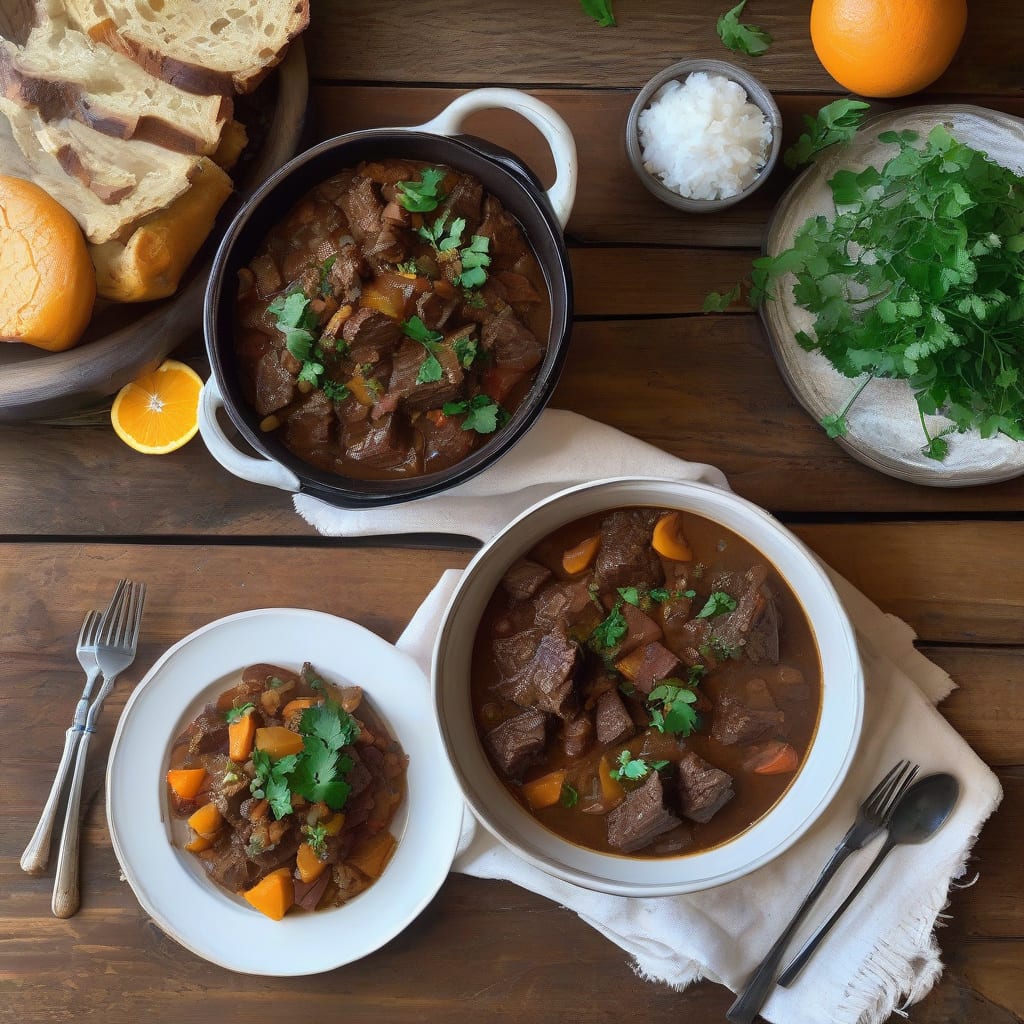
Haitian ragout is more than just a stew – it’s a comforting Caribbean tradition that warms both body and soul. This rich, flavorful dish combines tender meat with vibrant vegetables in a savory broth that’s perfect for chilly evenings.
What makes this ragout special is its layered flavor profile, achieved through careful browning and slow cooking. The result is a hearty stew that’s both nourishing and deeply satisfying. Let’s explore how to make this beloved Haitian dish.
Ingredients for Haitian Ragout
Hearty Haitian ragout requires quality ingredients and careful preparation for rich flavor.
| Ingredient | Amount | Notes |
|---|---|---|
| Beef Chuck Roast 🥩 | 2 lb | Cut into 1-inch cubes |
| Olive Oil 🫒 | ¼ cup | For browning meat |
| Yellow Onion 🧅 | 2 whole | Chopped, about 2 cups |
| Garlic Cloves 🧄 | 4 cloves | Minced, about 2 tbsp |
| Carrots 🥕 | 4 whole | Peeled, sliced |
| Potatoes 🥔 | 2 whole | Peeled, cubed |
| Tomato Paste 🍅 | 2 tbsp | Concentrated, not sauce |
| Beef Broth 🍜 | 4 cups | Low-sodium preferred |
| Red Wine 🍷 | 1 cup | Dry red, optional |
| Thyme 🌿 | 2 tsp | Dried thyme leaves |
| Scotch Bonnet Pepper 🌶️ | 1 whole | Seeds removed, chopped |
| Salt 🧂 | 1 tsp | Kosher salt preferred |
| Black Pepper 🌶️ | ½ tsp | Freshly ground |
For authentic flavor, use grass-fed beef if available. Most grocery stores carry chuck roast, but you can also ask your butcher to cube it for you. Look for Costco or Whole Foods for quality meat. The Scotch Bonnet pepper is crucial for authentic heat—handle with gloves to avoid skin irritation.
No red wine? Use additional beef broth or a splash of vinegar for acidity. For a milder version, reduce or omit the Scotch Bonnet pepper. You can substitute Russet potatoes for Yukon Gold if preferred. If using canned broth, choose low-sodium to control salt levels.
This dish improves with time—make it a day ahead if possible. Store in airtight containers in the fridge for up to 5 days or freeze for 3 months. Reheat gently on low heat, adding more broth if needed to maintain consistency.
❤️
Why You’ll Love This Recipe
- Low Effort Cooking: I can throw all the ingredients into the pot and let it simmer while I’m busy with other things. The beef chuck roast becomes tender and falls apart easily.
- Rich Haitian Flavor: The combination of garlic cloves, yellow onion, and carrots creates a depth of flavor that’s ridiculously good. I love how the slow-cooked beef absorbs all those flavors.
- Feeds the Whole Family: This Haitian ragout recipe makes a big batch, so I can feed my whole family and have leftovers for days. It’s perfect for a weeknight dinner or a special occasion.
- Budget Friendly: Using affordable ingredients like beef chuck roast and carrots makes this recipe a great value. I’ll be real: it’s a relief to make a delicious meal without breaking the bank.
Step-by-Step Instructions for Haitian Ragout
Mastering this traditional Caribbean stew is straightforward with these detailed steps.
Step 1: Brown the Beef Chuck Roast
Heat the 0.25 cup Olive Oil in a large Dutch oven over medium-high heat. Add the 2 lb Beef Chuck Roast cubes in batches to avoid overcrowding, browning them on all sides for about 5 minutes per batch. I find that browning in batches ensures a rich, caramelized crust on the meat. Remove the browned beef from the pot and set it aside.
The browning process is crucial as it creates a deep flavor foundation for the ragout. Make sure to get a good sear on the meat—this step shouldn’t be rushed.
Step 2: Sauté the Aromatics
Reduce the heat to medium and add the 2 whole Yellow Onion, chopped, to the same pot. Cook for about 8-10 minutes, stirring occasionally, until they are softened and lightly browned. I like to let the onions cook slowly to bring out their natural sweetness, which balances the savory flavors of the dish.
Add the 4 cloves Garlic Cloves, minced, and cook for another 1-2 minutes until fragrant. Be careful not to burn the garlic, as it can quickly become bitter.
Step 3: Add Vegetables and Spices
Add the 4 whole Carrots, peeled and sliced, and 2 whole Potatoes, peeled and cubed, to the pot. Stir to combine with the onions and garlic, cooking for about 5 minutes. The vegetables will start to soften and absorb the flavors.
Stir in the 2 tbsp Tomato Paste and cook for 1-2 minutes, until it darkens slightly and becomes fragrant. This step intensifies the flavor of the ragout. Add the 2 tsp Thyme, 1 whole Scotch Bonnet Pepper (seeds removed and chopped), 1 tsp Salt, and 0.5 tsp Black Pepper. Mix well to distribute the spices evenly.
Step 4: Simmer the Ragout
Return the browned beef to the pot and add the 4 cups Beef Broth and 1 cup Red Wine. Bring the mixture to a boil, then reduce the heat to low and simmer, covered, for about 2-3 hours or until the beef is tender and the flavors have melded together. I recommend checking the ragout periodically to ensure it’s not too thick or too thin, adjusting the seasoning as needed.
The slow simmer is key to developing the rich, comforting flavors characteristic of this Haitian ragout. Be patient and let it cook until the meat is fork-tender.
Step 5: Serve
Once the ragout is done, remove the Scotch Bonnet Pepper if you prefer a milder dish. Serve hot, garnished with fresh herbs if desired. This hearty stew is perfect for a comforting meal, serving 4 people generously.
Enjoy the rich, complex flavors and the tender beef and vegetables. This ragout is a true representation of Haitian comfort cuisine.
👨🍳
Pro Tips For Making Haitian Ragout
- BROWN THE MEAT: Get a good sear on that Beef Chuck Roast—about 5 minutes per side over high heat. This step adds depth to the ragout that you won’t get from just simmering.
- SOFTEN THE ONIONS: Cook the Yellow Onions slowly until they’re translucent and starting to caramelize; this takes about 15-20 minutes. I learned this the hard way—rushing this step results in a less flavorful base.
- USE FRESH GARLIC: Mince those Garlic Cloves just before adding them to the pot to preserve their flavor and aroma. I was skeptical until I tried it, but it really makes a difference in the overall taste of the ragout.
Best Sauces and Condiments for This haitian ragout
Traditional Haitian Hot Pepper Sauce
A classic condiment to serve alongside ragout is Haitian hot pepper sauce, made with Scotch Bonnet peppers, vinegar, and spices. This spicy sauce adds an authentic Caribbean kick to your meal. To make it, blend 2 Scotch Bonnet peppers with 1/4 cup vinegar and a pinch of salt.
Creole Mustard for Added Depth
Creole mustard provides a tangy contrast to the rich ragout. I like to use Zatarain’s Creole Mustard as it has the perfect balance of spice and tanginess. Spread a thin layer on bread or mix into the ragout for added complexity. This condiment is a staple in many Caribbean kitchens.
Coconut Chutney for Tropical Flavor
For a milder accompaniment, coconut chutney works beautifully. Mix 1 cup shredded coconut with 1/4 cup chopped fresh cilantro, 2 tbsp lime juice, and a pinch of salt. This refreshing condiment cools down the palate between bites of the hearty stew.
Pickled Scotch Bonnet Peppers
Pickling Scotch Bonnet peppers creates a tangy and spicy condiment that pairs well with ragout. Slice 2 Scotch Bonnet peppers thinly and soak them in a mixture of 1 cup vinegar, 1/2 cup water, and 1 tsp salt for at least 30 minutes. These pickled peppers add a nice crunch and heat.
Garlic Aioli for Creamy Contrast
A dollop of garlic aioli can provide a creamy contrast to the ragout. Mix 1/2 cup mayonnaise with 3 cloves minced garlic and a squeeze of lemon juice. This rich condiment is perfect for those who prefer milder flavors. Serve it on the side for dipping bread or vegetables. 🌶️
Nutrition Facts
540kcal
Frequently Asked Questions
Can I make Haitian ragout in advance?
Yes, Haitian ragout actually improves with time! You can make it 1-2 days ahead and refrigerate it, allowing the flavors to meld together even more. Reheat it gently on low heat, adding more broth if needed to maintain the desired consistency. This makes it perfect for meal prep or special occasions.
How spicy is Haitian ragout?
The heat level of Haitian ragout depends on the amount of Scotch Bonnet pepper used. Typically, one pepper adds a moderate level of heat. For a milder version, you can reduce or omit the seeds and membranes where most of the heat resides. For extra spice, add more peppers or use hot sauce to taste.
Can I freeze leftover ragout?
Absolutely! Haitian ragout freezes beautifully. Cool it completely, then transfer it to airtight containers or freezer bags. It will keep for up to 3 months in the freezer. When you’re ready to eat it, thaw overnight in the refrigerator and reheat on low heat, adding more broth if needed. This makes it a great meal prep option.
What can I serve with Haitian ragout?
Haitian ragout is traditionally served with rice or banan peze (fried plantains). You can also enjoy it with crusty bread or alongside a simple green salad. The rich flavors of the ragout pair well with a variety of sides, so

- 6 Egg Cake Recipe with Oil: Light as Air With Buttery Moisture - October 4, 2026
- 4 Bean Casserole Recipe: One-Pan Heartiness With Smoky Paprika Depth - October 4, 2026
- 3-Ingredient Keto Mug Cake Recipe: Microwave Magic in 2 Minutes - October 4, 2026