
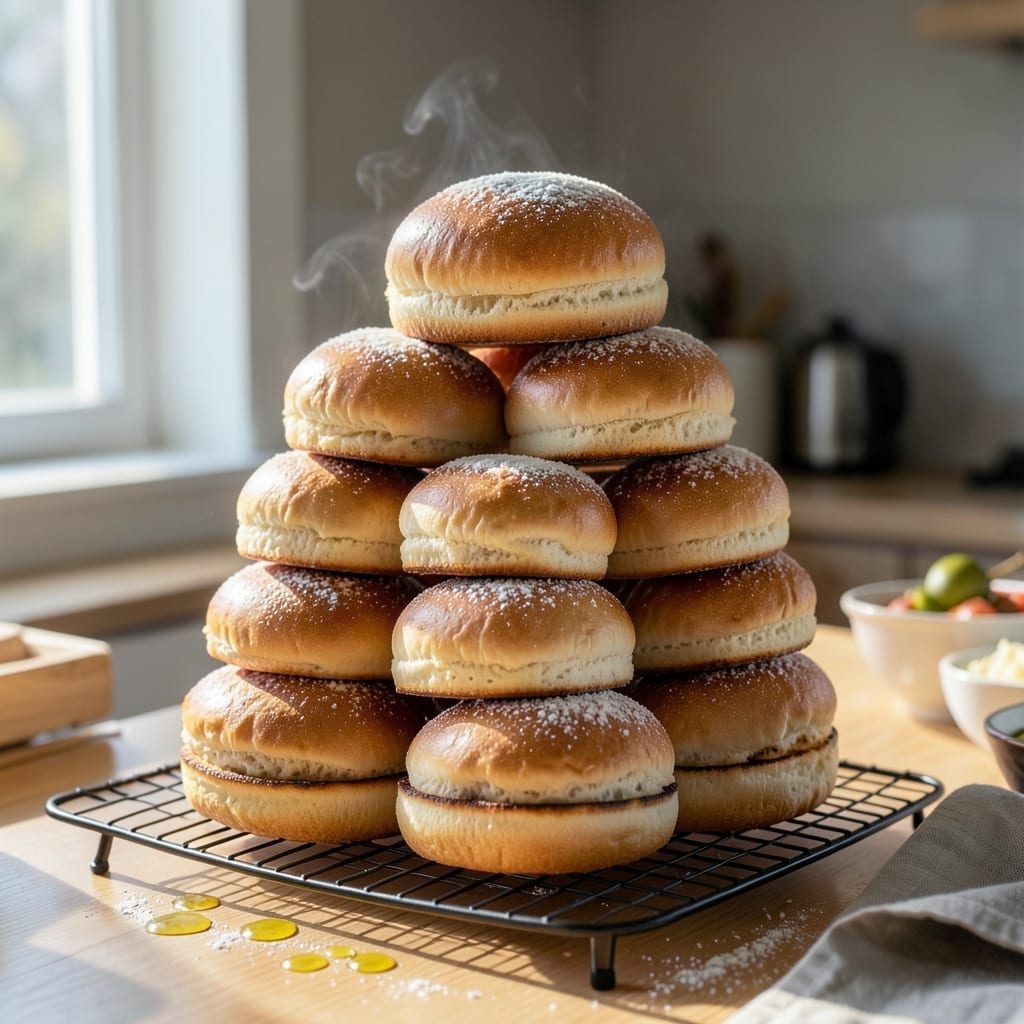
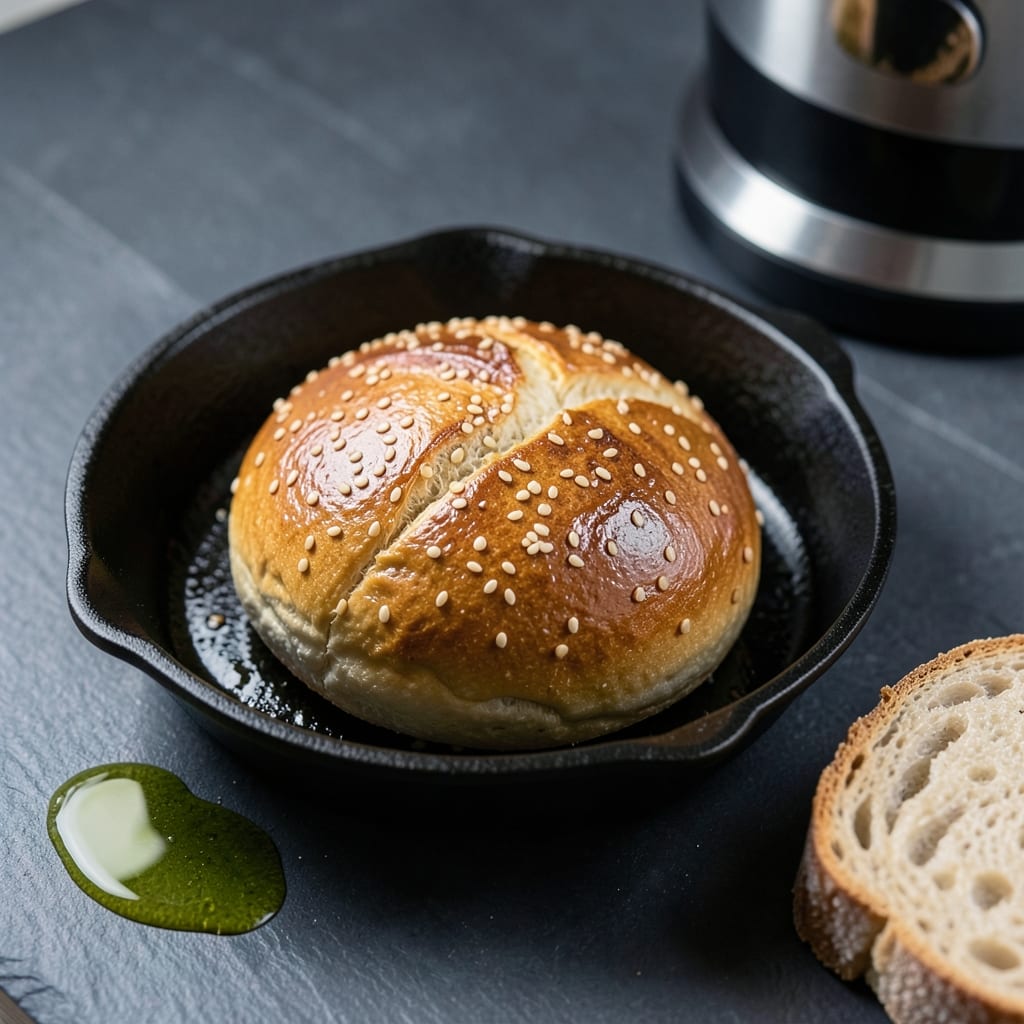
Soft, pillowy buns make all the difference for your next burger night. This bread machine method delivers perfect results with minimal effort, ensuring every bite holds together beautifully.
With just a few simple ingredients and your machine’s dough setting, you’ll have golden, tender buns ready to elevate any burger. The process is streamlined, yet the quality rivals any bakery version.
Ingredients for Hamburger Bun Recipe Bread Machine
Nine simple ingredients transform into golden, bakery-style buns with your bread machine.
| Ingredient | Amount | Notes |
|---|---|---|
| Bread Flour 🌾 | 4 cups | All-purpose works in a pinch |
| Warm Water 💧 | 1 ¼ cups | About 110°F, not hot |
| Large Egg 🥚 | 1 whole | Room temperature preferred |
| Unsalted Butter 🧈 | ¼ cup | Softened, cut into pieces |
| Granulated Sugar 🍚 | 2 tbsp | For subtle sweetness |
| Active Dry Yeast 🍞 | 2 ¼ tsp | One 0.25 oz packet |
| Salt 🧂 | 1 ½ tsp | Fine grain for even distribution |
| Nonfat Dry Milk 🥛 | ¼ cup | Adds tenderness to texture |
| Egg Yolk 🥚 | 1 whole | For egg wash finish |
| Sesame Seeds 🌰 | 2 tbsp | Optional, for topping |
[recipeingredientscaler]
The flour is key here—King Arthur Bread Flour gives that perfect soft yet sturdy structure. Most grocery stores carry it, or grab it online. The yeast needs to be fresh (check the expiration date), and instant yeast works too—just skip the proofing step. I always keep a Costco-sized bag of flour on hand for burger nights (we go through it fast).
No bread flour? All-purpose with 1 tbsp vital wheat gluten per cup gets close. Out of dry milk? Regular milk at the same amount works, but warm it slightly first. The egg wash can be skipped, but it gives that beautiful golden shine. For a softer bun, brush with melted butter after baking instead.
Dough keeps in the fridge overnight (let it come to room temp before shaping). Baked buns stay fresh 3-4 days in a sealed bag, or freeze for 3 months. Reheat in a 350°F oven for 5 minutes to restore that fresh-baked softness.
Why You’ll Love This Recipe
- Set It and Forget: I toss everything in the bread machine and let it do the work—no kneading, no fuss.
- Buttery Richness: The unsalted butter and egg give these buns a tender, slightly sweet flavor that beats store-bought.
- Meal Prep Magic: I make a double batch on Sunday and freeze half for burgers, sliders, or even breakfast sandwiches all week.
- Penny-Wise Perfection: Bread flour and a few pantry staples cost less than a pack of buns, and honestly, they taste so much better.
Step-by-Step Instructions for Hamburger Bun Bread Machine
Here’s the method I use for consistently soft, pillowy buns with minimal effort.
Step 1: Load the Bread Machine with Wet Ingredients
Add the 1.25 cups Warm Water to your bread machine pan first. Then add the 1 whole Large Egg and the 0.25 cup Unsalted Butter (cut into pieces). I always use room temperature egg to help the dough come together smoothly.
The water should be about 110°F—warm to the touch but not hot. If it’s too hot, it can kill the yeast. The butter should be softened but not melted; small pieces will dissolve as the machine kneads.
Step 2: Add Dry Ingredients and Yeast
Next, add the 4 cups Bread Flour, making sure to cover the wet ingredients completely. Then add the 2 tbsp Granulated Sugar, 2.25 tsp Active Dry Yeast, 1.5 tsp Salt, and 0.25 cup Nonfat Dry Milk. The yeast should go last and stay dry until the machine starts mixing.
I like to make a small well in the flour for the yeast to sit in, keeping it separate from the salt until the liquid activates it. The nonfat dry milk adds tenderness and a subtle richness that makes these buns special.
Step 3: Select the Dough Setting and Start the Machine
Set your bread machine to the dough setting and start the cycle. The machine will handle the kneading and first rise, which typically takes about 1.5 to 2 hours. You’ll hear it kneading and see the dough come together into a smooth, elastic ball.
If the dough looks too sticky after 10 minutes of kneading, add 1 tablespoon of additional bread flour. If it looks too dry, add 1 tablespoon of warm water. The dough should be soft but not sticky to the touch.
Step 4: Shape and Second Rise
Once the dough cycle completes, turn the dough out onto a lightly floured surface. Divide it into 8 equal portions (about 4 ounces each) and shape each into a smooth ball. Place the balls on a parchment-lined baking sheet, spacing them about 2 inches apart.
Cover with a clean kitchen towel and let rise in a warm place for 45-60 minutes until nearly doubled in size. They should look puffy and feel light when gently pressed. This second rise ensures the buns will be light and airy.
Step 5: Bake and Finish
Preheat your oven to 375°F. Gently brush the risen buns with the 1 whole Egg Yolk (mixed with 1 tablespoon of water for an egg wash). Sprinkle with 2 tbsp Sesame Seeds if using, pressing them lightly so they adhere.
Bake for 15-18 minutes until the buns are golden brown and the internal temperature reaches 190°F. Transfer to a wire rack to cool completely before slicing. The egg wash gives them a beautiful shine, and the sesame seeds add a subtle nutty crunch.
Pro Tips For Making Hamburger Bun Recipe Bread Machine
- Check Water Temp: Use a thermometer to verify your warm water hits 110°F—I learned this the hard way after killing yeast with water that was too hot.
- Soften the Butter: Cut the unsalted butter into small cubes and let it sit for 20 minutes; it incorporates better into the dough than melted butter.
- Avoid Overflouring: Resist the urge to add extra bread flour if the dough seems sticky; the machine will work it out, and too much flour makes buns dense.
- Egg Wash Late: Brush the buns with beaten egg only in the last 5 minutes of baking for a golden finish without over-browning.
Dietary Considerations for This Recipe
Keto-Friendly Options
For a low-carb twist, replace traditional flour with almond flour or coconut flour. These alternatives keep the buns soft while cutting carbs. Add a touch of xanthan gum to improve texture, as these flours lack gluten’s binding properties.
Gluten-Free Adaptations
Swap wheat flour for a gluten-free all-purpose blend. Ensure your blend includes xanthan gum or add 1 tsp per cup of flour. Bread machine settings may need slight adjustments, like reducing liquid by 1-2 tbsp for optimal consistency.
Allergen Awareness
This recipe can be modified to avoid common allergens. Use dairy-free milk (like almond or oat) and egg substitutes (e.g., flaxseed meal) if needed. Always check labels for hidden allergens in ingredients like flour blends or sweeteners.
Vegetarian Modifications
The base recipe is vegetarian, but for added richness, consider replacing honey with maple syrup or agave. Ensure all add-ins, like butter or milk, are plant-based if a vegan version is desired.
Low-Sodium Variations
Reduce sodium by omitting added salt or using a salt-free seasoning blend. Opt for unsalted butter and low-sodium milk to further cut back. Herbs like garlic powder or parsley can add flavor without the extra salt.
Nutrition Facts

- 6 Egg Cake Recipe with Oil: Light as Air With Buttery Moisture - October 4, 2026
- 4 Bean Casserole Recipe: One-Pan Heartiness With Smoky Paprika Depth - October 4, 2026
- 3-Ingredient Keto Mug Cake Recipe: Microwave Magic in 2 Minutes - October 4, 2026