
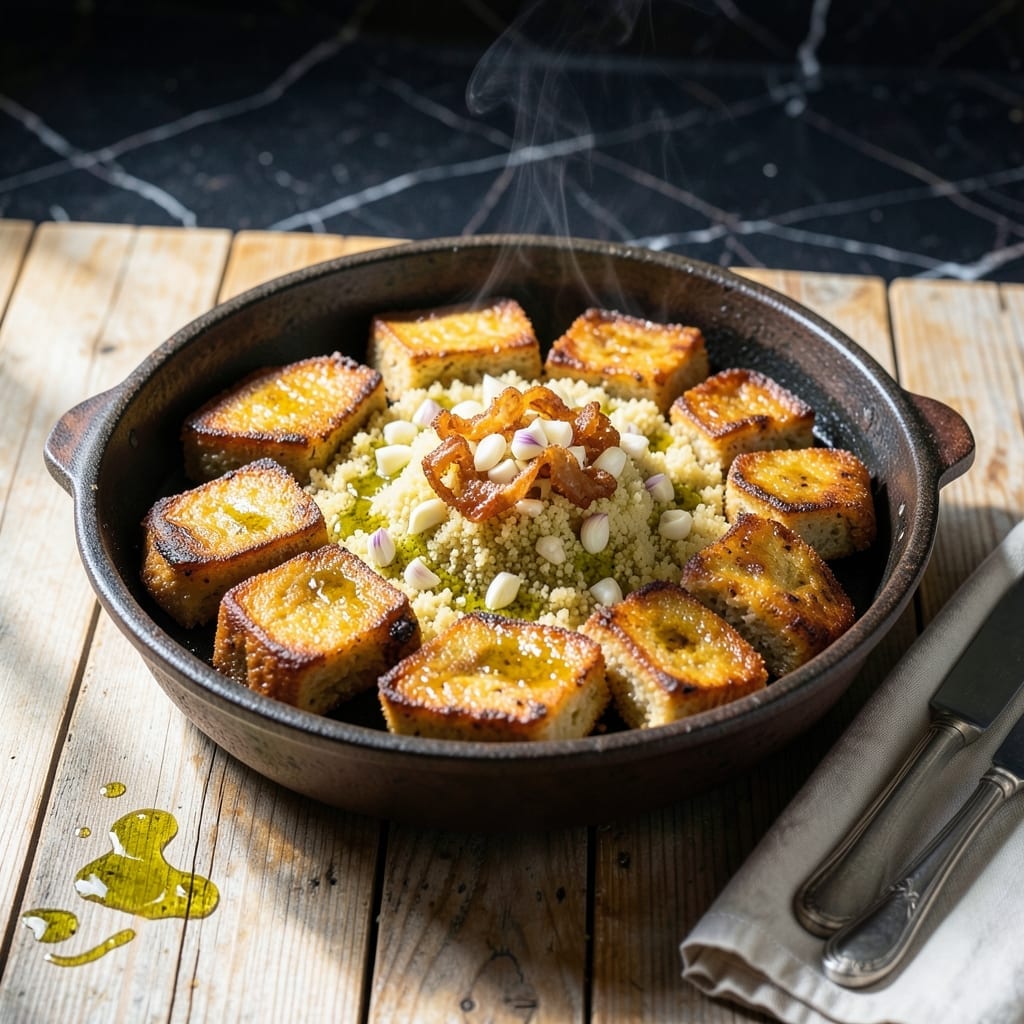
This recipe brings the heart of Puerto Rican cuisine to your kitchen with authentic traditional flavors.
Using simple techniques and staple ingredients, it captures the island’s beloved mofongo style with classic texture and taste.
Ingredients for Harina De Maiz Recipe Puerto Rico
Traditional Puerto Rican flavors come alive with these staple ingredients for island-style mofongo.
| Ingredient | Amount | Notes |
|---|---|---|
| Green Plantains 🍌 | 4 whole | Very ripe for sweetness, firm for mashing |
| Cornmeal 🌽 | 1 cup | Fine or medium grind |
| Garlic Cloves 🧄 | 4 cloves | Peeled and minced |
| Chicharrón 🥓 | 1 cup | Crumbled, vegetarian version if needed |
| Olive Oil 🫒 | ½ cup | For frying plantains |
| Salt 🧂 | 1 ½ tsp | Kosher or sea salt preferred |
| Black Pepper 🌶️ | ½ tsp | Freshly ground |
| Vegetable Broth 🥣 | 1 cup | Low-sodium preferred |
| Sofrito 🌿 | ¼ cup | Puerto Rican cooking base |
| Recao Leaves 🍃 | 5 whole | Fresh, or culantro substitute |
| Ají Dulce 🌶️ | 2 whole | Sweet peppers, optional |
| Lard 🧈 | 2 tbsp | Vegetable shortening as veg alternative |
The plantains are non-negotiable for authentic texture. Green plantains (not yellow) give the classic firm, starchy base essential to mofongo. Find them at Latin markets or well-stocked supermarkets—look for heavy, firm fruit with dull skin. For the cornmeal, Goya or P.A.N. brands are staple in Puerto Rican kitchens and widely available. The vegetarian chicharrón (often made from yuca) mimics the traditional pork cracklings perfectly.
No green plantains? Very firm bananas work in a pinch but lack the authentic taste. Missing sofrito? Blend bell pepper, onion, garlic, and cilantro as a quick substitute. For the lard, vegetable shortening or coconut oil maintains the dish’s richness without animal products. Recao can be tricky to find fresh—culantro (not cilantro) is the closest substitute, or use extra cilantro if desperate.
Store plantains at room temperature—they ripen quickly. Once mashed, mofongo keeps in the fridge for 3-4 days (reheat in a skillet) or freezes beautifully for 1 month. The sofrito base can be made ahead and frozen in ice cube trays for easy portioning.
Why You’ll Love This Recipe
- One Pot Wonder: I love that I can cook everything in a single pot—plantains, cornmeal, and chicharrón come together with barely any cleanup.
- Flavor Bomb: The garlic and crispy chicharrón give this dish a rich, savory depth that’s hard to resist.
- Weeknight Hero: It’s my go-to for busy evenings because it’s quick, filling, and satisfying.
- Budget Stretch: Honestly, a little cornmeal and green plantains go a long way, making this meal easy on the wallet.
Step-by-Step Instructions for Traditional Island Mofongo Style
This method preserves authentic Puerto Rican technique while ensuring perfect texture and flavor balance.
Step 1: Prepare and Fry the Green Plantains
Peel the 4 whole Green Plantains and cut them into 1-inch thick pieces. Heat the 0.5 cup Olive Oil in a large skillet over medium-high heat until shimmering but not smoking. I always test the oil by adding a small plantain piece—when it sizzles immediately, it’s ready.
Fry the plantain pieces in batches to avoid crowding the pan, turning occasionally, for 8-10 minutes until golden brown and tender when pierced with a fork. The plantains should be soft enough to mash but not falling apart. Transfer to a paper towel-lined plate to drain excess oil.
Step 2: Create the Aromatic Base with Sofrito
In a caldero or heavy pot, heat the 2 tbsp Lard over medium heat. Add the minced 4 cloves Garlic Cloves, finely chopped 5 whole Recao Leaves, and diced 2 whole Ají Dulce. Sauté for 2-3 minutes until the garlic turns light golden and releases its fragrance.
Stir in the 0.25 cup Sofrito and cook for another 3 minutes, allowing the flavors to meld. This aromatic foundation is crucial for authentic island flavor. The mixture should be fragrant and slightly reduced but not browned.
Step 3: Combine Ingredients and Mash to Perfection
In a large pilón (wooden mortar) or sturdy bowl, combine the fried plantains, 1 cup Cornmeal, 1 cup Chicharrón, 1.5 tsp Salt, and 0.5 tsp Black Pepper. Using the pilón, mash the mixture in a circular motion, gradually incorporating the ingredients until you achieve a dough-like consistency.
The texture should hold together when pressed but still have some plantain chunks for authenticity. If the mixture seems dry, add 1-2 tablespoons of the 1 cup Vegetable Broth to help bind it. Real talk: this step requires elbow grease—don’t rush it.
Step 4: Shape and Steam the Mofongo
Divide the mixture into 4 equal portions and shape each into a mound in the pilón or form into balls with your hands. Create a well in the center of each portion. This traditional presentation allows the broth to pool in the center for serving.
Pour the remaining Vegetable Broth into a small saucepan and bring to a gentle simmer. Carefully place the mofongo mounds in a steamer basket over the simmering broth. Cover and steam for 10-12 minutes to allow the flavors to fully integrate and the texture to set.
Step 5: Serve with Broth and Final Touches
Transfer each mofongo mound to a serving plate, ensuring the well remains intact. Ladle some of the hot Vegetable Broth into the center of each portion. The broth should be absorbed slightly by the mofongo without making it soggy.
Garnish with additional crumbled Chicharrón if desired. Serve immediately while hot. The ideal mofongo has a crisp exterior from the frying process, a moist interior from the broth, and complex layers of plantain, pork, and aromatic flavors in every bite.
Pro Tips For Making Harina De Maiz Recipe Puerto Rico
- Fry Plantains First: I learned this the hard way—fry the green plantains until deeply golden before mixing with cornmeal, or they’ll stay starchy and bland. About 5-7 minutes in hot oil does the trick.
- Toast the Cornmeal: Sounds weird, but it works: lightly toast the cornmeal in a dry pan for 2 minutes before combining. It deepens the flavor and removes any raw taste.
- Skip Sodium-Free Chicharrón: After a few bland batches, I finally figured out that salty chicharrón is non-negotiable here. If yours is unsalted, add 1 tsp of salt to the mix.
- Use Warm Broth: Replace half the water with warm chicken broth when mixing the dough. It makes a real difference in both flavor and texture, and the harina cooks up lighter.
Common Mistakes When Making This Dish
🔥 Overcrowding the Pan
Adding too much harina de maiz batter at once can lead to uneven cooking. The center may stay raw while the edges burn, ruining your mofongo’s texture.
Fix: Cook in small batches, spreading the batter thinly for even heat distribution.
🍳 Skipping the Pre-Cooking Step
Using raw harina de maiz without pre-cooking can result in a gritty or undercooked dish. Puerto Rican recipes often require toasting the flour first.
Fix: Lightly toast the harina de maiz in a dry pan before mixing it with liquids.
⏰ Rushing the Simmering Process
Harina de maiz needs time to absorb flavors and thicken. Cutting the simmering short leaves the dish watery or bland.
Fix: Simmer on low heat for 15-20 minutes, stirring frequently.
🌡️ Ignoring Liquid Ratios
Too much or too little liquid ( broth or water) can make the mofongo either mushy or dry. Precision is key for the perfect consistency.
Fix: Follow the recipe’s liquid-to-flour ratio strictly, adjusting only as needed.
Nutrition Facts

- 6 Egg Cake Recipe with Oil: Light as Air With Buttery Moisture - October 4, 2026
- 4 Bean Casserole Recipe: One-Pan Heartiness With Smoky Paprika Depth - October 4, 2026
- 3-Ingredient Keto Mug Cake Recipe: Microwave Magic in 2 Minutes - October 4, 2026