
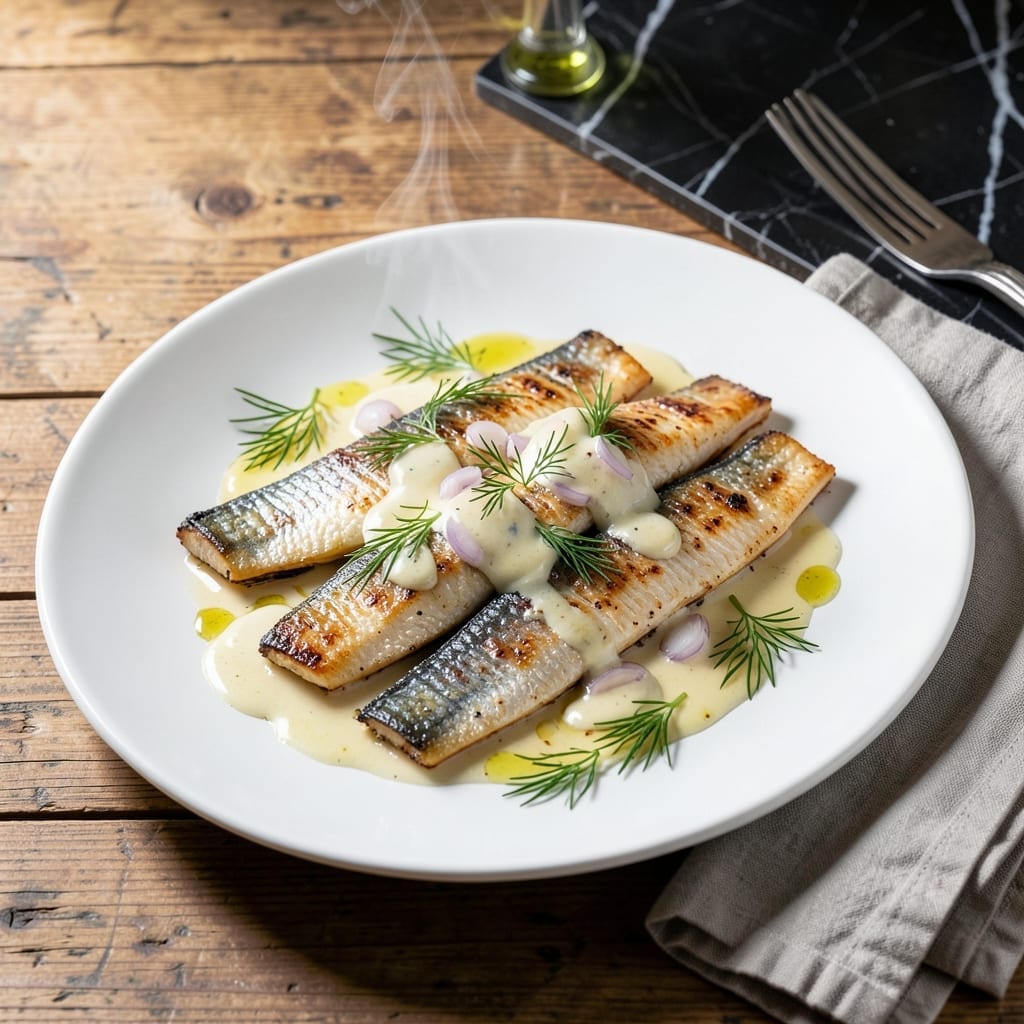
This elevated dish brings Nordic sophistication to your table with minimal effort. The herring cooks gently in a delicate wine sauce, creating a silky broth that pairs perfectly with crusty bread or simple sides.
I developed this recipe to highlight the fish’s natural richness while letting the wine sauce shine. A touch of cream adds body, and fresh dill brightens the flavor without overpowering the delicate herring.
The result is a restaurant-quality meal that feels special yet approachable. The sauce reduces to a glossy finish, coating the herring in layers of subtle, aromatic flavor.
Serve warm with steamed potatoes or a crisp green salad. The balance of flavors makes this dish a standout at any dinner.
Ingredients for Herring in Wine Sauce
Fresh herring, wine, and cream create this silky, elegant Nordic dish.
| Ingredient | Amount | Notes |
|---|---|---|
| Herring Fillets 🐟 | 1 ½ lb | Fresh or thawed, skin-on |
| Dry White Wine 🍷 | 1 ½ cups | Sauvignon Blanc or Pinot Grigio |
| Heavy Cream 🥛 | ½ cup | Full-fat for richness |
| Shallots 🧅 | 2 whole | Finely minced |
| Fresh Dill 🌿 | ¼ cup | Chopped, plus extra for garnish |
| Unsalted Butter 🧈 | 3 tbsp | For sautéing and sauce |
| All-Purpose Flour 🌾 | 2 tbsp | For thickening sauce |
| Fish Stock 💧 | ½ cup | Low-sodium preferred |
| Lemon Juice 🍋 | 1 tbsp | Freshly squeezed |
| Dijon Mustard 🟡 | 1 tsp | Smooth, not grainy |
| Salt 🧂 | 1 tsp | Sea salt or kosher |
| Black Pepper 🌶️ | ½ tsp | Freshly ground |
| Olive Oil 🫒 | 1 tbsp | For finishing the sauce |
The herring is the star here. Look for fresh fillets at Whole Foods or a trusted seafood counter—skin-on holds up better to gentle cooking. The white wine matters too; Sauvignon Blanc works great, but any dry white you’d drink is fine. Avoid cooking wines—they taste harsh. For the cream, skip the light version (it can curdle). Full-fat gives that velvety finish the recipe promises.
No shallots? Sweet onion at half the amount works. Out of fresh dill? Dried dill at one-third the amount is fine, but add it earlier so it has time to rehydrate. If white wine isn’t an option, dry vermouth is a solid backup. For the fish stock, vegetable stock in a pinch—just know the flavor will be milder. The mustard is subtle but important, so don’t skip it.
This reheats gently on the stove—just don’t boil or the cream will separate. Leftovers keep 2-3 days in the fridge. The sauce thickens as it cools, so thin with a splash of stock when reheating. Best served fresh, but still tasty the next day.
Why You’ll Love This Recipe
- One Pan Wonder: I love that this comes together in a single skillet—herring, wine, cream, and dill simmer while I set the table.
- Rich & Bright: The dry white wine cuts through the cream, and the shallots add just the right sweetness to balance the herring’s bold flavor.
- Elegant Leftovers: Honestly, it tastes even better the next day—perfect for a fancy lunch with crusty bread to soak up the sauce.
- Budget Luxury: Herring fillets are affordable, but the wine and cream make it feel like a restaurant dish without the markup.
Step-by-Step Instructions for Herring in Wine Sauce
This method transforms simple ingredients into a luxurious dish with minimal effort.
Step 1: Sear the Herring Fillets
Pat the 1.5 lb herring fillets dry with paper towels—this prevents splattering and ensures a good sear. Season both sides with 1 tsp salt and 0.5 tsp black pepper. Heat 1 tbsp olive oil in a large skillet over medium-high heat until shimmering.
Add the fillets skin-side down and cook for 3-4 minutes until the skin is golden and crisp. Flip carefully and cook for another 2 minutes until the flesh flakes easily. Transfer to a plate and set aside—they’ll finish cooking in the sauce later.
Step 2: Build the Wine and Shallot Base
In the same skillet, reduce heat to medium and add 2 tbsp unsalted butter. Once melted, add the 2 whole minced shallots and sauté for 2-3 minutes until soft and translucent. Don’t rush this; you want the shallots sweet and aromatic, not browned.
Pour in the 1.5 cups dry white wine and scrape up any browned bits from the pan. Simmer for 4-5 minutes until the liquid reduces by about half. The sharp wine smell will mellow into a rich, fragrant base.
Step 3: Create the Creamy Sauce
Sprinkle 2 tbsp all-purpose flour over the shallot-wine mixture and whisk constantly for 1 minute to cook out the raw flour taste. Slowly pour in the 0.5 cup fish stock and 0.5 cup heavy cream, whisking until smooth.
Add 1 tsp Dijon mustard and stir to combine. Let the sauce simmer for 3-4 minutes until it thickens enough to coat the back of a spoon. Watch for small bubbles—this is the sign it’s ready for the final touches.
Step 4: Finish and Combine
Remove the skillet from heat and stir in 1 tbsp lemon juice and 0.25 cup fresh dill. The acid brightens the rich sauce, and the dill adds a fresh, herbal note. Taste and adjust seasoning if needed—this is your last chance to balance the flavors.
Gently place the herring fillets back into the sauce, skin-side up. Spoon the sauce over the fillets and let them warm through for 2-3 minutes off the heat. The residual warmth will finish cooking the fish without overdoing it.
Serve immediately, garnished with extra dill. The sauce should cling to the fillets, and each bite should deliver tender fish with a silky, wine-infused broth.
Pro Tips For Making Herring In Wine Sauce
- Poach Gently, Don’t Boil: Keep the wine at a bare simmer—180°F max—so the herring stays tender and doesn’t turn rubbery. I learned this the hard way after my first batch came out tough as shoe leather.
- Dry the Fillets: Pat the herring fillets bone-dry with paper towels before adding to the wine; it helps the sauce cling better and prevents a watery finish.
- Skip the Old Wine: Use a dry white you’d actually drink—if it tastes harsh or vinegary straight from the bottle, it’ll ruin the sauce. Sounds obvious, but I’ve seen people grab whatever’s left in the fridge.
- Finish with Cold Cream: Temper the heavy cream by stirring in a ladle of hot wine sauce before adding it all at once—prevents curdling and gives a silky texture every time.
Pro Cooking Tips for This Recipe
Perfect Searing Technique
Pat the fillets completely dry before searing—this creates that coveted crisp skin. I use paper towels and press firmly to remove all moisture. Heat your skillet until olive oil shimmers but doesn’t smoke before adding the fish. 🔥
Sauce Reduction Control
After adding wine, let it reduce by half before proceeding. The alcohol needs to cook off completely, which takes 4-5 minutes at a gentle simmer. I stir occasionally to prevent hot spots from burning the shallots.
Roux Integration
When adding flour, whisk constantly for 1 full minute to eliminate raw flour taste. The mixture should look like wet sand. I use a flat whisk for better pan contact. This creates a stable base for your creamy sauce.
Temperature Management
Keep heat at medium when adding cream to prevent curdling. If the sauce looks grainy, remove from heat immediately and whisk vigorously. I add cream in a slow stream while whisking to maintain emulsion.
Final Resting
After combining fish and sauce, let it rest off heat for 2-3 minutes. This allows flavors to meld and the fish to reach perfect doneness. I cover the pan loosely with foil during this time. 💡
Garnish Timing
Add fresh dill just before serving to preserve its bright color and aroma. The lemon juice should go in last to maintain its fresh, zesty character. I always garnish at the table for maximum visual impact.
Nutrition Facts
Frequently Asked Questions
Can I use a different type of fish?
Yes! Mild white fish like cod or haddock work well. Avoid strongly flavored fish as they may overpower the delicate sauce. Adjust cooking time to 2-3 minutes per side for thinner fillets.
What if my sauce is too thin?
Simmer uncovered for 2-3 minutes longer to reduce. If still thin, mix 1 tsp cornstarch with water and stir in. Avoid boiling after adding cream to prevent curdling.
Can I make this ahead of time?
Prepare the sauce up to 2 days ahead and reheat gently. Cook the herring just before serving for best texture. Store sauce and fish separately in the fridge.
Is it safe to use raw wine?
The alcohol cooks off during the 4-5 minute reduction. For alcohol-free versions, use white grape juice with 1 tbsp vinegar per cup for acidity.

- 6 Egg Cake Recipe with Oil: Light as Air With Buttery Moisture - October 4, 2026
- 4 Bean Casserole Recipe: One-Pan Heartiness With Smoky Paprika Depth - October 4, 2026
- 3-Ingredient Keto Mug Cake Recipe: Microwave Magic in 2 Minutes - October 4, 2026