
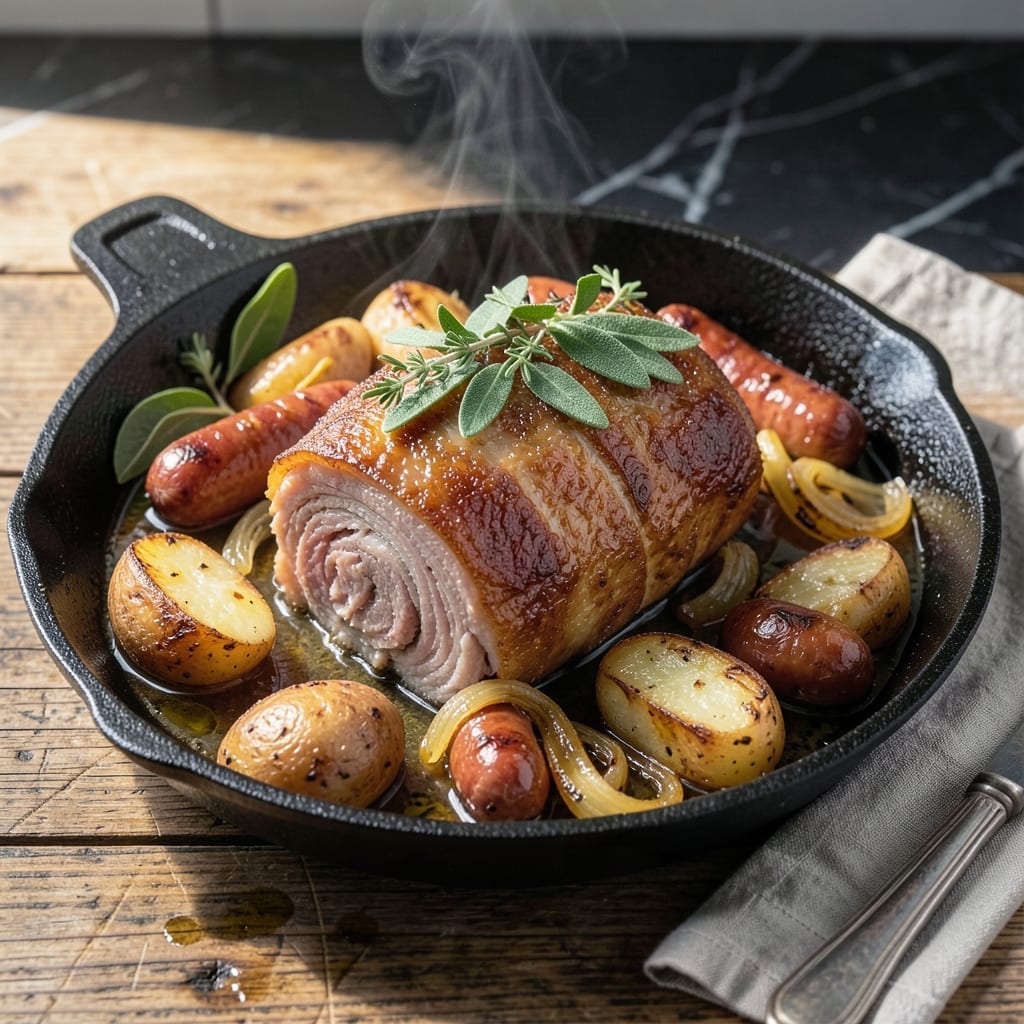
This Pennsylvania Dutch specialty transforms humble ingredients into a hearty, comfort dish that’s been cherished for generations. The stuffed pork stomach tradition brings together simple flavors in a way that feels both rustic and deeply satisfying.
What makes this preparation special is the careful layering of fillings—potatoes, sausage, and onions create a rich, savory blend. The slow cooking process allows flavors to meld, resulting in a tender, flavorful centerpiece for any meal.
The final result is a dish that embodies home-style cooking at its finest, with every bite delivering warmth and tradition. It’s the kind of meal that brings families together around the table.
Perfect for Sunday suppers or holiday gatherings. Here’s how to prepare this classic.
Ingredients for Hog Maw
Hearty Pennsylvania Dutch tradition starts with pork stomach, sausage, and potatoes for comfort in every bite.
| Ingredient | Amount | Notes |
|---|---|---|
| Pork Stomach 🐖 | 2 lb | Cleaned, whole hog maw |
| Pork Sausage 🌭 | 1 lb | Mild or spicy variety |
| Russet Potatoes 🥔 | 2 lb | Peeled and diced |
| Yellow Onions 🧅 | 2 whole | Large, finely chopped |
| Fresh Sage Leaves 🌿 | ¼ cup | Chopped for seasoning |
| Fresh Thyme Sprigs 🍃 | 4 pieces | Leaves stripped from stems |
| Garlic Cloves 🧄 | 4 cloves | Minced for depth |
| Chicken Broth 🍲 | 2 cups | Low-sodium preferred |
| All-Purpose Flour 🌾 | ½ cup | For thickening broth |
| Unsalted Butter 🧈 | 4 tbsp | For sautéing and richness |
| Kosher Salt 🧂 | 1 tbsp | Adjust to taste |
| Ground Black Pepper 🌶️ | 1 tsp | Freshly cracked preferred |
| Dried Marjoram 🌿 | 1 tsp | Optional for extra flavor |
| Apple Cider Vinegar 🍏 | 1 tbsp | For brightness in broth |
The pork stomach is non-negotiable—source from a trusted butcher or specialty meat market. Look for fresh hog maw with a clean smell and pale, unblemished surface. Many butchers will clean it for you if you ask ahead. The sausage should be high-quality, ideally from a local producer. For the potatoes, russets hold their shape best during the long cook, but Yukon Golds add a buttery note.
No pork sausage? Sweet Italian sausage works in a pinch, though the flavor profile shifts slightly. Fresh herbs are ideal, but dried sage and thyme at half the amount can substitute. For extra richness, swap the butter for bacon fat (save it from cooking breakfast). The broth can be vegetable-based if avoiding meat, but chicken broth adds depth that water lacks.
Assemble and cook the same day—hog maw doesn’t store well raw once stuffed. Leftover cooked dish keeps 4-5 days refrigerated or 3 months frozen. Reheat gently to avoid drying out the pork. Always slice carefully—the filling is the star.
Why You’ll Love This Recipe
- One Pot Meal: I love that everything—pork stomach, sausage, potatoes—simmers together in one pot. No fuss, no extra dishes.
- Rich and Hearty: The sausage and fresh sage fill the kitchen with a smell that makes everyone linger. That first bite? Worth the wait.
- Feeds a Crowd: Between us, this is my go-to for Sunday suppers. One batch easily satisfies a hungry family.
- Budget Stretcher: Pork stomach and potatoes are cheap, but the flavor feels anything but. Honestly, it’s my most cost-effective comfort meal.
Step-by-Step Instructions for Pennsylvania Dutch Stuffed Hog Maw
Master this traditional technique and you’ll deliver hearty, comforting results every time.
Step 1: Prepare the Pork Stomach
Begin by thoroughly cleaning the 2 lb pork stomach under cold running water, then soak it in fresh water for 1 hour to remove any residual impurities. This step is crucial for eliminating any off-flavors that could compromise your dish.
After soaking, turn the pork stomach inside out and scrub the interior surface with a mixture of 1 tbsp kosher salt and 1 tbsp apple cider vinegar. This not only cleans but also begins the seasoning process. Rinse well and pat completely dry with paper towels before proceeding.
Step 2: Create the Filling Mixture
In a large skillet, melt 4 tbsp unsalted butter over medium heat. Add the 2 whole yellow onions (finely chopped) and cook until they turn translucent, about 5-7 minutes. This builds the flavor foundation for your filling.
Add the 1 lb pork sausage, breaking it up with a wooden spoon. Cook until it loses its raw color, about 5 minutes. Then stir in the 2 lb russet potatoes (peeled and diced), 4 cloves garlic cloves (minced), 0.25 cup fresh sage leaves (chopped), leaves from the 4 pieces fresh thyme sprigs, 1 tsp ground black pepper, and 1 tsp dried marjoram. Cook for an additional 3-4 minutes to meld the flavors.
Step 3: Stuff and Secure the Hog Maw
Carefully stuff the pork stomach with your filling mixture, being mindful not to overfill—leave about 2 inches of space at the top. The pork stomach should be about two-thirds full to allow for expansion during cooking.
Secure the opening with kitchen twine, tying it tightly to prevent any filling from escaping during cooking. I recommend double-knotting for extra security. Pierce the pork stomach in several places with a fork to allow steam to escape and prevent bursting.
Step 4: Braise to Perfection
In a large Dutch oven or heavy pot, bring the 2 cups chicken broth to a gentle simmer over medium heat. Carefully place the stuffed pork stomach in the pot, ensuring it’s mostly submerged in the liquid. Cover and maintain a gentle simmer.
Cook for 2 to 2.5 hours, turning the hog maw occasionally to ensure even cooking. The pork stomach is done when it’s tender and the filling has set. You’ll know it’s ready when a knife inserted into the thickest part meets with little resistance and the internal temperature reaches 160°F.
Step 5: Thicken the Broth and Serve
Once the hog maw is cooked, carefully remove it from the pot and set aside to rest for 10 minutes. This allows the juices to redistribute and makes slicing easier.
To create a rich gravy, whisk the 0.5 cup all-purpose flour into the cooking liquid until smooth. Simmer for 3-5 minutes until the broth thickens to your desired consistency. Slice the hog maw and serve with the gravy spooned over the top for maximum comfort and flavor.
Pro Tips For Making Hog Maw
- Parboil the Maw: Simmer the pork stomach in salted water for 15-20 minutes before stuffing—this removes the strong odor and softens the texture so it doesn’t turn chewy after baking.
- Brown the Sausage: I learned this the hard way: cook the pork sausage separately until browned before mixing with potatoes and onions, or you’ll end up with a pale, greasy filling.
- Soak the Potatoes: After peeling, let the russet potatoes sit in cold water for 10 minutes to rinse off excess starch, so they don’t turn gummy when baked inside the maw.
- Use Fresh Sage: Dried sage works in a pinch, but fresh sage leaves minced into the filling add a bright, aromatic punch that dried just can’t match.
Make-Ahead Tips for Leftovers
Overnight Prep
You can prep the filling mixture the night before—cook the sausage, onions, potatoes, and herbs, then store in an airtight container in the fridge. This actually improves the flavors as they meld overnight. Just bring to room temperature before stuffing the pork stomach. ⏰
Morning Assembly
Clean and prep the pork stomach the morning of cooking, but keep it refrigerated until ready to stuff. This ensures freshness while saving time. I find this approach makes the cooking process much smoother.
Partial Cooking
For a head start, you can partially braise the stuffed hog maw for 1 hour, then refrigerate it in the cooking liquid. Finish cooking the next day by simmering for another 1-1.5 hours. This method works well for holiday meals.
Gravy Prep
Make the gravy base ahead by simmering the chicken broth with herbs. Strain and store it, then thicken with flour just before serving. This keeps the gravy fresh and prevents it from becoming too thick too soon. 💡
Freezing Tips
Fully cooked hog maw freezes beautifully for up to 3 months. Slice before freezing for easy portioning, and store slices with some gravy in freezer-safe containers. Thaw overnight in the fridge before reheating.
Reheating Method
To reheat, place slices in a baking dish with a splash of broth, cover with foil, and warm at 350°F for 20-25 minutes. This keeps the pork tender and the filling moist without drying out.
Nutrition Facts
Frequently Asked Questions
Where can I buy hog maw?
Check local butcher shops or specialty meat markets. Many butchers will clean it for you if requested in advance. Ethnic grocers or online meat suppliers often carry it as well.
How do I keep the filling from falling out?
Don’t overstuff—fill only two-thirds full. Secure tightly with kitchen twine and pierce the stomach with a fork to allow steam to escape. Double-knotting the twine adds extra security.
Can I use a slow cooker?
Yes! Place the stuffed hog maw in the slow cooker with broth, cook on low for 6-7 hours. Ensure it’s mostly submerged in liquid and turn it occasionally for even cooking.

- 6 Egg Cake Recipe with Oil: Light as Air With Buttery Moisture - October 4, 2026
- 4 Bean Casserole Recipe: One-Pan Heartiness With Smoky Paprika Depth - October 4, 2026
- 3-Ingredient Keto Mug Cake Recipe: Microwave Magic in 2 Minutes - October 4, 2026