
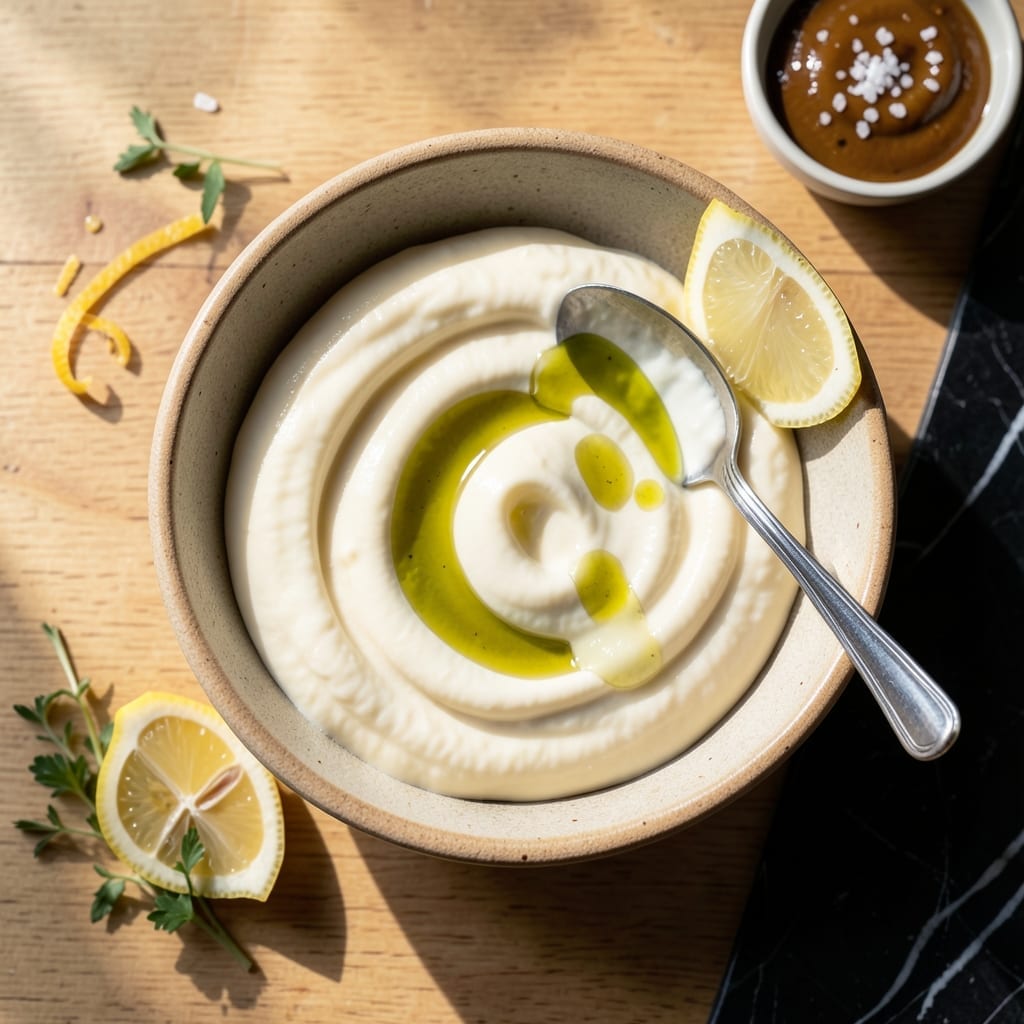
There’s nothing like fresh homemade mayonnaise to elevate sandwiches, salads, and dips with its rich, velvety texture. This simple recipe uses olive oil for a smooth, flavorful result that store-bought versions can’t match.
With just a few basic ingredients and a whisk, you can create a creamy, emulsified condiment that’s ready in minutes. It’s the perfect way to add a gourmet touch to everyday meals.
Ingredients for Homemade Mayonnaise Recipe with Olive Oil
Seven simple ingredients transform into creamy, emulsified perfection for sandwiches and salads.
| Ingredient | Amount | Notes |
|---|---|---|
| Large Egg Yolk 🥚 | 1 piece | Room temperature for best emulsification |
| Dijon Mustard 🟡 | 1 tsp | Smooth, high-quality preferred |
| White Wine Vinegar 🍷 | 1 tbsp | Or apple cider vinegar |
| Extra-Virgin Olive Oil 🫒 | 1 cup | Light or mild variety for neutral flavor |
| Sea Salt 🧂 | ½ tsp | Fine grain for even distribution |
| Lemon Juice 🍋 | 1 tsp | Freshly squeezed for brightness |
| White Pepper ⚪ | ¼ tsp | Ground, for subtle heat |
The olive oil is critical here. Light or mild extra-virgin olive oil ensures a neutral base that won’t overpower the mayonnaise. For the best results, use a high-quality brand like California Olive Ranch or Colavita. The egg yolk must be at room temperature—this helps create a stable emulsion. Pasture-raised eggs from Whole Foods or your local farmers market yield richer, more vibrant mayo.
No Dijon mustard? Yellow mustard at half the amount works in a pinch, though the flavor will be slightly sharper. Short on white wine vinegar? Apple cider vinegar or lemon juice can substitute one-for-one. If you’re avoiding raw eggs, pasteurized egg yolks are a safe alternative. The salt should be fine-grained—Diamond Crystal or Maldon dissolve beautifully.
Homemade mayo keeps in the fridge for 5-7 days in an airtight container. If separation occurs, simply whisk it back together. For longer storage, freeze in ice cube trays for up to 3 months, then thaw in the fridge overnight.
Why You’ll Love This Recipe
- No Fuss Mixing: I just whisk the egg yolk with Dijon and vinegar, then slowly drizzle in the olive oil—no blender required.
- Rich, Tangy Depth: The olive oil gives it this luscious body while the white wine vinegar adds the perfect bright kick.
- Sandwich Superstar: Honestly, once you try this on a BLT or burger, store-bought just can’t compare.
- Fridge Staple: A small batch keeps for a week, so I always have fresh mayo ready for dips, dressings, or fries.
Step-by-Step Instructions for Homemade Mayonnaise With Olive Oil
Master the emulsion technique and create a rich, velvety mayonnaise with professional results every time.
Step 1: Combine the Base Ingredients
In a medium bowl, whisk together the large egg yolk, 1 tsp Dijon Mustard, 1 tbsp White Wine Vinegar, 0.5 tsp Sea Salt, 1 tsp Lemon Juice, and 0.25 tsp White Pepper until fully combined. The mustard acts as an emulsifier, helping bind the oil and liquid components.
Ensure the egg yolk is at room temperature for optimal emulsification. I always use a fine-grain sea salt for even distribution and a bright, fresh lemon juice to balance the richness. The mixture will appear slightly thickened and pale yellow at this stage.
Step 2: Begin the Emulsion with Slow Oil Incorporation
Start adding the 1 cup Extra-Virgin Olive Oil very slowly, just a few drops at a time, while whisking vigorously. This gradual addition is critical to forming a stable emulsion. You’ll notice the mixture beginning to thicken as the oil incorporates.
Continue this process for the first ¼ cup of oil. If you add it too quickly at this stage, the emulsion will break. Patience here ensures a smooth, creamy base that won’t separate. The color will lighten as more oil is absorbed.
Step 3: Stream in the Remaining Oil
Once the first portion of oil has been fully emulsified, you can begin adding the remaining oil in a thin, steady stream while continuing to whisk constantly. Maintain a consistent pace—too fast and the mayonnaise will break, too slow and the process will take unnecessarily long.
As you approach the final additions, the mayonnaise will become thick and glossy, clinging to the whisk. The texture should be smooth and creamy with no visible separation. This typically occurs after incorporating about ¾ cup of the oil.
Step 4: Adjust Consistency and Seasoning
After all the oil has been added, taste and adjust the seasoning if needed. The mayonnaise should have a balanced flavor with a slight tang from the vinegar and lemon juice. If it’s too thick, whisk in a teaspoon of warm water to achieve your desired consistency.
For best results, let the mayonnaise sit at room temperature for 10-15 minutes before using. This allows the flavors to meld together. The final product should be thick enough to hold its shape but still spreadable, with a glossy, creamy appearance.
Pro Tips For Making Homemade Mayonnaise Recipe With Olive Oil
- Drip Slowly: Add the olive oil a few drops at a time at first—I learned this the hard way after breaking three emulsions in a row. Once it starts thickening, you can pour in a thin stream.
- Use Room-Temp Eggs: Pull your egg out of the fridge 30 minutes before starting. Cold yolks resist emulsifying, and nobody wants a sad, separated mess.
- Skip the Blender: A whisk and a bowl give you more control than a blender or food processor. Sounds old-school, but it works better for olive oil mayo.
- Balance the Vinegar: Start with half the white wine vinegar, taste, then add more if needed—olive oil can be assertive, and too much acid throws off the flavor.
Creative Variations of These Flavors
🔥 Spicy Texas Style
Kick your homemade mayonnaise with olive oil up a notch with a bold Texas twist! Add 1 teaspoon smoked paprika, ½ teaspoon cayenne pepper, and 1 tablespoon chipotle in adobo sauce (finely minced) to your finished mayo. For extra depth, stir in 1 teaspoon lime juice and a pinch of cumin. This fiery version pairs perfectly with burgers, grilled meats, or as a spicy dip for fries. The smoky heat balances the creamy richness, making it a crowd-pleaser for those who love a little oomph in their condiments.
🍯 Sweet and Savory Fusion
Blend sweet and tangy flavors by whisking 1 tablespoon honey and 1 teaspoon Dijon mustard into your olive oil mayo. For an Asian-inspired twist, add 1 teaspoon soy sauce and ½ teaspoon grated ginger. This variation is fantastic for drizzling over roasted veggies, spreading on sandwiches, or using as a dip for spring rolls. The honey adds a subtle sweetness while the mustard and ginger bring a zesty punch.
🥗 Healthy Lighter Version
For a lighter take, replace half the olive oil with Greek yogurt (about ¼ cup) and add 1 tablespoon lemon juice for extra tang. This cuts calories while keeping the creamy texture. A pinch of garlic powder and 1 teaspoon fresh dill enhances the flavor without adding heaviness. It’s perfect for those watching their intake but still craving that rich, velvety spread.
🍂 Seasonal Twist
Celebrate fall flavors by mixing in 1 tablespoon maple syrup and ½ teaspoon cinnamon for a cozy, slightly sweet mayo. For a herby spring version, blend in 1 tablespoon chopped fresh tarragon and 1 teaspoon lemon zest. These seasonal adjustments make your mayo versatile for holiday dishes or fresh spring salads, adding a touch of warmth or brightness as needed.
Nutrition Facts

- 6 Egg Cake Recipe with Oil: Light as Air With Buttery Moisture - October 4, 2026
- 4 Bean Casserole Recipe: One-Pan Heartiness With Smoky Paprika Depth - October 4, 2026
- 3-Ingredient Keto Mug Cake Recipe: Microwave Magic in 2 Minutes - October 4, 2026