
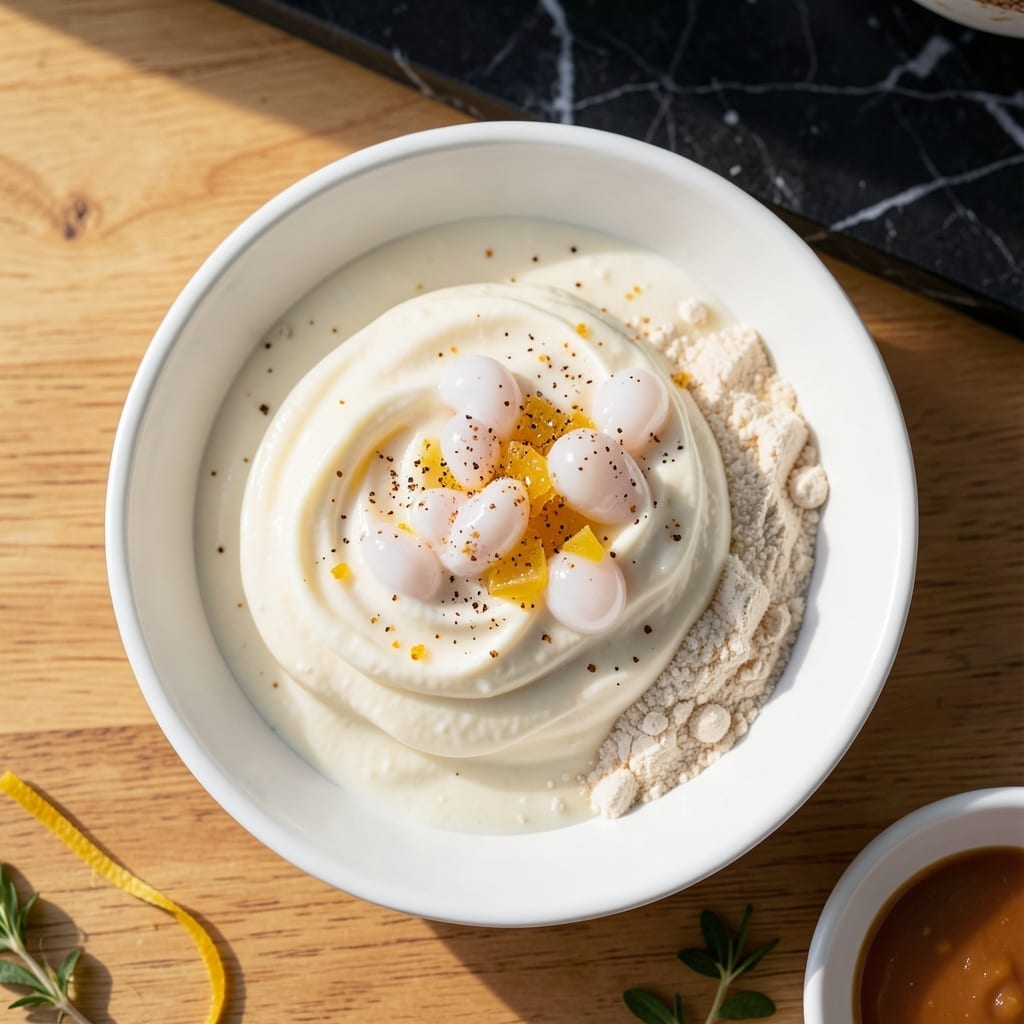
This white cake recipe delivers the light, tender layers that made Hough Bakery famous. The secret lies in using cake flour and properly creaming the butter and sugar for ultra-light texture.
Each layer bakes up with a fine crumb and delicate vanilla flavor, perfectly complementing the rich, buttery frosting. The method ensures professional results without requiring professional skills.
What sets this version apart is the attention to detail—room temperature ingredients, precise mixing times, and proper pan preparation all contribute to the final quality. The result is a cake that’s moist yet sturdy enough for layering.
Whether for celebrations or weekend baking, this recipe consistently produces the perfect white cake. The frosting technique creates smooth, professional finishes every time.
Ingredients for Hough Bakery White Cake
Cake flour and room temperature butter create the ultra-light, tender layers of this bakery-style white cake.
| Ingredient | Amount | Notes |
|---|---|---|
| Cake Flour 🌾 | 2 ½ cups | Sifted for light texture |
| Granulated Sugar 🍚 | 1 ¾ cups | Superfine preferred for even distribution |
| Unsalted Butter 🧈 | 1 cup | Room temperature, cut into tablespoons |
| Large Egg Whites 🥚 | 6 whole | Room temperature, separated carefully |
| Whole Milk 🥛 | 1 cup | Room temperature for smooth batter |
| Pure Vanilla Extract 🌿 | 2 tsp | High-quality for best flavor |
| Baking Powder 🧂 | 1 tbsp | Fresh for optimal rise |
| Salt 🧂 | ½ tsp | Fine sea salt preferred |
| Unsalted Butter 🧈 | 1 ½ cups | For buttery frosting, softened |
| Powdered Sugar 🍚 | 6 cups | Sifted for smooth frosting |
| Heavy Cream 🥛 | ¼ cup | For frosting consistency |
| Pure Vanilla Extract 🌿 | 1 tbsp | For frosting flavor |
| Salt 🧂 | ¼ tsp | Balances sweetness in frosting |
Cake flour is non-negotiable for that signature fine crumb—King Arthur or Swans Down brands deliver consistent results. Room temperature butter must be truly soft (pressable but not greasy) for proper creaming. Plugra or European-style butter offers superior flavor and fat content. For the egg whites, separate them cold then let them warm to room temperature—this prevents overmixing and ensures maximum volume.
No cake flour? All-purpose flour minus 2 tbsp per cup plus 2 tbsp cornstarch can substitute, but texture won’t be identical. Out of egg whites? Whole eggs won’t work—this is a true white cake. The vanilla should be pure extract, not imitation. For the frosting, half-and-half can replace heavy cream in a pinch, though it may be slightly less stable.
Baked layers keep 2 days at room temperature in airtight containers, or freeze for 3 months. The frosting can be made 2 days ahead and refrigerated—bring to room temperature and rewhip before using. Cake flour should be stored in the freezer to prevent spoilage.
Why You’ll Love This Recipe
- One Bowl Wonder: I love that everything comes together in a single bowl—no fancy equipment, just cake flour, sugar, and butter creamed to perfection.
- Birthday Ready: Honestly, it’s my go-to for celebrations—simple yet impressive enough for any party.
- Budget Friendly: Cake flour and basic pantry staples mean I can bake this without breaking the bank.
Step-by-Step Instructions for Hough Bakery White Cake
Follow this precise method to achieve ultra-light layers with a velvety buttery frosting.
Step 1: Prepare the Cake Batter
In a large mixing bowl, cream the 1 cup Unsalted Butter with the 1.75 cups Granulated Sugar on medium speed until light and fluffy—about 3-4 minutes. This step incorporates air, which is essential for that signature light texture.
Add the 6 whole Large Egg Whites one at a time, mixing well after each addition. Then, alternate adding the 2.5 cups Cake Flour (sifted for optimal aeration) with the 1 cup Whole Milk, beginning and ending with the flour. Mix just until combined to avoid developing gluten.
Finally, stir in the 2 tsp Pure Vanilla Extract, 1 tbsp Baking Powder, and 0.5 tsp Salt. The batter should be smooth and slightly thick, with a glossy sheen. Divide it evenly between prepared cake pans.
Step 2: Bake the Cake Layers
Preheat your oven to 350°F and position the rack in the center. Bake the layers for 25-30 minutes, or until a toothpick inserted into the center comes out clean and the edges pull slightly away from the pan.
The tops should be golden brown and spring back when lightly pressed. Avoid opening the oven door during the first 20 minutes to prevent the layers from collapsing. Once done, let the cakes cool in their pans for 10 minutes before transferring to a wire rack to cool completely.
Step 3: Prepare the Buttery Frosting
In a stand mixer, beat the 1.5 cups Unsalted Butter on medium speed until smooth and creamy—about 2-3 minutes. Gradually add the 6 cups Powdered Sugar, mixing on low to prevent a cloud of sugar dust, then increase to medium once incorporated.
Pour in the 0.25 cup Heavy Cream, 1 tbsp Pure Vanilla Extract, and 0.25 tsp Salt. Beat on high for an additional 2-3 minutes until the frosting is light, fluffy, and pale in color. The frosting should hold its shape when spread but remain smooth and easy to work with.
Step 4: Assemble and Frost the Cake
Place one cooled cake layer on a serving plate or cake stand. Spread a generous layer of frosting evenly over the top, leaving a slight border. Top with the second layer and press gently to level it.
Apply a thin crumb coat of frosting to the entire cake, sealing in any loose crumbs. Chill the cake for 15-20 minutes to set the crumb coat. Then, spread the remaining frosting over the top and sides, using a spatula or bench scraper for a smooth finish. The frosting should be at least ¼-inch thick for that signature buttery richness.
Serve at room temperature for the best texture and flavor. The cake will keep in an airtight container at room temperature for up to 3 days.
Pro Tips For Making Hough Bakery White Cake
- Room Temp Egg Whites: Pull your egg whites out 30 minutes before starting—they whip up fluffier and hold peaks better when not ice-cold.
- Sift the Flour: I learned this the hard way—cake flour clumps easily, so sift it before measuring or you’ll end up with dense spots in your cake.
- Cream Butter Slowly: Beat the butter and sugar for a full 3-4 minutes until pale and airy; rushing this step gives you a tighter crumb.
- Use Milk at 70°F: Sounds weird, but it works: slightly warm whole milk (about 70°F) blends into the batter smoother than cold straight from the fridge.
Make-Ahead Tips for Leftovers
Batter Prep Ahead
You can mix the cake batter 1 day ahead and store it covered in the refrigerator. Let it sit at room temperature for 30 minutes before baking to ensure even cooking. This works because the baking powder activates with heat, not mixing. 💡
Baked Layers
Once completely cooled, wrap individual cake layers tightly in plastic wrap and store at room temperature for up to 2 days. For longer storage, freeze for up to 3 months. Thaw overnight in the fridge before assembling.
Frosting Advance
The buttery frosting can be made 2-3 days ahead and refrigerated in an airtight container. Before using, bring to room temperature and rewhip for 1-2 minutes to restore its fluffy texture.
Assembled Cake
An assembled but unfrosted cake keeps well in the fridge for 1 day. I recommend adding the final frosting layer just before serving for the freshest presentation and texture.
Room Temperature Tip
Always bring refrigerated components to room temperature before assembling or serving. Cold cake absorbs frosting unevenly and loses its signature lightness. A 30-minute rest on the counter works perfectly.
Freezing Slices
For portion control, freeze individual slices wrapped in plastic and foil. They’ll keep for 2 months and thaw in 1 hour at room temperature. This is ideal for surprise guests or late-night cravings. ✨
Nutrition Facts
Frequently Asked Questions
Why use cake flour instead of all-purpose?
Cake flour has a lower protein content, creating a finer crumb and lighter texture. All-purpose can make the cake denser. For best results, stick with cake flour as specified.
Can I use whole eggs instead of just whites?
No, whole eggs will change the texture and color. The recipe relies on 6 egg whites for that pure white appearance and airy structure. Using yolks would make it a yellow cake.
How do I prevent a dome-shaped cake?
Bake at 350°F and avoid overmixing the batter. Fill pans only 2/3 full and use bake-even strips if available. Doming is less likely with proper technique.
Can the frosting be made with less sugar?
Reducing the 6 cups powdered sugar will affect texture and stability. For a less sweet option, consider a cream cheese frosting instead, which uses less sugar.

- 6 Egg Cake Recipe with Oil: Light as Air With Buttery Moisture - October 4, 2026
- 4 Bean Casserole Recipe: One-Pan Heartiness With Smoky Paprika Depth - October 4, 2026
- 3-Ingredient Keto Mug Cake Recipe: Microwave Magic in 2 Minutes - October 4, 2026