
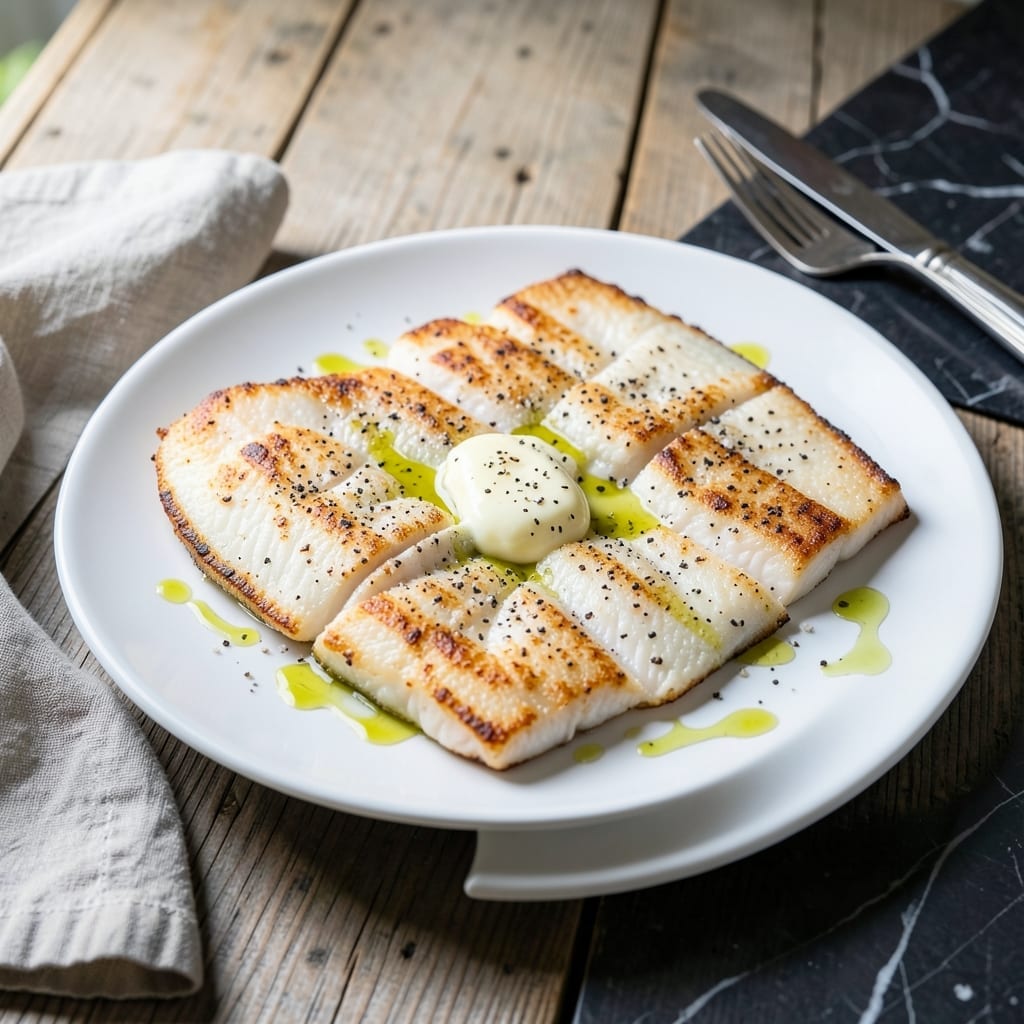
This flounder preparation exemplifies how simple ingredients can create light, flaky perfection. A delicate white fish meets bright lemon and briny capers for a dish that feels special yet effortless.
The technique is straightforward: quick pan-searing ensures the fish stays tender while the skin crisps. Fresh herbs and a splash of white wine build layers of flavor without overpowering the natural sweetness of the flounder.
What results is a restaurant-worthy entree with minimal effort. The lemon-caper sauce adds just enough tang to complement the fish’s delicate texture, making every bite balanced and satisfying.
Serve immediately for the best texture. This dish proves that elegant meals don’t require complicated methods.
Ingredients for Ina Garten Flounder
Elegant simplicity defines this dish with flounder, lemon, capers, and fresh herbs creating restaurant-quality perfection.
| Ingredient | Amount | Notes |
|---|---|---|
| Flounder Fillets 🐟 | 1 ½ lb | Skin-on, fresh or thawed |
| All-Purpose Flour 🌾 | ½ cup | For dredging fish |
| Kosher Salt 🧂 | 1 tsp | Diamond Crystal preferred |
| Freshly Ground Black Pepper 🌶️ | ½ tsp | Coarse grind ideal |
| Unsalted Butter 🧈 | 4 tbsp | Divided for cooking |
| Extra-Virgin Olive Oil 🫒 | 2 tbsp | For pan-searing |
| Dry White Wine 🍷 | ½ cup | Such as Sauvignon Blanc |
| Fresh Lemon Juice 🍋 | 3 tbsp | From 1-2 lemons |
| Capers 🌿 | 3 tbsp | Drained and rinsed |
| Fresh Flat-Leaf Parsley 🌿 | ¼ cup | Chopped, for garnish |
| Fresh Dill 🌿 | 2 tbsp | Chopped, optional |
| Garlic Cloves 🧄 | 2 cloves | Minced finely |
The flounder is the foundation—source skin-on fillets from a reputable fishmonger or Whole Foods seafood counter. Freshness is non-negotiable; look for fillets with vibrant color and no fishy odor. The butter and olive oil combo creates the ideal searing medium, while Diamond Crystal kosher salt ensures consistent seasoning. For the white wine, a crisp Sauvignon Blanc or Pinot Grigio complements the dish without overpowering it.
No white wine? Substitute chicken broth with a splash of lemon juice. Capers can be reduced to 2 tbsp if you prefer milder brininess. Fresh dill can be omitted, but add a pinch of dried dill if you want that herbaceous note. For a richer sauce, finish with an extra 1 tbsp of cold butter. The flour dredge can be swapped for cornstarch for a gluten-free version.
Serve immediately to preserve the flaky texture—this doesn’t hold well. Leftovers keep for 1 day refrigerated, but the fish will lose its delicate texture. The lemon-caper sauce can be made ahead and reheated gently. Always pat the flounder dry before cooking to ensure proper searing.
Why You’ll Love This Recipe
- One Pan Meal: I love that I can go from raw fillets to golden, buttery flounder in a single skillet—minimal cleanup, maximum flavor.
- Buttery Perfection: The unsalted butter browns just enough to create a crisp, golden crust on the flounder that’s honestly irresistible.
- Weeknight Hero: Here’s what sold me—this dish comes together faster than my kids can argue over who sits where at dinner.
- Budget Friendly: Flounder fillets stretch further than you’d think, and the simple pantry staples keep costs low without sacrificing taste.
Step-by-Step Instructions for Lemon-Caper Flounder
Preparing this dish requires precision in timing and temperature to preserve the delicate texture of the fish.
Step 1: Season and Dredge the Flounder Fillets
Pat the 1.5 lb Flounder Fillets completely dry with paper towels to ensure proper browning. Season both sides evenly with the 1 tsp Kosher Salt and 0.5 tsp Freshly Ground Black Pepper. The salt should form a visible, even layer—this is crucial for flavor penetration.
Spread the 0.5 cup All-Purpose Flour on a shallow plate. Lightly dredge each fillet, shaking off excess flour. The dredging creates a delicate crust that locks in moisture while adding subtle texture. Set the dredged fillets aside on a clean plate until ready to cook.
Step 2: Sear the Fillets to Golden Perfection
Heat 2 tbsp Extra-Virgin Olive Oil and 2 tbsp Unsalted Butter in a large skillet over medium-high heat until the butter melts and begins to foam. The oil prevents the butter from burning while adding depth of flavor.
Add the flounder fillets skin-side down and cook undisturbed for 3-4 minutes until the edges become opaque white and the skin is golden brown. Gently flip and cook for an additional 2-3 minutes until the fish flakes easily when tested with a fork. Transfer to a warm plate, skin-side up.
Step 3: Create the Lemon-Caper Pan Sauce
Reduce heat to medium and add the minced 2 cloves Garlic Cloves to the skillet. Sauté for 30 seconds until fragrant but not browned. Immediately deglaze with the 0.5 cup Dry White Wine, scraping up any browned bits from the pan.
Add the 3 tbsp Fresh Lemon Juice and 3 tbsp Capers, then whisk in the remaining 2 tbsp Unsalted Butter until the sauce emulsifies into a silky, slightly thickened consistency. This should take 2-3 minutes of constant stirring.
Step 4: Finish and Garnish for Service
Return the flounder fillets to the skillet, spooning the sauce over each piece. Simmer for 30-60 seconds just to reheat the fish through. The sauce should cling lightly to the fillets without overwhelming their delicate texture.
Transfer to serving plates and garnish with the chopped 0.25 cup Fresh Flat-Leaf Parsley and 2 tbsp Fresh Dill. The herbs add freshness that balances the briny capers and bright lemon. Serve immediately while the fish is at its peak flakiness.
Pro Tips For Making Ina Garten Flounder
- Pat Fillets Dry: Use paper towels to thoroughly dry the flounder before dredging in flour—this guarantees a crispy crust instead of a soggy one. I learned this the hard way after my first few attempts stuck to the pan.
- Heat the Pan First: Get your pan screaming hot before adding the butter, then let it foam but not brown. After burning three batches, I finally figured out that medium-high heat is the sweet spot for even cooking.
- Season the Flour: Mix a teaspoon of kosher salt and half teaspoon of black pepper into the flour before dredging. Sounds weird, but it works—every bite ends up perfectly seasoned, not just the surface.
- Use Clarified Butter: Swap regular butter for clarified to avoid burning the milk solids. My grandmother swore by this, and she was right—it lets you cook the flounder longer without bitterness if you’re nervous about doneness.
Wine and Beer Pairings for These Flavors
White Wine Pairings
A crisp Sauvignon Blanc from New Zealand mirrors the dish’s lemon notes beautifully. The bright acidity cuts through the butter, while citrus flavors harmonize with the capers. I love Kim Crawford for its consistent quality. 🍷
Light Red Options
For red wine lovers, a chilled Pinot Noir from Oregon offers earthy notes that complement without overpowering. Eyrie Vineyards makes a delicate version that works perfectly. Serve slightly cooler than room temperature.
Beer Pairings
A Belgian-style witbier like Hoegaarden brings citrus and coriander notes that echo the lemon. The effervescence cleanses your palate between bites. Avoid hoppy IPAs that would clash with the delicate fish. 🍺
Sparkling Choices
Prosecco offers a refreshing contrast with its light bubbles and apple notes. The Italian sparkling wine’s mild sweetness balances the briny capers. I recommend La Marca for its approachable price and consistent quality.
Non-Alcoholic
A sparkling lemonade with fresh mint creates a vibrant pairing. The carbonation mimics wine’s mouthfeel while the lemon ties directly to the sauce. Add a splash of club soda for extra fizz. ✨
Nutrition Facts
Frequently Asked Questions
What’s the best way to dry the fillets?
Pat them thoroughly with paper towels before seasoning. This ensures a golden sear and prevents steaming. Any moisture left will create a barrier between the fish and the pan.
Can I use a different type of fish?
Yes! Sole, cod, or haddock work well. Adjust cooking time for thickness—thinner fillets need only 2-3 minutes per side. The sauce pairs beautifully with any mild white fish.
Why does the sauce separate sometimes?
This happens if the heat is too high when adding butter. Keep it at medium and whisk constantly. If it separates, remove from heat and whisk vigorously to re-emulsify.
Should I remove the skin before cooking?
Keep the skin on—it crisps beautifully and holds the fillets together. The skin also adds flavor to the finished sauce. Just ensure your fishmonger has scaled it properly.

- 6 Egg Cake Recipe with Oil: Light as Air With Buttery Moisture - October 4, 2026
- 4 Bean Casserole Recipe: One-Pan Heartiness With Smoky Paprika Depth - October 4, 2026
- 3-Ingredient Keto Mug Cake Recipe: Microwave Magic in 2 Minutes - October 4, 2026