
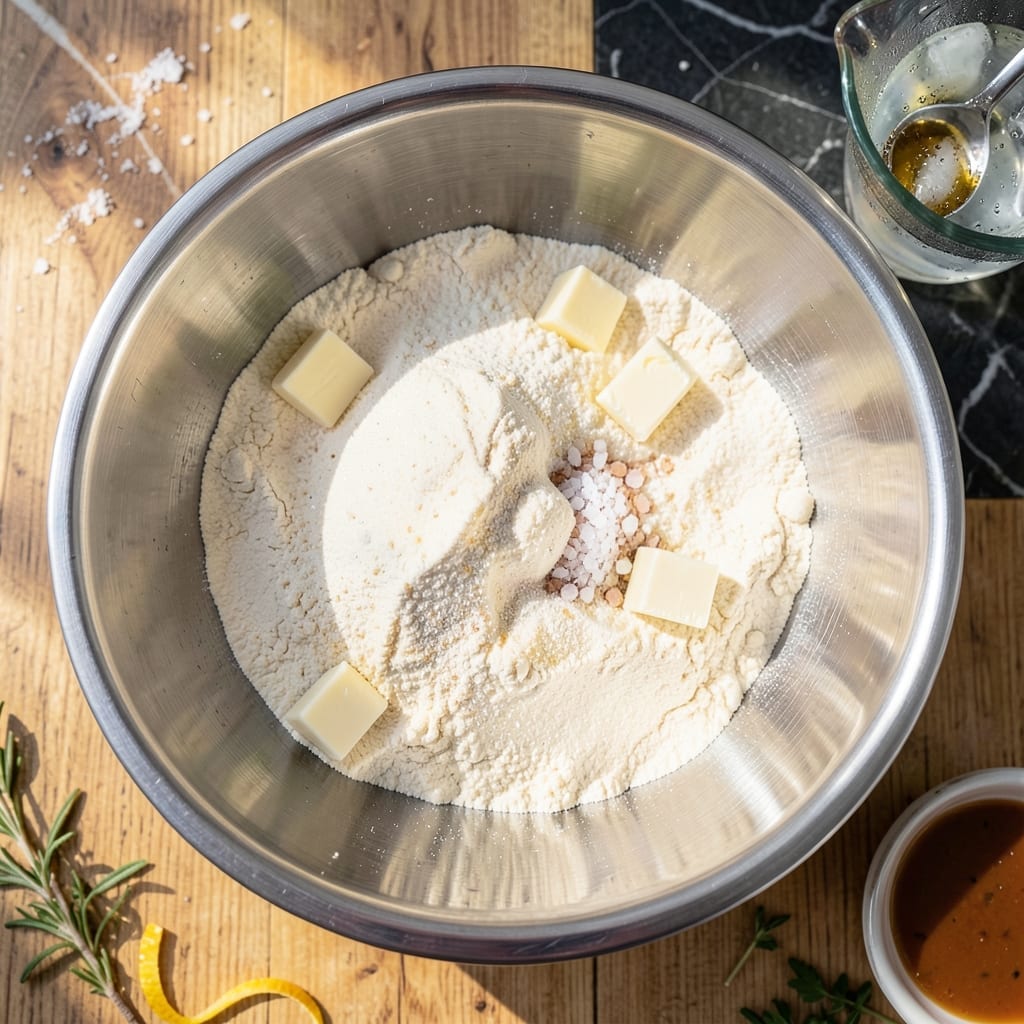
There’s an art to creating pie crust that achieves those coveted flaky layers, and this method delivers professional results every time.
The secret lies in keeping ingredients ice-cold and handling the dough minimally. Cold butter creates steam during baking, producing those perfect layers that shatter with each bite.
With just a few simple ingredients and proper technique, you’ll achieve a golden, tender crust that serves as the foundation for any pie. The process is straightforward but requires attention to detail.
This recipe transforms basic pantry staples into a buttery, flaky masterpiece that elevates any filling. The results speak for themselves.
Ingredients for Ina Garten Pie Crust
Six ingredients. Ice-cold technique. The foundation for perfect pies every time.
| Ingredient | Amount | Notes |
|---|---|---|
| All-Purpose Flour 🌾 | 2 ½ cups | Spoon and level measure |
| Unsalted Butter 🧈 | 1 cup | Very cold, cut into cubes |
| Ice Water 💧 | ½ cup | Plus 1 tbsp as needed |
| Granulated Sugar 🍚 | 1 tbsp | Optional for sweet crusts |
| Kosher Salt 🧂 | 1 tsp | Diamond Crystal preferred |
| Apple Cider Vinegar 🍏 | 1 tbsp | For tenderizing dough |
The butter must stay frigid—cut it into 1/2-inch cubes and chill before starting. King Arthur or Gold Medal flour both work beautifully (avoid cake flour, too low protein). I keep a bag of Diamond Crystal kosher salt on hand specifically for baking; its coarse texture dissolves evenly. For the ice water, fill a glass with water and ice cubes—measure from this, not the tap. The vinegar is subtle but essential for inhibiting gluten formation.
No apple cider vinegar? White vinegar or lemon juice at the same amount works fine. For a richer flavor, replace 2 tbsp ice water with vodka (alcohol evaporates, leaving flakier layers). If you must use salted butter, reduce the added salt by half. The sugar is optional—omit for savory pies, increase to 2 tbsp for fruit-filled sweets.
Dough can rest in the fridge for up to 2 days or freeze for 3 months. Wrap tightly in plastic to prevent drying. Let chilled dough sit at room temperature for 10-15 minutes before rolling—this prevents cracking. Baked crusts hold at room temperature for 24 hours.
Why You’ll Love This Recipe
- No-Fuss Mixing: I just dump flour, cold butter, and ice water in the food processor—no hand cramping or overworking the dough.
- Buttery Perfection: The unsalted butter and pinch of sugar make it flaky and just sweet enough to let the filling shine.
- Freezer Friendly: I always double the batch and freeze one—homemade crust on demand, even for last-minute dinner guests.
- Pantry Staples: All-purpose flour, butter, salt, sugar—I already have these, so it’s a zero-trip-to-the-store kind of recipe.
Step-by-Step Instructions for Flaky Pie Crust
Master the technique that creates those delicate, buttery layers everyone craves.
Step 1: Chill and Combine Dry Ingredients
Place the 2.5 cups All-Purpose Flour, 1 tbsp Granulated Sugar, and 1 tsp Kosher Salt in the bowl of a food processor fitted with the steel blade. Pulse 3-4 times until the mixture is combined. This aerates the flour and ensures even distribution of the sugar and salt throughout the dough.
I always chill my food processor bowl and blade in the freezer for 10 minutes beforehand to keep everything cold. Cold ingredients are the secret to flakiness—warm butter melts into the dough instead of creating distinct layers. The vinegar will be added later, so don’t include it yet.
Step 2: Cut in the Cold Butter
Add the 1 cup Unsalted Butter (cut into ½-inch cubes) to the flour mixture. Pulse the processor 10-12 times, or until the butter is the size of small peas. You want visible pieces of butter throughout—this creates the flaky layers as it melts during baking.
Stop the processor and check the mixture. If some butter pieces are larger than peas, pulse a few more times. Be careful not to over-process; the dough should look crumbly, not like wet sand. The butter must stay cold and solid, so work quickly and avoid handling the mixture with warm hands.
Step 3: Add Liquid Ingredients Gradually
Transfer the flour-butter mixture to a large mixing bowl. In a small bowl, combine the 0.5 cup Ice Water and 1 tbsp Apple Cider Vinegar. The vinegar tenderizes the gluten, preventing a tough crust. Make a well in the center of the flour mixture and add ½ cup of the ice water-vinegar mixture.
Using a fork, gently toss the flour mixture with the liquid until it just begins to come together. Add the remaining liquid 1 tablespoon at a time only if needed—the dough should be moist but not sticky. You’ll know it’s ready when it holds together when pressed but still looks shaggy.
Step 4: Form and Chill the Dough
Turn the dough out onto a lightly floured surface and gather it into a ball. Divide it in half and flatten each portion into a disk about 1 inch thick. Wrap each disk tightly in plastic wrap and refrigerate for at least 1 hour or up to 2 days.
Chilling relaxes the gluten and allows the butter to firm up again. This rest period is non-negotiable for flakiness. If the dough feels too warm at any point during shaping, pop it back in the fridge for 10-15 minutes before continuing.
Step 5: Roll and Fit the Crust
Remove one disk from the refrigerator and let it sit at room temperature for 5-10 minutes to soften slightly. On a well-floured surface, roll it into a 12-inch circle, about ⅛-inch thick. Roll from the center outward, turning the dough occasionally to prevent sticking.
Transfer the rolled dough to a 9-inch pie plate by rolling it loosely around the rolling pin and unrolling it over the plate. Gently fit the dough into the bottom and up the sides without stretching. Trim the excess, leaving a ½-inch overhang, then crimp the edges. Chill the crust for 30 minutes before blind baking or filling to prevent shrinking.
Pro Tips For Making Ina Garten Pie Crust
- Chill the Butter: Cut the unsalted butter into small cubes and freeze for 15 minutes before mixing—I learned this the hard way after my first few crusts turned out tough instead of flaky.
- Use Ice-Cold Water: Fill a glass with ice cubes and water, then measure from that for the ice water. Sounds weird, but it works: the colder the water, the less the gluten develops.
- Don’t Overwork Dough: Stop mixing as soon as the dough just comes together, even if it looks shaggy. My grandmother swore by this, and she was right: overworking makes it dense.
- Rest Before Rolling: Wrap the dough and refrigerate for at least 30 minutes—yes, even if you’re impatient like me. It relaxes the gluten and makes rolling out a breeze.
Common Mistakes When Making ina garten pie crust
Warm Ingredients
Never let your butter or water warm up before starting. If the butter starts to soften, it will melt into the flour instead of creating those essential flaky layers. I always keep my butter in the fridge until the last possible moment. 🧊
Overworking the Dough
Handle the dough as little as possible. Excessive kneading or pressing develops gluten, which makes the crust tough. Stop mixing as soon as the dough comes together—it should look shaggy, not smooth.
Skipping the Chill
Rushing the resting period is a common mistake. Chilling the dough for at least 1 hour relaxes the gluten and re-firms the butter. Without this step, your crust will shrink and lose its flakiness.
Incorrect Butter Size
Butter pieces should be about the size of small peas after cutting into the flour. If they’re too large, you’ll have uneven layers. If they’re too small, the butter will melt into the dough instead of creating steam pockets.
Stretching the Dough
When fitting the dough into your pie plate, never stretch it to make it fit. This causes the crust to shrink back during baking. Instead, gently lift and press the dough into place. 💡
Skipping Blind Baking
For custard or fruit pies with wet fillings, always blind bake the crust first. Without this step, the bottom can become soggy. Prick the dough with a fork and weigh it down with pie weights or dried beans.
Nutrition Facts
Frequently Asked Questions
Why use apple cider vinegar in the dough?
The vinegar tenderizes the gluten, preventing a tough texture. It also adds a subtle tang that complements sweet fillings. Just 1 tbsp is enough to make a noticeable difference.
Can I make this dough ahead of time?
Yes! Wrap the disks tightly in plastic and refrigerate for up to 2 days. For longer storage, freeze for up to 3 months. Thaw in the fridge overnight before using.
What if my crust shrinks while baking?
This usually means the dough wasn’t chilled long enough or was stretched when fitting into the pan. Always rest the dough for at least 1 hour and avoid pulling it to fit.
Can I use a stand mixer instead of a food processor?
Yes, but pulse on low and watch closely to avoid overmixing. The goal is pea-sized butter pieces, not a smooth dough. Stop as soon as it comes together.

- 6 Egg Cake Recipe with Oil: Light as Air With Buttery Moisture - October 4, 2026
- 4 Bean Casserole Recipe: One-Pan Heartiness With Smoky Paprika Depth - October 4, 2026
- 3-Ingredient Keto Mug Cake Recipe: Microwave Magic in 2 Minutes - October 4, 2026