
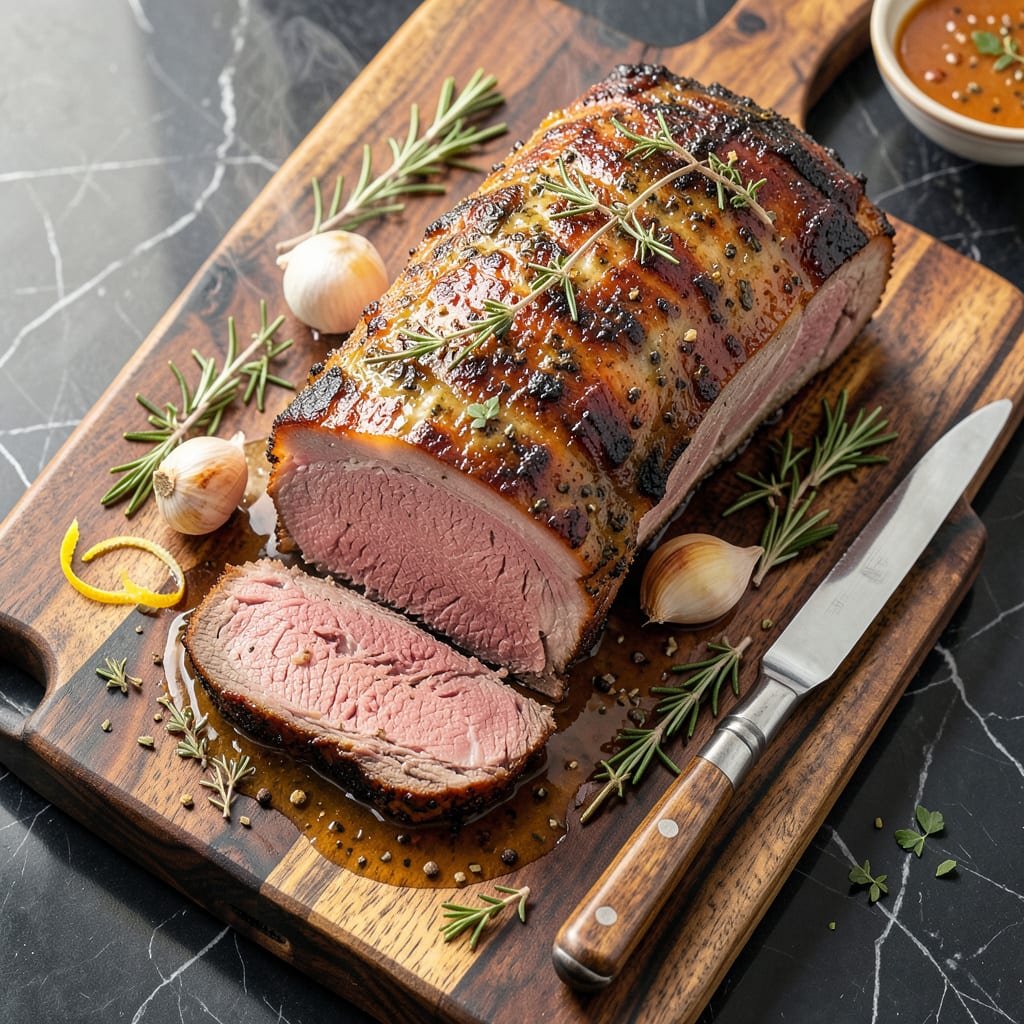
Few holiday centerpieces impress like a perfectly cooked prime rib roast, and Ina Garten’s method delivers restaurant-quality results with surprising simplicity. The secret lies in a generous herb crust and precise temperature control—no fancy equipment required. This recipe transforms an intimidating cut into a foolproof showstopper that will become your go-to for special occasions.
What sets this version apart is the balance of rich, beefy flavor with aromatic herbs and just the right amount of salt. The slow-roasting technique ensures a perfectly pink center every time, while the high-heat finish creates that coveted crispy exterior. Whether you’re hosting a holiday feast or Sunday supper, this prime rib guarantees rave reviews—and leftovers that taste even better the next day.
Ingredients for Ina Garten Prime Rib Roast
Six pounds of prime rib requires just twelve ingredients to achieve Ina Garten’s signature herb-crusted perfection.
| Ingredient | Amount | Notes |
|---|---|---|
| Bone-in Prime Rib Roast 🥩 | 6 lb | Rib bones frenched, fat cap trimmed to 1/4-inch |
| Kosher Salt 🧂 | 2 tbsp | Diamond Crystal preferred for even distribution |
| Freshly Ground Black Pepper 🌶️ | 2 tbsp | Coarse grind for optimal texture |
| Fresh Rosemary Sprigs 🌿 | 6 whole | Stems removed, finely chopped |
| Fresh Thyme Sprigs 🍃 | 6 whole | Leaves stripped from stems |
| Garlic Cloves 🧄 | 6 cloves | Minced to fine paste consistency |
| Extra-Virgin Olive Oil 🫒 | ¼ cup | High-quality, fruity variety |
| Dijon Mustard 🟡 | 3 tbsp | Smooth, not whole-grain variety |
| Unsalted Butter 🧈 | 4 tbsp | European-style preferred for richness |
| Dry Red Wine 🍷 | 1 cup | Full-bodied Cabernet Sauvignon recommended |
| Beef Stock 🥩 | 1 cup | Low-sodium, high-quality brand |
| Yellow Onion 🧅 | 1 whole | Large dice for aromatic base |
| Carrots 🥕 | 2 whole | Peeled, cut into 2-inch chunks |
| Celery Stalks 🌿 | 2 whole | Cut into 2-inch pieces |
[recipeingredientscaler]
The prime rib quality is non-negotiable for optimal results. Optimal selection includes USDA Prime grade with abundant marbling, available at Whole Foods or specialty butchers. The rib bones should be frenched (cleaned of meat) by your butcher for professional presentation. For the herb crust, fresh rosemary and thyme provide superior aromatic qualities compared to dried—source from farmers markets when possible for maximum potency. Diamond Crystal kosher salt ensures proper osmosis without over-salting, while European-style butter delivers the ideal fat content for crust formation (82-86% butterfat).
Substitutions must maintain the recipe’s structural integrity. Boneless rib roast may be used but requires adjusted cooking times (reduce by 20%). For alcohol-free preparation, replace red wine with equal parts beef stock plus 1 tbsp balsamic vinegar. Dried herbs may substitute at one-third the volume, though fresh provides superior flavor complexity. Vegetable oil can replace olive oil in the crust, though flavor depth will be compromised. The Dijon mustard acts as both binder and flavor agent—whole-grain mustard alters texture significantly and isn’t recommended.
Prime rib benefits from extended dry-brine time (12-24 hours) in the refrigerator, uncovered, to develop optimal crust. Post-cooking, the roast requires 30-minute resting before carving to redistribute juices. Leftovers maintain quality for 4-5 days refrigerated or 3 months vacuum-sealed and frozen. The herb crust components (rosemary, thyme, garlic) may be prepped 24 hours ahead and refrigerated in olive oil to preserve freshness without oxidation.
Why You’ll Love This Recipe
- Five-Ingredient Magic: Honestly, that’s all you need—salt, pepper, rosemary, thyme, and the star: a bone-in roast. No marinades, no fancy rubs, just the kind of unfussy prep that lets the beef shine without hiding behind a grocery list.
- That Crust, Though: The salt-and-herb crust forms this crackly, golden shell that gives way to meat so tender it barely needs a knife. Between us, I’ve made this three times, and that first bite—when the rosemary’s piney hit meets the black pepper’s bite—still makes me pause mid-chew.
- Leftovers You’ll Fight Over: A 4-pound roast feeds my family twice: first as the main event, then as French dip sandwiches with the pan juices. I’ll be real—the second meal might be better. Cold slices on crusty bread with horseradish mayo? Solid reason to make this “just because.”
Instructions
This method delivers a perfectly pink, herb-crusted prime rib with minimal effort and maximum flavor.
Step 1: Prepare the Herb Crust and Season the Roast
Begin by finely chopping the 6 whole fresh rosemary sprigs and stripping the leaves from the 6 whole fresh thyme sprigs. In a small bowl, combine these herbs with the 6 cloves garlic cloves (minced to a fine paste), 2 tbsp kosher salt, 2 tbsp freshly ground black pepper, 3 tbsp Dijon mustard, and 0.25 cup extra-virgin olive oil. This creates a robust paste that will form the flavorful crust.
Pat the 6 lb bone-in prime rib roast completely dry with paper towels. The drier the surface, the better the crust will adhere and brown. Using your hands, massage the herb mixture evenly over the entire surface of the roast, including the fat cap and ends. This ensures every bite carries the aromatic herb flavor.
Step 2: Set Up the Roasting Environment
Position a rack in the lower third of your oven and preheat to 450°F. This high initial temperature creates a beautiful crust while keeping the interior juicy. Place the seasoned roast bone-side down on a sturdy roasting rack set inside a heavy roasting pan. The bones act as a natural rack, promoting even air circulation.
Scatter the 1 whole yellow onion (large dice), 2 whole carrots (peeled and cut into 2-inch chunks), and 2 whole celery stalks (cut into 2-inch pieces) around the roast. These vegetables will caramelize during roasting, adding depth to your pan sauce later. Pour 1 cup beef stock into the bottom of the pan—this prevents burning and creates steam for even cooking.
Step 3: Execute the Reverse Sear Technique
Roast the prime rib at 450°F for exactly 30 minutes. This initial blast of heat develops a flavorful crust. Then, without opening the oven door, reduce the temperature to 325°F and continue roasting. For medium-rare (recommended for prime rib), calculate 13-15 minutes per pound—about 1 hour 15 minutes total additional time for a 6-pound roast.
The roast is done when an instant-read thermometer inserted into the thickest part (avoiding bone) registers 120-125°F for medium-rare. The temperature will rise another 5-10°F during resting. Watch for visual cues: the crust should be deep golden brown, and when pressed with tongs, the meat should feel firm yet yield slightly, like pressing the base of your thumb.
Step 4: Create the Red Wine Pan Sauce
Transfer the roast to a cutting board and tent loosely with foil. Place the roasting pan on the stovetop over medium-high heat. Add the 1 cup dry red wine and bring to a boil, scraping up all the browned bits with a wooden spoon. These fond contain concentrated flavor that will enrich your sauce.
Once the wine reduces by half (about 3-4 minutes), reduce heat to medium and whisk in the 4 tbsp unsalted butter, one tablespoon at a time, until fully emulsified. Strain the sauce through a fine-mesh sieve into a serving boat, pressing on the solids to extract maximum flavor. The result should be a glossy, rich sauce with balanced acidity from the wine.
Step 5: Rest and Carve for Optimal Serving
Let the roast rest for 20-30 minutes before carving. This crucial step allows the juices to redistribute throughout the meat. If you slice too soon, you’ll lose up to 30% of the juices to your cutting board. The internal temperature will also stabilize at the perfect 130-135°F for medium-rare.
To carve, first remove the bones in one piece by cutting along the ribs. Then slice the meat against the grain into ½-inch thick slices. Arrange on a warmed platter and drizzle with some of the pan sauce. Serve immediately with the remaining sauce on the side. Each slice should reveal a perfect gradient from the herb crust to the rosy pink center.
Dietary Considerations for ina garten prime rib roast
Gluten-Free Adaptations
This recipe is naturally gluten-free as written, making it perfect for guests with celiac disease or gluten sensitivities. The only ingredient to double-check is your Dijon mustard—some brands add wheat as a thickener. I recommend Grey Poupon or Maille, both certified gluten-free. The herb crust and pan sauce rely on naturally gluten-free ingredients like olive oil, butter, and fresh herbs. 💪
Low-Carb/Keto Friendly
Prime rib is an excellent choice for keto and low-carb diets, with virtually zero carbs per serving. The only carbohydrates come from the 1 cup red wine in the pan sauce, which divides among 6+ servings. For strict keto, you could reduce the wine to ½ cup or substitute with additional beef stock. The herb crust adds flavor without adding carbs.
Dairy Considerations
The only dairy in this recipe comes from the 4 tbsp unsalted butter used in the pan sauce. For dairy-free guests, simply substitute with olive oil or dairy-free butter like Miyoko’s. The herb crust itself contains no dairy, and the roast remains just as flavorful. I’ve made it both ways and honestly can’t tell the difference in the final dish.
Red Meat Alternatives
While prime rib is the star here, you could adapt the herb crust technique for other proteins. A whole beef tenderloin (4-5 lbs) works beautifully with the same seasoning and cooking method—just reduce the cooking time to 20-25 minutes per pound. For poultry, a bone-in turkey breast (6-7 lbs) can use this herb mixture, though I’d roast it at 350°F until reaching 165°F internally. 🥩
Sodium Adjustments
The recipe calls for 2 tbsp kosher salt, which is perfect for flavor development but can be reduced. For low-sodium diets, cut the salt to 1 tbsp and use low-sodium beef stock. The Dijon mustard and herb crust still provide plenty of flavor. I’ve found that salting the roast 12 hours ahead allows you to use less salt overall while achieving the same depth of flavor.
Wine Substitutions
For those avoiding alcohol, replace the 1 cup red wine with 1 cup beef stock + 1 tbsp balsamic vinegar. This maintains the acidity needed to balance the rich pan sauce. The vinegar adds complexity that mimics wine’s depth. I actually prefer this version sometimes—it lets the pure beef flavor shine through without wine’s fruitiness competing with the herb crust. ✨
Nutrition Facts

- 6 Egg Cake Recipe with Oil: Light as Air With Buttery Moisture - October 4, 2026
- 4 Bean Casserole Recipe: One-Pan Heartiness With Smoky Paprika Depth - October 4, 2026
- 3-Ingredient Keto Mug Cake Recipe: Microwave Magic in 2 Minutes - October 4, 2026