
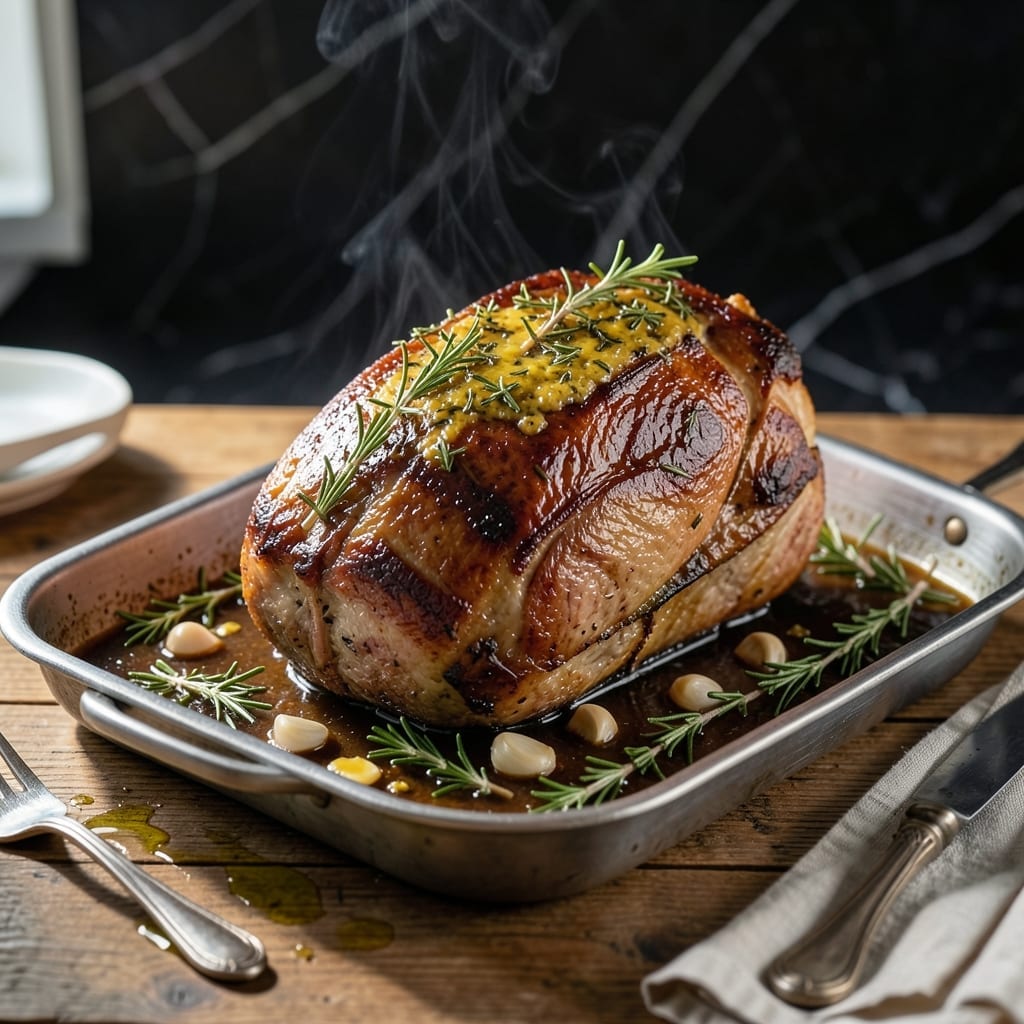
Few dishes impress like a perfectly cooked standing rib roast with its herb-crusted exterior and tender, juicy interior. This method delivers consistent results every time.
The secret lies in starting with high heat to develop a golden crust, then reducing the temperature to ensure even cooking throughout. A simple garlic and herb paste creates that signature flavor.
What emerges is a centerpiece-worthy roast with a crispy exterior and tender meat that melts in your mouth. The aroma alone signals a meal to remember.
Perfect for holidays or special occasions, this technique turns an intimidating cut into an approachable masterpiece. The results speak for themselves.
Ingredients for Ina Garten Standing Rib Roast
Prime rib, fresh herbs, and garlic form the foundation of this elegant centerpiece dish.
| Ingredient | Amount | Notes |
|---|---|---|
| Standing Rib Roast 🥩 | 4 lb | Bone-in, prime grade preferred |
| Kosher Salt 🧂 | 1 tbsp | Diamond Crystal brand recommended |
| Freshly Ground Black Pepper 🌶️ | 2 tsp | Coarse grind preferred |
| Garlic Cloves 🧄 | 6 cloves | Peeled, minced to paste |
| Fresh Rosemary 🌿 | 2 tbsp | Finely chopped, stems discarded |
| Fresh Thyme 🍃 | 2 tbsp | Finely chopped, stems discarded |
| Dijon Mustard 🟡 | 2 tbsp | Whole grain or smooth |
| Olive Oil 🫒 | ¼ cup | Extra-virgin for herb paste |
| Unsalted Butter 🧈 | 4 tbsp | Room temperature, for finishing |
| Red Wine 🍷 | 1 cup | Dry variety for deglazing |
| Beef Stock 🥣 | 1 cup | Low-sodium preferred |
| Shallots 🧅 | 2 whole | Finely minced for sauce |
| All-Purpose Flour 🌾 | 1 tbsp | For thickening pan sauce |
The roast quality is paramount. Prime grade standing rib roast from a reputable butcher ensures optimal marbling and tenderness. Whole Foods or Costco offer excellent options, with bone-in cuts providing superior flavor. Request the chine bone be removed for easier carving. Look for bright red meat with abundant white fat streaks—this fat melts during cooking, basting the meat from within.
No prime grade available? Choice grade works well with slightly longer cooking. Substitute fresh sage for thyme if desired, though rosemary remains essential. The Dijon can be replaced with whole grain mustard for textural contrast. For the wine, any dry red such as Cabernet Sauvignon or Merlot works—avoid sweet varieties. The beef stock can be homemade or high-quality store-bought.
Store the raw roast uncovered in the refrigerator for up to 3 days to dry the surface for better browning. Fresh herbs keep 1 week wrapped in damp paper towels. The prepared herb paste can be refrigerated for 24 hours before use. Cooked leftovers maintain quality for 4-5 days refrigerated or 3 months frozen.
Why You’ll Love This Recipe
- I’ll be real: the sandwiches I make with the cold slices are better than the original meal.
- Set It and Forget: Honestly, just rub the roast with salt, pepper, garlic, and rosemary, then let the oven do the work.
- Rich Garlic-Rosemary Crust: That first bite with the crispy herb crust and tender beef? I make it just to have leftovers.
- Holiday Centerpiece: Between us, this is the only thing my in-laws request for Christmas dinner.
Step-by-Step Instructions for Standing Rib Roast
Master the technique for a show-stopping rib roast with a fragrant herb crust and luscious pan sauce.
Step 1: Prepare the Herb Paste and Season the Roast
Combine the 6 cloves garlic cloves, 2 tbsp fresh rosemary, 2 tbsp fresh thyme, 2 tbsp Dijon mustard, and 0.25 cup olive oil in a food processor until a thick paste forms. This paste infuses every bite with aromatic depth.
Pat the 4 lb standing rib roast dry with paper towels, then rub the herb paste evenly over all surfaces. Sprinkle generously with 1 tbsp kosher salt and 2 tsp freshly ground black pepper, pressing gently to adhere. Let it sit at room temperature for 1 hour before roasting.
Step 2: Roast at High Heat, Then Lower Temperature
Preheat your oven to 450°F. Place the roast bone-side down in a roasting pan. Roast for 20 minutes to develop a deep, flavorful crust. You’ll see the exterior turn rich golden brown and hear sizzling as the herb paste caramelizes.
After 20 minutes, reduce the oven temperature to 325°F without opening the door. Continue roasting until an instant-read thermometer inserted into the thickest part of the meat (avoiding bone) reaches 120-125°F for medium-rare. This typically takes 1 to 1.5 hours for a 4 lb roast.
Step 3: Rest the Roast and Prepare the Pan Sauce
Transfer the roast to a cutting board, tent loosely with foil, and let it rest for 20 minutes. This allows the juices to redistribute, ensuring every slice is moist and flavorful. The internal temperature will rise 5-10°F during this time.
Place the roasting pan on the stovetop over medium-high heat. Add the 2 whole shallots and cook for 2 minutes until softened. Pour in 1 cup red wine and deglaze the pan, scraping up all browned bits with a wooden spoon. Simmer for 3-4 minutes until reduced by half.
Step 4: Finish the Sauce and Serve
Whisk 1 tbsp all-purpose flour into the pan, then add 1 cup beef stock. Bring to a simmer and cook for 5-6 minutes until the sauce thickens enough to coat the back of a spoon. Remove from heat and whisk in 4 tbsp unsalted butter one tablespoon at a time until smooth and glossy.
Strain the sauce through a fine-mesh sieve into a gravy boat. Carve the roast between the ribs into thick slices, spoon sauce over each portion, and serve immediately. The sauce should be rich and velvety, complementing the herb-crusted meat perfectly.
Pro Tips For Making Ina Garten Standing Rib Roast
- Room Temp First: Pull the rib roast out of the fridge 2 hours before cooking—cold meat struggles to cook evenly, and I learned this the hard way with a dry center.
- Crush the Garlic: Smash the garlic cloves with the side of your knife before chopping; it releases more flavor and sticks better to the meat.
- Skip the Overcrowding: Use a roasting pan just big enough for the roast so the heat circulates properly—I used to cram it in and wondered why the edges were burnt.
- Rest Under Foil: Tent the roast with foil and let it rest 20-30 minutes before slicing; it keeps the juices inside where they belong.
Dietary Considerations for This Recipe
Gluten-Free Adaptation
To make this dish gluten-free, simply swap the 1 tbsp all-purpose flour for 1 tbsp cornstarch when thickening the pan sauce. Mix the cornstarch with 2 tbsp cold water first to create a slurry, then whisk into the simmering sauce. The result is just as velvety. I’ve tested this with Bob’s Red Mill cornstarch with great results. 💪
Low-Carb Option
This recipe is naturally low-carb as written, with only 1 tbsp flour in the entire dish. For strict keto, eliminate the flour entirely and reduce the sauce slightly longer to thicken naturally. The 4 lb roast itself has zero carbs, making it ideal for low-carb lifestyles.
Dairy-Free Modification
Replace the 4 tbsp unsalted butter with olive oil or dairy-free margarine like Miyoko’s. The sauce will still be rich and flavorful. I recommend using extra-virgin olive oil for the best taste. The herb paste already includes 0.25 cup olive oil, so the flavor profile remains intact.
Sodium Considerations
To reduce sodium, use low-sodium beef stock and cut the 1 tbsp kosher salt in half. The Dijon mustard and red wine add depth without extra salt. I often use Diamond Crystal kosher salt because it’s less dense, so a little goes a long way. 💡
Allergen Awareness
This dish contains no common allergens as written, but check your Dijon mustard for potential mustard seed allergies. The red wine may contain sulfites, so use a sulfite-free variety if needed. Always verify ingredient labels for cross-contamination warnings.
Nutrition Facts
Frequently Asked Questions
What temperature should I pull the roast from the oven?
Remove it when the internal temperature hits 120-125°F for medium-rare. It will rise to 130-135°F during resting.
Can I cook a frozen standing rib roast?
Never cook from frozen. Thaw it in the fridge for 24-48 hours depending on size. This ensures even cooking and better texture.
How do I prevent the herb crust from burning?
Start at 450°F for 20 minutes, then reduce to 325°F. Tent with foil if it darkens too quickly.
What’s the best way to carve it?
Slice between the ribs after resting. Use a sharp knife and cut against the bone for even, elegant portions.

- 6 Egg Cake Recipe with Oil: Light as Air With Buttery Moisture - October 4, 2026
- 4 Bean Casserole Recipe: One-Pan Heartiness With Smoky Paprika Depth - October 4, 2026
- 3-Ingredient Keto Mug Cake Recipe: Microwave Magic in 2 Minutes - October 4, 2026