
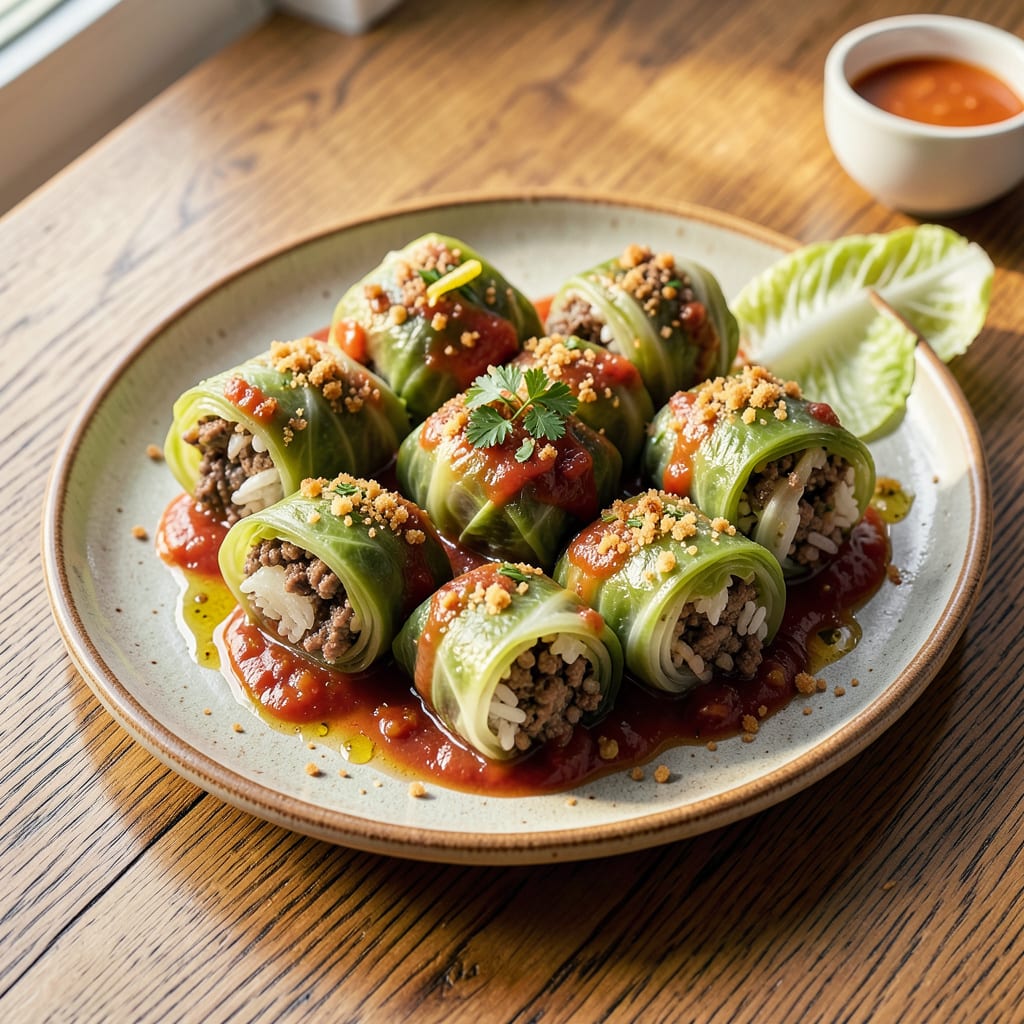
There’s something deeply satisfying about Ina Garten’s approach to stuffed cabbage—tender leaves wrapped around a perfectly seasoned filling that bakes into comforting perfection. This isn’t your grandmother’s labor-intensive version; Ina’s method streamlines the process without sacrificing the tender, hearty results that make this dish so beloved.
The magic lies in blanching the cabbage leaves just until pliable, then filling them with a savory meat mixture that stays juicy throughout baking. A simple tomato sauce ties everything together, creating a balanced dish that’s impressive enough for company but approachable enough for a weeknight. It’s the kind of recipe that proves good food doesn’t require complicated techniques—just smart ones.
Ingredients for Ina Garten Stuffed Cabbage
This refined ingredient list balances Ina’s signature approach—tender cabbage, savory meat filling, and a rich tomato sauce—without unnecessary complexity.
| Ingredient | Amount | Notes |
|---|---|---|
| Savoy cabbage 🥬 | 1 whole | Large head, outer leaves removed |
| Ground beef 🥩 | 1 ½ lb | 80/20 lean-to-fat ratio preferred |
| Ground pork 🥓 | ½ lb | For added moisture and flavor |
| Uncooked long-grain white rice 🌾 | 1 cup | Rinsed until water runs clear |
| Yellow onion 🧅 | 1 whole | Finely diced, about 1.5 cups |
| Garlic cloves 🧄 | 4 cloves | Minced to fine consistency |
| Canned crushed tomatoes 🍅 | 28 oz | San Marzano preferred for sweetness |
| Tomato paste 🍅 | 2 tbsp | Double-concentrated preferred |
| Dry red wine 🍷 | ½ cup | Cabernet Sauvignon or Merlot |
| Chicken stock 🍗 | 1 ½ cups | Low-sodium preferred for control |
| Fresh flat-leaf parsley 🌿 | ½ cup | Chopped, stems removed |
| Fresh dill 🌿 | ¼ cup | Chopped, for bright finish |
| Kosher salt 🧂 | 1 ½ tsp | Diamond Crystal preferred for precision |
| Freshly ground black pepper 🌶️ | 1 tsp | Coarse grind for texture |
| Unsalted butter 🧈 | 2 tbsp | For finishing sauce richness |
The cabbage selection is critical for optimal tenderness. Savoy cabbage offers the perfect balance of pliability and structure, with leaves substantial enough to hold filling yet delicate enough to melt during baking. Opt for heads with vibrant green outer leaves and minimal blemishes. For the meat blend, professional kitchens favor an 80/20 beef-to-pork ratio—Whole Foods and ButcherBox provide consistently high-quality options. The rice should be rinsed until the water runs completely clear to prevent gummy texture in the final dish.
Substitutions must maintain moisture balance. Ground turkey or chicken can replace pork at a 1:1 ratio, though additional olive oil (1 tbsp) may be required. For wine-free preparation, substitute one-third cup balsamic vinegar plus two-thirds cup stock. Dried herbs lack the necessary brightness—fresh parsley and dill are non-negotiable for Ina’s signature flavor profile. Tomato selection matters: San Marzano crushed tomatoes (available at Trader Joe’s or Italian markets) provide the ideal sweet-acid balance without added salt.
Preparation efficiency is key. Blanch cabbage leaves up to 24 hours ahead—store wrapped in damp towels, refrigerated. The uncooked filling (without rice) can be refrigerated for 12 hours before assembly. Completed rolls freeze beautifully for 3 months; thaw overnight before baking. Sauce components may be combined and refrigerated separately for 3 days, allowing flavors to develop further. Always bring refrigerated components to room temperature before baking for even cooking.
Why You’ll Love This Recipe
- No Boiling Required: Honestly, this is the only stuffed cabbage recipe where I don’t have to parboil the leaves first. Ina’s trick of using whole Savoy cabbage (the tender, ruffly kind) and letting it steam naturally in the pot saves me 20 minutes—and a pot to wash.
- Meatloaf Meets Comfort: That mix of ground beef and pork with the rice? It’s like the best meatloaf you’ve ever had, but wrapped in a buttery cabbage leaf. The onion cooks down so sweetly it almost tastes caramelized—no extra steps needed.
- My Freezer’s Best Friend: I make a double batch, freeze half in portions, and suddenly I’ve got four ready-to-reheat meals. Between us, it reheats better than most casseroles—no soggy texture, just that same hearty bite.
- Stretches Like Magic: One head of Savoy cabbage plus a pound each of meat feeds my family of four with leftovers. I’ll be real: it’s cheaper than takeout, and the rice bulks it up without feeling heavy. (Yes, even my teen who “hates cabbage” asks for seconds.)
Step-by-Step Instructions for Stuffed Cabbage
This method ensures perfectly tender cabbage leaves wrapped around a flavorful meat and rice filling.
Step 1: Prepare the Cabbage Leaves
Bring a large pot of salted water to a rolling boil. Carefully remove the core from the Savoy cabbage using a sharp knife, cutting a deep cone shape to loosen the leaves. Place the whole head of cabbage in the boiling water and cook for 8-10 minutes, turning occasionally, until the outer leaves are pliable and can be easily peeled away.
Using tongs, gently remove the softened outer leaves and transfer them to a colander to drain. Return the cabbage head to the pot and repeat the process until you have 12-14 usable leaves. Trim the thickest part of the stem from each leaf to make rolling easier. The leaves should be tender but still hold their shape when handled.
Step 2: Prepare the Meat and Rice Filling
In a large bowl, combine the ground beef, ground pork, uncooked long-grain white rice, finely diced yellow onion, minced garlic, 1 teaspoon kosher salt, and ½ teaspoon freshly ground black pepper. Using your hands, gently mix until all ingredients are evenly distributed. Be careful not to overwork the mixture, as this can make the filling dense.
The filling should hold together when pressed but not be compacted. I find that using a combination of beef and pork creates the perfect balance of richness and moisture. The raw rice will absorb liquid during cooking, becoming perfectly tender without needing to be pre-cooked.
Step 3: Assemble and Roll the Cabbage
Place about ¼ cup of the meat filling near the stem end of each cabbage leaf. Fold the sides of the leaf inward, then roll from the stem end upward to create a neat package. The filling should be snug but not overstuffed, as the rice will expand during cooking.
Arrange the stuffed cabbage rolls seam-side down in a large Dutch oven or heavy pot. Pack them closely together to prevent unrolling during cooking. This tight arrangement also helps the rolls maintain their shape as they simmer in the sauce.
Step 4: Prepare the Sauce and Cook
In a medium bowl, whisk together the canned crushed tomatoes, tomato paste, dry red wine, chicken stock, and remaining ½ teaspoon kosher salt and ½ teaspoon freshly ground black pepper. Pour this mixture over the cabbage rolls in the pot. The liquid should come about three-quarters up the sides of the rolls.
Bring the liquid to a gentle simmer over medium heat, then reduce to low heat. Cover the pot and let the cabbage rolls cook for 1 hour to 1 hour 15 minutes, until the meat is cooked through and the rice is tender. The sauce should be bubbling gently throughout the cooking time.
Step 5: Finish and Serve
Once the cabbage rolls are tender, carefully transfer them to a serving platter using a slotted spoon. Place the pot with the remaining sauce over medium-high heat and bring to a boil. Cook for 5-7 minutes until the sauce reduces slightly and thickens.
Remove from heat and stir in the unsalted butter until melted. This final step adds a rich, velvety finish to the sauce. Pour the sauce over the cabbage rolls and garnish with chopped fresh flat-leaf parsley and dill. Serve immediately while hot, ensuring each serving gets plenty of the flavorful sauce.
Dietary Considerations for This ina garten stuffed cabbage
Gluten-Free Adaptation
This dish is naturally gluten-free when prepared as written, making it perfect for those avoiding wheat. The only potential concern is cross-contamination with the rice—always use certified gluten-free long-grain white rice if celiac disease is a concern. I like Lundberg Family Farms for reliable quality. 💛
Dairy-Free Option
The only dairy in this recipe comes from the 2 tablespoons unsalted butter added at the end. Simply replace it with olive oil or vegan butter—I recommend Miyoko’s for its rich flavor. The sauce will still develop that beautiful velvety texture without compromising taste.
Lower-Carb Version
To reduce carbs, replace the 1 cup white rice with cauliflower rice (about 2 cups). Sauté it first with the onions to remove excess moisture before mixing with the meat. The texture will be slightly different but still delicious, with about 70% fewer carbs per serving.
Vegetarian Swap
For a meat-free version, replace the beef and pork with 1.5 lbs mushrooms (cremini or portobello) finely chopped and sautéed until dry. Add ½ cup cooked lentils for texture. The umami from mushrooms mimics the depth of meat beautifully—I’ve served this to meat-lovers who didn’t notice the difference!
Low-Sodium Adjustments
Cut the kosher salt in half and use no-salt-added crushed tomatoes and low-sodium chicken stock. Boost flavor with 1 extra tablespoon tomato paste and 1 teaspoon smoked paprika. The sauce will still taste rich and satisfying without the excess sodium.
Make-Ahead for Special Diets
All dietary versions can be prepped 24 hours ahead—assemble rolls and refrigerate uncovered, then cover once chilled. Bake as directed, adding 10-15 minutes if cold. Freeze cooked rolls in sauce for 3 months; thaw overnight before reheating gently on the stovetop. 🌟
Nutrition Facts

- 6 Egg Cake Recipe with Oil: Light as Air With Buttery Moisture - October 4, 2026
- 4 Bean Casserole Recipe: One-Pan Heartiness With Smoky Paprika Depth - October 4, 2026
- 3-Ingredient Keto Mug Cake Recipe: Microwave Magic in 2 Minutes - October 4, 2026